Wholesale Lash Tools: How to Choose the Right Salon Kit for Bulk Supply
Wholesale lash tools look simple, but they influence technician control, salon workflow, retail presentation and repeat purchasing. For B2B buyers, the best choice is not always the largest kit or the lowest unit cost. A useful lash tool assortment should match the service style, feel reliable in the hand, arrive in consistent condition and support the way your business sells or uses the products.
This guide explains how to evaluate common lash tool categories, including precision tweezers, eyelash curlers, spoolie brushes and under-eye pads. It is written for salons, distributors, beauty supply retailers and kit builders comparing eyelash extension tools wholesale. The goal is to help you ask better supplier questions, reduce avoidable sourcing mistakes and build a tool mix that remains useful beyond one seasonal promotion.
What Wholesale Lash Tools Usually Include
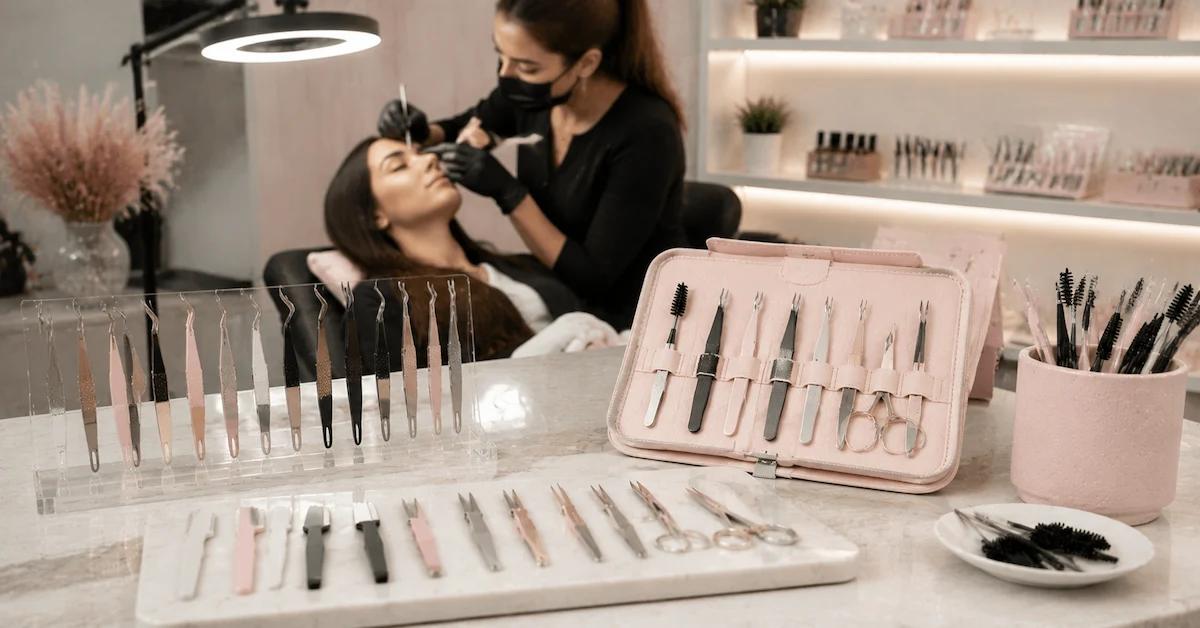
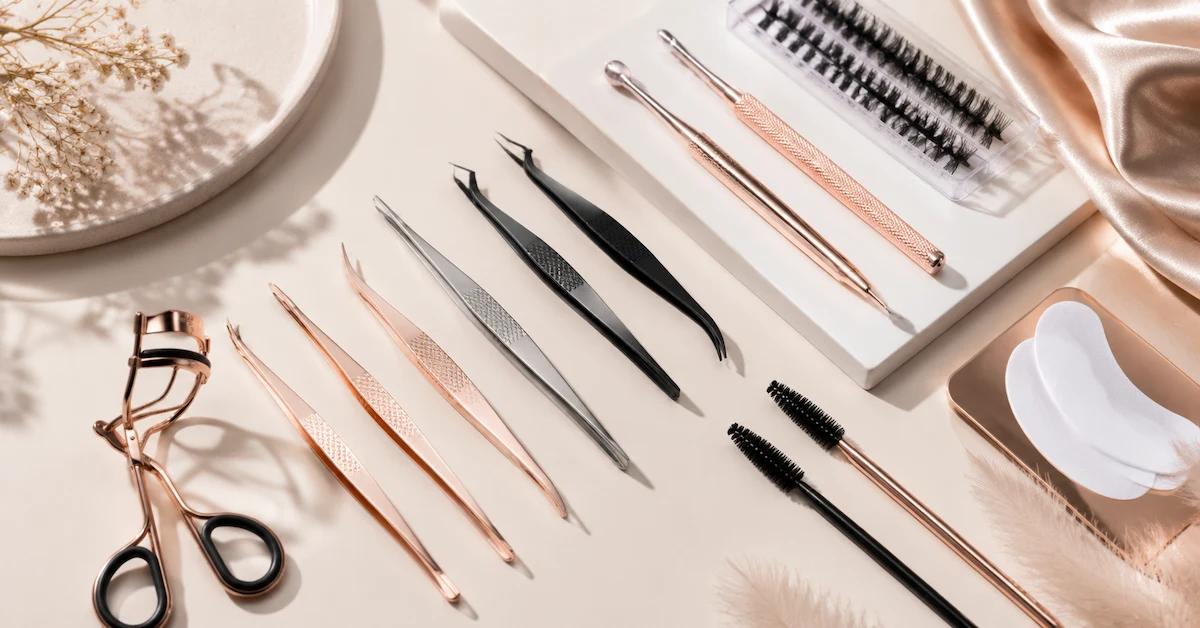
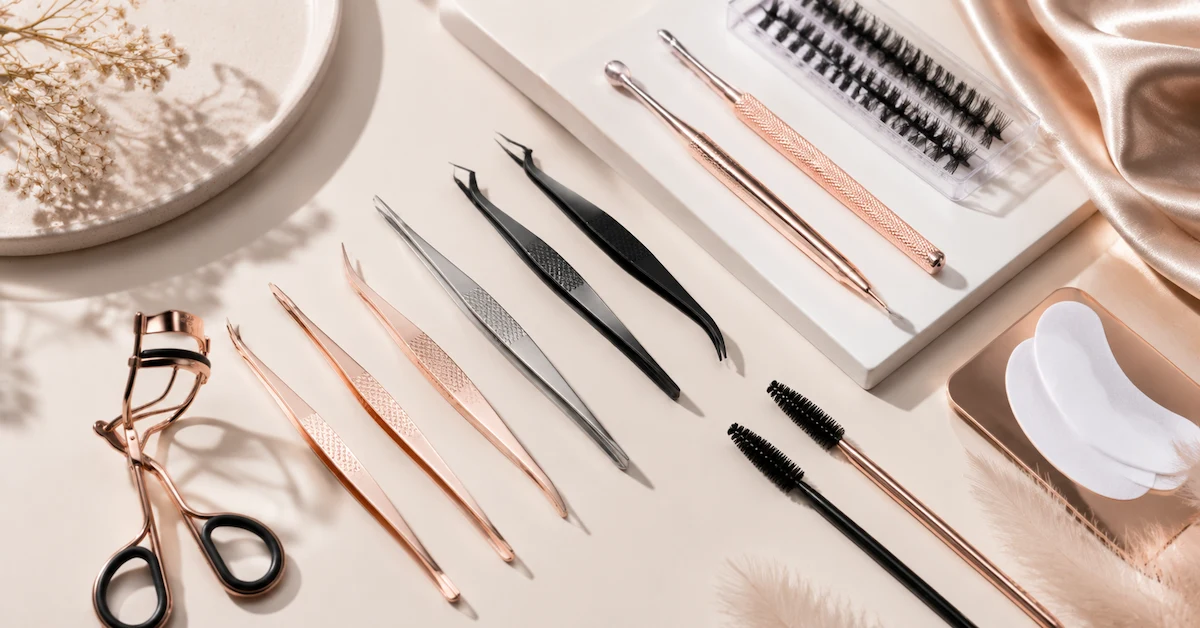
A typical lash tool wholesale mix is built around small hand tools and support accessories used for lash extension, lash grooming or eye-beauty retail kits. The visible product family includes multiple tweezer styles, an eyelash curler, spoolie-style brushes and white curved under-eye pads. These items may be used together in professional service environments or bundled for resale depending on the buyer's channel.
Each item has a different job. Tweezers handle isolation, pickup and placement. Spoolie brushes groom lashes and brows and help separate fibers. Under-eye pads support the lower eye area during lash work and help keep the service area organized. Eyelash curlers belong to the broader eye-beauty accessory category and are often considered when buyers want a more complete retail-facing set.
If you are comparing assortments on Olimor beauty tool products, start by defining the end use. A salon replenishment order should focus on working performance and technician preference. A distributor order should focus on consistency across bulk quantities. A retail kit should consider finish, presentation and whether the contents are easy for the end customer to understand.
Match the Kit to the Buyer Type
Before reviewing finish colors or accessory counts, decide who the kit is for. The same collection of lash tools can be judged very differently by a lash technician, a chain beauty retailer and a private-label kit planner.
For salons and lash studios
Salons should prioritize the tools that affect daily service quality. Tweezer tip alignment, grip texture, balance and comfort matter more than decorative finish. A tool that looks attractive but forces a technician to adjust their hand position repeatedly can slow work and increase frustration.
For beauty supply retailers
Retailers need an assortment that communicates value quickly. Rose-gold or copper-tone, black and silver finishes can help create visual variety, but the set still needs to feel coherent. A mixed kit should not look like unrelated pieces placed together only to increase item count.
For distributors and kit builders
Distributors and kit builders should focus on repeatability. Ask whether the kit is a fixed SKU or whether the components can be configured. A configurable assortment may help you serve multiple customer groups, but only if the supplier can keep tool styles, finishes and packaging consistent across orders.
Precision Tweezers Are the Core of a Professional Lash Tool Mix
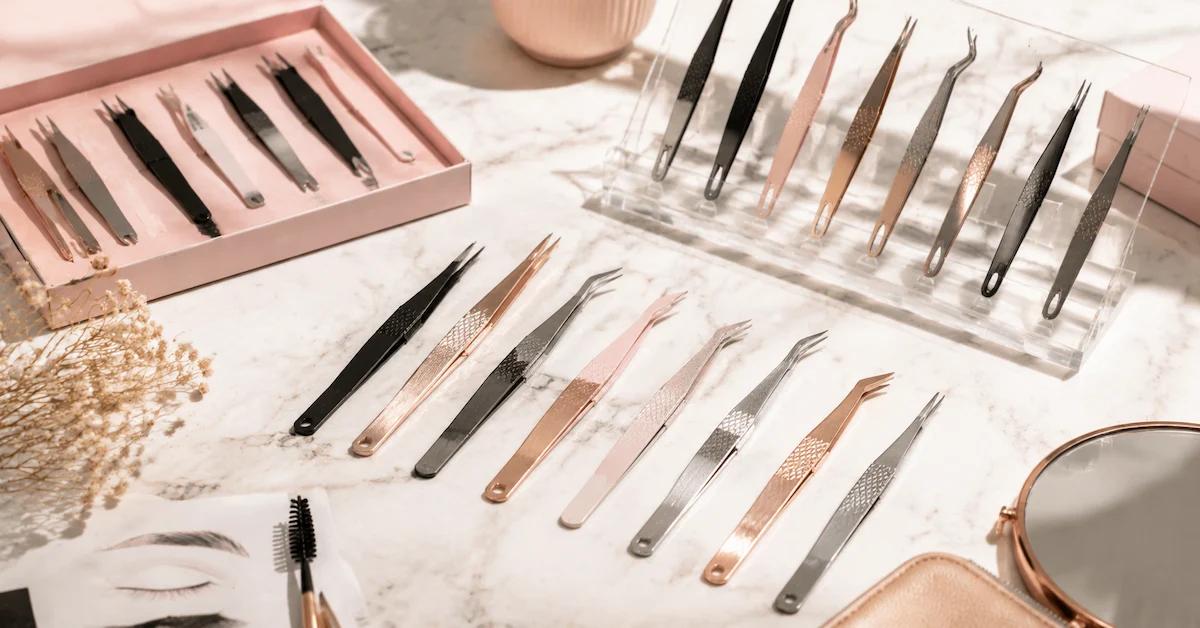
Tweezers are usually the most important item in wholesale lash tools because they directly affect control. The product details show several precision profiles, including fine pointed, angled and curved tips. This variety is useful because lash professionals do not all work the same way.
A fine pointed tweezer can support detailed isolation and careful separation. Angled or curved profiles may be preferred for pickup and placement, depending on the technician's hand position and lash technique. There is no single universal best shape. The right choice depends on the service type, technician training and whether the buyer is building a broad kit or a specialized set.
When inspecting tweezer samples, look at the tips first. The points should meet cleanly and should not appear twisted or uneven. Even small misalignment can make a tweezer feel unreliable. Check whether the closing action feels smooth and whether the grip section supports stable handling. The visible textured grip areas on the tools are a practical feature because lash work is repetitive and requires fine control.
The tools appear metallic and are shown in polished rose-gold or copper-tone, matte black and silver finishes. Treat finish as both a merchandising feature and an inspection point. A polished surface can support a premium retail look, while a black or silver option may fit a different brand style. However, finish appearance is not proof of material grade, coating process or durability. Ask the supplier to confirm the material and finish process for the specific order you are considering.
Eyelash Curlers, Spoolies and Under-Eye Pads: Small Items That Shape the Kit
Although tweezers receive most of the attention, the supporting items can determine whether the full kit feels complete and practical.
Eyelash curlers
The eyelash curler shown has metal arms, dark finger loops or pads and a curved clamping head. For wholesale buyers, the key inspection points are hinge movement, pad placement, frame alignment and whether the curler closes evenly. A curler can look acceptable in a photo but still feel loose, stiff or uneven when handled. If it is intended for retail resale, also check how the shape sits in the packaging and whether the item is easy to display without damage.
Spoolie brushes
The spoolie brushes are slim wand-style tools with dark bristles and metal-colored handles. These are often inexpensive, but they should not be treated as unimportant filler. In a retail kit, a spoolie may be one of the first items a customer handles. In a salon, it may be used frequently for grooming and finishing. Look for consistent bristle shape, stable stem construction and clean assembly.
Under-eye pads
The under-eye pads are white, curved and appear to have a disposable gel-like or foam-like form. They are not judged like metal tools. For disposable support items, the priority is clean presentation, consistent shape, suitable packaging protection and reliable fit for the intended service workflow. Pads that arrive crushed, misshapen or poorly stacked can waste time and reduce perceived quality even if their unit cost is low.
Comparison Checklist for Evaluating Bulk Lash Tools
Use a structured review so that appearance does not overwhelm practical performance. The table below can be used when comparing samples from different suppliers or different kit configurations.
| Category | What to Inspect | Why It Matters | Supplier Question |
|---|---|---|---|
| Precision tweezers | Tip alignment, closing feel, grip texture, shape variety | Controls isolation, pickup and technician comfort | Can you provide close-up images or samples of each tip profile? |
| Metal finish | Color consistency, edge cleanliness, surface uniformity | Affects retail appeal and perceived product quality | What material and finish process apply to this specific order? |
| Eyelash curler | Hinge smoothness, pad position, frame closure | Determines whether the tool feels stable and safe to handle | Can the curler be supplied as part of a fixed kit or separately? |
| Spoolie brushes | Bristle consistency, handle stability, clean assembly | Small item that influences the feel of the full kit | Are brush styles and handle finishes consistent across batches? |
| Under-eye pads | Shape, stackability, packaging protection | Supports salon workflow and reduces damaged disposable stock | How are pads packed to prevent deformation in transit? |
| Packaging | Sorting, labeling, protection and retail readiness | Impacts warehouse handling, display and rework cost | Can packaging be adjusted for salon supply or retail kit use? |
Cost Factors Beyond the Unit Price
Wholesale lash tools are small, so buyers often compare only the per-piece cost. That can lead to poor decisions. The real cost includes inspection time, sorting, returns, rebagging, damaged packaging, unusable tools and customer dissatisfaction.
A lower-cost assortment may be attractive if the items are consistent and fit the target use. It becomes expensive if tweezer tips vary too much, pads arrive deformed or the curler feels unreliable. On the other hand, a more visually premium kit may not be worth the added cost if the finish is the only difference and your buyers care mainly about salon function.
When comparing quotes, separate the cost factors into three groups. First, product function: does the tool do its job? Second, presentation: does it support your retail or brand positioning? Third, operating cost: how much work is required after delivery to make the goods sellable or usable? This approach helps you compare offers more fairly than item count alone.
Common Sourcing Mistakes to Avoid
The most common mistake is choosing by finish first. Rose-gold, black and silver finishes can be useful for merchandising, but they do not replace inspection of alignment, grip and assembly. A tool can look premium and still fail to meet the needs of a working technician.
A second mistake is assuming that more pieces create a better kit. A large assortment with weak or unrelated items can be harder to sell than a smaller, focused set. For example, a salon-oriented kit may benefit from multiple tweezer profiles and reliable pads, while a consumer retail kit may need a clearer balance of grooming tools and presentation.
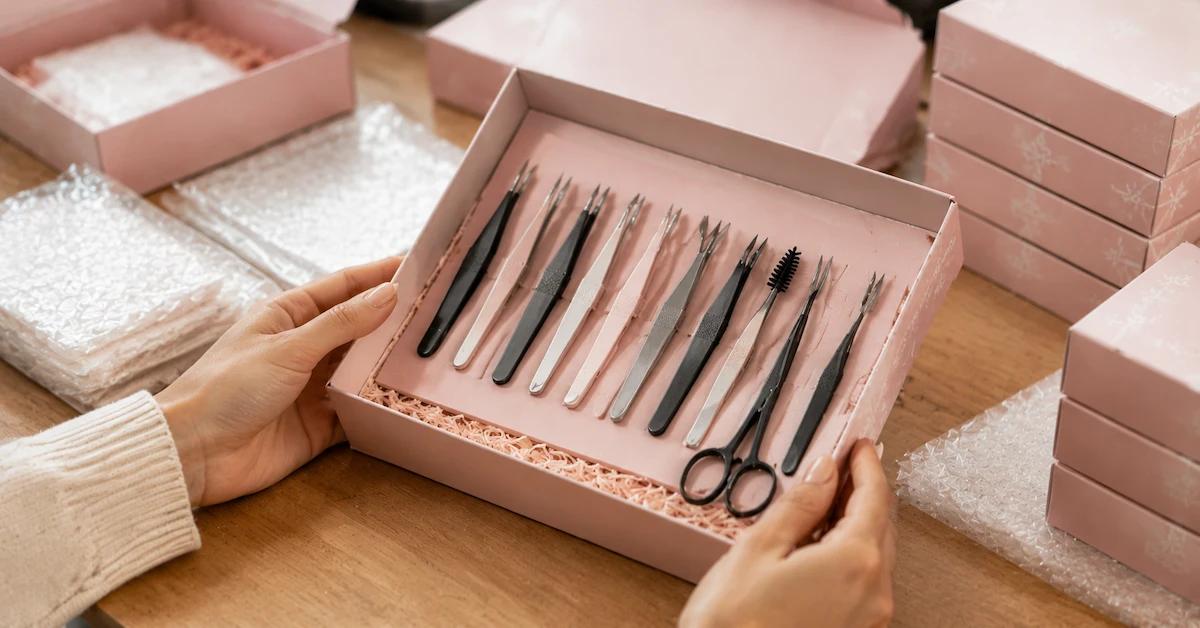
A third mistake is ignoring packaging. Lash tools are compact and can shift or scratch during transport if not packed properly. Disposable pads can deform if stacked or protected poorly. If a shipment requires extra sorting or repacking after arrival, the hidden labor can reduce the value of the purchase.
A fourth mistake is not checking repeatability. A sample may look suitable, but a bulk order must match the approved style, finish and component mix. Ask how the supplier controls batch consistency and how changes are communicated before production or shipment.
Supplier Evaluation Questions for B2B Buyers
Good supplier questions are specific without requiring unnecessary technical language. For metallic tools, ask what material is used and whether the supplier can document the finish process for the ordered item. Do not assume stainless steel, plating type or coating performance unless the supplier confirms it in writing.
For disposable pads, ask how the items are packed, protected and labeled. Ask whether the pad shape, packaging format and quantities can support your channel. A salon supply buyer may prefer practical bulk packaging, while a retailer may need a more display-ready arrangement.
If you sell into regulated markets, ask suppliers for current documents relevant to your destination market and product category. Depending on the product materials and market, buyers may need to consider requirements or restricted substance obligations associated with public frameworks such as EU REACH, or quality management references such as ISO 9001 when evaluating supplier systems. These references do not mean a specific supplier or product is certified. Always verify current versions, applicable scope and actual supplier documents before relying on any claim.
For customized kits, ask whether the assortment, finish combination or packaging can be adjusted. If you are building a broader beauty accessory line, review related options through the beauty tool collection to keep the product family visually consistent.
How to Build a Practical Salon or Retail Lash Kit
A good lash tool kit should feel intentional. Start with the core user and then choose components that support that use case. For a professional salon kit, consider multiple tweezer profiles, practical spoolies and under-eye pads that suit the service workflow. For a retail beauty kit, consider an eyelash curler, grooming brush and a visually appealing finish story.
Do not overfill the kit. Every added item should have a purpose. If an accessory does not support the service, resale story or brand position, it may add cost without adding value. A smaller assortment with dependable tools is usually easier for sales teams to explain and easier for customers to trust.
Also think about how the kit will be replenished. Salons may reorder tweezers and disposable pads at different rates. Retailers may reorder complete sets. Distributors may need both individual products and combined kits. Asking this early helps avoid a product structure that is attractive for the first order but inconvenient for ongoing supply.
Sample Review Checklist Before Placing a Bulk Order
- Confirm the intended buyer: salon, retailer, distributor or private-label kit builder.
- Inspect tweezer tip alignment under good lighting and from multiple angles.
- Handle each tweezer profile to compare grip, balance and closing action.
- Check eyelash curler hinge movement, pad placement and frame closure.
- Review spoolie bristle consistency and handle assembly.
- Inspect under-eye pads for shape consistency and packaging protection.
- Compare finish color consistency across samples in the same family.
- Ask what can be customized and what remains fixed in the assortment.
- Request supplier documents relevant to material, packaging and destination market needs.
- Evaluate how much sorting, labeling or repacking will be required after delivery.
When to Contact a Supplier
Contact a supplier when you know the target customer, preferred assortment type and basic presentation style. You do not need every detail finalized, but you should be ready to discuss whether the order is for professional service use, resale, distribution or kit assembly. That context helps the supplier recommend a more suitable combination of tweezers, grooming tools, curlers and disposable accessories.
For product discussions, sample requests or kit configuration questions, use the wholesale inquiry form. If you need to clarify available product families or sourcing options before preparing an order plan, you can also contact Olimor directly.
FAQ: Wholesale Lash Tools
Can I request samples before placing a wholesale order?
Sample availability should be confirmed with the supplier for the specific lash tools and kit configuration you are considering. Samples are especially useful for checking tweezer alignment, hand feel, curler movement, brush consistency and pad packaging.
Is there a fixed MOQ for lash tool kits?
Minimum order requirements can depend on the product type, whether the assortment is standard or customized, and the packaging needs. Ask for the current MOQ for the exact item or kit you want rather than assuming one quantity applies to all lash tools.
Can lash tool kits be customized?
Customization may be possible for assortment mix, finish selection or packaging depending on the product and order requirements. Confirm which parts are configurable and which are fixed before approving samples or artwork.
How should quality be checked for bulk lash tools?
Focus on functional inspection. Check tweezer tip alignment, grip comfort, finish consistency, curler hinge movement, spoolie assembly and under-eye pad shape. Also review packaging protection because small tools and disposable pads can be affected by transit handling.
How should I discuss lead time with a supplier?
Lead time can vary by stock status, customization, packaging and order size. Ask the supplier to confirm the expected timeline for sampling, approval, production and shipping for your specific order, and verify details before committing to a launch or replenishment plan.
Tag: