Wholesale Lash Supply: What B2B Buyers Should Check Before Ordering
Wholesale lash supply should be evaluated as a working lash service system, not as a collection of small accessories. The best order for a salon, beauty school, distributor or resale program supports the full workflow: isolation, pickup, application, grooming, storage, cleaning and reordering.
For B2B buyers, the key question is simple: will the tools perform consistently when used by different technicians, students or customers? A low unit cost is not enough if tweezer tips are inconsistent, accessories do not match the workflow, storage is awkward or packaging creates inventory confusion. This guide explains how to review lash tweezers, spoolie brushes, under-eye pads, lash trays, holders and related tools before placing a larger wholesale order.
Why Wholesale Lash Buying Requires More Than Product Photos
At retail level, a lash artist can try one tweezer or one accessory pack and replace it if it does not feel right. Wholesale buying is different. A salon may need the same tool experience across several workstations. A beauty school may need student kits that are easy to understand and repeat. A distributor may need products that can be sold individually, bundled into kits or replenished without changing the product story.
Small differences matter in lash work. Tweezer geometry affects how lashes are picked up and isolated. Tip alignment affects control. Surface finish affects grip and handling. Storage trays or acrylic organizers affect how quickly tools can be found during a service. Consumables such as under-eye pads, adhesive pads and spoolie brushes influence setup discipline and hygiene routines.
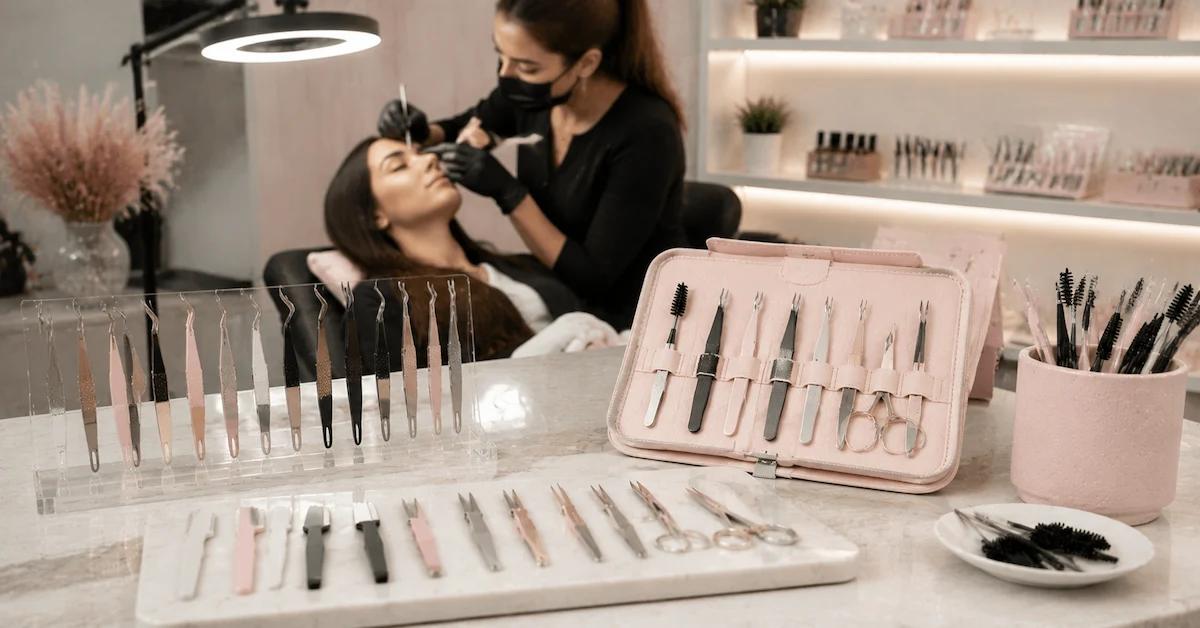
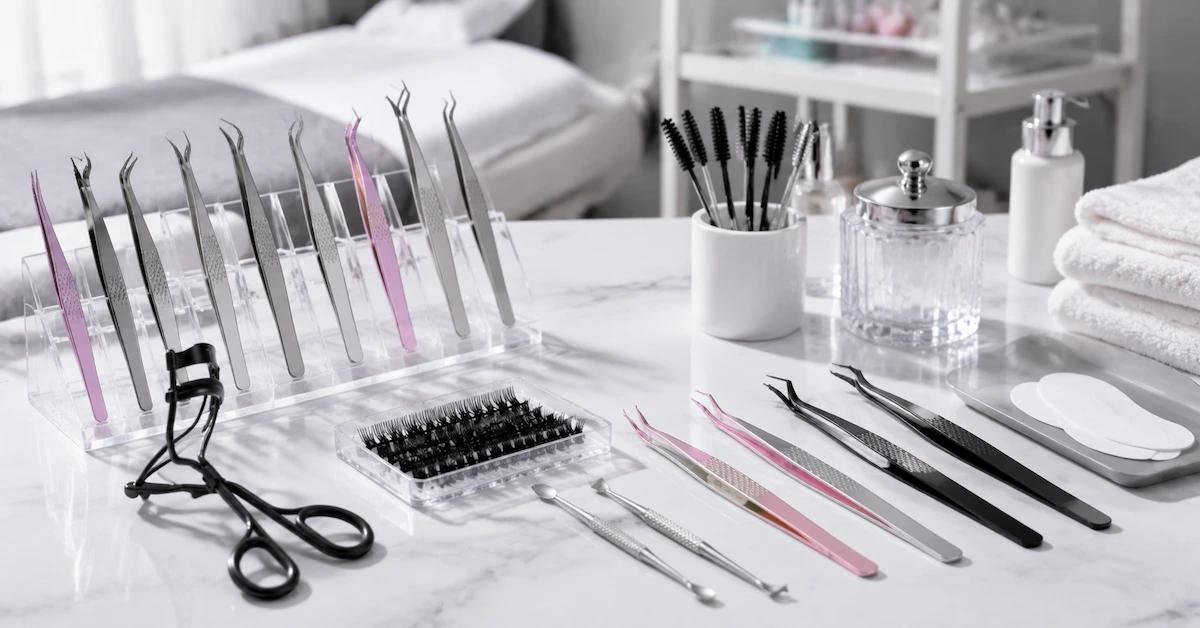
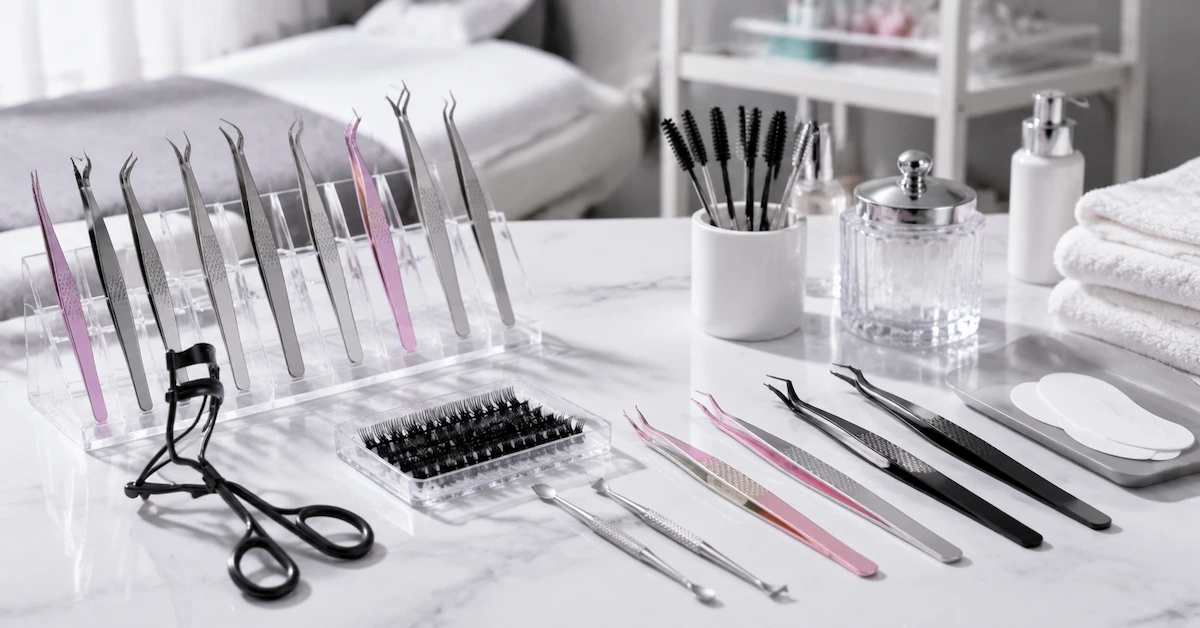
A useful wholesale lash assortment usually includes a combination of metal hand tools, brushes, lash strips or trays, pad-shaped consumables and storage pieces. This mix reflects the real workstation. No single item carries the entire service. Buyers should judge whether the assortment helps the technician work cleanly and efficiently from start to finish.
What a Useful Wholesale Lash Assortment Should Include
A strong lash tool assortment starts with the service workflow. Before comparing suppliers, map the tools to what happens at the workstation. The assortment should help the user prepare the eye area, isolate lashes, pick up extensions, apply or position lashes, groom the result and store tools between uses.
Core Lash Tools
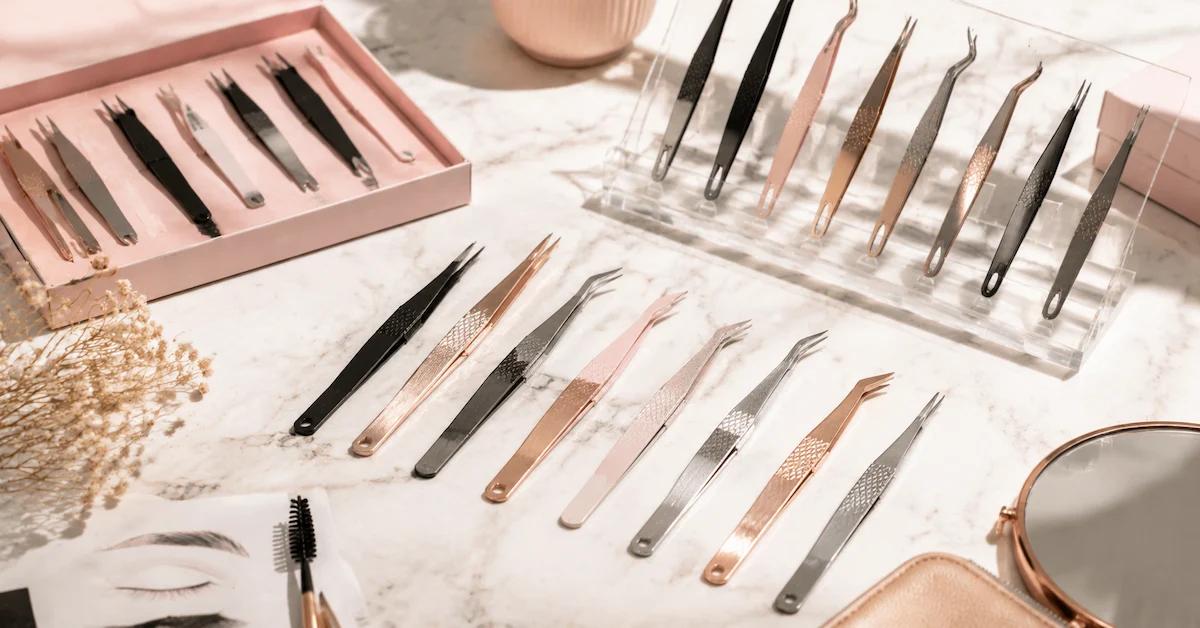
The main decision point is usually the tweezer set. Wholesale eyelash tweezers should not all be the same shape. Curved, angled and pointed tips each serve different purposes. One may be better for isolation, another for pickup and another for fan handling. A wholesale kit with several functional geometries is generally more practical than a kit with multiple near-identical pieces in different colors.
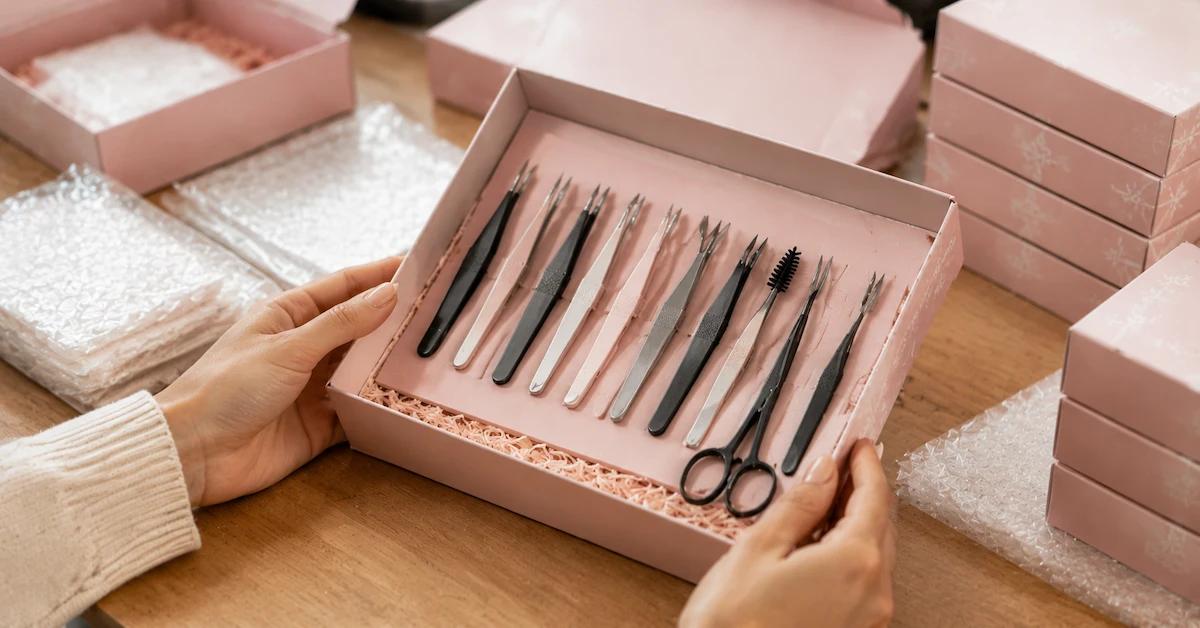
Scissors, separator tools and applicator-style tools may also be included depending on the kit. These supporting tools are useful when they fit a defined task. Buyers should avoid treating a larger piece count as automatically better. A smaller, clearly organized kit can be more valuable than a visually impressive set with redundant items.
Consumables and Supporting Accessories
Spoolie brushes, under-eye pads, adhesive pads and lash trays are not glamorous, but they affect the rhythm of daily work. Spoolies support grooming and finishing. Under-eye pads support client preparation and service setup. Lash trays and strips keep product accessible and help the technician work in an orderly way.
For wholesale programs, supporting accessories also help create complete resale bundles. A salon starter kit, student kit or retail lash accessory set may be easier to merchandise when it includes both precision tools and everyday consumables.
Storage and Workstation Organization
Clear acrylic organizers, holder stands and compact display pieces can reduce clutter at the lash bench. They also make tool separation easier in training environments. For beauty schools, visible organization helps students learn the setup routine. For salons, it helps technicians keep key tools within reach during appointments.
When reviewing storage items, check stability, edge finishing, visibility and ease of cleaning. An organizer that looks neat in a product image may be less useful if it tips easily, has rough edges or traps residue in difficult corners.
Comparison Checklist for Wholesale Lash Supply
The following checklist can help sourcing teams compare suppliers and sample sets in a structured way. It is designed for practical review rather than laboratory testing.
| Review Area | What to Check | Why It Matters |
|---|---|---|
| Tweezer variety | Curved, angled, pointed or other clearly different tip styles | Different lash tasks require different handling behavior |
| Tip condition | Alignment, smoothness, closing feel and visible defects | Poor tips can affect pickup, isolation and user confidence |
| Grip and finish | Polished, matte, textured or colored surface; comfort in hand | Appearance should not reduce control during use |
| Accessory mix | Spoolies, under-eye pads, lash trays, adhesive pads and applicators | A balanced kit supports the full workstation workflow |
| Storage design | Organizer stability, visibility, edge finishing and cleanability | Good storage reduces bench clutter and loss of small tools |
| Packaging logic | Individual packs, kits, labels and item separation | Clear packaging helps inventory, resale and training distribution |
| Reorder consistency | Stable item names, shapes, colors and descriptions | Repeat orders should match what technicians already use |
| Supplier documentation | Material descriptions, care guidance and current product details | Buyers should verify claims before scaling an order |
Materials, Finishes and Handling Details to Review
Many lash hand tools are made from metal, commonly stainless steel or similar metals used for precision beauty tools. However, buyers should not assume every metal tool has the same grade, finish, corrosion behavior or cleaning compatibility. If a supplier describes a tool as stainless steel, ask for the exact product description available for that item and confirm whether the material statement applies to the entire tool or only part of it.
Finishes may include polished silver, matte black, pink, rose-gold or other colored options. Color can be useful for branding, workstation coordination and separating student kits. It can also help a salon assign different tools to different stations. But color should remain a secondary factor. A beautiful finish is not a benefit if the tool feels slippery, chips easily or makes tip inspection difficult.
Acrylic storage pieces are useful because they allow technicians to see tools and lashes at a glance. Clear holders can work well in salons, retail displays and training rooms. When inspecting acrylic pieces, look at edge smoothness, base stability and whether the design is easy to wipe. Beauty tools are handled repeatedly, so everyday maintenance matters more than showroom appearance.
For hygiene and workplace routines, buyers should follow applicable local health authority requirements and review public guidance from bodies such as the CDC where relevant to cleaning, disinfection and infection prevention. Requirements can vary by location and service type, so verify current versions and do not rely only on a product listing. If a supplier makes material, cleaning or compatibility claims, request current supplier documents before placing a larger order.
How to Inspect Lash Tool Samples Before a Larger Order
Samples are especially important for lash tools because handling feel cannot be judged reliably from photos. A sample review does not need to be complicated, but it should be structured. Ask the technicians, trainers or product managers who will use or sell the items to evaluate the same points.
- Check tweezer tip alignment: Close the tips gently and look for uneven contact, visible gaps or rough edges.
- Test spring tension: Open and close the tweezers repeatedly to see whether the resistance feels comfortable for a normal working session.
- Review grip feel: Hold each finish with dry hands and, if appropriate for your internal process, after normal workstation preparation.
- Map each tool to a task: Identify which tweezer is for isolation, pickup, fan handling or general use.
- Inspect accessory quality: Look at spoolie brush consistency, pad shape, tray usability and packaging cleanliness.
- Assess storage pieces: Place tools in the holder or organizer and confirm that the arrangement is practical, stable and easy to understand.
- Review labeling: Confirm whether item names, colors, quantities and kit components are clear enough for receiving and reordering.
It is also useful to compare the sample against your intended customer. A salon may prioritize daily handling and cleaning routines. A school may prioritize easy identification and student-friendly layout. A distributor may prioritize packaging, shelf presentation and the ability to sell full kits or individual replacements.
Selection Advice by Buyer Type
For Salons and Multi-Station Lash Businesses
Salons should focus on consistency and workstation efficiency. Matching tool sets can make station setup easier, but the tools still need to cover actual service tasks. Review whether each station can be equipped with the same essential tweezer styles, spoolies, pads and storage. If technicians have strong preferences, involve them in sample review before standardizing.
For Beauty Schools and Training Programs
Training buyers should look for clear organization, safe handling routines and tool variety that supports instruction. Students need to see why different tip shapes exist and how tools should be stored between uses. Color-coded or visually clear kits can be useful, but the layout should teach good habits rather than simply look attractive.
For Distributors and Resale Channels
Distributors need flexibility. A broad lash accessory assortment can serve professional users, beginners and salons, but only if the components can be explained and replenished. Ask whether products are available as full kits, individual tools or accessory packs. Review packaging for barcode, labeling or channel requirements if those are part of your retail process.
For Product Teams and Sourcing Managers
Product teams should think beyond the first shipment. A wholesale lash supply program needs stable descriptions, repeatable components and a practical reorder path. If a technician likes one tweezer shape, a later replacement should not be only similar; it should match the agreed product as closely as the supplier can provide. Consistency is often the hidden cost factor in low-price sourcing.
To review current product categories and build a shortlist, buyers can start with the Olimor beauty tool products page or compare related items through the product collection.
Cost Factors That Affect Wholesale Lash Supply Decisions
Wholesale cost is not only the quoted unit price. The real cost includes sample evaluation, packaging choices, kit complexity, defect handling, inventory control and reorder stability. A lower price may be less attractive if the product mix creates more returns, technician complaints or warehouse confusion.
Several factors can influence cost without requiring any invented price assumptions. Metal tools with more precise tips may require closer inspection. Colored finishes or coordinated sets may add complexity compared with plain finishes. Acrylic organizers can add packing volume and require protection during transit. Kits with many small components may require clearer labeling and more careful packing than individual items.
Buyers should also consider whether they want a full workstation bundle or a smaller core tool set. Full bundles can be attractive for training, onboarding and resale. Individual tools may be more efficient when customers already know the shapes they prefer. The right choice depends on the channel, not on piece count alone.
Common Problems and How to Prevent Them
One common problem is buying for appearance instead of workflow. A kit may look impressive because it includes several colors, a display holder and many accessories. But if the tweezer shapes are redundant or the station layout is awkward, the set may not perform well in daily use.
Another problem is weak reorder planning. Wholesale buyers often test a sample, approve an order and then discover that later product descriptions are unclear. Avoid this by confirming item names, colors, component lists and packaging details before ordering. Keep approved samples or reference photos in your internal records.
Buyers also sometimes underestimate maintenance routines. Reusable metal tools and storage pieces need clear cleaning, drying and storage practices according to the requirements that apply to your location and service model. Ask suppliers for care guidance, but verify it against your own professional obligations and current local regulations.
Finally, do not ignore packaging. Packaging affects how products arrive, how warehouse teams count them, how schools distribute them and how resale customers understand them. For a wholesale lash program, clear packaging is part of product quality.
Questions to Ask a Lash Tool Supplier Wholesale
Before scaling an order, ask direct questions that reveal whether the supplier understands B2B use. Useful questions include:
- Which tweezer tip styles are included, and what task is each style intended to support?
- Are the colors, finishes and component lists expected to remain consistent for repeat orders?
- Can the assortment be supplied as a full kit, individual tools or selected accessory packs?
- What product descriptions, material information and care guidance can be provided for buyer review?
- How are small tools and consumables packed for inventory control and resale?
- What customization options are available for packaging, color selection or kit composition, if any?
- How should samples be requested and evaluated before a larger order?
For sample review or project-specific questions, contact Olimor through the wholesale inquiry form. If you need help discussing product mix, packaging or sourcing details, you can also reach the team via contact support.
FAQ for Wholesale Lash Supply Buyers
Can I request samples before placing a wholesale lash order?
Sample review is recommended for lash tools because tweezer feel, tip alignment, finish and storage design are difficult to judge from photos. Ask the supplier how samples are arranged and what product details are included with them.
Is there a fixed MOQ for lash tools or kits?
MOQ can depend on the product, packaging, customization and order structure. Buyers should confirm current MOQ directly with the supplier before planning a launch or resale program.
Can wholesale lash kits be customized?
Customization may involve kit composition, color selection, packaging or labeling, depending on supplier capability and the specific item. Confirm available options and request written product details before committing.
How should buyers check quality before a bulk order?
Inspect samples for tweezer alignment, closing feel, grip, finish, accessory consistency, packaging and storage usability. Keep approved samples or clear internal references for future comparison.
How should lead time be confirmed?
Lead time should be confirmed with the supplier for the specific products, quantities, packaging and customization involved. Avoid assuming that a previous order or sample timeline applies to a new project.
Final Buying Guidance
A successful wholesale lash supply order starts with practical use. Review the assortment as a complete workstation system: tweezers, accessories, pads, brushes, storage and packaging should all support the same service workflow. Compare suppliers on usability, repeatability and documentation, not only on price.
For salons, the priority is reliable daily handling. For schools, it is organized learning and clear kit structure. For distributors, it is resale flexibility and consistent replenishment. In every case, samples and supplier communication are essential before increasing order volume. A well-chosen lash tool assortment should be easy to use, easy to explain, easy to store and easy to reorder.
Tag: