Professional Lash Tools Wholesale: A Practical Buyer’s Guide
Buying professional lash tools wholesale is not just a restocking task. For salons, distributors, academies and private-label beauty businesses, the real goal is to find tools that support clean pickup, accurate isolation, comfortable handling and repeatable service quality.
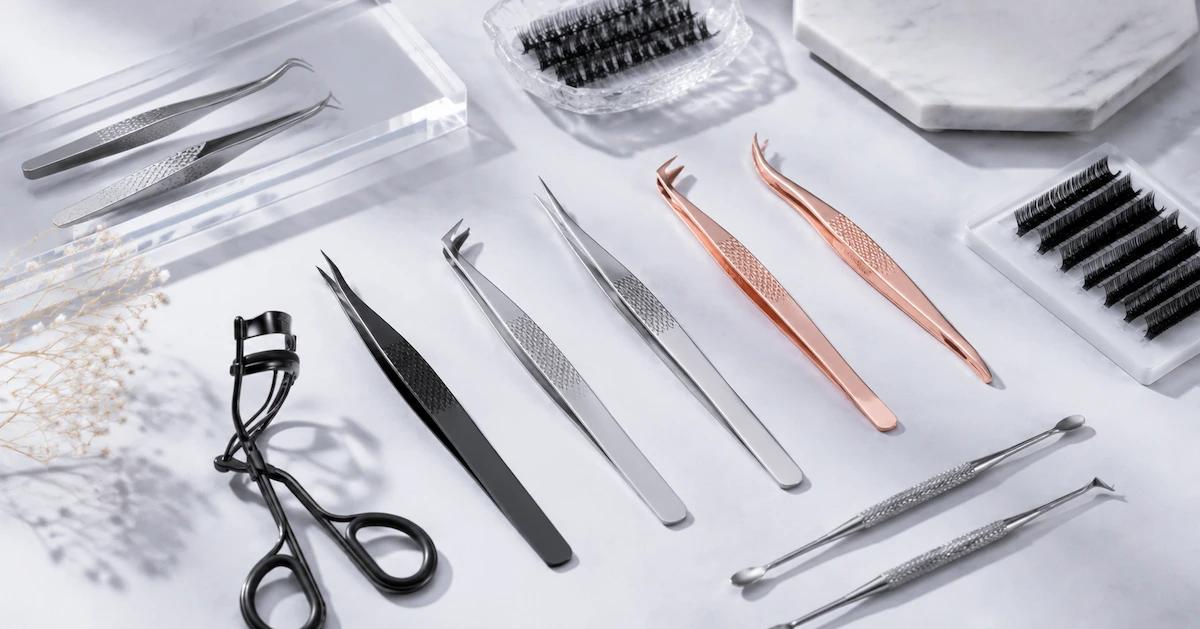
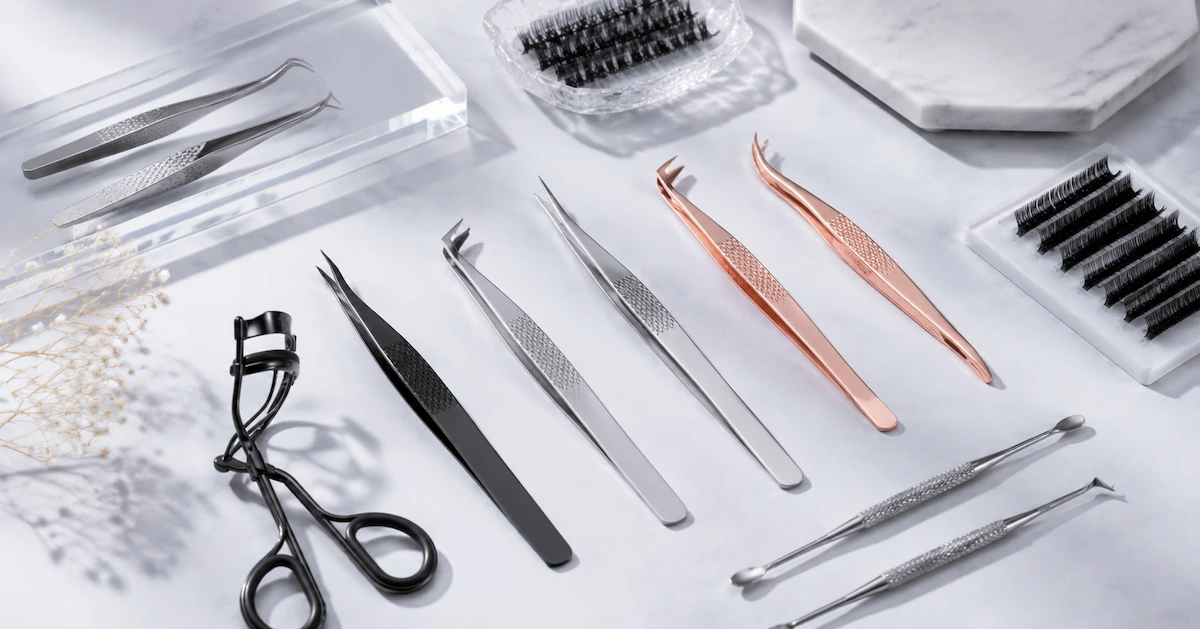
A typical lash tool assortment may include several precision tweezers, a lash curler and small dual-ended metal tools with spoon-like or spatula-like ends. The set may also appear alongside false lash strips or lash fans, making it suitable for salon use, training kits or resale bundles. The value of that assortment depends on how well each tool matches a real lash workflow, not only on how complete it looks in a product photo.
This guide explains what B2B buyers should check before ordering wholesale eyelash applicator tools, how to compare tool shapes and finishes, what cost factors affect purchasing decisions, and which questions to ask a supplier before moving from samples to a bulk order.
Start With the Buying Intent: Salon Use, Training or Resale
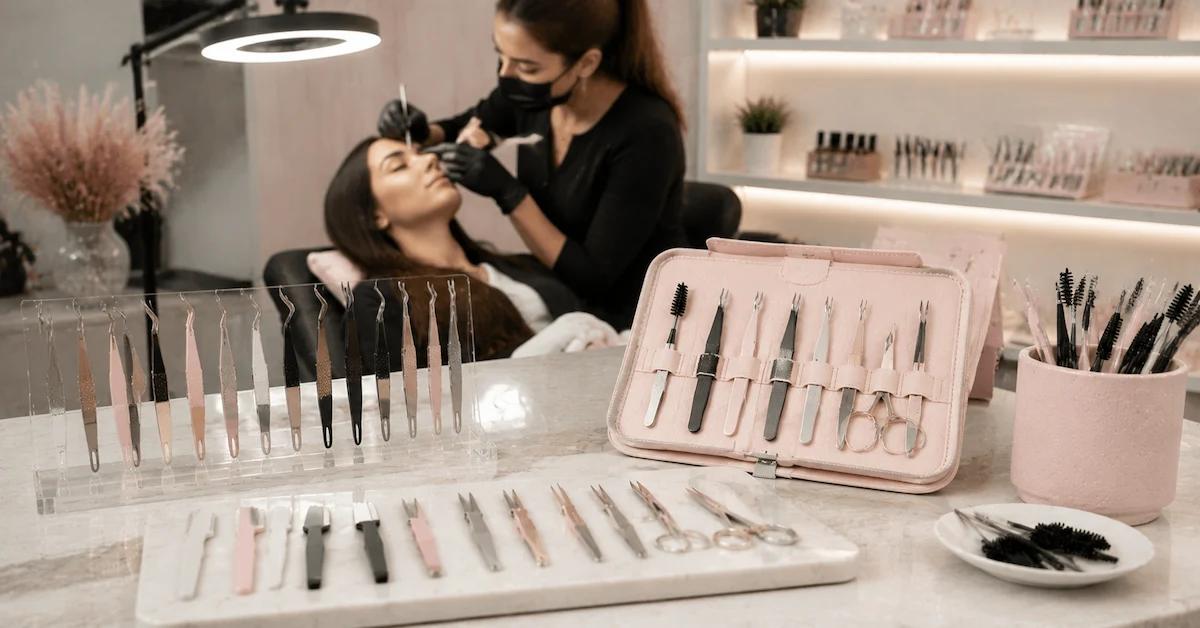
The right lash tool purchase depends on where the tools will be used. A working salon usually wants a small number of reliable shapes that technicians trust every day. A training program may prefer a broader set, because students need to compare different tweezer angles, grip positions and handling habits. A distributor or retail buyer may focus on assortment logic, packaging, finish options and how clearly the kit can be explained to downstream customers.
Before comparing quotes, define the primary use case:
- Salon service: prioritize tip alignment, grip comfort, hand fatigue and easy cleaning.
- Training kits: prioritize visible variety, durable handling and clear identification of each tool type.
- Distributor catalog: prioritize repeatable supply, consistent appearance, packaging clarity and product descriptions.
- Promotional or starter kits: prioritize a balanced assortment that covers basic lash and adjacent beauty tasks without unnecessary filler.
This positioning helps prevent a common wholesale mistake: buying the largest-looking kit when a narrower, better-controlled set would serve technicians more effectively. Buyers can review broader beauty-tool categories through the Olimor product range and then narrow the inquiry to lash-specific requirements.
What a Mixed Lash Tool Set Should Include
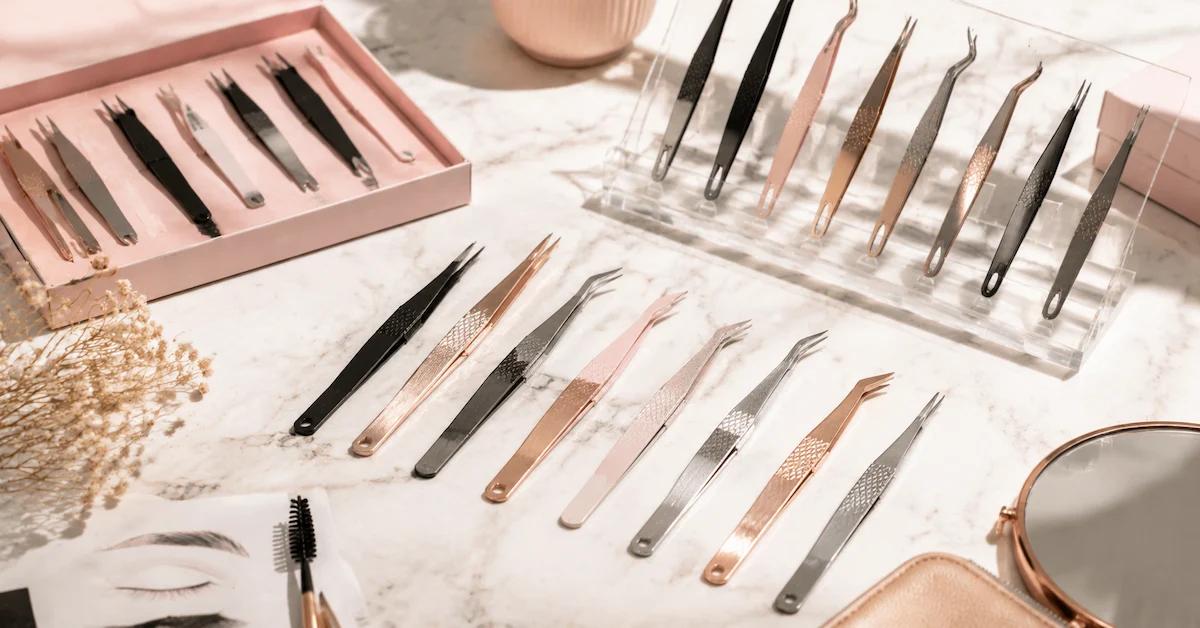
A useful wholesale lash tool set normally includes more than one tweezer shape. No single tweezer performs every task equally well. The assortment shown in the product image suggests a precision beauty-tool kit with slim metal tools, different tweezer profiles, a black lash curler and compact dual-ended implements.
Precision tweezers
Tweezers are the core instruments in lash extension and false-lash handling. Angled, curved and pointed tips each support different hand positions and working preferences. Angled tweezers are often chosen for controlled pickup. Finer pointed styles can help with separation or detail work. Curved profiles may feel more natural for some technicians, especially when working at a particular angle near the lash line.
For wholesale evaluation, the key issue is not how many tweezers are included. The key issue is whether the tips meet evenly, close predictably and feel stable during fine cosmetic handling.
Lash curler
A lash curler is not the main tool for extension placement, but it is common in broader salon accessory kits. The black frame in the assortment gives the kit a coordinated professional look, yet buyers should evaluate the hinge, pad position and smoothness of movement rather than finish color alone. A curler that does not align evenly can reduce user confidence, even if it looks attractive in packaging.
Dual-ended metal tools
Small dual-ended tools with spoon-like or spatula-like ends can support detail work, separation, light grooming or controlled product handling depending on their shape. They are also useful in training environments, where new technicians practice steady movements before working with live clients. Because these tools are compact and simple, they are often included in bundled lash and brow accessory sets.
Compare Tweezer Shapes by Function, Not Appearance
Wholesale eyelash applicator tools often look similar in catalogs, but small differences in tip angle, spring tension and handle shape can change how they perform. A buyer should ask what each tweezer is intended to do and then test that claim with a sample.
| Tool type | Common use in lash work | What buyers should check | Possible sourcing concern |
|---|---|---|---|
| Angled tweezer | Pickup, placement and controlled gripping | Even tip contact, comfortable closing pressure, stable hand position | Tip may look aligned visually but fail under light pressure |
| Pointed tweezer | Isolation, separation and precise detail work | Fine tip finishing, smooth edges and predictable closure | Overly sharp or inconsistent tips can be difficult for new technicians |
| Curved tweezer | Alternative hand angle for pickup or placement | Balance, wrist comfort and tip visibility during use | Not every technician prefers the same curve or working angle |
| Lash curler | Prep, grooming or adjacent beauty services | Pad alignment, hinge movement and frame stability | Decorative finish can distract from mechanical fit |
| Dual-ended metal tool | Separation, product handling or training practice | End shape, smooth finishing and easy cleaning | May become decorative filler if not matched to a real workflow |
This kind of comparison is especially helpful for purchasing teams that are not lash technicians themselves. It gives the technical users a structured way to provide feedback before the company commits to bulk eyelash extension supplies.
Material, Finish and Manufacturing Details to Clarify
The visible tools appear to be metal, with polished surfaces and black, silver and rose-gold tones. Metal construction is common for precision cosmetic instruments because it can be formed into slim shapes and fine tips. However, buyers should not assume the exact steel grade, coating type or cleaning compatibility from appearance alone.
Ask the supplier to describe the base material, surface finish and intended use. If a product is described as stainless steel, confirm the grade if that information matters to your market. If the tool has a black or rose-gold finish, ask whether it is plated, coated or otherwise surface-treated. The finish may improve branding and shelf appeal, but it does not automatically prove durability.
Manufacturing quality is visible in small details:
- Tips should meet evenly without obvious gaps.
- Edges should feel smooth, especially near the working end.
- Handles should not twist or feel unstable during closure.
- Grip texture should support control without creating pressure points.
- Curler hinges should move smoothly and close in alignment.
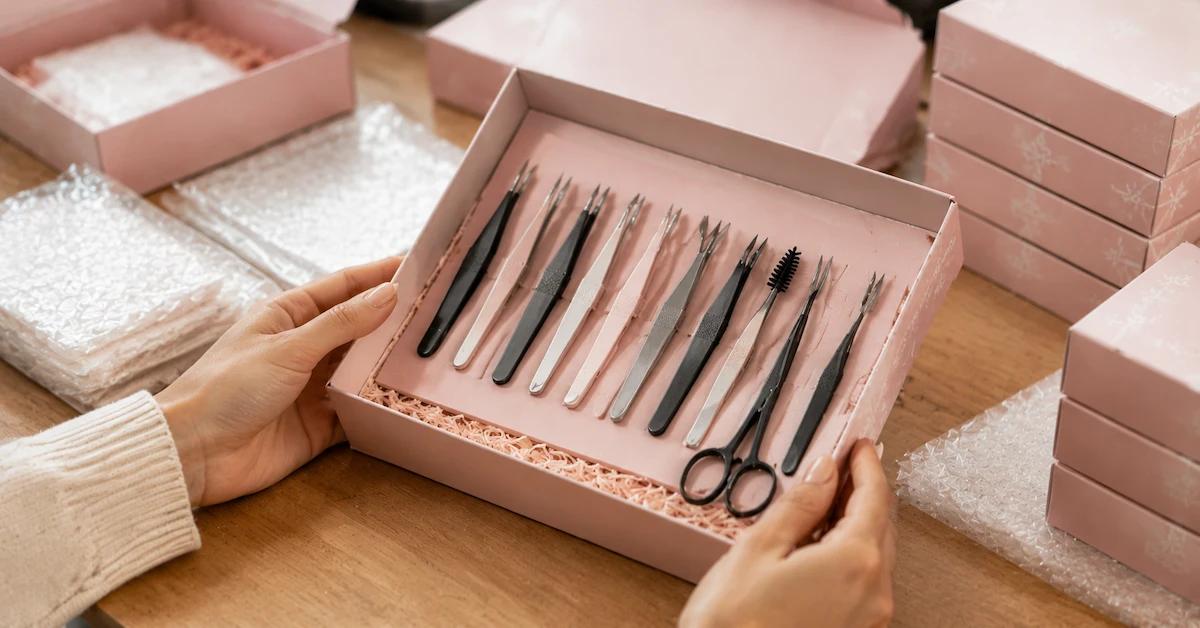
- Packaging should protect fine tips from bending during transport.
If tools will be cleaned or disinfected between uses, ask for the supplier’s care instructions. Do not assume that every coating tolerates the same cleaning method. Salons should also follow applicable local hygiene rules for beauty services. Where suppliers reference recognized systems or standards such as ISO 9001 for quality management, buyers should verify the current certificate, scope and issuing body instead of relying on a logo alone.
How to Inspect Samples Before a Wholesale Order
Samples are important because lash tools are hand-feel products. A polished product image cannot show closing pressure, spring response or how the grip feels during a long appointment. A small sample review by experienced technicians can prevent costly returns or complaints later.
Sample inspection checklist
- Confirm the assortment: match every item received against the quoted tool list.
- Inspect tips under good light: check alignment, symmetry and smooth finishing.
- Test closing action: open and close each tweezer repeatedly to feel resistance and control.
- Evaluate pickup behavior: ask technicians to handle sample lashes, fans or training materials.
- Check the grip: note whether textured areas help control or create discomfort.
- Review the curler: confirm pad position, hinge feel and frame stability.
- Check packaging: make sure fine tips are protected and labels support inventory control.
- Record technician feedback: compare comments by task, not only by overall preference.
For distributors, it is also useful to photograph samples, record item names and build a simple internal reference sheet. That reduces confusion when reordering, especially if several tweezer shapes have similar finishes.
Cost Factors in Wholesale Lash Tool Buying
Wholesale cost is shaped by more than the number of tools in a kit. Material selection, surface finishing, tool complexity, inspection process, packaging type and customization all affect the final quote. A simple silver tweezer and a coated rose-gold tweezer may not cost the same, even when their shapes are similar. A mixed kit with lash strips, fans or retail-ready packaging can also carry different cost assumptions than loose tools packed for salon backroom use.
Buyers should compare quotations on the same basis. A low unit price may not be attractive if the kit omits protective packaging, has unclear tool descriptions or requires additional sorting after arrival. Conversely, a more complete package may reduce internal handling for training schools or distributors.
Practical cost questions include:
- Is the quote for individual tools, a fixed kit or a customizable assortment?
- What packaging is included, and is it suitable for resale or only bulk storage?
- Are different finishes priced differently?
- Are sample charges, customization charges or tooling charges separated from unit cost?
- How will quality issues, shortages or mixed assortments be handled?
Because exact pricing depends on specification and order details, buyers should request a written quote after confirming the tool list, finish, packaging and any customization needs through an online wholesale inquiry.
Supplier Evaluation for Bulk Eyelash Extension Supplies
A reliable lash tool supplier should be able to explain what each item is for, how it is finished and how it should be packed. Buyers do not need exaggerated claims; they need clear product information and stable communication.
When evaluating a supplier, look for practical competence in four areas. First, the supplier should understand tool categories rather than treating all tweezers as generic metal accessories. Second, it should be able to support sampling and feedback before bulk production or bulk shipment. Third, it should provide consistent naming, packaging and item separation so your team can reorder accurately. Fourth, it should be transparent about what is and is not included, such as lash strips, fans, curlers or dual-ended tools.
If you sell into regulated markets or bundle tools with cosmetic products, check current requirements with the relevant regulator or public authority. For example, buyers selling cosmetics in the United States may review U.S. Food and Drug Administration information on cosmetic responsibilities, while buyers selling cosmetic products in the European Union should verify current European Commission cosmetic requirements. These references do not automatically certify a tool supplier; they help buyers understand their own market obligations.
For broader beauty-tool sourcing, buyers can compare related categories in the beauty tool collection and then ask which options are appropriate for lash, brow, salon or training use.
Common Problems and How to Avoid Them
The most common problem in professional lash tools wholesale buying is assuming that a premium-looking finish equals premium working performance. Surface color can improve presentation, but tip geometry and alignment determine whether technicians can use the tool confidently.
Another issue is overbuying variety. A salon may only need a few proven tweezer shapes, while a training school benefits from a broader comparison set. If the assortment is too wide for the user, inventory becomes harder to manage and some tools may remain unused.
Batch inconsistency is also a serious concern. One good sample does not guarantee that every tool in a larger shipment will feel the same. Ask how the supplier checks alignment, finishing and assortment accuracy. For larger purchases, consider approving reference samples and keeping them for comparison against incoming goods.
Finally, do not ignore packaging. Fine tweezer tips can be damaged if packed loosely. Retail buyers also need clear labeling so end customers understand what each tool is intended to do. Poor packaging can turn a technically acceptable tool into a customer-service problem.
Practical Buying Process for B2B Teams
A structured process helps purchasing, technical users and sales teams make the same decision. Start with the intended user and required assortment. Request product information and samples. Let working technicians or trainers test the tools. Record feedback by tool type, not only by personal preference. Then confirm packaging, finish, customization and commercial terms before ordering.
For custom branding, buyers should ask which parts of the product or packaging can be customized and what artwork files or approval steps are required. Do not assume that every coating, handle shape or kit layout can be changed without affecting cost or production arrangements.
A restrained but practical next step is to prepare a short requirement list: target user, preferred tweezer shapes, desired finish, packaging style and whether lash strips or lash fans should be included. Share that list through Olimor contact support so the supplier can respond with relevant options instead of a generic catalog.
FAQ
Can I request samples before placing a wholesale lash tool order?
Yes, sample review is strongly recommended. Lash tools should be tested for tip alignment, closing pressure, grip comfort and packaging protection before a larger order is approved. Ask the supplier how samples are arranged and what specifications they represent.
Is there a fixed MOQ for professional lash tools wholesale?
MOQ can depend on the tool type, finish, packaging and customization requirements. Buyers should confirm MOQ directly with the supplier for the exact assortment they want rather than assuming one quantity applies to every lash tool kit.
Can lash tweezers or kits be customized?
Customization may be possible for finish, assortment, packaging or branding, depending on the product and order details. Confirm what can be customized, whether approval samples are available and whether customization changes the quote or production plan.
How should I check quality before accepting a bulk shipment?
Use approved samples as a reference, inspect tip alignment and finish, confirm the assortment count and review packaging condition. For professional use, include feedback from technicians who understand isolation, pickup and placement tasks.
How do I confirm lead time for wholesale eyelash applicator tools?
Lead time depends on stock status, customization, packaging and order size. Ask for written confirmation after the specification is finalized, and verify whether sample approval or artwork approval is required before production or shipment begins.
Final Takeaway
The best wholesale lash tool purchase is not the kit with the most pieces or the most decorative finish. It is the assortment that fits the technician’s workflow, protects fine tips in packaging, offers consistent batch quality and can be clearly explained to salons, students or retail customers.
Use product photos as a starting point, then verify material description, finish, tool purpose, sample performance and supplier documentation. That practical approach helps buyers choose lash tools that are useful in daily work, not just attractive in a catalog.
Tag: