Nail Clipper OEM Sourcing from China: What Beauty Brands Should Evaluate
Nail clippers may look simple, but buyers who source them for retail, salon, travel, private label or gift-set programs know that small differences matter. Blade alignment, cutting feel, lever strength, finish consistency, packaging fit and carton durability can all affect repeat purchase and customer reviews. For beauty brands building an OEM nail clipper line, choosing the right manufacturing partner is less about finding the lowest unit cost and more about creating a dependable grooming tool that can be produced consistently at scale.
China remains a major sourcing base for nail clipper OEM projects because many manufacturers can support metal processing, assembly, surface finishing and export packaging within mature supply chains. That can be an advantage for brands that need wholesale nail clippers, bulk buying options or customized packaging. However, the best results come from clear specifications, careful sampling and a structured quality plan. Olimor Beauty works with beauty tool buyers across product categories; you can also review related beauty tool products to understand how nail clippers may fit into a broader grooming assortment.
Why Nail Clipper OEM Demand Keeps Growing
At-home grooming has become a stable purchasing category rather than a short-term trend. Consumers replace worn clippers, add travel-size tools to toiletry kits and buy manicure sets as gifts. Retailers and beauty brands are responding by developing nail care accessories that feel more intentional than generic commodity items. An OEM nail clipper program allows a brand to control appearance, packaging, retail positioning and assortment strategy while using manufacturing expertise from an established production partner.
For a buyer, the commercial opportunity is broad. Nail clippers can be sold as single items, paired with files and tweezers, added to travel kits, included in subscription boxes or offered as practical promotional products. Because the product is compact and familiar, it can also be used to test a new private label category before expanding into a full range of grooming tools. The challenge is that customers immediately notice poor cutting performance, so design and manufacturing discipline are essential.
Core Product Details That Affect Cutting Performance
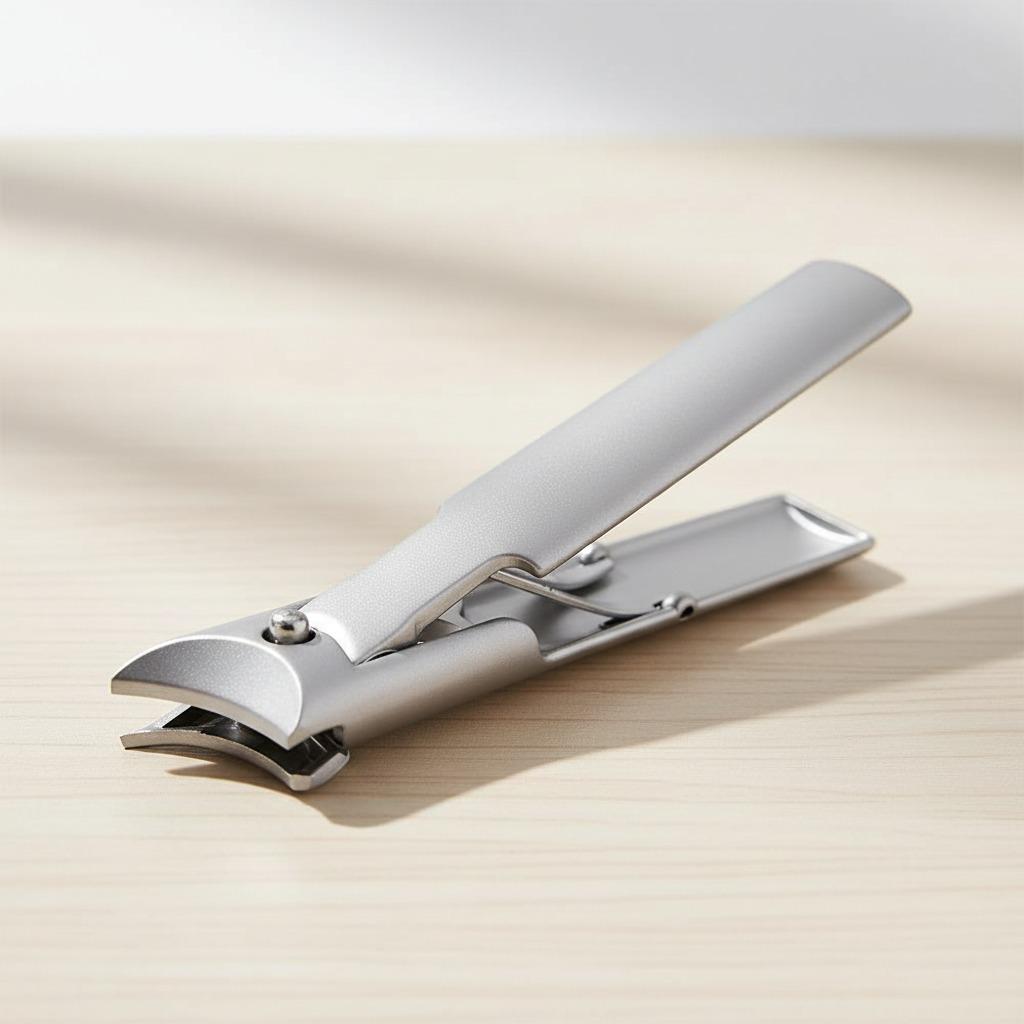
A nail clipper should cut cleanly without crushing, slipping or requiring excessive force. When reviewing OEM samples, do not judge only by appearance. Test the feel of the lever, the closure of the jaws and the smoothness of the cut. Stainless steel nail clippers are common in the market because the material supports durability and a clean metal finish, but buyers should still define expectations for surface treatment, edge sharpness and corrosion resistance through agreed specifications and inspection criteria.
Useful evaluation points include:
- Blade alignment: The upper and lower cutting edges should meet evenly from side to side. Misalignment can cause tearing or incomplete cuts.
- Blade shape: Curved blades suit many fingernail applications, while larger or more robust shapes may be needed for toenail use.
- Lever action: A comfortable lever should apply pressure smoothly and return without feeling loose or unstable.
- Grip comfort: Textured or shaped grips can help users control the tool, especially when hands are damp.
- Edge finishing: Corners should feel safe in the hand and should not scratch packaging inserts or pouches.
- Consistency between units: A good sample is not enough; bulk production should match the approved reference sample.
If your program includes both fingernail and toenail clippers, define the differences clearly. Buyers often need separate sizes, blade curves or lever strengths. A single generic specification can lead to a product that is not ideal for either use case.
How to Compare China Nail Clipper Manufacturers
When comparing China nail clipper manufacturers, start with capability fit. Some suppliers are stronger in high-volume standard products, while others are more suitable for OEM work that involves logo placement, custom finishes, retail packaging or coordinated sets. Your selection process should identify which partner can meet your design requirements without creating unnecessary complexity.
A practical supplier review should cover manufacturing process control, sample development speed, communication accuracy and packaging execution. For nail clippers, quality does not depend on one step alone. Cutting performance comes from the relationship between material selection, stamping or forming, heat treatment where applicable, grinding, polishing, assembly and final inspection. Even if a buyer does not manage every technical step directly, the supplier should be able to explain how consistency is maintained.
It also helps to provide a target market and retail channel. A clipper for a discount multipack, a pharmacy private label line and a premium gift set may all require different finishes, packaging structures and acceptable cost ranges. Clear commercial context allows the OEM partner to recommend realistic options rather than quoting a product that does not match your sales plan.
Wholesale and Bulk Buying Strategy
Wholesale nail clipper sourcing works best when order planning is connected to channel demand. Bulk buying can support competitive pricing, but over-ordering the wrong style creates slow-moving inventory. Before committing to a large production run, buyers should validate whether the product will be sold as a standalone SKU, part of a set, a refill item or a seasonal promotion.
Consider the following planning sequence:
- Define the end user: Decide whether the clipper is for daily home use, travel, salon retail, men’s grooming, manicure kits or general personal care.
- Select the product format: Choose size, blade curve, finish, grip treatment and whether accessories are needed.
- Approve a reference sample: Keep a signed or sealed sample to compare against production.
- Confirm packaging: Check artwork, barcode placement, hang-hole requirements, insert fit and protective wrapping.
- Set inspection criteria: Include cutting function, appearance limits, logo placement, assembly strength and carton condition.
- Plan replenishment: Estimate sales velocity and lead time before deciding whether to hold safety stock.
Low MOQ nail clipper options can be useful for startups, indie beauty brands and retailers testing a new range. Smaller starting quantities reduce inventory risk, but buyers should still treat the project professionally. A low opening order should not mean vague specifications. The clearer the first order is, the easier it becomes to repeat or scale the product later.
Packaging and Branding Decisions for OEM Nail Clippers
Packaging is often where a basic nail clipper becomes a retail-ready product. For e-commerce, the package must protect the metal tool during shipping and present clearly in product photography. For stores, it may need a hanging card, blister pack, paper box or set tray. For gift programs, a pouch or coordinated manicure kit may be more appropriate.
Branding decisions should be practical. A logo on the lever can reinforce recognition, but placement should not interfere with grip or wear too quickly through normal handling. Finishes should match the brand’s visual identity while remaining suitable for production. Highly reflective surfaces, dark coatings or special colors may require more careful control to avoid scratches and shade variation. If sustainability is part of your brand positioning, review packaging materials, excess plastic use and carton efficiency as part of the development brief rather than adding these concerns at the end.
Buyers building a wider assortment can compare how nail clippers sit beside tweezers, scissors, eyelash tools or manicure accessories by browsing Olimor product collections. A consistent design language across tools can make a private label range feel more coherent.
Quality Control Questions Before Production
A strong OEM program should include checkpoints before, during and after production. Nail clippers are small, but defects can be easy for consumers to identify. A dull blade, uneven jaw, loose lever or scratched finish may lead to returns or negative feedback. Quality control should therefore combine functional testing and appearance inspection.
Build your inspection checklist around measurable or clearly visible points. Examples include cutting test method, acceptable surface marks, logo position tolerance, lever movement, jaw closure, package print accuracy and carton labeling. If the clipper is part of a set, inspect the complete set rather than each component in isolation, because missing items or poor tray fit can create customer complaints even when the clipper itself is acceptable.
It is also wise to keep records of approved samples, production photos, packaging proofs and inspection results. These documents help resolve questions quickly and make repeat orders more consistent. When changes are made, such as a new finish or package, treat the update as a new approval rather than assuming it will behave the same as the previous version.
Building a Long-Term OEM Partnership
The best nail clipper OEM partnerships are built on clear expectations and steady improvement. Instead of changing suppliers for every small price difference, many brands benefit from developing a partner that understands their quality level, packaging preferences and market schedule. Over time, this can reduce sampling delays and improve repeat order consistency.
Before choosing a partner, prepare a concise brief with product use, target customer, estimated order approach, packaging needs and any required branding elements. Include reference photos only as guidance, not as permission to copy protected designs. A responsible OEM project should create a product that fits your brand while respecting market and intellectual property boundaries.
If you are planning a nail clipper OEM project, wholesale program or bulk sourcing test, Olimor Beauty can help review practical product and packaging options. To discuss a specific requirement, contact Olimor or send an inquiry with your target product type, expected sales channel and customization needs. A well-defined brief will help turn a simple grooming tool into a reliable SKU that customers can trust and retailers can reorder with confidence.
Tag: