Nail Clipper Manufacturing Trends for OEM and Wholesale Buyers
Nail clippers are small grooming tools, but they are not simple products for B2B buyers. A clipper that cuts cleanly, feels stable in the hand, resists everyday corrosion and arrives with consistent finishing depends on controlled material selection, forming, sharpening, assembly, inspection and packaging. For retail chains, beauty brands, salons, distributors, online sellers and promotional buyers, the right nail clipper manufacturer should be judged by repeatability as much as price.
The main sourcing question is practical: how can a buyer choose nail clippers that meet customer expectations without creating avoidable quality, packaging or private-label problems? The answer is to define the product use case early, verify sample specifications, inspect cutting alignment and lever feel, and work with a supplier that communicates clearly before mass production. Olimor Beauty works in the beauty tools category, and buyers can review related beauty tool products when comparing nail clippers with other grooming accessories for a retail or OEM program.
Why Nail Clipper Manufacturing Is Becoming More Technical
Consumer expectations have changed. Many shoppers now judge grooming tools by how smoothly they cut, whether the lever requires too much force, whether the jaw alignment looks precise, and whether the finish suits a modern beauty retail environment. For online sellers, even small defects can become reviews about dull edges, rough corners, weak tension or inconsistent surface appearance. For wholesalers, mixed finishing, packaging mismatch or variable cutting performance can create extra inspection work and after-sales issues.
This is why nail clipper manufacturing is moving away from purely low-cost commodity sourcing and toward better-controlled product details. The function has not changed, but the tolerance for visible and functional inconsistency is lower. Buyers are looking for suppliers that can manage cutting edge geometry, lever stability, pin connection, polishing, packaging and batch consistency in a repeatable way.
Stainless steel remains a common material choice because it gives buyers a practical balance of strength, surface finish and hygiene expectations. However, material alone does not create a reliable clipper. The tool still needs accurate stamping or forming, clean sharpening, careful assembly and a final inspection process that checks both appearance and function.
Material, Size and User Feel
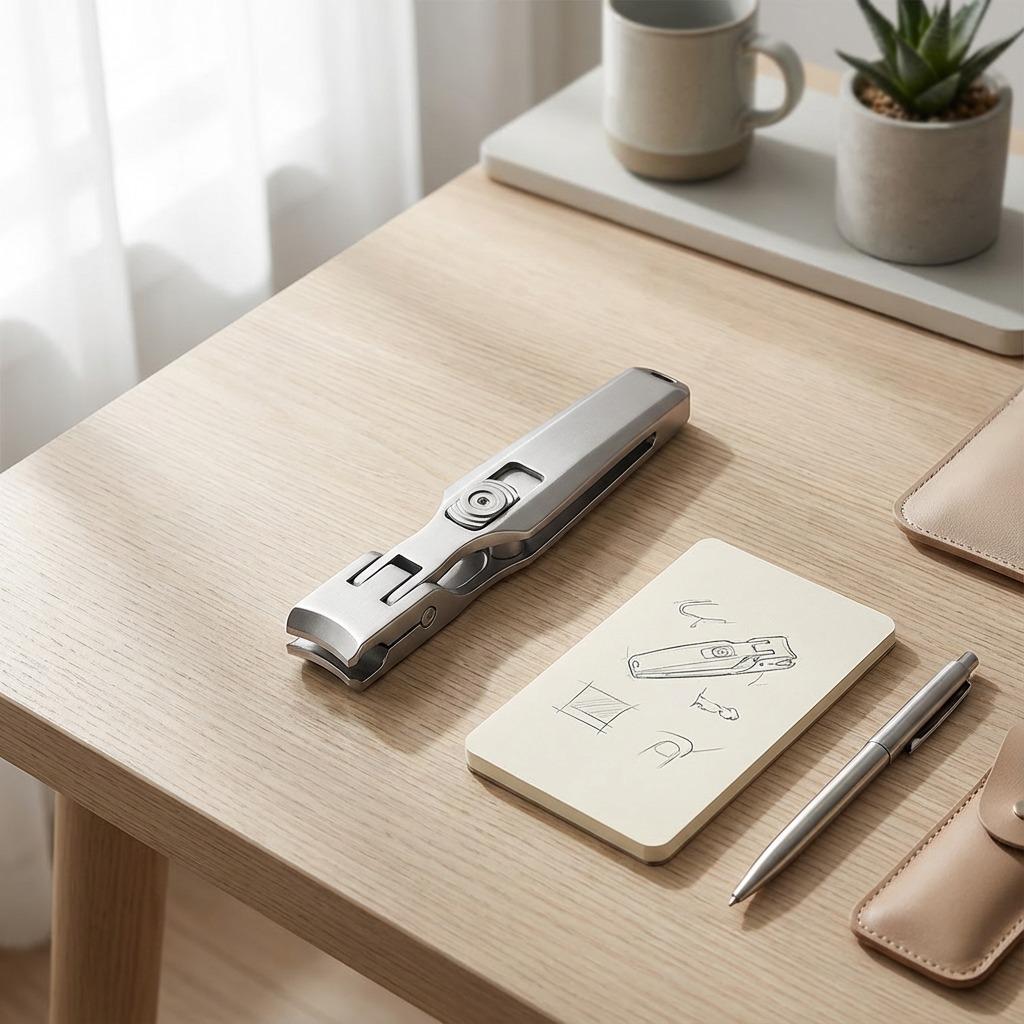
A good nail clipper specification should be specific enough to compare samples objectively. In Olimor supplied product information, one stainless steel nail clipper model is described as 91 mm x 16 mm and 48 g. These figures should not be treated as the only possible configuration, but they show the type of product data a buyer should request and verify. Size and weight influence the end-user experience as much as the visual design.
A compact clipper may be better for travel kits, purse accessories, hotel amenities or promotional grooming sets. A slightly heavier or larger clipper can feel more stable for home grooming, salon resale or men’s grooming assortments. The correct choice depends on the selling channel, the user group and the product positioning. A nail clipper sold alone in retail packaging may need a more polished presentation than a clipper included inside a multi-tool manicure set.
Material considerations for wholesale nail clippers
- Stainless steel construction: Commonly preferred for strength, clean appearance and everyday grooming expectations.
- Surface finish: Polished, matte or other finish directions should match the product family and retail positioning.
- Lever strength: The lever should transfer pressure smoothly without feeling loose, unstable or overly stiff.
- Pin and joint stability: The moving connection should feel consistent across multiple samples, not only one presentation sample.
- Edge comfort: Handle edges, corners and contact areas should be checked for burrs or rough surfaces.
Cutting Performance: The Detail Buyers Should Not Skip
Cutting performance is the core value of a nail clipper. A product can look attractive and still fail if the upper and lower cutting edges do not meet evenly. Buyers should inspect whether the jaw alignment is clean across the full cutting width, whether the clipper trims without tearing, and whether the lever returns smoothly after pressure is released.
One sample is not enough to prove consistency. A practical inspection approach is to review multiple samples from the same production reference and compare them against the written specification. This helps buyers understand whether the factory can repeat the desired feel, not just produce one good unit for approval.
Functional checks before approving a sample
- Open and close the lever repeatedly: The motion should be smooth and controlled, with no obvious looseness.
- Check jaw alignment visually: The cutting edges should meet evenly without a clear gap that could cause tearing.
- Test cutting feel: The clipper should cut cleanly without requiring excessive pressure.
- Review edge finishing: Look for burrs near the blade, handle edges and corners.
- Compare more than one piece: Consistency across samples is more valuable than one ideal unit.
Design Trends: Precision, Comfort and Practical Portability
Current nail clipper design trends are practical rather than decorative. Buyers want cleaner cuts, better grip, smooth lever feel, compact durability and presentation that fits their channel. Minimal silhouettes and sleek finishes remain popular, but appearance should not hide weak construction. A nail clipper that flexes under pressure or slips during use can damage customer confidence even if the packaging looks premium.
Ergonomics is also becoming more important. A clipper should be easy to hold, stable during use and comfortable enough for repeated clipping. Smooth grip surfaces, controlled lever tension and balanced proportions can help reduce slipping. These details matter for professional grooming kits, family care sets and everyday retail tools.
Portability is another important long-tail sourcing requirement. A travel nail clipper, a salon resale clipper and a private-label manicure set component may all require different dimensions, finishing and packaging. Buyers should define whether the clipper will be sold individually, combined with tweezers or scissors, added to a travel kit, or used as a promotional accessory. That decision affects the perceived value and the supplier brief.
OEM Nail Clipper Customization: What to Define Early
OEM nail clipper projects are smoother when the buyer provides clear requirements before sampling. Vague terms such as premium finish or good quality are difficult for a manufacturer to verify. A stronger sourcing brief explains the target customer, selling channel, preferred material, finish direction, branding area, packaging format and inspection priorities.
Customization can include logo placement, packaging structure, finish direction, color accents and set composition. Small grooming tools have limited branding space, so logo artwork should be reviewed for readability before production. Overly complex marks may not reproduce clearly on a compact metal surface. Buyers should confirm logo size, placement, artwork file requirements, packaging dielines, color references and label content before mass production.
Private-label buyers should also think beyond one item. A nail clipper may need to match tweezers, scissors, eyelash tools or manicure instruments in the same product family. Consistency across a line can be more valuable than one decorative detail on a single tool. Buyers planning a broader assortment can compare Olimor product collections to see how grooming tools may fit together in a retail range.
Supplier Evaluation for Wholesale Nail Clippers
Price matters, especially for high-volume wholesale and promotional channels, but it should not be separated from production reliability. A low unit price can become expensive if the products fail inspection, arrive with inconsistent tension, show scratches, or require repacking because the packaging was not confirmed correctly. The goal is not to create unnecessary paperwork. The goal is to prevent common problems before they become shipment issues.
A reliable nail clipper supplier should be able to explain how order details are confirmed, how samples are reviewed, how packaging is handled and what quality checks are practical before shipment. Buyers should ask for evidence of process rather than broad claims. If a supplier mentions a quality management system such as ISO 9001, buyers should verify the applicable version and documentation directly. For destination-market safety, labeling or consumer product requirements, buyers should also check the current rules from relevant public bodies such as the U.S. Consumer Product Safety Commission or applicable local authorities. This is not a claim that any supplier holds a certification; it is a reminder to verify requirements for the market where the product will be sold.
| Evaluation Area | What to Check | Why It Matters |
|---|---|---|
| Material and construction | Stated stainless steel use, lever strength, pin stability and jaw alignment | Supports durability, cutting consistency and user confidence |
| Cutting performance | Clean cut, smooth opening and closing, suitable tension and no tearing | Directly affects customer satisfaction and product reviews |
| Surface finishing | Polishing quality, edge smoothness and coating consistency if applicable | Improves handling comfort and retail appearance |
| OEM readiness | Branding area, packaging options, artwork approval and sample confirmation | Reduces delays in private-label development |
| Packaging accuracy | Dimensions, inserts, barcode placement, language, color and carton needs | Helps avoid repacking, relabeling and retail compliance problems |
| Batch consistency | Multiple sample checks and final inspection criteria before shipment | Shows whether the approved sample can be repeated in bulk production |
Cost Factors Buyers Should Compare
Wholesale nail clipper cost is affected by more than the metal tool itself. Buyers should compare the full specification before deciding that one quotation is better than another. A more detailed quote may include a different finish, stronger packaging, a custom logo step, more complex assembly, or additional inspection requirements. Without aligned specifications, price comparisons can be misleading.
Common factors that influence quotation differences
- Material and construction: Material choice, thickness, lever design and assembly details can affect both feel and cost.
- Finish requirements: Polishing, coating or special surface appearance may require extra handling.
- Packaging format: Bulk pack, retail card, box, insert or set packaging can change labor and material needs.
- Branding: Logo method, artwork complexity and placement can influence sampling and production steps.
- Inspection expectations: Additional functional checks, appearance checks or packaging checks may affect the production plan.
- Order complexity: Multiple colors, mixed sets or several packaging languages may require more coordination.
Instead of asking only for the lowest price, buyers should ask what is included in the quote and what must be confirmed before production. This creates a clearer basis for comparing nail clipper suppliers and helps avoid misunderstanding after sampling.
Quality Checks Before Shipment
A sensible nail clipper inspection plan should cover appearance, function and packaging. The inspection does not need to be complicated, but it should match the buyer’s risk. For a simple wholesale order, visual checks, cutting function checks and packaging confirmation may be enough. For a private-label retail program, the buyer may also need to confirm branding, barcode placement, carton markings and language requirements.
Useful inspection points include material and finish consistency, cutting edge alignment, lever movement, edge smoothness, logo placement, packaging accuracy and carton condition. Buyers should confirm which checks the supplier performs during production and which checks are performed before shipment. When possible, the approved sample should be kept as a reference for comparison.
How to Build a Clear Sourcing Brief
A strong sourcing brief saves time for both the buyer and supplier. It should define the product use case, target market, preferred dimensions or reference sample, finish direction, packaging requirements, logo needs and inspection priorities. If the clipper will be sold as part of a set, list the other tools and explain how the overall presentation should look.
For example, a travel kit buyer may prioritize compact size, secure packaging and light retail presentation. A salon resale buyer may prefer a more stable hand feel and polished retail packaging. A promotional buyer may focus on simple branding and reliable bulk packing. Each project can be reasonable, but the supplier needs to know the intended use before recommending the most suitable option.
Buyers who are ready to discuss a custom grooming tool program can send specifications through Olimor’s OEM inquiry channel. For early-stage questions about available beauty tools, packaging direction or sourcing fit, the Olimor contact page is the appropriate starting point.
Practical Conclusion for OEM and Wholesale Buyers
The strongest nail clipper manufacturing trend is practical quality control. Buyers are not only asking for attractive tools; they are asking for repeatable cutting performance, comfortable handling, consistent finishing, packaging readiness and clear supplier communication. Stainless steel construction, accurate jaw alignment, smooth lever movement and careful packaging confirmation are the details that turn a basic grooming tool into a reliable retail product.
For B2B buyers, the best approach is to define the use case, compare samples against written specifications, ask focused supplier questions and verify market requirements before ordering. This keeps sourcing decisions grounded in evidence and helps reduce quality disputes, repacking work and customer complaints.
FAQ
Can I request samples before placing a wholesale nail clipper order?
Sample review is an important step for nail clippers because cutting alignment, lever feel, surface finishing and packaging cannot be judged by photos alone. Buyers should confirm sample availability, sample specification and approval steps directly with the supplier.
What MOQ should I expect for OEM nail clippers?
MOQ depends on the product design, customization level, packaging type and production arrangement. Buyers should avoid assuming a fixed quantity and instead share the intended specification so the supplier can confirm the applicable order requirements.
What customization options are usually discussed for private-label nail clippers?
Common OEM topics include logo placement, finish direction, packaging format, color accents, carton labeling and whether the clipper will be sold individually or as part of a grooming set. Artwork and packaging details should be approved before mass production.
What quality checks matter most before shipment?
Key checks include cutting edge alignment, clean clipping performance, lever stability, edge smoothness, surface consistency, logo accuracy and packaging correctness. Buyers should compare production goods against the approved sample and written specification.
How should I confirm lead time?
Lead time depends on sampling, customization, packaging confirmation, order quantity and production schedule. Buyers should request a project-specific timeline after the final specification and artwork are confirmed.
Tag: