Nail Clipper Manufacturer Trends for Wholesale and OEM Buyers
The nail clipper market looks simple from the outside, but buyers know that small differences in engineering, finishing, and inspection can affect customer satisfaction quickly. A clipper that cuts cleanly, feels balanced in the hand, and stays aligned after repeated use is more likely to earn repeat orders than one selected only by price. For retailers, distributors, salon suppliers, and private-label beauty brands, choosing the right nail clipper manufacturer is now a sourcing decision tied to quality control, packaging consistency, brand positioning, and long-term supply reliability.
Demand for practical grooming tools remains steady across home care, travel, salon, and gift categories. At the same time, the market is becoming more selective. Buyers want compact tools that look clean on shelf, perform consistently, and can be adapted for different customer segments. Olimor Beauty works within this environment as a beauty-tools supplier focused on dependable manufacturing, careful inspection, and buyer-ready presentation. For companies comparing beauty tool products, nail clippers are a category where details matter more than many first-time buyers expect.
What Is Changing in Nail Clipper Manufacturing?
The strongest trend in nail clipper manufacturing is the shift from basic commodity sourcing to performance-led selection. Buyers are paying closer attention to the cutting edge, lever resistance, handle comfort, surface finish, and packaging durability. These details affect both end-user experience and after-sale risk.
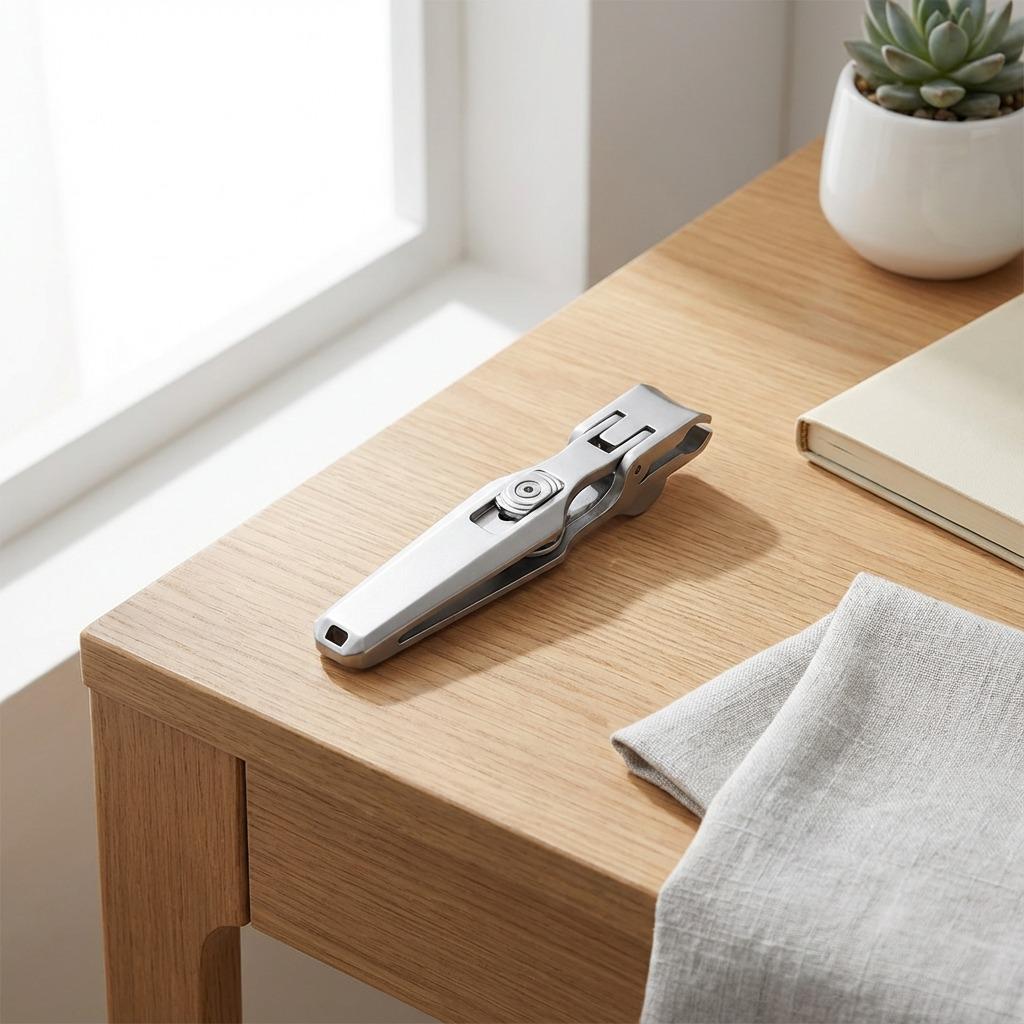
One example of the category’s practical direction is the popularity of compact, lightweight clippers, including models described at 91 mm x 16 mm and 48 g. A size like this can suit everyday grooming kits, travel sets, retail peg displays, and salon backup tools. Compact does not mean low value; it means the manufacturer must manage balance, leverage, and cutting alignment in a smaller format.
Several wider trends are also shaping how buyers evaluate factories:
- Precision over decoration: Appearance still matters, but the cutting action, blade meeting point, and lever stability are more important to repeat purchase.
- Ergonomic handling: Buyers want tools that feel controlled in different hand sizes, especially for home users who may not have professional technique.
- Consistent stainless steel components: Stainless steel is valued for grooming tools, but the buyer still needs to review finishing, edge quality, and corrosion-risk handling.
- Cleaner minimalist aesthetics: Many brands prefer simple, practical designs that fit both men’s and women’s grooming ranges without overcomplicated styling.
- More disciplined inspection: Checks from raw materials through packaging help reduce the risk of inconsistent cutting, cosmetic defects, or shipment-level surprises.
Key Players Are Defined by Process, Not Only Location
China remains an important sourcing base for nail clipper buyers because of its established beauty-tool manufacturing networks, component access, and experience with wholesale and OEM projects. However, location alone does not define a strong nail clipper factory. The more useful question is how a supplier manages repeatable production.
A reliable nail clipper supplier should be able to explain how it checks the parts that affect performance. For nail clippers, that includes the cutting edges, rivet or pivot stability, lever movement, opening and closing smoothness, surface treatment, and final packaging condition. These are not abstract quality points. A small misalignment can make a clipper feel rough, crush the nail instead of cutting it cleanly, or create uneven pressure during use.
Olimor Beauty’s positioning in this category is built around inspection discipline from raw materials to packaging. For buyers, that approach is valuable because nail clippers are often sold in volume and may be distributed through several retail or wholesale channels. A defect rate that seems small at the factory level can become costly once goods are packed, labeled, shipped, and placed into stores or online fulfillment centers.
How Wholesale Buyers Should Compare Nail Clipper Suppliers
Wholesale buyers often need a nail clipper that can work across multiple sales environments. A product may be sold to pharmacies, supermarkets, salon supply shops, online stores, hotel amenity providers, or grooming-kit assemblers. The best supplier choice depends on how the clipper will be used and what level of presentation the channel requires.
Before comparing quotations, buyers should define the product role. Is the clipper a low-profile refill item, a premium grooming accessory, part of a manicure set, or a promotional product? Each use case leads to different priorities in finish, packaging, and inspection.
| Buyer priority | What to evaluate | Why it matters |
|---|---|---|
| Cutting performance | Blade alignment, edge sharpness, opening width, lever force | Determines whether the tool cuts cleanly and comfortably |
| Retail presentation | Surface finish, logo position, packaging structure, barcode space | Supports shelf appeal and easier distribution |
| Bulk consistency | Sample-to-batch matching and final inspection process | Reduces complaints when ordering repeated quantities |
| Brand fit | Color, minimalist design, handle shape, packaging tone | Helps the clipper match an existing product line |
| After-sale risk | Corrosion prevention, burr control, smooth mechanism | Protects customer experience and retailer confidence |
It is also useful to compare products physically instead of relying only on product photos. A buyer should open and close the clipper repeatedly, test the grip, inspect the cutting edge under good light, and check whether the lever sits evenly. For wholesale programs, the sample should represent what the factory can repeat, not an isolated demonstration piece.
OEM Opportunities: Where Customization Adds Real Value
Nail clipper OEM services are attractive because the product is compact, practical, and easy to place into multiple beauty or grooming lines. However, customization should support a clear business purpose. Adding a logo is only one part of OEM development. The better opportunity is to align the clipper with the buyer’s audience, sales channel, and packaging system.
For a beauty brand, a minimalist clipper may fit a modern nail-care range. For a salon supplier, function and durability may matter more than decorative finishes. For a travel retail or gift-set buyer, compact dimensions, safe packaging, and visual consistency with other tools may be the priority. OEM decisions should follow the intended use rather than chase unnecessary changes.
Useful OEM planning questions include:
- Who is the end user? Home users, salon professionals, travelers, and gift buyers may value different features.
- How will the clipper be sold? Single retail pack, kit component, wholesale carton, or e-commerce bundle all create different packaging needs.
- What level of branding is appropriate? Logo placement should not interfere with grip, surface finish, or product inspection.
- What appearance fits the rest of the range? A nail clipper should look compatible with tweezers, scissors, files, or manicure sets when sold together.
- Which quality points are non-negotiable? Cutting alignment, smooth action, and clean finishing should be defined before approving production.
Buyers developing private-label grooming lines can review related product collections to consider whether a nail clipper should stand alone or be grouped with other beauty tools. This helps avoid disconnected product choices that look inconsistent once placed in a catalog or online store.
Quality Control Points That Affect User Experience
Quality control for nail clippers should focus on function first. A bright finish cannot compensate for poor cutting action. The most important checks are practical and easy for buyers to understand, even if the technical manufacturing process is handled by the factory.
First, the cutting edges should meet evenly. If one side is higher or the blade tips do not align, the clipper may leave rough edges or require extra pressure. Second, the lever should move smoothly without feeling loose or unstable. Third, edges around the body should be finished cleanly to avoid sharp burrs. Fourth, the surface should be inspected for scratches, stains, or finishing inconsistencies that may reduce perceived value.
Packaging inspection also matters. Nail clippers are often compact and may shift during transport if packaging is poorly designed. A crushed blister, damaged card, unclear label, or loose product inside a box can make an otherwise usable clipper difficult to sell. For wholesale buyers, packaging quality is part of product quality because it affects how goods arrive, display, and scan through retail systems.
Sustainability and Practical Material Choices
Sustainability is increasingly discussed in beauty-tool manufacturing, but buyers should treat it as a practical sourcing topic rather than a slogan. For nail clippers, longer service life can be part of a responsible product strategy. A clipper that cuts well for longer, resists premature failure, and avoids unnecessary replacement supports both user value and waste reduction.
Packaging is another area where buyers can make careful decisions. Depending on the sales channel, it may be possible to reduce excess packaging, choose simpler retail formats, or design cartons that protect the clipper without unnecessary bulk. The right answer depends on the product’s route to market. E-commerce, retail display, and kit assembly may each require different protection.
When sustainability claims are important to a brand, buyers should document what can be verified and avoid vague claims. A good sourcing conversation should cover materials, finishing, packaging structure, product lifespan expectations, and inspection standards. This approach is more useful than adding broad environmental language that the product program cannot support.
Building a Better Nail Clipper Sourcing Brief
A clear sourcing brief helps the manufacturer respond accurately and helps the buyer compare options fairly. Instead of asking only for a low price, buyers should describe the target customer, sales channel, desired size range, finish preference, packaging format, inspection expectations, and any OEM branding needs. This reduces misunderstandings before sampling and production.
For nail clippers, the brief should also state whether the product is intended for fingernails, toenails, general grooming, travel kits, or salon support. If a buyer already has a benchmark product, it can be useful to compare grip, cutting feel, and packaging expectations against that benchmark. The goal is not to copy another item, but to define performance clearly.
Buyers ready to discuss a sourcing project can send an inquiry with target use, packaging needs, and expected positioning. If the project requires clarification before product selection, it may be more efficient to contact Olimor and outline the channel, whether wholesale or OEM, so the discussion can begin with practical requirements.
Future Outlook for Nail Clipper Manufacturers
The future of the nail clipper manufacturer sector will likely be shaped by consistent quality, useful customization, and better alignment between factory capability and brand strategy. Buyers are becoming more careful because grooming tools are small items with high visibility: customers notice immediately when a clipper pulls, slips, scratches, or feels weak.
Manufacturers that can support stable production, inspect stainless steel components carefully, manage packaging quality, and adapt products for wholesale or OEM channels will remain relevant. For brands and distributors, the best opportunity is to treat nail clippers as engineered grooming tools rather than simple add-on items. With the right supplier process and a clear sourcing brief, a nail clipper can become a dependable product in a beauty tool range, not just a low-cost accessory.
Tag: