

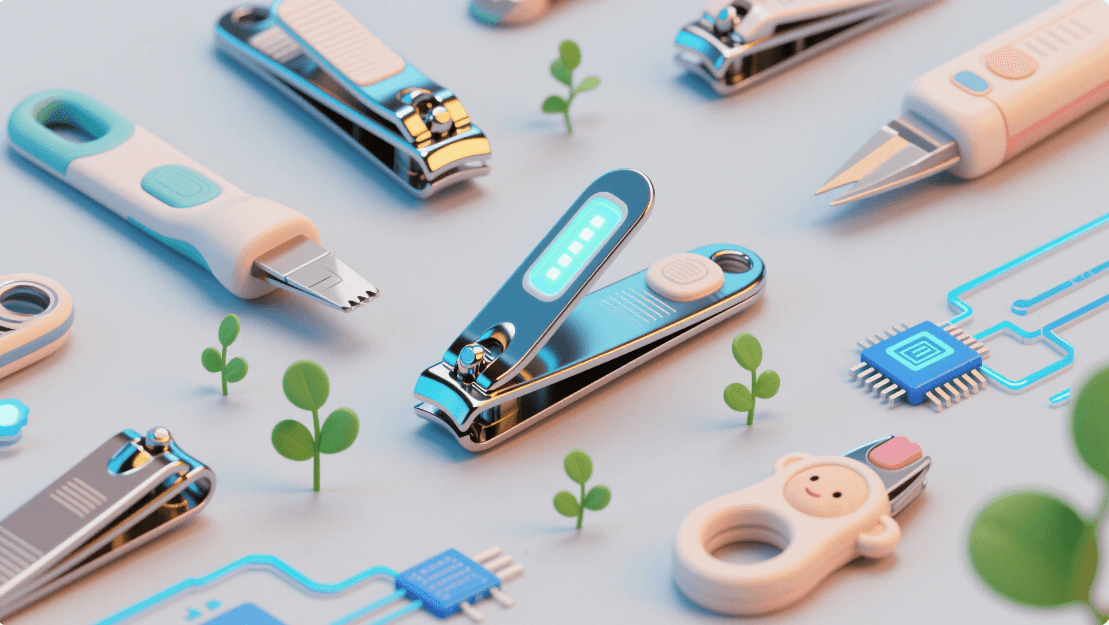
Nail Clipper Industry Trends for Beauty Tool Buyers and Brands
Nail clippers remain one of the most frequently used personal grooming tools, yet the market around them is changing quickly. For retailers, beauty brands, distributors, salon suppliers, and private-label buyers, the question is no longer whether a nail clipper can cut nails. The better question is whether the product fits current expectations for comfort, hygiene, sustainability, portability, and perceived value.
Consumers now compare small grooming tools with the same attention they give to skincare accessories, hair tools, and manicure sets. They look at how a clipper feels in the hand, whether it is easy to clean, how it is packaged, and whether it belongs in a travel kit, family bathroom, salon station, or gift set. For B2B buyers, these expectations affect assortment planning, product development, packaging briefs, and supplier communication.
This guide looks at the key nail clipper industry trends shaping the market and how to translate them into practical sourcing decisions. If you are comparing formats or planning a wider grooming range, you can also explore Olimor Beauty beauty tool products and related product collections.
Sustainability Is Moving From Marketing Claim to Product Brief
Sustainability has become a major influence in beauty and personal care purchasing, but buyers should treat it as a product development requirement rather than a slogan. In nail clippers, the most visible opportunities are material selection, product durability, packaging reduction, and repair-or-replace expectations.
Metal nail clippers already have an advantage over many disposable grooming accessories because they are compact, long-lasting, and commonly made with metal components. However, the sustainability conversation is becoming more detailed. Buyers increasingly want to understand whether the tool is designed for a long service life, whether unnecessary plastic parts can be reduced, and whether packaging can be simplified without harming shelf presentation.
- Material approach: Consider whether the design relies on durable metal construction, mixed materials, coatings, or decorative plastic elements.
- Packaging approach: Compare blister packs, paper boxes, reusable cases, and set packaging based on retail channel and waste reduction goals.
- Product lifespan: A clipper that stays sharp, resists deformation, and feels solid during use supports fewer replacements over time.
- Assortment planning: A basic long-lasting clipper, a travel clipper, and a premium set may communicate sustainability differently.
The most credible sustainability strategy is specific. Instead of relying on broad green language, buyers can define the preferred packaging structure, acceptable material combinations, finish options, and expected durability level before sampling.
Ergonomics Is Becoming a Core Selling Point
Traditional nail clippers were often designed around manufacturing simplicity. Today, comfort is a bigger part of the buying decision. The same clipper may be used by adults, seniors, travelers, salon professionals, and people with reduced grip strength. This makes ergonomics one of the most important nail clipper trends for both mass-market and premium positioning.
Ergonomic improvement does not always mean a dramatic shape. It can include a wider lever, improved leverage, curved edges that do not press harshly into the fingers, a non-slip grip texture, a more stable cutting angle, or a size that suits toenails rather than fingernails. Buyers should avoid treating “small” and “compact” as automatically better. A compact clipper is useful for travel, while a larger clipper may be more comfortable for regular home use.
When reviewing samples, test the clipper with dry nails, thicker toenails, and different hand positions. Pay attention to how much force is needed, whether the lever feels stable, and whether the cut feels controlled. A good ergonomic clipper reduces hand strain and helps prevent uneven cutting, especially for users who trim nails frequently.
Hygiene Expectations Are Higher Than Before
Hygiene has become a stronger purchase driver for grooming tools used close to the skin and nails. Nail clippers are used in bathrooms, salons, travel bags, family homes, and sometimes shared settings. As a result, buyers are paying more attention to cleanable surfaces, rust resistance, protective storage, and designs that do not trap nail debris unnecessarily.
Not every product needs advanced antimicrobial claims or sterilization accessories. In many cases, practical hygiene features matter more: smooth surfaces, easy access for wiping, a simple structure, and packaging that explains basic care. For salon or professional channels, cleaning procedures and storage cases may be especially important. For consumer retail, a small case or catcher design can improve perceived cleanliness and convenience.
Buyers should be careful with hygiene claims. If a product is marketed with antimicrobial coatings, medical-style sanitation language, or specialized sterilization features, those claims should be supported by appropriate documentation and should match the destination market’s rules. For many brands, a safer and clearer approach is to emphasize easy cleaning, personal use, and proper storage.
Multi-Functional Grooming Tools Continue to Gain Space
Multi-functional nail clippers and grooming sets are popular because they solve a practical problem: consumers want fewer loose tools and a more organized grooming routine. A clipper paired with a nail file, cuticle pusher, small scissors, tweezers, or storage case can work well for travel, gifting, men’s grooming, family kits, and entry-level manicure sets.
However, adding functions does not always improve the product. A multi-tool must still perform its main job well. If the nail clipper feels weak or the file surface wears quickly, the product may create returns or poor reviews. Buyers should treat each added function as a feature that must earn its place.
| Product direction | Best suited for | Buyer focus |
|---|---|---|
| Single nail clipper | Daily use, value retail, replacement purchases | Cut quality, comfort, durability, price positioning |
| Travel clipper | Toiletry kits, impulse retail, promotional sets | Compact size, protective cover, safe storage |
| Clipper with file | Convenience-focused consumers | File usability, smooth edges, compact design |
| Grooming set | Gifting, online bundles, salon retail | Tool mix, case quality, consistent finish |
| Premium clipper | Beauty brands, specialty retail, personal care gifts | Finish, weight, packaging, long-term feel |
This type of comparison helps buyers avoid overbuilding a product. A simple, well-made clipper may outperform a complicated tool if the sales channel prioritizes reliability and repeat purchase.
Premiumization Is About Details, Not Just Price
Premium nail clippers are gaining attention as consumers become more willing to pay for grooming tools that feel better and last longer. Premiumization can involve stainless-looking finishes, polished surfaces, matte coatings, carefully shaped levers, giftable packaging, or coordinated sets. The important point is that premium value must be visible and tactile.
A higher-priced clipper should feel stable when opened and closed. The cutting edges should align neatly. The lever should not rattle excessively. Edges should feel smooth where the user holds the tool. Packaging should protect the finish and support the brand story without making the product difficult to open.
Customization also plays a role, especially for private-label beauty brands and retailers building their own grooming lines. This may include color direction, finish selection, logo placement, case design, and packaging artwork. Buyers planning custom nail clipper ranges can send an inquiry with target channel, preferred product type, and packaging expectations so the discussion starts with practical requirements rather than vague style references.
Smart Technology Creates Interest, but Practical Value Still Leads
Smart grooming tools attract attention, and the idea of connected or sensor-assisted nail care appears in trend discussions. Concepts such as pressure guidance, nail health tracking, or app-based grooming reminders may appeal to technology-focused consumers. Still, for most nail clipper purchasing today, practical improvement matters more than digital features.
Buyers should evaluate smart or semi-smart concepts carefully. Does the feature solve a real trimming problem? Does it make the tool easier to use, safer, or more hygienic? Does it add battery, charging, warranty, or compliance complexity? A conventional clipper with excellent leverage, a comfortable grip, and a durable finish may deliver more value than a novelty feature that consumers use once.
Technology can still influence the category in less obvious ways. Better manufacturing control, more consistent sharpening, improved surface finishing, and refined packaging processes can all improve the end-user experience without turning the product into an electronic device.
Online Retail Is Changing How Nail Clippers Are Judged
E-commerce has made small grooming tools easier to compare. Consumers now examine close-up photos, read reviews about sharpness and grip, and compare sets by the number of pieces, case appearance, and perceived value. This affects how buyers should prepare a nail clipper product for sale.
For online channels, product photography and descriptions must make the functional differences clear. Show the clipper open and closed, include scale references where appropriate, and explain whether the product is designed for fingernails, toenails, travel, or a complete grooming set. Avoid vague descriptions that could apply to any tool. Specific, accurate product information helps reduce disappointment and supports organic search performance.
For offline retail, packaging must communicate quickly. A shopper may only spend a few seconds deciding between several similar clippers. Clear product naming, visible tool shape, concise feature points, and a clean package structure can make the difference.
A Practical Nail Clipper Sourcing Checklist
Before placing a nail clipper into a beauty tool range, buyers should evaluate more than appearance. A structured checklist can help compare samples consistently and identify issues before production.
- Define the user: Is the product for daily home use, travel, seniors, salons, men’s grooming, gifting, or a general beauty aisle?
- Confirm the cutting purpose: Fingernail clippers, toenail clippers, and mixed sets may require different sizes and leverage.
- Test comfort: Check grip, lever pressure, finger contact points, and stability during cutting.
- Review finish quality: Look for rough edges, uneven coating, visible marks, or loose movement.
- Assess hygiene: Consider cleaning access, storage case options, and whether debris can collect in hard-to-clean areas.
- Match packaging to channel: Online, retail shelf, salon resale, and gift sets may each need different packaging priorities.
- Check claim discipline: Ensure sustainability, hygiene, material, or performance claims are specific and supportable.
- Plan the assortment: Decide whether the range needs one hero clipper, several sizes, or a coordinated grooming set.
What These Trends Mean for Beauty Tool Brands
The future of nail clippers is not only about futuristic technology or luxury finishes. The strongest market direction is toward better everyday performance: tools that cut cleanly, feel comfortable, store neatly, and fit modern expectations for hygiene and sustainability. For brands, this creates room to differentiate even in a familiar category.
A successful nail clipper program starts with a clear positioning decision. A value product should be reliable and simple. A travel product should be compact and protected. A premium product should justify its price through feel, finish, and packaging. A sustainable direction should be built into material and packaging choices, not added as an afterthought.
If you are planning a nail clipper range or comparing beauty tool options for your market, review the full context: user needs, retail channel, packaging, claims, and long-term product experience. To discuss suitable beauty tool directions for your business, you can contact Olimor and share your sourcing priorities.
Tag: