How to Evaluate Nail Clipper Manufacturers for Retail, Wholesale and OEM Sourcing
Choosing a nail clipper manufacturer is not only about finding a low unit price. For retailers, distributors, private-label brands and beauty tool wholesalers, the better question is whether the supplier can produce a clipper that cuts cleanly, feels balanced in the hand, survives daily use and arrives consistently from order to order. A small grooming tool can create a large impression: rough cutting edges, weak leverage or poor finishing can quickly lead to customer complaints.
The current nail clipper market is shaped by stronger consumer interest in personal hygiene, compact grooming kits and reliable everyday tools. Buyers are also comparing suppliers more carefully because nail clippers are sold through many channels, including pharmacies, beauty stores, supermarkets, travel kits, online marketplaces and salon supply assortments. Whether you are sourcing a standard retail item or preparing an OEM project, the manufacturer’s design discipline and quality process matter as much as the product appearance.
What Today’s Buyers Expect from a Nail Clipper Manufacturer
A useful nail clipper should make trimming simple without crushing, tearing or splitting the nail. That result depends on several design and production factors: the alignment of the cutting jaws, the sharpness and finish of the edge, the strength of the lever, the smoothness of the rivet or pivot area, and the overall balance of the tool.
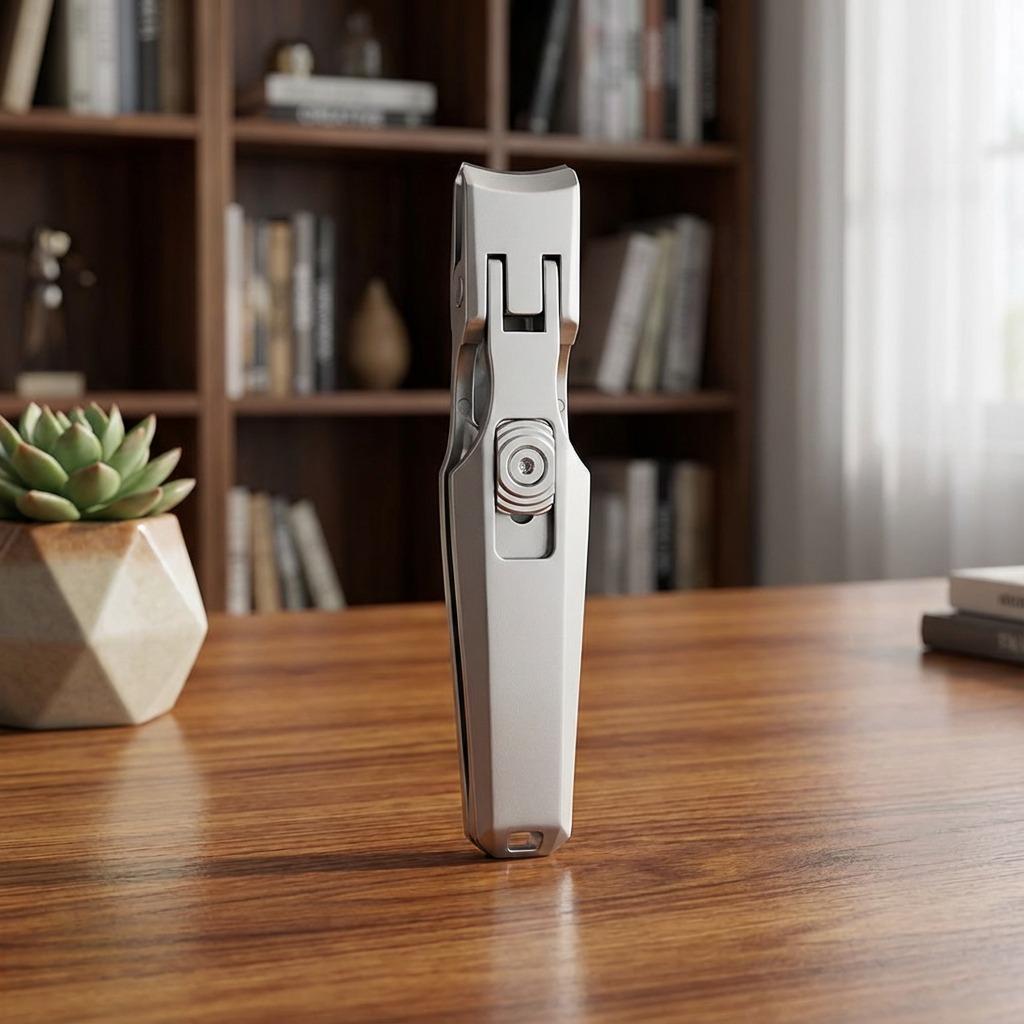
One example of the compact direction in the category is a clipper measuring 91mm long and 16mm wide, with a weight of 48g. Those dimensions place the tool in a practical range for daily grooming, travel pouches and retail nail care sets. The weight also matters: a clipper that is too light may feel flimsy, while a heavier tool can feel more stable if the leverage is comfortable.
For sourcing teams, the key is to evaluate the clipper as a functional instrument rather than a simple commodity. A visually polished product still needs to open smoothly, close evenly and cut with control. When reviewing beauty tool products, pay close attention to the relationship between form, function and repeatable production quality.
Product Design Criteria That Affect Cutting Performance
Most nail clipper complaints come from a small group of issues: dull cutting edges, uneven jaws, uncomfortable pressure, rough surfaces or weak springs and levers. These are not always obvious in product photos, so sample review is essential before wholesale or OEM decisions are made.
Use the following checklist when comparing manufacturer samples:
- Jaw alignment: The upper and lower cutting edges should meet evenly across the full curve, without visible gaps or offset points.
- Edge finish: The cutting edge should be sharp enough for a clean cut but not so rough that it catches or scrapes the nail.
- Lever comfort: The lever should provide enough pressure without forcing the user to squeeze excessively.
- Hand feel: Corners, side edges and underside surfaces should feel smooth during use and when handled in retail display.
- Opening and closing action: Movement should be stable, without rattling, sticking or excessive looseness.
- Size suitability: A compact clipper may suit travel and general grooming, while larger formats may be preferred for toenails or professional kits.
- Finish consistency: Surface treatment should look uniform across samples, especially if the item will be sold as part of a premium grooming range.
For stainless steel designs, buyers often value corrosion resistance, clean appearance and a more durable feel. However, material wording alone does not guarantee performance. The manufacturing process, polishing, edge formation and final inspection all affect the finished product.
Supplier Reliability and Quality Assurance
A strong nail clipper supplier should be able to explain how quality is controlled from raw material selection through final inspection. This is especially important for beauty tool buyers who plan repeat orders, because the first shipment and the third shipment should meet the same expectations.
Practical quality assurance questions include how incoming materials are checked, how cutting edges are inspected, how defective pieces are separated, and how packaging is reviewed before cartons are closed. Buyers should also compare production samples with shipment samples, not just approve a single attractive prototype.
For wholesale programs, consistency is the foundation of customer trust. A retailer may accept minor variation in packaging shade more easily than poor cutting performance, but both can affect brand perception. If the clipper is sold online, reviews will quickly reveal repeated issues such as dull blades or uncomfortable grip. If it is sold in physical stores, appearance and packaging quality influence first purchase, while performance determines repeat purchase.
Olimor Beauty focuses on grooming tools where product feel, usability and inspection discipline are important to buyers. Companies comparing product collections can use collection-level review to judge whether a supplier has coherent finishing standards across related tools, not only on one nail clipper sample.
OEM and Customization Considerations for Nail Clipper Projects
The OEM segment has grown because many beauty, personal care and lifestyle brands want nail clippers that fit their own assortment strategy. Customization can include surface finish, handle or lever styling, retail packaging, kit configuration and brand presentation. The goal should be to create a product that is recognizable and commercially practical without compromising the trimming function.
Before starting an OEM nail clipper project, define the intended sales channel. A clipper for a travel kit may need compact dimensions, lightweight packaging and easy bundling with files or scissors. A retail pegboard item may need packaging that displays the tool clearly and communicates size. A professional or salon supply product may place more emphasis on durability, cleaning convenience and reliable leverage.
Useful OEM planning points include:
- Target user: Decide whether the product is for general household use, travel, gifting, men’s grooming, salon retail or private-label beauty care.
- Product role: Determine whether the clipper will be sold alone, in a manicure set or as part of a broader grooming range.
- Sample approval standard: Approve samples based on cutting performance, finish, packaging and carton presentation, not appearance alone.
- Branding requirements: Keep logo placement, packaging copy and finish choices practical for the size and shape of the tool.
- Reorder consistency: Document the approved sample and packaging details so repeat production can be checked against a clear reference.
Customization is valuable when it supports the buyer’s market position. It becomes risky when cosmetic changes add cost while leaving the core cutting experience untested.
Wholesale Sourcing from China: Opportunities and Risks to Manage
China remains a major sourcing base for nail clippers because of established manufacturing networks, supply chain depth and experience in producing grooming tools at scale. For wholesalers, this can create access to a wide variety of formats, finishes and packaging options. The advantage is strongest when the buyer works with a supplier that understands both production efficiency and the quality expectations of international retail channels.
At the same time, wholesale sourcing should be managed with clear specifications. Low-cost offers can look attractive, but they may not include the level of finishing, inspection or packaging needed for your customers. A more reliable comparison looks at total value: sample quality, defect control, communication, packaging durability, production consistency and after-order support.
| Buyer priority | What to check | Why it matters |
|---|---|---|
| Clean trimming | Jaw alignment, edge sharpness and cutting feel | Directly affects customer satisfaction and reviews |
| Retail appearance | Surface finish, polishing and packaging presentation | Influences purchase decision in store and online |
| Repeat orders | Approved sample records and inspection process | Helps maintain consistency across shipments |
| OEM readiness | Customization options and packaging coordination | Supports private-label and brand-specific projects |
| Wholesale logistics | Carton strength, labeling and shipment preparation | Reduces damage, sorting issues and warehouse delays |
Packaging, Sustainability and Retail Presentation
Packaging decisions should match the channel and product value. A simple clipper in a basic pack may suit price-sensitive channels, while a branded grooming range may require a more refined presentation. Packaging also protects the clipper during transport and prevents scratches before the consumer opens the product.
Many buyers are paying closer attention to packaging materials and waste reduction. When sustainability is part of your sourcing brief, evaluate practical options such as recyclable paper-based packaging, reduced plastic where appropriate, and packaging dimensions that avoid unnecessary bulk. The best choice depends on retail display needs, product protection and local market expectations.
Do not overlook instructions or care guidance. Even a familiar tool benefits from simple use and maintenance information, especially when sold in a kit. Clear packaging copy can help consumers understand how to trim gradually, keep the tool dry and store it safely.
Maintenance Guidance That Adds Value for End Users
Retailers and brands can reduce complaints by giving customers straightforward care advice. Nail clippers should be wiped clean after use and stored in a dry place. If the tool is used in a shared or professional environment, hygiene procedures should be more controlled. The cutting area should remain free of nail debris, and the lever should not be forced beyond its intended movement.
End users should trim in small cuts rather than attempting to remove a large section at once. This helps reduce stress on the nail and gives a cleaner shape. For thicker nails, users may need a suitable larger clipper rather than forcing a compact one. These practical notes can be included on product pages, packaging inserts or after-sale content.
Building a Better Manufacturer Shortlist
A good nail clipper manufacturer should offer more than a catalog image. Buyers should look for evidence of functional product thinking, sample consistency, realistic customization support and quality checks that match the intended market. For wholesale and OEM programs, the right partner helps balance cost, performance and presentation.
If you are comparing suppliers for a new nail clipper program or reviewing options for a broader grooming assortment, prepare a concise brief with target channel, expected finish, packaging style and sample evaluation standards. To discuss sourcing details with Olimor Beauty, you can contact Olimor or send an inquiry with your project requirements.
Tag: