Custom Logo Tweezers for Beauty Brands: A Practical Buying Guide
Custom logo tweezers are a small product with a surprisingly important role in beauty retail, salon operations and promotional kits. They are handled often, seen up close and judged immediately by how they grip, align and feel in the hand. For a beauty brand, spa, brow studio or distributor, that makes them more than a simple grooming accessory. A well-chosen pair can reinforce brand quality every time a customer uses it.
The search for custom logo tweezers is usually driven by a clear business need: creating private-label tools, adding a branded item to a cosmetic set, preparing retail-ready salon accessories or sourcing consistent stock from a long-term tweezer supplier. The most useful decision is not simply choosing a logo color. Buyers need to consider tweezer shape, tip precision, surface finish, branding method, packaging, inspection criteria and how future orders will be kept consistent.
This guide explains how to evaluate custom logo tweezers with a practical, buyer-focused approach. If you are comparing beauty tool options, you can also browse Olimor beauty tool products or review related product collections to understand how different grooming tools may fit within a branded range.
Why Custom Logo Tweezers Work Well for Beauty Businesses
Tweezers are compact, useful and easy to include in many beauty-related sales channels. Unlike decorative merchandise, they serve a daily or weekly grooming purpose. That makes them suitable for eyebrow care, lash application support, facial hair removal, nail art detail work and travel grooming kits. When a logo is placed on a tool that performs well, the brand impression is repeated through real use instead of one-time advertising.
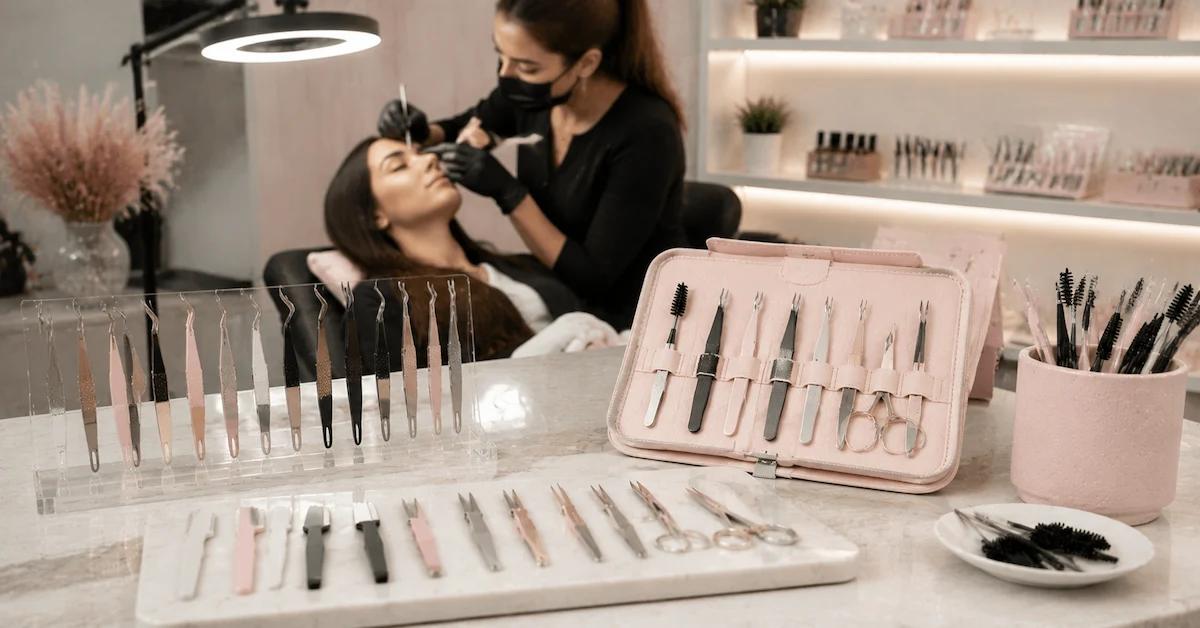
For salons and brow professionals, branded tweezers can create a more uniform service environment. For beauty retailers, they can become an add-on product near cosmetics, mirrors, lash accessories or brow pencils. For distributors and private-label companies, they are a practical entry point into branded stainless beauty tools because the product is familiar to end users and does not require extensive explanation.
However, the value of customization depends on the base tool. If the tips do not meet cleanly, if the arms feel weak or if the finish scratches easily, the logo will not save the product. In fact, branding a poor-quality tool can harm customer trust. The best approach is to define the tweezer function first, then apply the logo and packaging around that function.
Choose the Right Tweezer Type Before Adding a Logo
Different tweezer tip shapes serve different use cases. A buyer creating a retail brow tool may need a different design from a company building a lash kit or nail art set. Before discussing colors and printing, identify how the customer will actually use the tool.
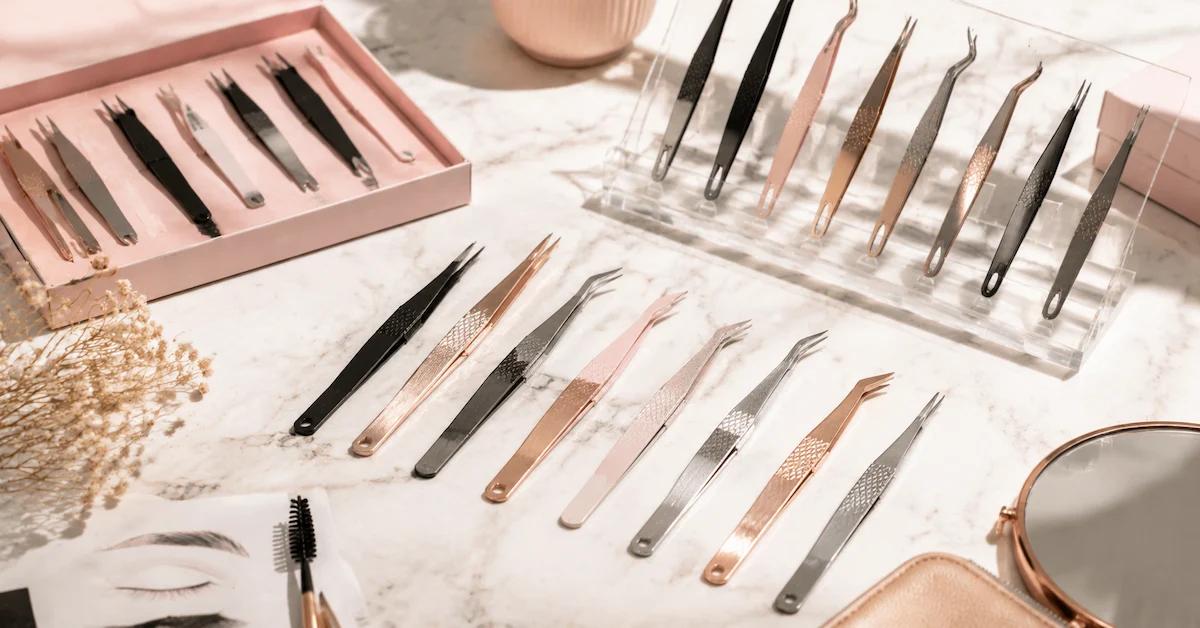
- Slant tip tweezers: Common for eyebrow shaping and general facial grooming. The angled edge helps users approach hairs from a comfortable direction.
- Pointed tip tweezers: Useful for fine detail work where accuracy matters, such as isolating very small hairs or handling tiny beauty accessories. They require careful protective packaging because the tips are delicate.
- Flat tip tweezers: Suitable for gripping broader items rather than fine hair removal. They may be used in beauty kits where holding or placing accessories is important.
- Curved or specialty tweezers: Often considered for lash-related tasks, nail art or other detailed applications. The shape should match the technique expected from the user.
The spring tension and tip alignment are just as important as shape. Good tweezers should close predictably, meet evenly at the intended contact point and return smoothly after pressure is released. For branded retail tools, it is worth checking several samples rather than judging one piece. Consistency across units is a key part of the buying decision.
Logo Placement and Finish: What to Decide Early
Custom logo tweezers can be subtle or highly visible depending on the target customer. A spa may prefer a clean, professional logo on a matte or polished surface. A gift set might use a stronger color effect. A cosmetics brand may want the tweezer finish to match a palette, compact mirror or lash applicator.
The most common design decisions include where the logo sits, how large it appears, whether it is placed on one arm or both, and whether it should be readable when the tool is displayed in packaging. A logo that looks attractive in a digital mockup may become unclear on a narrow tweezer arm, especially if the artwork contains very fine lettering or complex marks. Simple, high-contrast logos usually reproduce more reliably on small beauty tools.
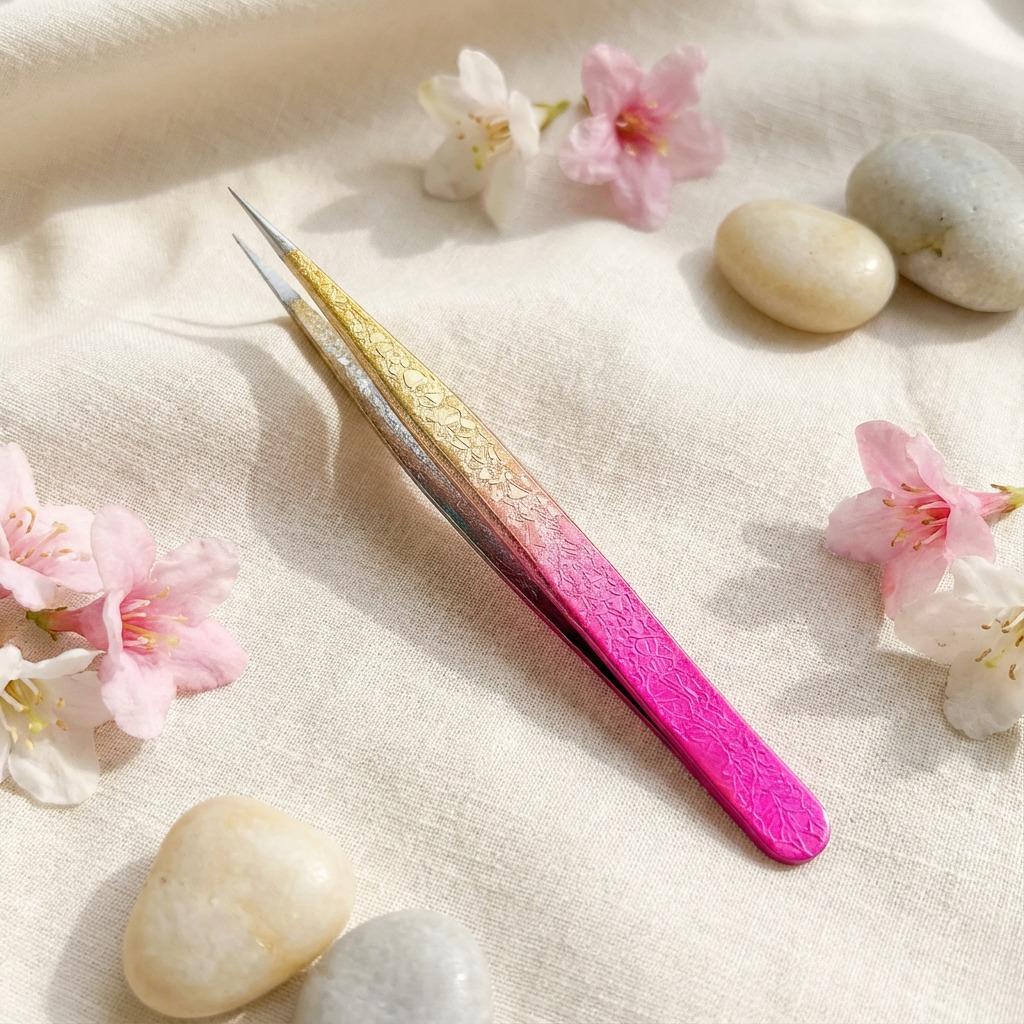
Surface finish also affects branding. A mirror-like finish, matte coating, gradient color or textured grip area can change the way the logo appears. If the tweezer has a coating, buyers should consider how the coating feels in the hand and whether it may show marks during normal handling. If the logo is placed near the gripping area, it may receive more friction than a logo positioned closer to the center or upper arm.
Because actual methods and finish options depend on the chosen product and production route, buyers should evaluate physical samples when possible. Look at logo clarity under normal room light, not only under studio lighting. Check whether the logo is centered, aligned with the tweezer body and consistent between left and right sides if both are decorated.
Quality Checks for Export-Ready Branded Tweezers
Buyers often use the phrase export-quality tweezers to describe products that look consistent, function reliably and are packed appropriately for shipping and resale. Instead of relying on a general label, build a checklist that can be applied to samples, pre-production pieces and shipment inspection.
| Check Area | What to Look For | Why It Matters |
|---|---|---|
| Tip alignment | Tips meet evenly without visible gaps or twisting. | Alignment affects grip, precision and customer satisfaction. |
| Edge condition | No burrs, rough edges or overly sharp exterior corners. | Comfort and safety depend on smooth finishing. |
| Arm tension | Resistance feels controlled and consistent across samples. | Uneven tension makes the tool feel cheap or tiring to use. |
| Logo execution | Artwork is clean, centered and consistent in color or contrast. | The logo represents the brand at close viewing distance. |
| Surface finish | Finish is even, without stains, scratches or patchy coating. | Cosmetic appearance affects retail value. |
| Packaging fit | Tool is protected, especially the tips, and does not move excessively. | Good packing reduces damage during transport and display. |
This type of checklist helps buyers communicate expectations clearly. It also reduces the risk of focusing only on the logo while missing functional problems. For beauty tools, the user experience begins with the first grip and continues through repeated use.
Packaging and Presentation for Retail, Salon and Gift Sets
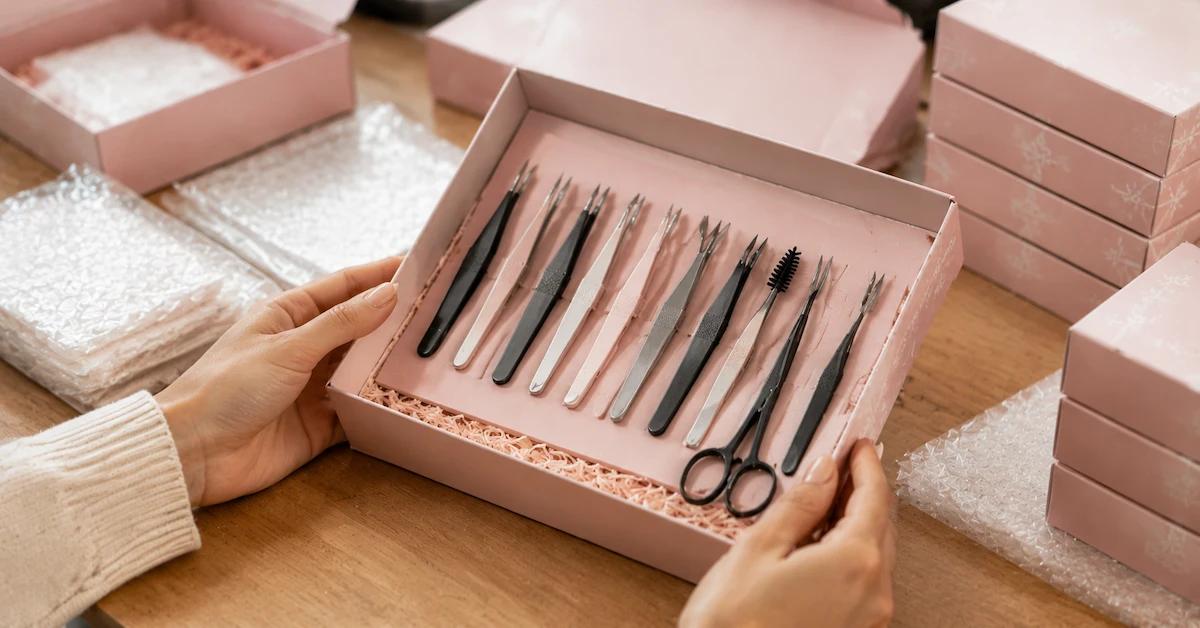
Packaging should match the channel. A salon may need simple protective sleeves or practical storage that keeps tools organized. A retail brand may need packaging that explains the tweezer type, shows the logo and allows the customer to understand the use case quickly. A promotional set may prioritize a compact presentation that fits with mirrors, nail tools or cosmetic samples.
Tip protection is especially important. Even a well-made tweezer can lose value if the tip is damaged before the customer opens it. Protective caps, inserts or secure packaging structures help reduce contact damage. For pointed styles, this becomes more critical because the working end is narrower and easier to bend or dull.
Brand consistency should also be considered across the full set. If custom logo tweezers are sold with scissors, nail tools, lash tools or brow accessories, colors and finishes should not look accidental. The tool does not need to be overly decorative, but it should feel like part of the same product family. Buyers developing broader ranges can review Olimor beauty tool products to compare possible combinations.
Factory Direct Sourcing and Long-Term Supplier Decisions
A factory-direct model can be useful when a buyer needs repeatable customization, stable communication on technical details and more control over future replenishment. The important question is not only whether a supplier can make one attractive sample. It is whether the supplier can help maintain the same tool characteristics, appearance and packaging logic over multiple orders.
When evaluating a long-term tweezers supplier, consider how clearly the supplier handles artwork files, sample approval, production references and inspection standards. Keep approved samples and written specifications for future comparison. Record details such as tip type, finish, logo size, logo location, packaging structure and any agreed visual acceptance points. This makes reorders easier and reduces confusion if a product is updated later.
Buyers should also think about assortment planning. A single custom tweezer may be enough for a salon, while a retail brand may want several shapes or finishes aimed at different users. Starting with the most practical style for the target customer can be better than launching too many variations at once. Once customer response is clear, additional colors, tip styles or packaging formats can be considered.
If you are preparing artwork or comparing sourcing options, you can send an inquiry with your basic project information, including intended use, preferred finish, logo requirements and packaging needs. For broader questions about cooperation or product direction, you can also contact Olimor.
How to Build a Better Custom Tweezer Brief
A clear product brief saves time and improves the chance of receiving useful samples. Instead of asking only for “custom logo tweezers,” describe the intended customer and sales channel. A professional brow salon, an online beauty retailer and a promotional gift buyer may all need different outcomes.
- Define the use case: Brow shaping, lash support, nail art, travel grooming or gift set inclusion.
- Select the tip style: Choose the shape based on function before choosing color.
- Prepare simple logo artwork: Use clear vector-style artwork when possible and avoid tiny unreadable details.
- Choose finish direction: Decide whether the brand needs a polished, matte, colored or more decorative appearance.
- Plan packaging: Include protection, retail display needs and any set-building requirements.
- Set inspection priorities: Tip alignment, logo clarity, finish consistency and packaging protection should be checked early.
Custom logo tweezers are successful when branding and function support each other. The logo creates recognition, but the precision, comfort and finishing create repeat use. By choosing the right tweezer type, checking real samples and building a practical sourcing brief, beauty brands and professional buyers can turn a small grooming tool into a reliable part of their product range.
Tag: