Custom Logo Tweezers: A Practical Guide for Beauty Brands, Salons, and Buyers
Custom logo tweezers are a small product with a surprisingly large branding role. They are handled often, stored in makeup bags, used at salon stations, included in gift sets, and photographed in beauty content. For a beauty brand, lash studio, brow bar, distributor, or promotional buyer, a well-made branded tweezer can support repeat visibility while still serving a real grooming purpose.
The key is to treat custom logo tweezers as functional tools first and branded items second. A tweezer that looks attractive but fails to grip fine hair, pinches unevenly, or feels uncomfortable will not reflect well on the brand printed on it. A good sourcing process should consider tweezer shape, grip feel, finish, logo placement, packaging, quality consistency, and suitability for the intended market. Olimor Beauty works in the beauty-tools category, and buyers comparing beauty tool products can use the points below to plan a clearer, more practical custom tweezer project.
Why Custom Logo Tweezers Work for Beauty Businesses
Tweezers are widely understood, easy to demonstrate, and useful across many customer groups. Brow shaping, general grooming, lash application support, splinter removal, and makeup cleanup all rely on precise gripping. This makes tweezers suitable for retail shelves, salon resale, subscription boxes, travel kits, event gifts, and private-label beauty sets.
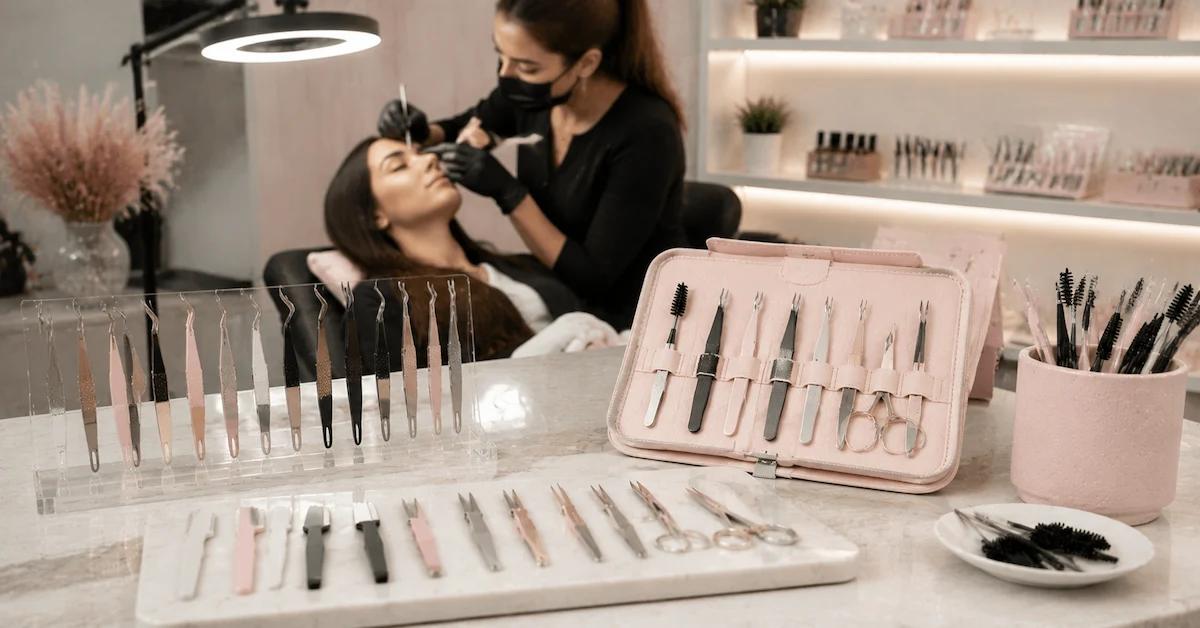
Unlike a disposable promotional item, a quality tweezer can stay with the user for months or years. That gives the logo repeated exposure in a personal-care setting. For professional buyers, branded tweezers can also create a more uniform kit presentation across salon stations or training programs. For retailers, they can help complete a beauty accessory range without requiring the complexity of a cosmetic formula.
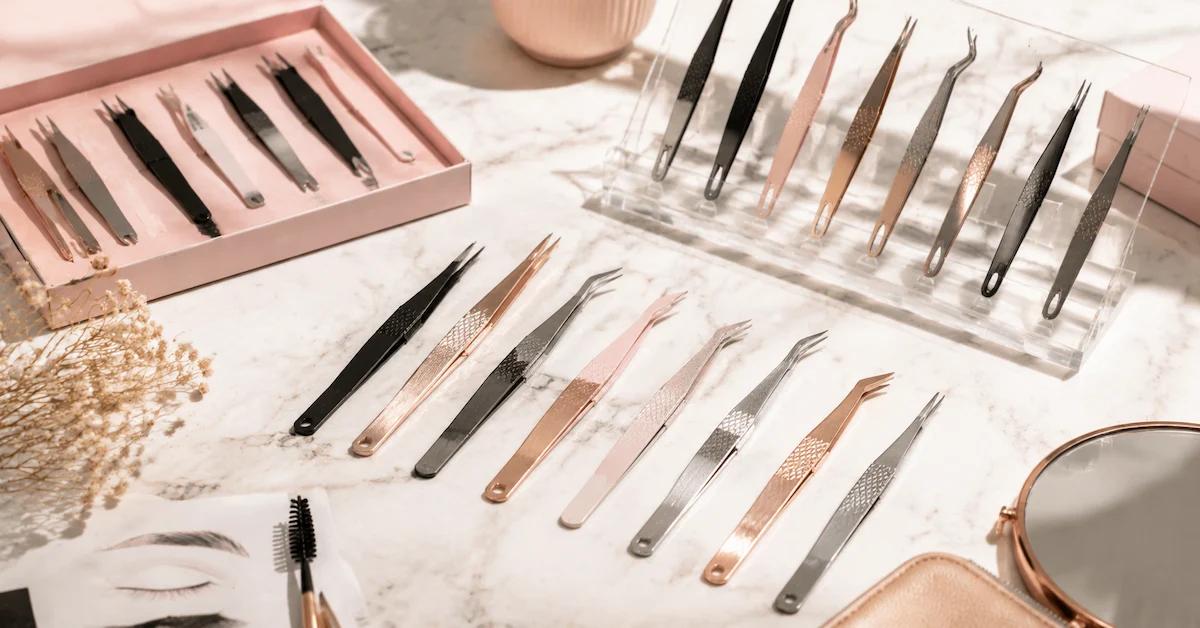
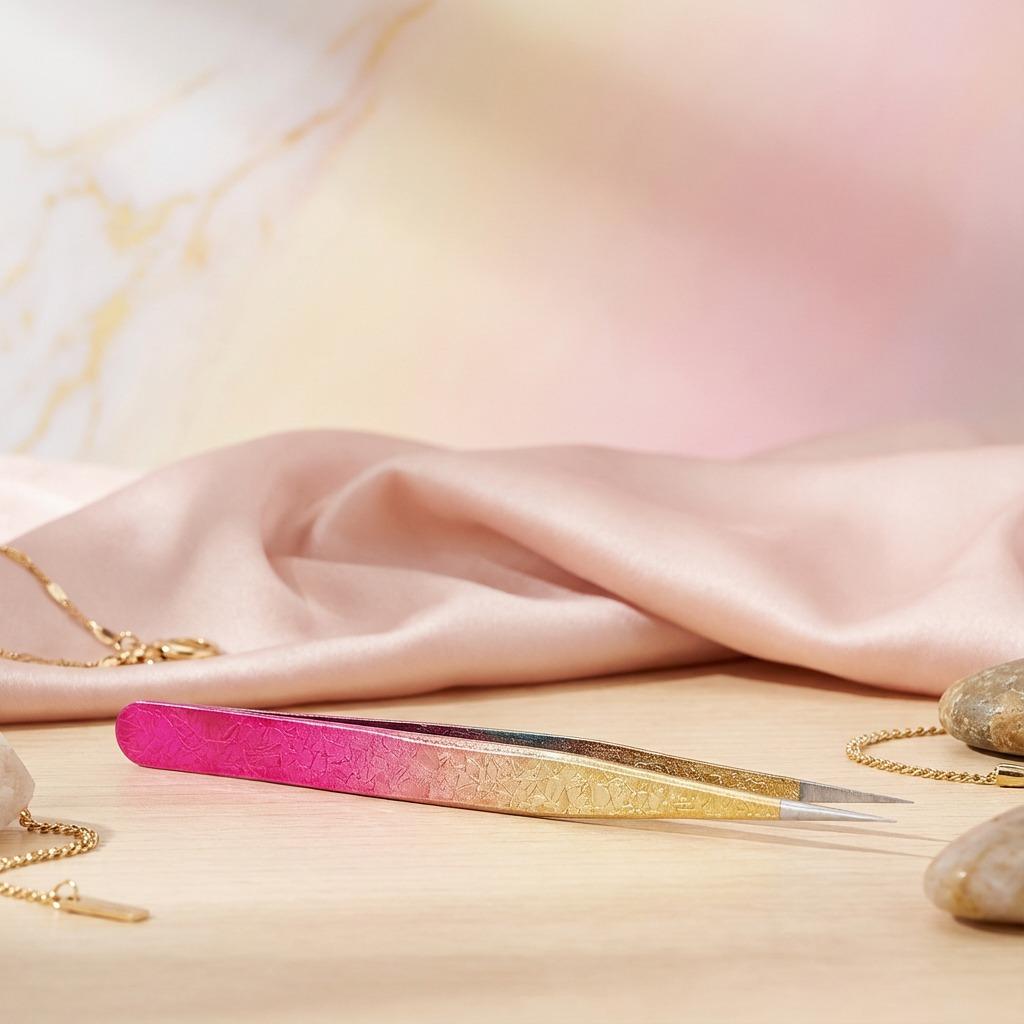
Customization also supports market positioning. A minimalist logo on a polished or matte finish may suit a clean, professional brow brand. A gradient or ombre finish, such as the Gold Ombre Precision Tweezers referenced in Olimor Beauty material, can help a tool feel more giftable or retail-ready. The right choice depends less on what looks bold in isolation and more on how the tool fits the surrounding product line.
Choose the Tweezer Type Before Designing the Logo
Logo artwork should not be finalized until the tweezer format is selected. Different tweezer tips, handle widths, and finishes offer different printing areas and user experiences. A design that looks clear on a wide slanted tweezer may become cramped on a narrow pointed one. The buyer should first define how the product will be used.
- Slanted tip tweezers: Often chosen for brow grooming because the angled edge helps grip hairs at different positions. They are common in retail beauty ranges and salon kits.
- Pointed tip tweezers: Better suited for highly precise tasks, but they require careful handling. They may be preferred by trained users rather than casual consumers.
- Flat tip tweezers: Useful for gripping broader items, though they may be less ideal for very fine brow hairs.
- Textured or shaped handles: Can improve control, especially for users working repeatedly or in professional environments.
- Decorative finishes: Ombre, colored, polished, or coated appearances can support retail presentation, but they should not interfere with comfort or tip alignment.
For a promotional giveaway, a simple slanted tweezer with a clear logo may be enough. For a brow service brand or retail accessory line, the grip quality, tip precision, and finish durability become more important because customers will judge the brand through daily use.
Logo Placement, Finish, and Readability
The best custom logo tweezer is not always the one with the largest logo. Tweezers are narrow tools, so readability matters. A logo with thin lines, small text, or complex gradients may lose clarity when applied to a metal surface. Buyers should simplify artwork where necessary and consider whether the brand mark still reads clearly at small size.
Placement also affects wear. A logo positioned where fingers constantly rub may experience more abrasion over time than one placed slightly away from the main pressure area. On the other hand, a logo hidden too low on the handle may be less visible in packaging or product photography. Balance visibility, hand contact, and the surface shape.
| Branding decision | What to evaluate | Why it matters |
|---|---|---|
| Logo size | Legibility at tweezer scale | Prevents blurred or crowded branding |
| Logo color | Contrast against the tweezer finish | Improves visibility in use and packaging |
| Placement | Finger contact and display angle | Supports both durability and presentation |
| Surface finish | Polished, matte, colored, or ombre look | Affects retail style and perceived quality |
| Packaging view | How the logo appears before opening | Important for retail, gifts, and kits |
If the tweezer will be sold online, buyers should also consider how it photographs. Highly reflective finishes can look premium but may be more difficult to capture consistently. Matte or softly colored finishes may show logos more clearly in simple product images.
Quality Checks That Matter for Branded Tweezers
Branding cannot compensate for poor tweezer performance. The most important quality points are mechanical and tactile: the tips should meet evenly, the tension should feel controlled, and the tool should grip without excessive hand force. Even small misalignment can turn a nice-looking product into a frustrating one.
When reviewing samples or production references, buyers can use a simple evaluation checklist:
- Tip alignment: The two sides should meet cleanly without visible gaps at the gripping area.
- Grip test: The tweezer should hold fine material consistently without slipping.
- Hand feel: Tension should be firm enough for control but not so stiff that it causes fatigue.
- Edge comfort: Outer edges should not feel sharp against the fingers during normal use.
- Finish consistency: Color, shine, or ombre effect should look even across pieces in the same batch.
- Logo clarity: The mark should be centered, readable, and consistent from piece to piece.
- Packaging fit: The tweezer should sit securely and arrive protected from scratches or tip damage.
For professional and retail buyers, consistency is as important as a single good sample. A branded tool is part of a promise to the customer. If the first unit works well but the next one does not, the brand experience becomes unreliable. This is why factory-direct discussions should include how samples, production approval, and final inspection will be handled, without assuming that every finish or artwork behaves the same way.
Packaging Choices for Retail, Salon, and Promotional Use
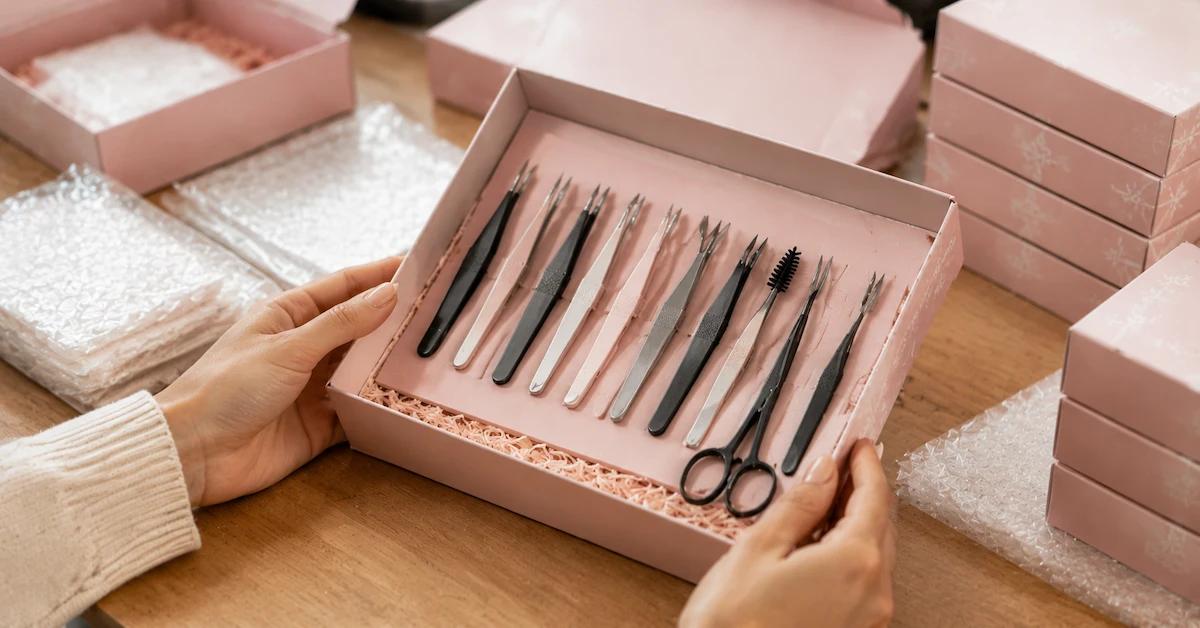
Packaging should match the sales channel. A salon may prefer practical protective sleeves that keep tools organized at stations. A retail buyer may need packaging that displays the tweezer clearly, explains the use case, and fits existing shelf systems. A gift set may require coordinated colors and a more polished presentation.
For custom logo tweezers, packaging has two jobs: protect the tips and communicate value. Tweezer tips can be damaged if they move freely during shipping or storage, so the inner hold matters. For brand communication, the package should make the logo, product type, and intended use easy to understand. Overly generic packaging can weaken the effect of customization, while overly complex packaging may add cost without improving the user experience.
Before finalizing packaging, buyers should think through the full journey: factory packing, international shipping, warehouse handling, retailer display, customer opening, and storage after purchase. A clear protective cap or sleeve may be small, but it can help users keep the tips in better condition after the first use.
Sourcing Questions for a Factory-Direct Custom Tweezer Project
Factory-direct sourcing can make customization more efficient because product selection, logo application, finish, and packing can be discussed together. However, buyers should prepare details before starting the conversation. A vague request for “custom tweezers with logo” can lead to slow quoting and mismatched expectations.
A useful brief includes the intended user, tweezer tip type, finish preference, logo file, approximate order purpose, packaging style, destination market, and any retail or distributor requirements. If the project is part of a wider accessory range, it helps to compare options within Olimor product collections so the tweezer aligns with other tools in color, finish, and presentation.
Buyers should also clarify practical production questions: whether the chosen finish supports the desired logo method, how logo position will be confirmed, what sample approval steps are available, how packaging protects the tips, and what inspection points are used before shipment. These questions are not just administrative; they directly affect whether the final branded tool feels professional.
Building a Better Custom Tweezer Program
A successful custom logo tweezer program starts with a specific use case. A brow studio selling aftercare tools may prioritize precision and a professional look. A cosmetics brand creating a holiday set may focus on giftable color and packaging coordination. A distributor may need a versatile design that appeals to many retailers. Each goal leads to different decisions.
It is also wise to keep the design disciplined. A clean logo, suitable finish, reliable tip alignment, and protective package often matter more than adding many decorative elements. The tweezer should look like part of the brand, but it must still perform like a dependable grooming tool.
For buyers planning a custom project, the next step is to define the application, compare product options, and prepare logo artwork in a usable format. To discuss a branded tweezer order or match tweezers with other beauty accessories, you can contact Olimor or send an inquiry with your project details. Clear requirements at the start will make it easier to choose the right tweezer, finish, logo placement, and packaging for your market.
Tag: