Choosing a Nail Clipper Manufacturer for Retail, Salon and OEM Programs
Selecting a nail clipper manufacturer is not only a price comparison. For beauty retailers, grooming brands, distributors, salons and promotional product buyers, the right supplier affects product feel, repeat purchase rates, packaging consistency and after-sales issues. A nail clipper is a small tool, but customers notice immediately when the blades do not meet cleanly, the lever feels weak, the edges are rough or the finish begins to corrode after regular bathroom use.
This guide explains how to evaluate a nail clipper supplier or factory with a practical sourcing mindset. It focuses on the criteria that matter when buying stainless steel nail clippers, building a wholesale assortment or developing an OEM grooming tool under your own brand. Olimor Beauty offers beauty tool products for professional and consumer markets, and buyers can explore related beauty tool products when planning a complete manicure or personal care range.
Start With the Intended Use and Sales Channel
A strong sourcing decision begins with the buyer’s market, not the factory quotation. A nail clipper for a salon counter display may need a different shape, finish and packaging format than a clipper intended for an online grooming kit, travel pouch or mass retail blister card. Before comparing suppliers, define the product’s role in the range.
For consumer retail, appearance and comfort are important because shoppers often decide quickly from images, packaging and perceived durability. For salons or professional use, buyers may prioritize a clean cut, stable hand feel and repeatable quality across batches. For gift sets or travel kits, compact size and coordinated finishing with other tools may matter more. For private label programs, the manufacturer’s ability to support packaging, surface finish and brand presentation becomes central.
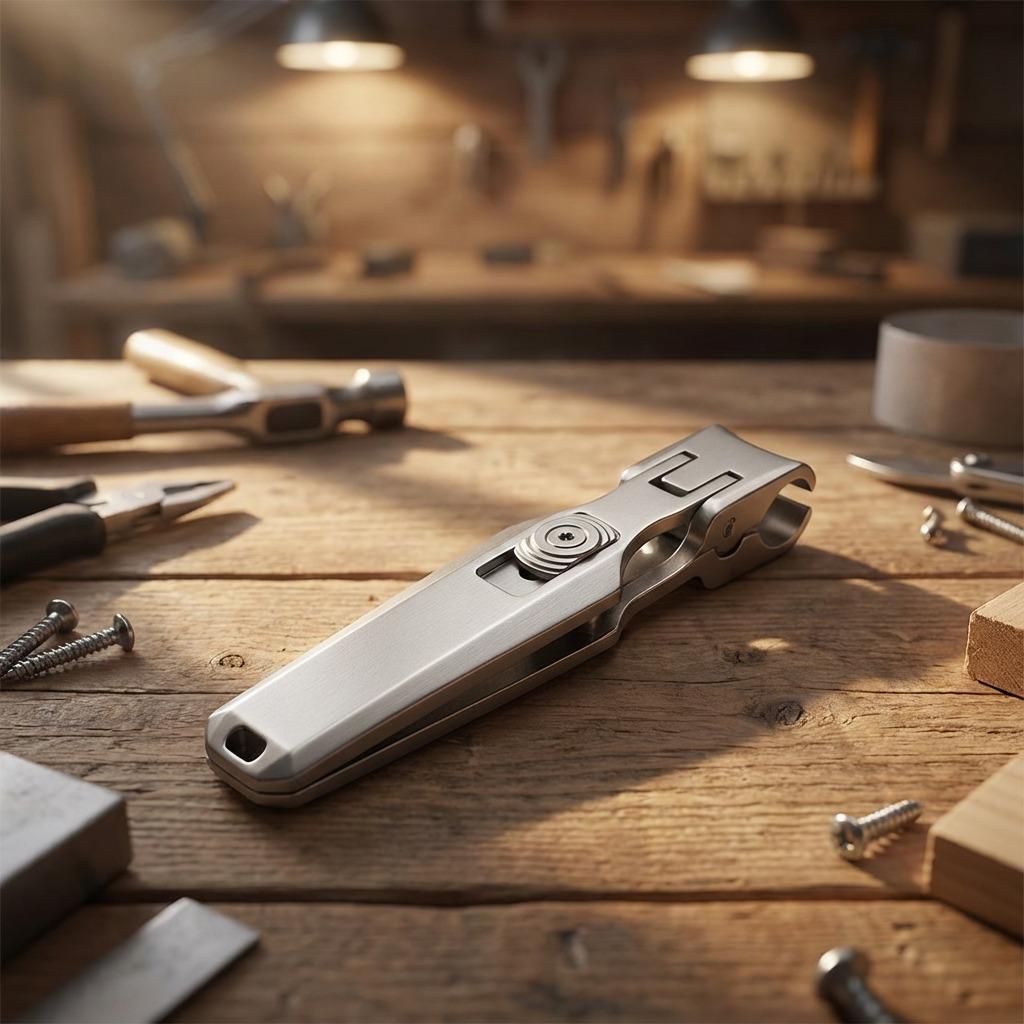
The supplied Olimor Beauty product information notes a stainless steel nail clipper weighing 48g and measuring 91mm in length, with an ergonomic grip for effortless use. Those facts are useful examples of the type of details buyers should request and verify. Weight and length influence hand feel, perceived sturdiness and packing dimensions. Stainless steel is commonly selected for grooming tools because buyers expect durability and easy cleaning, but the exact execution still depends on forming, sharpening, polishing and inspection.
Evaluate Material, Cutting Performance and Ergonomics
Nail clipper quality is felt in a few seconds. The blades should meet accurately, the lever should press smoothly, and the tool should cut without excessive force or jagged splitting. Even if two products look similar in photos, small differences in blade alignment, rivet fit, edge finishing and spring tension can create very different user experiences.
When comparing nail clipper manufacturers, request clear product samples and review them as a team. A buyer, a quality manager and a user-facing salesperson may notice different issues. Do not judge only the first cut. Test fingernails of different thicknesses, check the edge after repeated use, and inspect whether the lever remains stable. If the clipper is part of a kit, confirm that the tool can be removed and stored without scratching nearby items.
- Blade alignment: The cutting edges should close evenly from side to side without visible gaps.
- Cut feel: A good clipper should cut cleanly without twisting the nail or requiring excessive pressure.
- Grip comfort: The lever shape and body length should suit the intended user group, including travel, home and salon use.
- Edge finishing: Corners should be smooth enough for safe handling and packaging.
- Surface finish: Polishing, coating or plating should look consistent across units, especially for retail display.
- Portability: Weight and length should match the product promise, whether compact, premium-feeling or professional.
Ergonomics should not be reduced to a marketing word. A 91mm clipper, for example, may offer a more stable grip than a very small travel clipper, while still remaining portable. The correct balance depends on the audience. Senior users may appreciate easier leverage; frequent salon users may value predictable handling; travel buyers may prefer compactness. Choose the form based on use cases rather than assuming one design fits every channel.
Check Factory Process Control, Not Just Finished Samples
Finished samples are important, but they do not prove that bulk production will match them. A reliable nail clipper factory should be able to explain how it controls incoming materials, forming, sharpening, assembly, polishing, cleaning, packaging and final inspection. The process does not need to be described in overly technical language, but it should be organized and repeatable.
For buyers, the key question is consistency. A nail clipper that performs well in a sample set but varies in a shipment can create complaints, returns and poor reviews. Ask how the supplier separates approved samples from production references, how visual defects are classified, and how functional checks are performed before packing. If you are building a wholesale program, determine whether the manufacturer can maintain the same finish and packaging standard across repeat orders.
Useful inspection checkpoints include raw material appearance, formed part dimensions, blade closure, lever movement, surface blemishes, logo placement where applicable, packaging print quality and carton labeling. If the tool will be sold through online marketplaces, consider adding checks for scratch resistance during shipping and clarity of consumer instructions. If it will sit in a retail display, packaging alignment and barcode readability become practical issues, not minor details.
Olimor Beauty emphasizes inspection from raw materials to packaging in the supplied product information. Buyers can use that type of quality-control structure as a baseline when comparing any nail clipper supplier. The goal is not to collect vague promises; it is to make sure the manufacturer understands where failures can occur and how they are prevented before shipment.
Compare Supplier Types: Factory, Wholesaler and OEM Partner
The phrase nail clipper manufacturer is often used broadly, but different supplier types serve different buying needs. A factory may be suitable when you need direct production communication and product development support. A wholesaler may be useful for faster range building with existing items. An OEM partner may be the right fit when you want a customized product, packaging concept or branded grooming tool program.
| Supplier type | Best for | What to verify |
|---|---|---|
| Nail clipper factory | Buyers focused on production control, repeat orders and specification alignment | Process control, sample approval, inspection standards and communication flow |
| Nail clipper wholesaler | Distributors, retailers or salons needing existing products and simpler assortment building | Stock consistency, packaging options, reorder reliability and product condition |
| Nail clipper OEM provider | Brands developing private label tools, grooming kits or coordinated beauty accessories | Customization scope, artwork handling, packaging feasibility and pre-production sample review |
If your business is still testing demand, an existing wholesale item may reduce complexity. If you already know the target customer and need brand differentiation, OEM development may justify the additional coordination. When reviewing product collections, think about how a nail clipper fits beside tweezers, scissors, nail files, cuticle tools or other personal care accessories. A coherent assortment can improve perceived value and simplify merchandising.
Plan OEM Customization With Clear Boundaries
OEM nail clipper projects can involve changes to shape, finish, logo position, packaging, kit combination or display format. However, every customization should be tied to a commercial reason. A unique finish may support a premium retail concept. A compact package may reduce shipping space. A coordinated color direction may help the clipper match other beauty tools in a set. Customization that does not improve customer appeal or operational efficiency can add risk without adding value.
Before starting an OEM project, prepare a concise brief. Include the sales channel, target price positioning, expected user, preferred packaging format, required languages or label fields, and any retail compliance needs. Provide reference images for direction, but avoid copying protected designs. If the brand has style guidelines, share logo files, color references and packaging requirements early so the supplier can identify production limits before sampling.
A neutral buyer checklist for OEM nail clippers should include the following steps:
- Approve the base clipper shape and size using physical samples, not only catalog images.
- Confirm the surface finish and how it will appear under normal retail lighting.
- Review logo placement for visibility, durability and alignment.
- Test packaging with the actual tool to check movement, scratching and presentation.
- Define acceptable cosmetic and functional standards before production.
- Keep an approved sample for comparison during final inspection.
This structured approach helps prevent misunderstandings. It also makes it easier to compare one nail clipper OEM supplier with another, because each manufacturer is responding to the same brief.
Balance Cost With Long-Term Product Reliability
Low unit cost can be attractive, especially in competitive retail categories, but nail clippers are tools that customers judge through performance. A small saving may not be worthwhile if the product creates dull cuts, weak leverage, inconsistent finish or packaging damage. For online sellers, negative reviews can cost more than the initial saving. For distributors, inconsistent quality can make repeat orders harder to secure.
When comparing quotations, look at what is included. Does the price reflect the selected material, finish, packaging, inspection level and carton requirements? Are samples representative of mass production? Is the packaging strong enough for the shipping route and sales channel? Are there changes in cost if the product is included in a kit? A quotation is only meaningful when the specifications are stable.
Buyers should also consider communication quality. A capable supplier should answer product questions clearly, flag unrealistic requirements and provide practical alternatives when needed. Fast replies are helpful, but accuracy is more important. If you need to discuss a current nail clipper project, you can contact Olimor or send an inquiry with your product direction, packaging needs and target market.
Final Sourcing Checklist for Nail Clipper Buyers
A good nail clipper manufacturer helps turn a small grooming tool into a dependable retail or professional product. Before placing an order, confirm the essentials: product size and weight, stainless steel construction if required, blade alignment, ergonomic handling, finish consistency, packaging format, inspection criteria and repeat-order expectations. If OEM work is involved, add artwork approval, pre-production samples and packaging tests to the process.
The best supplier choice is the one that fits your channel and product promise. A salon-oriented clipper should feel stable and precise. A travel clipper should balance portability with cutting comfort. A private label clipper should meet both performance expectations and brand presentation needs. By evaluating materials, ergonomics, factory controls and customization options together, buyers can source nail clippers that customers keep, use and purchase again.
Tag: