

How to Choose a Reliable Tweezers Manufacturer for Wholesale Beauty Tools
For beauty brands, distributors, salon suppliers, and private-label buyers, tweezers are small tools with a large impact on customer satisfaction. A tweezer that slips, feels weak in the hand, or loses alignment quickly can damage the reputation of an entire beauty tool range. Choosing a tweezers manufacturer is therefore not only about finding a low unit price. It is about selecting a production partner that understands precision, surface finish, grip comfort, packaging consistency, and repeatable bulk quality.
Olimor Beauty works in the beauty tools category with a focus on practical, durable tools for professional and retail use. When evaluating Olimor Beauty or comparing it with other suppliers, buyers should look closely at the details that affect daily performance: tip alignment, stainless steel construction, ergonomic handling, custom logo execution, and export readiness. This guide explains what matters most when sourcing wholesale tweezers and how to assess whether a supplier is suitable for long-term cooperation.
Precision Starts With Tip Alignment and Grip Control
The most important feature of any tweezer is how the tips meet. If the tips do not align evenly, the tool may miss fine hairs, pinch skin, or require repeated attempts. In eyebrow grooming, lash work, facial hair removal, and general beauty care, this difference is immediately noticeable. A well-made tweezer should close cleanly, hold the target firmly, and release smoothly without forcing the user to squeeze too hard.
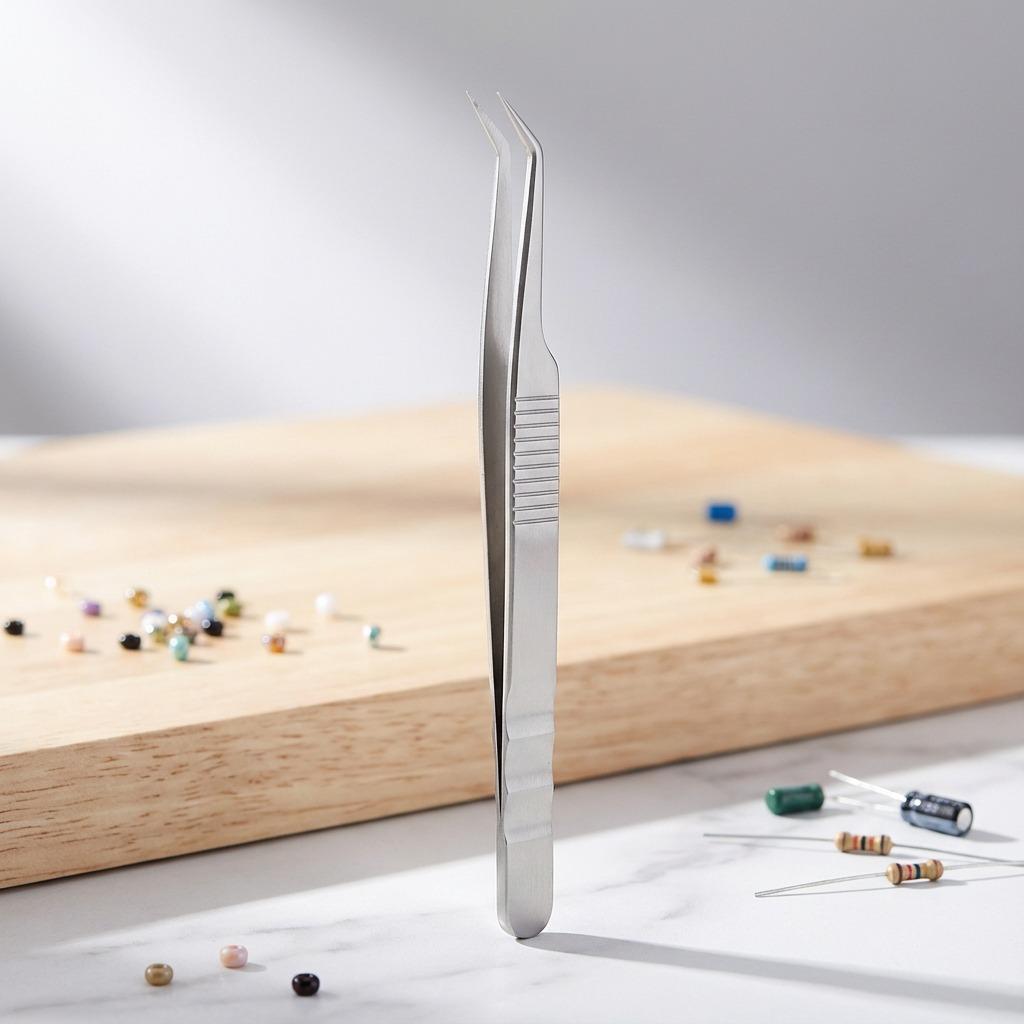
The original product focus for Olimor Beauty highlights stainless steel tweezers with an angled tip, firm grip, and ergonomic design. These are useful features for both personal care and professional beauty settings. An angled tip helps users approach hairs from a comfortable direction, while a secure grip reduces slipping. Ergonomic shaping matters because many salon professionals use tweezers repeatedly throughout the day, and hand fatigue can affect both comfort and accuracy.
When reviewing samples from any tweezers manufacturer, buyers should test more than one unit. A single good sample is not enough to prove production consistency. Open and close each tweezer several times, check whether the tips meet without gaps, and test the grip on different hair thicknesses or fine fibers. Consistency across samples is often a better sign than one highly polished display piece.
Material and Finish Affect Durability More Than Appearance Alone
Stainless steel is a common material choice for beauty tweezers because it offers strength, corrosion resistance, and a clean professional look. However, buyers should not evaluate material only by shine or color. A tool may look attractive in a product photo but still feel thin, uneven, or poorly finished in use. Durability depends on material selection, shaping, edge finishing, and how well the tool maintains tension after repeated use.
A quality tweezer should not feel brittle or bend too easily. It should have enough spring tension to open and close naturally, but not so much resistance that the user’s hand becomes tired. The outside edges should be smooth enough for safe handling, and the tip area should be finished carefully so it grips precisely without feeling rough or jagged.
For wholesale buyers, finish consistency is especially important because products may be sold through multiple channels, packed into sets, or offered as branded accessories. Uneven polishing, visible scratches, inconsistent color tone, or poorly applied logos can make an otherwise functional product appear low quality. Before placing a bulk order, review the finish under normal lighting and bright lighting, and check whether the same finish quality appears across multiple pieces.
Wholesale Tweezers Require Repeatable Quality, Not Just Volume
The tweezers wholesale market includes many suppliers, but not all are suitable for repeat orders. Bulk reliability means that the 500th, 5,000th, or future reordered piece should match the approved sample as closely as possible. Inconsistent suppliers may deliver acceptable samples but fail to control tip alignment, surface finish, packaging, or logo placement during larger runs.
Olimor Beauty is positioned as a long-term tweezers supplier with attention to inspection from raw materials to packaging. For buyers, that type of process matters because defects in small tools can be difficult to correct after shipment. A minor alignment issue on one item becomes a serious customer service problem when repeated across cartons.
Use the following checklist when comparing wholesale tweezers suppliers:
- Tip consistency: Tips should meet evenly with no visible offset, gap, or twisting.
- Grip strength: The tweezer should hold fine hairs or fibers without repeated slipping.
- Hand feel: Edges should be smooth, and the spring tension should feel controlled.
- Surface finish: Polishing, coating, or coloring should look even across multiple samples.
- Logo execution: Branding should be placed neatly and should not interfere with grip or tip performance.
- Packaging fit: Each item should sit securely in its package and be protected from scratches.
- Reorder consistency: The supplier should be able to maintain the approved standard over time.
Buyers building a broader beauty tool range can compare tweezers with other beauty tool products to ensure material style, packaging, and branding feel consistent across the collection.
Custom Logo Tweezers Need Branding Without Losing Function
Custom logo tweezers are popular for beauty brands, salon retail, promotional kits, subscription boxes, and gift sets. The challenge is to add branding while preserving the tool’s performance. A logo that is too large, poorly placed, or applied with an unsuitable method can create visual imbalance or affect the grip area. Good customization should look intentional and professional while keeping the tweezer easy to use.
When planning custom logo tweezers, consider the final sales channel. A minimalist logo may suit premium retail packaging, while a more visible mark may work better for promotional use or salon resale. The finish of the tweezer also matters. A logo that looks clear on a bright stainless surface may need a different approach on a darker or matte finish. Buyers should review physical samples whenever possible because digital mockups do not always show scale, reflectivity, or surface texture accurately.
Packaging should also be planned with branding. A branded tweezer placed in generic or weak packaging may feel unfinished. On the other hand, overly complex packaging can increase handling risk if the tool rubs against hard surfaces during transport. For buyers preparing a product line, it can be useful to view Olimor Beauty’s broader product collections and consider how tweezers will sit alongside other beauty accessories.
Export Readiness and Packaging Control Reduce Buyer Risk
For international buyers, a tweezers manufacturer must do more than make a functional tool. Export orders require clear communication, stable packing methods, carton organization, and attention to documentation and shipment handling. Even a well-made tweezer can arrive in poor condition if the packaging does not protect the tips or surface finish.
Practical export readiness includes protecting the tweezer tips from impact, preventing pieces from rubbing together, keeping product counts organized, and making outer cartons suitable for normal transport conditions. For retail buyers, barcode labels, inner box presentation, and packaging cleanliness may also be important. For distributors, carton markings and assortment control can reduce warehouse confusion.
Before confirming a wholesale order, buyers should define the acceptance standard in simple terms. This may include approved sample reference, logo position, finish appearance, packaging layout, and basic defect categories. Clear expectations help both sides avoid misunderstandings, especially when the order includes custom branding or multiple packaging versions.
How to Evaluate Samples Before Placing a Bulk Order
Sample evaluation should be structured, not casual. Instead of only checking whether the tweezer looks attractive, create a short test routine. This makes it easier for product managers, salon testers, or purchasing teams to compare options objectively.
- Visual inspection: Check alignment, polish, scratches, edge smoothness, and logo placement.
- Grip test: Use fine fibers or hair-like material to see whether the tips hold without slipping.
- Comfort test: Open and close the tweezer repeatedly to judge tension and hand fatigue.
- Surface check: Handle the tool with clean hands and inspect for sharp edges or uncomfortable points.
- Packaging review: Confirm that the tool is protected and presented appropriately for the sales channel.
- Batch comparison: Test several samples, not only one, to judge consistency.
This process is especially important for custom logo orders because a buyer may approve both the tool and the branding at the same time. If the logo is correct but the tips are inconsistent, the product will not meet customer expectations. If the tool performs well but the packaging looks weak, retail value may suffer.
Choosing a Long-Term Tweezers Supplier
A dependable tweezers supplier should support repeat business, not just one-off purchasing. Long-term sourcing depends on steady communication, consistent samples, practical packaging decisions, and a shared understanding of quality. The lowest initial quote may not provide the best value if it leads to returns, complaints, or inconsistent reorder quality.
Olimor Beauty’s value for buyers lies in the combination of practical beauty tool experience, stainless steel tweezer manufacturing focus, angled-tip functionality, custom logo possibilities, and attention to export-quality presentation. For companies building a beauty tools range, this type of supplier relationship can reduce the time spent rechecking basic quality with every new order.
Before moving forward, prepare your requirements clearly: intended market, target user, finish preference, logo needs, packaging style, and expected quality standard. If you are comparing suppliers or developing a private-label tweezer project, you can send an inquiry with your product goals, or contact Olimor to discuss suitable options.
A small tool deserves careful sourcing. When tweezers are precise, durable, comfortable, and consistently produced, they help strengthen the credibility of the full beauty product line. For wholesale buyers, that reliability is the real measure of a strong tweezers manufacturer.
Tag: