

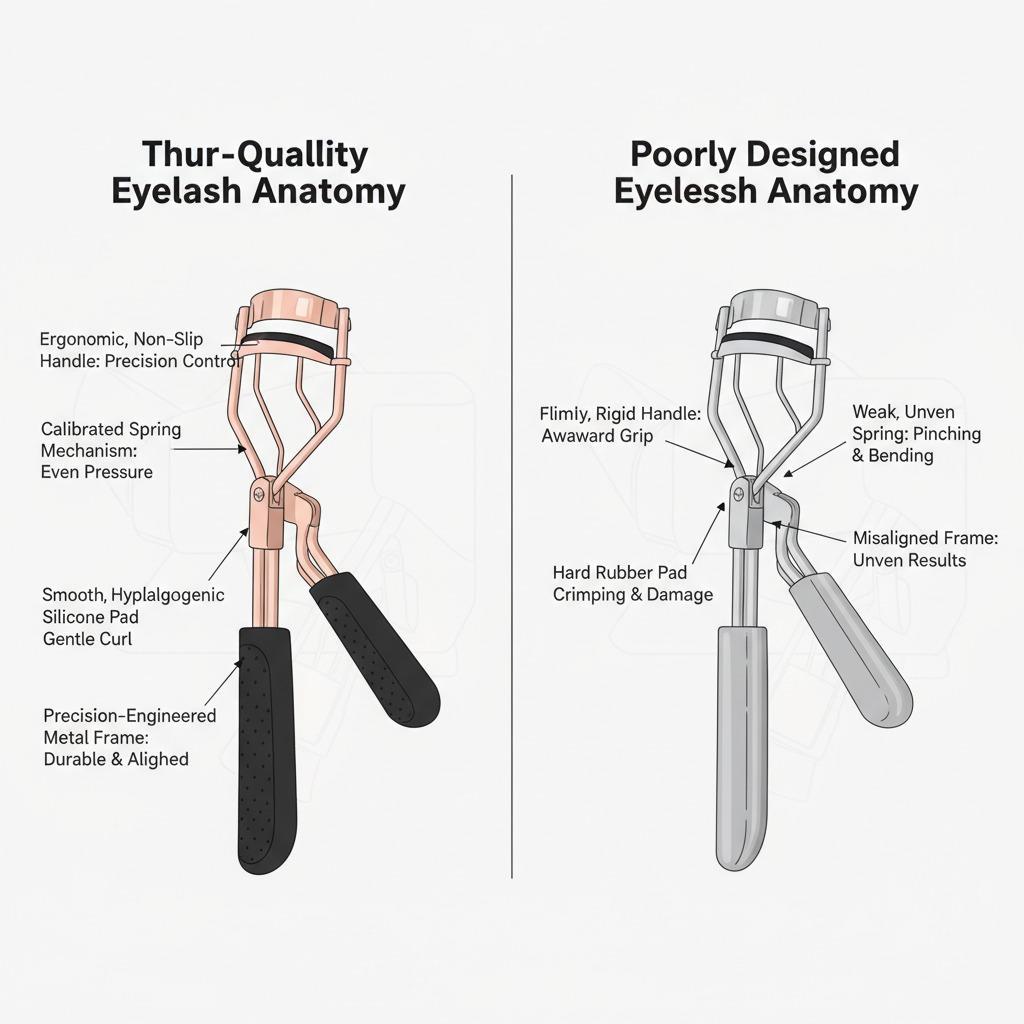
Why Eyelash Curlers Fail and How to Choose a Better One
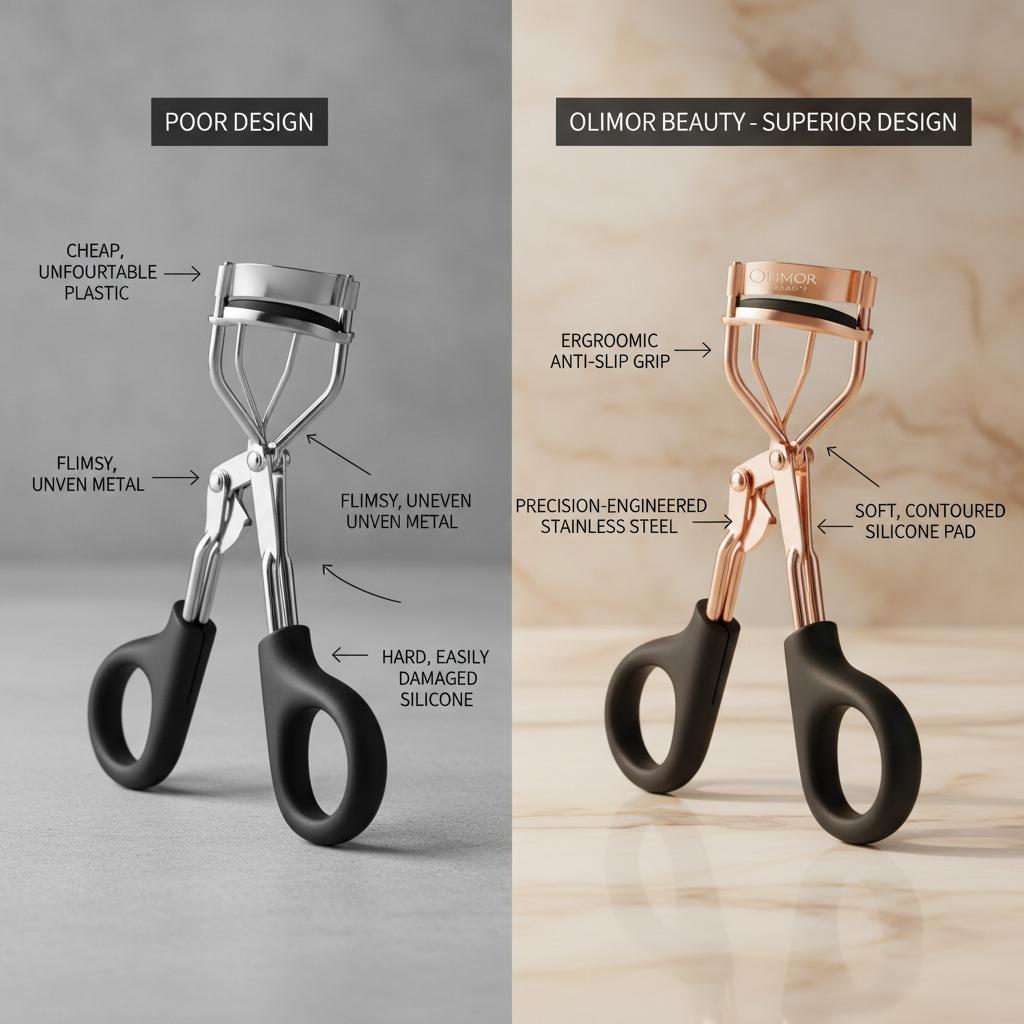
An eyelash curler looks simple, but small design choices decide whether it gives a clean lift or leaves lashes bent, pinched or unchanged. When buyers search for why eyelash curlers fail, the answer is rarely one single defect. It is usually a combination of face fit, clamp alignment, pad condition, hinge control and user technique. For beauty retailers, private-label buyers and daily users, understanding these details makes it easier to select a tool that performs consistently instead of relying on packaging claims alone.
Olimor Beauty focuses on practical beauty tools, including eyelash curlers for everyday makeup routines and beauty tool sourcing. If you are comparing options across beauty tool products, this guide explains what to inspect, what to avoid and how to maintain a lash curler so it remains safe and effective for longer.
Failure Point 1: The Curler Does Not Match the Eye Shape
Many curling problems begin before the tool touches the lashes. A curler with an unsuitable arc may not sit close enough to the lash line, especially on deep-set, round, hooded or flatter eye shapes. If the curve is too steep, it may reach the center lashes while missing the inner and outer corners. If it is too flat, the user may press harder to compensate, increasing the risk of pinching skin or crimping lashes.
A good evaluation starts with the frame shape. The opening should allow the upper lashes to enter without forcing the eyelid into an awkward angle. The top bar and lower pad should meet evenly from corner to corner. For retail buyers, it is useful to test a sample on different eye shapes rather than judging only by appearance. For individual users, the right curler should feel stable at the lash line before pressure is applied.
Failure Point 2: Uneven Pressure Creates Crimps Instead of Curl
A natural-looking curl comes from controlled pressure distributed through the pad. When the clamp is misaligned, one side may press more strongly than the other. The result can be a sharp bend in the middle, lashes that point in different directions or a curl that collapses after mascara is applied. This is why hinge movement matters as much as the visible frame.
Before choosing an eyelash curler, open and close it several times. The motion should feel smooth, not loose, sticky or wobbly. Watch whether the top clamp lands squarely on the pad. If the frame shifts sideways during closing, the user may need extra hand control to avoid uneven pressure. That extra effort often leads to inconsistent results, especially during quick morning routines.
- Good sign: the clamp closes evenly across the full pad surface.
- Warning sign: one corner touches first while the opposite corner floats.
- Good sign: the handle gives controlled resistance without sudden snapping.
- Warning sign: the hinge rattles, bends or feels unstable after repeated openings.
Failure Point 3: Pads Wear Out, Harden or Do Not Support the Lash
The silicone or rubber pad is a small component with a large effect. A pad that is too hard can create a visible crease. A pad that is too soft may absorb pressure without lifting the lashes. Over time, any pad can develop a groove where the clamp repeatedly presses. Once that groove becomes deep, the tool may cut into the lash line rather than shaping it smoothly.
Users often blame the metal frame when the pad is actually the issue. A worn pad can make a previously reliable curler feel harsh. For hygiene and performance, pads should be checked regularly and replaced when they show dents, cracks, stickiness or residue buildup that cannot be cleaned. If a curler is used in a professional or retail demonstration setting, pad condition should be monitored even more carefully because repeated use accelerates wear.
Failure Point 4: Material and Finish Affect Durability
An eyelash curler is repeatedly squeezed, cleaned, stored and transported. If the frame bends easily, the alignment changes and the curl becomes unpredictable. The original Olimor Beauty product discussion highlights stainless steel construction and quality checks as important considerations. In general, buyers should look for a frame that resists deformation during normal use, has clean edges and does not feel flimsy when pressure is applied.
Surface finishing also matters. Areas around the handles, clamp and eye opening should feel smooth, because rough edges can be uncomfortable and may catch skin or lashes. A well-finished curler should not require the user to fight the tool. For sourcing teams comparing products for a beauty assortment, sample inspection should include repeated open-close testing, pad removal and replacement, cleaning simulation and checking whether the frame remains aligned afterward.
How to Test an Eyelash Curler Before Committing
Whether you are buying one tool for personal use or evaluating products for a store, a simple inspection process can reveal many common problems. The goal is not to find the most complicated curler, but the one that works reliably with controlled pressure and minimal risk of lash damage.
- Check the frame arc. Hold the curler near the eye without squeezing. It should approach the lash line comfortably.
- Inspect the pad. Look for a smooth, even surface with no cuts, dents or uneven seating.
- Close the clamp slowly. Confirm that the upper bar meets the pad evenly from left to right.
- Test handle control. The handles should allow gradual pressure, not a sudden hard snap.
- Review cleaning access. Mascara residue should be easy to remove from the pad and clamp area.
- Consider replacements. If pads are replaceable, confirm that they fit securely and do not slide out during use.
For wholesale or custom sourcing discussions, share your target market, preferred packaging direction and inspection priorities when you send an inquiry. Clear evaluation criteria help narrow the choices without relying on vague descriptions such as premium feel or professional quality.
Technique Problems That Make Good Curlers Look Bad
Even a well-made curler can perform poorly if it is used incorrectly. The most common mistake is clamping too hard at one point near the lash root. This creates a bend rather than a curve. A better method is to use light pressure in stages: first near the base, then slightly outward toward the middle of the lashes, and finally near the tips if extra lift is needed. Each press should be brief and controlled.
Another issue is using the curler after mascara has dried. Mascara can make lashes stiffer and more likely to stick to the pad. Curling before mascara is generally gentler. If a user applies heat from a separate source, caution is essential because excessive heat can damage lashes or skin. A standard mechanical curler should not be exposed to conditions that may warp pads or affect adhesive components.
Maintenance That Prevents Pinching and Lash Breakage
Maintenance is often the difference between a tool that lasts and one that fails early. After use, wipe the pad and clamp area with a clean tissue or suitable cosmetic tool cleaner to remove oils and makeup. Avoid leaving heavy mascara buildup on the pad, because residue changes the surface texture and can pull on lashes. Store the curler in a dry place where it will not be crushed by heavier items in a makeup bag.
Replace the pad when it shows a permanent groove or no longer springs back after pressure. If the frame becomes bent, the safest option is usually replacement rather than trying to force it back into shape. A bent curler may look acceptable but still apply uneven pressure at the lash line. For retailers, including simple care instructions with the product can reduce dissatisfaction and help customers understand that pads are wear parts, not permanent components.
What Beauty Buyers Should Prioritize
For beauty tool buyers, the best eyelash curler is not just the one that looks attractive in a package. It should match the expectations of the end user: comfort, predictable curl, safe contact surfaces and durability under normal use. When reviewing product collections, compare samples using the same test process so decisions are based on performance rather than inconsistent first impressions.
Useful sourcing questions include: Is the clamp alignment consistent across samples? Does the pad remain seated after repeated opening and closing? Are the edges smooth around the eye opening? Does the handle design allow controlled pressure for users with different hand sizes? Is the product easy to clean? These questions are practical, measurable and relevant to customer satisfaction.
Choosing Reliability Over Claims
Eyelash curlers fail when small details are ignored. A poor arc misses lashes, weak alignment creates crimps, worn pads cause pinching and unstable hinges make pressure difficult to control. By checking fit, motion, pad quality, finish and maintenance needs, buyers and users can avoid many of the problems that lead to disappointing results.
Olimor Beauty offers beauty tools for customers who value practical design and consistent usability. If you need help comparing eyelash curler options for your market or assortment, you can contact Olimor with your project requirements and evaluation priorities.
Tag: