

Wholesale Salon Supplies: A Practical Guide to Professional Beauty Tools
For salon owners, spa managers, nail technicians, and beauty distributors, wholesale salon supplies are not simply back-room inventory. They shape the quality of daily services, affect appointment timing, influence client comfort, and help determine whether tools can withstand repeated cleaning, storage, and professional use. A cuticle nipper that pulls instead of cuts, a file that wears down too quickly, or a tweezer that loses alignment can slow a service and weaken confidence in the overall experience.
Buying professional beauty tools in bulk requires a more careful approach than choosing retail accessories for occasional home use. The buyer must think about tool performance, sanitation, staff comfort, packaging, replacement planning, and supplier consistency. Olimor Beauty focuses on beauty tools for professional and wholesale buyers, and this guide explains how to evaluate options before placing a larger order. If you are building a salon tool list, you can also review Olimor beauty tool products to compare product categories and plan a more organized purchasing process.
Start With the Service Menu, Not the Catalog
The most effective wholesale purchasing decisions begin with the services your business actually performs. A nail salon focused on cuticle care, shaping, and polish preparation will need a different mix of tools than a spa offering facial services, waxing support, and brow maintenance. Buying too broadly can create unnecessary inventory, while buying too narrowly can leave technicians waiting for shared tools during busy periods.
Before comparing suppliers, map each service to the tool types it requires. For example, manicure and pedicure services may require cuticle nippers, pushers, files, buffers, and detail tools. Brow or facial preparation may require tweezers, scissors, spatulas, or other precision accessories depending on the treatment. Once the tool list is connected to real services, it becomes easier to decide which items deserve the highest quality priority.
- High-contact precision tools: nippers, tweezers, scissors, and similar tools should be evaluated carefully for edge quality, alignment, grip, and cleaning compatibility.
- Consumable or semi-consumable items: files, buffers, and disposable accessories should be judged by consistency, surface performance, and packaging convenience.
- Shared salon tools: items used by multiple technicians should be durable, easy to identify, and practical to sanitize between services.
- Retail or take-home items: if sold to clients, packaging appearance and clear product information become more important.
What Makes a Professional Tool Different?
Professional-grade tools are expected to perform consistently through frequent use. A consumer tool may be acceptable for occasional personal grooming, but a salon tool must support repeated services without causing hand fatigue or producing uneven results. The difference is often found in material choice, edge finishing, balance, spring action, and inspection standards.
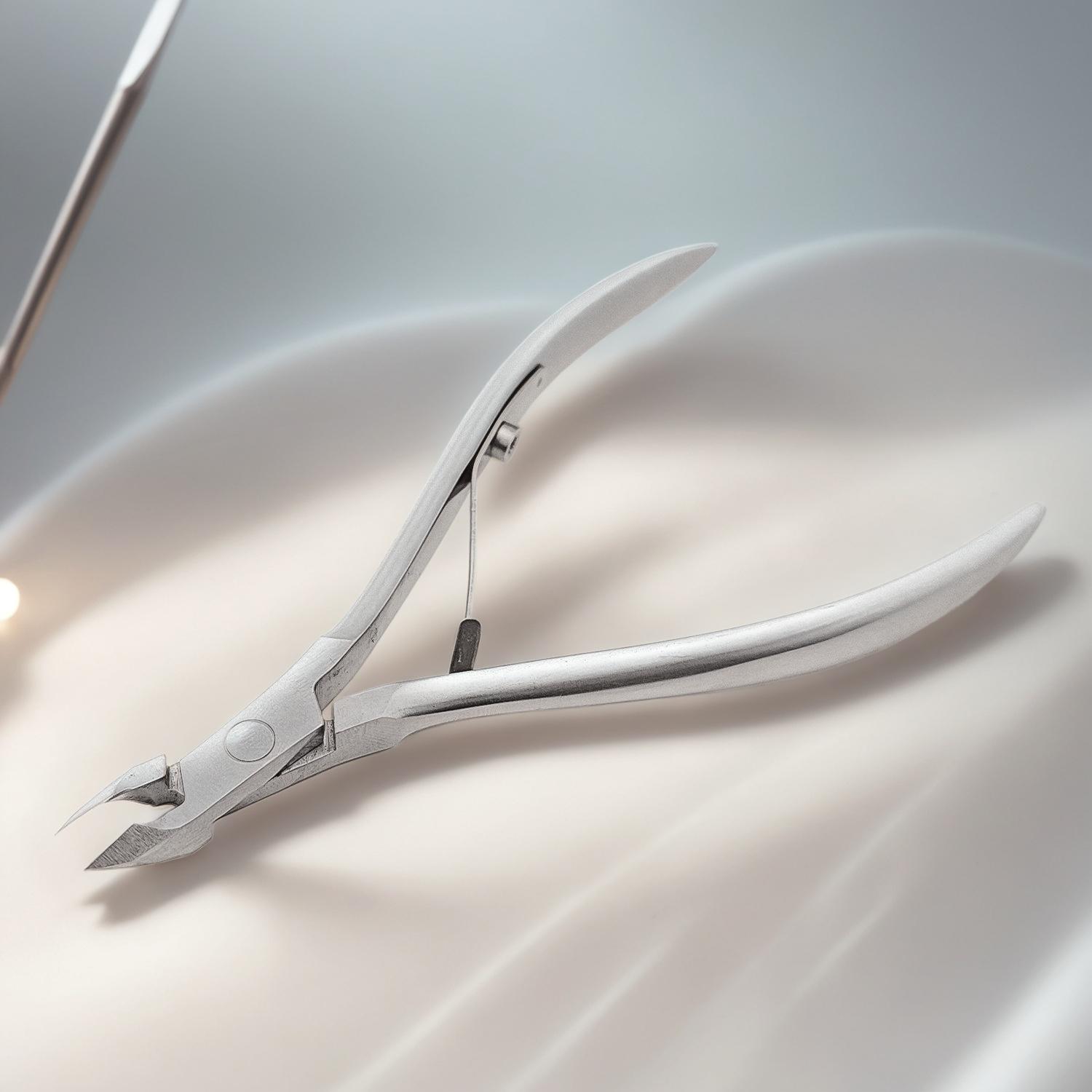
The original example of the Elite Precision Cuticle Nipper illustrates the kind of details buyers should examine. It is described as being crafted from high-grade stainless steel, with rust resistance, easy sanitization, an ergonomic handle, ultra-sharp hand-filed blades, and a double spring action mechanism. These are meaningful features because cuticle care depends on controlled cutting rather than pulling or tearing. The technician needs a tool that opens and closes smoothly, sits comfortably in the hand, and maintains a clean cutting feel during service.
When evaluating manicure tools wholesale, look beyond the product name and ask how the tool will behave at the service table. Does the handle feel stable when the hand is slightly damp or gloved? Does the cutting edge meet evenly? Is the spring smooth enough for repeated use? Can the surface be cleaned without difficult seams or rough areas? Small design details can become major operational concerns when a tool is used many times per day.
Key Selection Criteria for Wholesale Salon Supplies
A structured buying checklist helps reduce inconsistent decisions, especially when several team members are involved in purchasing. The following table gives practical criteria for comparing wholesale salon supplies without relying only on photographs or generic product descriptions.
| Criteria | Why It Matters | What to Check |
|---|---|---|
| Material and finish | Impacts durability, cleaning, and long-term appearance. | Look for smooth surfaces, corrosion resistance claims, and material information suited to salon use. |
| Edge or tip precision | Affects control in close-detail services such as cuticle or brow work. | Check alignment, sharpness, closure, and whether the tool cuts or grips cleanly. |
| Ergonomics | Reduces strain for technicians working through multiple appointments. | Evaluate handle shape, grip comfort, weight, balance, and spring response. |
| Sanitization practicality | Supports safe, repeatable salon workflows. | Consider whether the design has hard-to-clean areas and whether the tool surface is suitable for routine cleaning procedures. |
| Packaging consistency | Helps with storage, retail display, and professional presentation. | Review labeling, protective packaging, batch consistency, and ease of inventory handling. |
| Supplier communication | Reduces ordering errors and quality misunderstandings. | Prepare questions on product details, packing options, inspection steps, and order documentation. |
Quality Control Questions for Professional Beauty Tools Suppliers
Choosing professional beauty tools suppliers is about more than finding a wide catalog. A supplier should be able to support repeat orders and provide products that arrive with dependable finish, function, and packaging. Inconsistent tools create hidden costs: technician frustration, rework, returns, client complaints, and extra time spent checking shipments.
Olimor Beauty emphasizes precision engineering and stringent quality control for beauty tools, including inspection from raw material sourcing through final packaging. For a wholesale buyer, this type of process matters because defects are easier to prevent before shipment than to solve after tools are already distributed across salon stations or retail locations.
When comparing salon wholesale distributors or spa product wholesalers, build a question list that matches your business risk. For cutting tools, focus on blade contact, spring smoothness, tip alignment, and surface finish. For files and buffers, focus on surface consistency and packaging. For mixed beauty tool orders, focus on how products are sorted, labeled, and protected during transit. A reliable sourcing process should make it clear what you are buying, how products are checked, and how communication will be handled if specifications or packaging need clarification.
Ergonomics and Technician Workflow
A tool may look well made but still be unsuitable for heavy professional use if it causes discomfort. Salon staff often repeat the same hand movements for long periods, so handle shape, resistance, tool weight, and balance can affect both speed and comfort. This is especially true for cuticle nippers and other spring-based tools, where repeated opening and closing can create strain if the mechanism feels stiff or uneven.
When reviewing samples or preparing a first wholesale purchase, involve technicians who perform the services daily. Have them hold the tools in normal working positions rather than simply inspecting them on a desk. A useful test is to simulate the motion required during a full appointment and note whether the tool feels controlled, slippery, too heavy, or too light. For a nipper, the spring action should feel smooth enough to support precision work. For tweezers, the tips should meet reliably without excessive pressure. For files, the size and surface should match the technician’s preferred shaping method.
Comfort is not just a staff benefit. Better ergonomics can improve service consistency because the technician can work with steadier control. Over time, this supports a more professional client experience and reduces the temptation to replace tools prematurely.
Sanitization, Storage, and Tool Life
Professional beauty tools must fit into the salon’s hygiene routine. Even a well-designed tool can fail in practice if it is difficult to clean, prone to staining, or easily damaged during storage. Stainless steel tools are commonly valued in salon settings because they can support durability, rust resistance, and easier sanitization when designed and maintained properly. However, daily care practices still matter.
After each service, tools should be cleaned according to the salon’s hygiene protocols and stored in a way that protects edges, tips, and surfaces. Cutting tools should not be thrown loosely into drawers where blades can knock against other metal items. Tweezers and pointed tools should be protected from bending or misalignment. Files and buffers should be stored dry and separated as required by the salon’s sanitation policy.
- Remove visible residue before deeper cleaning or disinfection steps.
- Dry tools thoroughly after cleaning to reduce the chance of surface issues.
- Protect sharp edges and fine tips during storage and transport.
- Inspect tools regularly for looseness, damage, corrosion, or reduced cutting performance.
- Replace tools when performance decline begins to affect service quality or client comfort.
A clear maintenance routine helps wholesale purchases last longer and makes replacement planning more predictable. It also protects the value of investing in higher-quality professional tools.
Planning a Smarter Wholesale Order
A strong wholesale order balances immediate service needs with future replenishment. Start with core tools used every day, then add backups for peak periods, staff growth, and replacement cycles. If your business operates multiple service stations, avoid ordering only the exact number of tools required for a full schedule. A small buffer helps when tools are being cleaned, inspected, sharpened, replaced, or temporarily unavailable.
For mixed salon and spa businesses, group the order by service category. This makes it easier to check whether manicure, pedicure, facial, brow, and retail needs are all covered. It also simplifies internal training because staff can understand which tools belong to which treatment area. If you are comparing broader category options, Olimor product collections can help you organize purchasing by tool type or use case.
Documentation is also important. Keep a record of the product names, quantities, packaging preferences, and any agreed details. This reduces confusion on repeat orders and helps managers track which tools perform best over time. If your business has specific sourcing questions or needs to discuss a planned order, you can send an inquiry or contact Olimor for direct communication.
Building a Reliable Supplier Relationship
The best wholesale salon supplies program is built around repeatable quality, not one-time convenience. A supplier relationship should help your business maintain a steady standard across appointments, technicians, and locations. That means clear product information, careful inspection, practical packaging, and responsive communication when order requirements need to be confirmed.
For salon and spa owners, the goal is not to buy the largest possible assortment. The goal is to choose tools that support precise work, efficient sanitation, technician comfort, and consistent client results. By evaluating materials, edge quality, ergonomics, cleaning practicality, and supplier quality control, buyers can make wholesale decisions with far more confidence. Olimor Beauty provides professional beauty tools for businesses that value dependable performance and thoughtful sourcing, helping salons and spas build a tool inventory that supports daily service quality.
Tag: