

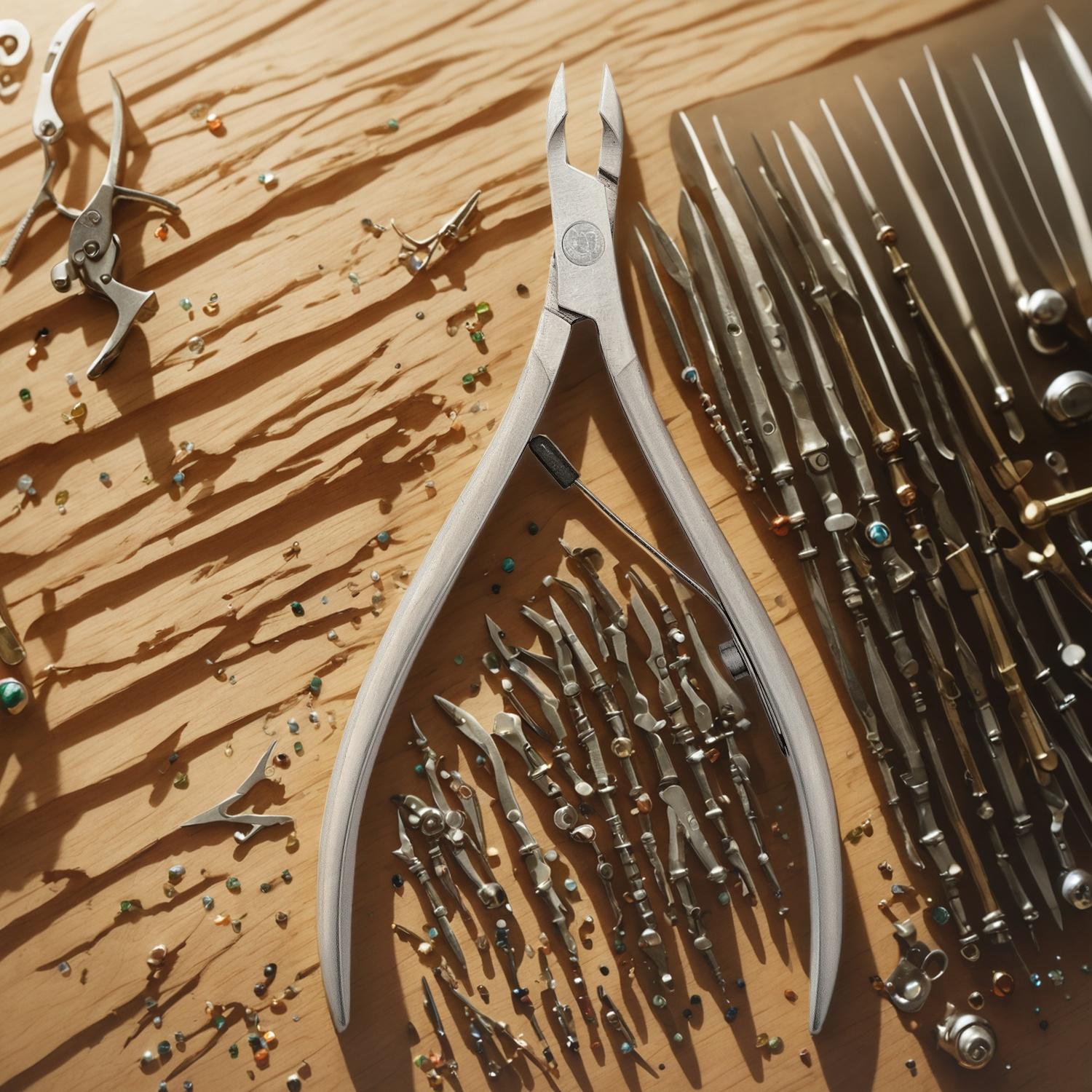
Wholesale Salon Supplies: How to Choose Professional Manicure and Spa Tools
Wholesale salon supplies influence more than the appearance of a workstation. For salons, spas, nail studios, beauty distributors, and private-label buyers, the quality of tools affects service consistency, technician comfort, hygiene routines, client confidence, and repeat purchasing. A cuticle nipper that loses alignment quickly, a tweezer with poor grip, or a spa implement that is difficult to clean can slow down daily work and create avoidable quality issues.
Choosing professional beauty tools at wholesale level should therefore be treated as a sourcing decision, not a simple price comparison. The best approach is to define how the tools will be used, what level of finish is required, how they will be sanitized, and whether the supplier can maintain consistent quality across repeat orders. This guide explains what to evaluate when purchasing manicure tools wholesale, spa tools wholesale, and related salon supplies for professional use.
Start with the service environment, not the product list
Before comparing catalogs, consider the environment where the tools will be used. A busy nail salon may prioritize speed, grip, sharpness, and easy sanitizing. A spa may need comfortable, refined implements suitable for calm treatment rooms. A distributor may need a balanced range that covers entry-level, professional, and retail-ready options without overcomplicating inventory.
Build your buying list around real service needs. For manicure and pedicure services, common professional tools may include cuticle nippers, nail clippers, cuticle pushers, nail files, foot files, tweezers, scissors, and cleaning accessories. For spa and facial services, buyers may also consider extraction tools, brow tools, lash tools, mixing accessories, and other precision implements. If you are reviewing broader categories, Olimor’s beauty tool products page can help you compare available tool types before narrowing your inquiry.
A useful wholesale list should also separate consumable items from durable tools. Consumables are reordered frequently and often depend on packaging and unit cost. Durable tools require more attention to material, edges, joints, finishing, inspection, and after-sale consistency. Mixing these two groups in one buying decision can lead to overlooking the details that matter most for professional implements.
What to look for in manicure tools wholesale
Manicure tools need precision because they are used close to delicate skin and nail edges. When reviewing cuticle nippers, pushers, clippers, and scissors, focus on measurable handling qualities rather than broad marketing terms. A professional tool should feel stable in the hand, operate smoothly, and support repeat use without excessive force.
For metal manicure tools, the original sourcing priority is material and design. Surgical-grade stainless steel is valued in professional settings because it offers durability, rust resistance, and can be sanitized efficiently when used with appropriate salon protocols. However, buyers should still check finishing, alignment, and edge quality instead of relying on material naming alone.
- Blade alignment: Nipper blades and scissor edges should meet cleanly without gaps, twisting, or uneven pressure.
- Sharpness and control: The tool should cut or trim cleanly while allowing the technician to control small movements.
- Joint movement: Hinged tools should open and close smoothly without looseness, stiffness, or grinding.
- Handle comfort: Handles should fit professional hand positions and reduce fatigue during back-to-back services.
- Surface finish: Edges, corners, and touchpoints should be smooth enough for safe handling and easy cleaning.
- Sanitation compatibility: Tools should be suitable for the cleaning and disinfection procedures used in the salon or spa.
For wholesale buyers, one sample that looks acceptable is not enough. Evaluate multiple pieces from the same sample batch if possible. Consistency across pieces is especially important for distributors, salon chains, and buyers planning repeat purchases. If the first order is reliable but later orders vary noticeably, technicians and customers will lose confidence in the product range.
How to evaluate spa tools for professional use
Spa tools may not always experience the same cutting pressure as manicure tools, but they still require careful selection. Many spa services depend on comfort, quiet handling, and a feeling of cleanliness. A rough edge, unbalanced tool, or poorly finished surface can affect the client experience even if the tool technically performs its basic function.
For spa tools wholesale, think about how the product fits into the treatment flow. A tool used during a facial should be easy to pick up, easy to clean, and comfortable for the technician to hold for controlled movements. Brow and lash tools should offer accuracy. Mixing tools and accessory items should be practical, durable, and simple to organize.
Packaging can also matter for spa and retail channels. Some buyers need bulk-packed supplies for back-of-house use, while others need consumer-ready presentation for resale. The right choice depends on your sales channel and storage process. Avoid overpaying for decorative packaging when the product is used only in treatment rooms, but do not ignore packaging protection when tools will be shipped, displayed, or handled by retail customers.
Supplier quality control questions that matter
Choosing professional beauty tools suppliers requires more than finding a low unit price. A reliable supplier should be able to explain how quality is checked from material sourcing to final packaging. Internal quality control is important because many tool problems are small but meaningful: a slightly uneven edge, a loose joint, a rough handle, or inconsistent polishing may not be obvious in product photos.
Use the following checklist when comparing salon wholesale distributors or spa product wholesalers:
- Product scope: Does the supplier offer the categories you need now and may need later?
- Sample evaluation: Can you review samples for hand feel, cutting performance, finishing, and packaging before committing to a larger order?
- Inspection process: Are there checks for alignment, surface finish, movement, and packaging condition?
- Consistency: Can the supplier maintain the same quality expectations across repeat orders?
- Communication: Are product details, customization limitations, timelines, and packing options explained clearly?
- Problem handling: Is there a practical process for reporting defects or shipment concerns?
For buyers developing a professional range, consistency is often more valuable than chasing the lowest possible price. A tool that performs reliably can reduce complaints, returns, technician frustration, and brand damage. When you are ready to compare categories or clarify purchasing needs, you can send an inquiry with your intended use, quantity planning, packaging preference, and quality priorities.
Balancing price, durability, and user comfort
Wholesale pricing matters, but the cheapest tool may become expensive if it dulls quickly, rusts, feels uncomfortable, or generates returns. Instead of looking only at unit cost, evaluate the total value of the tool in daily use. For salons, that means technician time, service smoothness, cleaning routines, and replacement frequency. For distributors, it includes customer satisfaction, reorder potential, and the risk of inconsistent batches.
A practical comparison table can help buyers organize decisions before placing an order:
| Buying factor | Why it matters | What to check |
|---|---|---|
| Material and finish | Affects durability, cleaning, and perceived quality | Surface smoothness, rust resistance, edge finishing |
| Functional precision | Determines how well the tool performs during services | Blade alignment, grip accuracy, joint movement |
| Ergonomics | Impacts technician comfort during repeated use | Handle shape, weight balance, opening resistance |
| Packaging | Protects products and supports retail or professional use | Bulk pack, individual pack, labeling needs, shipping protection |
| Supplier consistency | Protects your brand and reorder confidence | Inspection standards, sample approval, repeat-order control |
This structure also helps internal purchasing teams make better decisions. A salon owner may care most about technician comfort, while a distributor may focus on packaging, range planning, and repeat-order consistency. Listing priorities in advance helps avoid confusion during supplier discussions.
Planning a wholesale order without overcomplicating inventory
Many beauty businesses make the mistake of buying too many similar products at once. A tighter, well-selected range is often easier to sell, train, and reorder. For example, a manicure tool assortment may include one dependable cuticle nipper option, one pusher style, one clipper style, and a small number of complementary tools rather than multiple overlapping versions with unclear differences.
For salons and spas, start with the tools used most frequently and add specialized items only when they support a specific service. For distributors, consider building good-better-best options only when the differences are clear to customers. If the distinction between two tools is not easy to explain, it may create unnecessary inventory complexity.
It is also helpful to review related product collections when planning assortments. Collections can reveal how tools may be grouped for nail care, brow care, skincare, or spa use. Grouping products by service category can simplify training, website merchandising, and sales presentations.
Maintenance and handling after purchase
Even high-quality salon supplies need proper care. Wholesale buyers should provide handling guidance to teams or customers so tools last longer and remain suitable for professional service. Follow local hygiene rules and the disinfectant manufacturer’s instructions for cleaning and sanitizing. Avoid leaving metal tools wet for extended periods, and dry them thoroughly after cleaning.
Store sharp tools with blade protection where appropriate. Do not throw precision implements loosely into drawers with heavier items, as edges can become damaged. Hinged tools should be opened and closed normally rather than forced. If a tool becomes dull, misaligned, corroded, or uncomfortable to operate, remove it from professional use and replace it according to your service standards.
For multi-location businesses, create a simple tool inspection routine. A quick weekly or monthly review can identify worn tools before they affect service quality. Check cutting edges, springs, hinges, grips, and surface condition. This is especially useful for busy manicure stations where tools are used continuously.
Choosing a wholesale partner for long-term reliability
A good wholesale relationship supports stable product quality and clear communication. Olimor Beauty works in the professional beauty tools field, and buyers can use the same evaluation standards described above when comparing manicure tools, spa tools, and broader salon supplies. The goal is not only to purchase products, but to build a supply process that supports your business reputation.
When preparing to contact a supplier, include the product types you need, intended sales channel, target user, packaging preference, and any performance concerns your technicians or customers have raised. Clear information helps narrow the options and reduces back-and-forth. If your sourcing plan involves multiple categories or a customized assortment, you can contact Olimor to discuss suitable next steps.
Wholesale salon supplies should help professionals deliver consistent, comfortable, and hygienic services. By focusing on material, design, precision, supplier quality control, and practical maintenance, buyers can choose tools that support daily salon work and long-term customer trust.
Tag: