

Wholesale Salon Supplies: Practical Sourcing Guide for Beauty Tool Buyers
Wholesale salon supplies should be selected for real service conditions, not only for catalog appearance or the lowest visible unit cost. For salons, spas, nail studios, lash artists, beauty distributors and private label buyers, tools influence treatment speed, hygiene routines, technician comfort, retail presentation and customer trust.
A foot file that feels unstable, a tweezer that does not align cleanly, a manicure implement with rough finishing or a tool that is difficult to organize can create avoidable problems across many appointments. The better sourcing goal is to choose professional beauty tools that match the service menu, staff workflow, cleaning routine, storage method and market expectations.
Olimor Beauty supplies professional beauty tools for wholesale buyers who need practical options for salon, spa and retail use. This guide explains how to evaluate wholesale salon supplies, including manicure tools, tweezers, spa accessories and foot care tools such as dual-side stainless foot files. It also covers supplier evaluation, quality checks, packaging review and common pre-purchase questions for B2B buyers.
What Wholesale Salon Supplies Need to Deliver
Professional tools are handled repeatedly, often by different technicians and across back-to-back services. A tool used in a salon or spa must do more than look attractive in a sample photo. It should support consistent performance, predictable replacement planning and a professional service experience.
When reviewing wholesale salon supplies, buyers should focus on practical performance factors:
- Clear function: Each item should solve a specific service need, such as lash placement, nail shaping, cuticle care, smoothing rough skin or organizing treatment steps.
- Material suitability: Materials should be appropriate for repeated handling, cleaning routines and the intended beauty application.
- Comfort in use: Grip, balance, surface feel and tool tension matter because professionals may use the same tool throughout the day.
- Consistent finishing: Tools should be free from obvious burrs, rough seams, unstable parts or surfaces that feel uncomfortable in normal use.
- Storage and workflow fit: Tools that are easy to identify, clean, dry and store help stations reset faster between clients.
- Packaging readiness: For distributors and retailers, packaging should protect items and support organized inventory handling.
Buyers comparing categories can review Olimor beauty tool products to see how different implements may fit salon service kits, spa programs, lash services or retail assortments.
Key Product Categories for Salon, Spa and Retail Buyers
Wholesale salon supplies often cover several service areas. A buyer sourcing manicure tools wholesale may care most about precision and hand control, while a spa tools wholesale buyer may prioritize treatment flow, easy storage and compatibility with wet-area procedures. A distributor may need items that are easy to explain, display and reorder.
Manicure Tools Wholesale
Manicure tools such as nail clippers, files, cuticle tools and related implements should be reviewed for grip, control, edge consistency and suitability for repeated nail services. A tool may look simple, but the way it sits in the hand affects accuracy and user confidence.
Tweezers for Lash, Brow and Detail Work
Tweezers are small tools with a significant effect on service quality. Lash artists and brow technicians need controlled pressure, accurate grip and a shape that suits the technique being performed. Tip alignment, spring tension, hand comfort and material quality are important buying criteria.
Olimor highlights a False Lash Tweezer made from premium stainless steel with an ergonomic design intended to reduce hand fatigue and support precise application. Buyers should treat these stated qualities as practical review points: check how the tweezer closes, whether the tips meet evenly and whether several technicians can use the tool comfortably during repeated movements.
Foot Care Tools and Foot Rasps
Foot care tools deserve careful supplier evaluation because they are used in services where control, surface feel and finishing quality matter. A foot rasp should remove rough skin efficiently while remaining stable and comfortable in the technician’s hand.
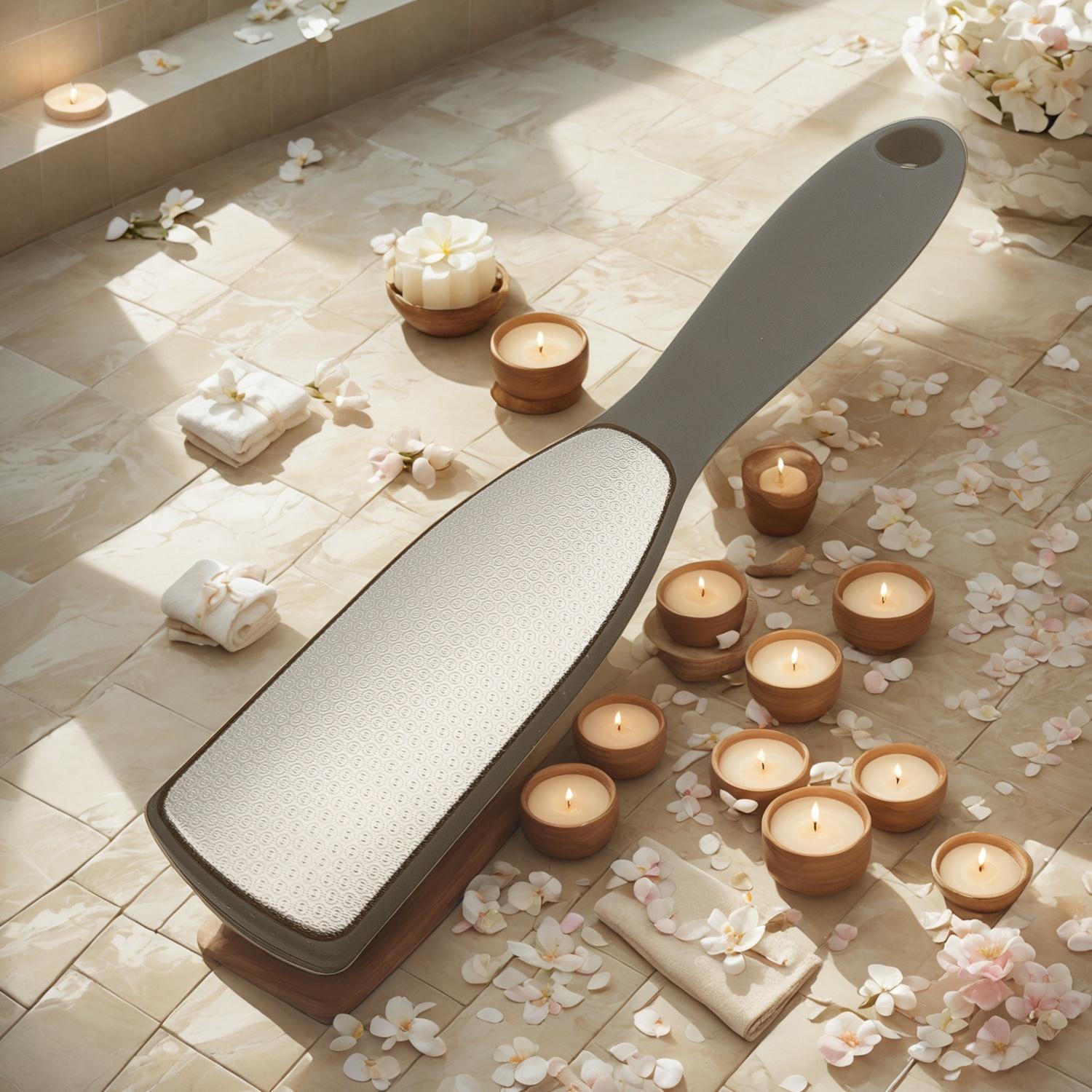
The Olimor EliteForge Dual-Side Stainless Foot File is an example of a foot care tool designed around practical pedicure use. It features stainless steel construction, dual-side technology and a matte-black handle. The coarse side is intended for removing tough calluses, while the fine side is used for smoothing skin. This two-step design helps technicians work from rough skin removal to refinement without changing to a separate tool. A convenient hanging hole can also support workstation organization when hooks or hanging rails are used.
Spa Grooming Tools and Accessories
Spa-related tools and accessories should be evaluated according to treatment-room workflow. Buyers should ask whether each tool fits the service sequence, whether it is easy to handle with clean or damp hands, and whether it can be stored neatly between appointments according to local hygiene procedures.
Distributor-Ready Retail Beauty Tools
Retail beauty tools must be usable and easy to understand. For distributors, packaging clarity, product purpose, surface appearance and consistency across repeat orders can matter as much as the individual tool function. A broad catalog is not automatically better than a focused range with clear application value.
Comparison Table: How to Select the Right Wholesale Beauty Tools
The table below helps buyers compare product categories with a practical sourcing mindset. It is useful when building a salon service kit, a spa assortment or a retail product line.
| Tool category | Key sourcing focus | Practical buyer check | Common risk if ignored |
|---|---|---|---|
| Foot files and rasps | Surface effectiveness, grip, cleaning routine and storage | Review coarse and fine surfaces, handle comfort and hanging or storage options | Uneven service results, poor control or cluttered pedicure stations |
| Manicure tools | Precision, edge consistency, balance and comfort | Check hand feel, finishing quality and suitability for the salon service menu | Slow work, technician discomfort or inconsistent nail service quality |
| Tweezers | Tip alignment, tension, grip accuracy and material quality | Test pick-up, release and closing action with realistic lash or brow tasks | Hand fatigue, inaccurate placement or customer dissatisfaction |
| Spa grooming tools | Durability, treatment flow, surface finish and organization | Confirm how the tool fits each treatment step and storage system | Disorganized rooms or tools that do not match spa procedures |
| Retail beauty tools | Usability, appearance, packaging clarity and repeat consistency | Review whether customers can understand the product purpose quickly | Lower sell-through, returns or inconsistent customer experience |
How to Assess Quality Before Placing a Wholesale Order
Quality assurance should begin before a large order is confirmed. A sample review is useful only if the buyer tests the sample in the same way the tool will actually be used. For salon tools, that means handling the item through real working positions. For retail tools, it means reviewing packaging, product clarity and whether the item arrives in a condition suitable for resale.
Olimor describes quality checks from raw materials to final packaging. Buyers can use that full-process mindset when evaluating professional beauty tool suppliers. The purpose is not to rely on vague claims, but to confirm that the product, packaging and supplier communication support consistent wholesale purchasing.
Practical Pre-Order Inspection Checklist
- Inspect the finish: Look for sharp unintended edges, rough seams, unstable parts, visible defects or inconsistent surfaces.
- Evaluate handling: Hold the tool in normal working positions and consider whether it remains comfortable during repeated motions.
- Check the working function: For tweezers, review tip alignment and tension. For foot files, confirm that coarse and fine sides are clearly different in function. For manicure tools, assess control and finishing quality.
- Compare multiple pieces: If more than one sample is available, check whether units feel and perform consistently.
- Review cleaning and storage needs: Consider how the tool will be cleaned, dried and stored under your local salon hygiene procedures.
- Assess packaging protection: Packaging should reduce unnecessary abrasion or damage during transit, warehousing and handling.
- Document feedback: Ask technicians, buyers or retail staff to record practical comments instead of relying on a single opinion.
For buyers planning a mixed assortment, Olimor product collections can help identify which categories belong together, such as tweezers with lash tools, manicure implements with nail care items or foot files with pedicure supplies.
Material and Manufacturing Details Buyers Should Discuss
Material names alone do not prove tool quality. Stainless steel, for example, is commonly valued in professional beauty tools because it can support durability and a clean working appearance when properly maintained. However, buyers still need to review the final tool: surface finishing, alignment, tool tension, working edges, handle construction and packaging condition.
For B2B sourcing discussions, ask suppliers how they control the steps that affect practical use:
- How are incoming materials reviewed before production?
- What in-process checks are used for surface finishing, alignment, grip or working edges?
- How are finished goods inspected before packaging?
- How is packaging selected to protect items during bulk handling?
- How are sample comments recorded and reflected before order confirmation?
- Can customization requests be reviewed without changing the tool’s safe and practical function?
Depending on the market and product type, buyers may also ask whether the supplier follows documented quality management practices aligned with standards such as ISO 9001. For salon hygiene and disinfection procedures, local public health authorities or public bodies such as the U.S. Centers for Disease Control and Prevention may provide relevant general guidance. Buyers should always verify the applicable version, local requirements and supplier documentation. No certification or compliance status should be assumed unless the supplier provides current evidence for the exact product and order.
Supplier Evaluation: Beyond the Lowest Unit Cost
The visible unit price is only one part of the total sourcing decision. A low-cost tool can become expensive if it causes higher replacement rates, technician complaints, inconsistent retail presentation or time-consuming after-sales issues. For wholesale salon supplies, the better comparison is total practical value.
When comparing beauty tool suppliers, consider these cost-factor and reliability questions:
- Does the tool match the exact service menu or retail purpose?
- Are samples representative of future bulk orders?
- Is the supplier clear about materials, packaging and customization options?
- Can the supplier discuss inspection points from raw materials to packaging?
- Does the product design support technician comfort and station organization?
- Are communication, quotation details and order requirements easy to understand?
- Can the supplier support repeat orders with consistent product presentation?
This approach helps buyers avoid treating every beauty tool as a commodity. A foot file for professional pedicure services, a tweezer for lash work and a manicure implement for daily nail services each require different checks. The right supplier should help buyers match tools to the intended use instead of pushing a generic assortment.
Customization, Packaging and Private Label Considerations
Many wholesale buyers need more than a standard item. Distributors, chain salons and private label buyers may ask about packaging, branding, assortments or product presentation. Customization can be valuable, but it should not weaken the tool’s function, comfort or practical durability.
Before requesting customization, define the commercial purpose. A retail buyer may need packaging that explains the tool clearly to end users. A salon group may need organized kits for internal use. A distributor may prioritize case packing, labeling clarity and repeatable presentation. Clear requirements help the supplier recommend realistic options and avoid unnecessary revisions.
Useful details to prepare include target sales channel, intended user, product category, packaging expectations, logo or artwork needs, destination market and any documentation your business requires. Buyers can send category questions or project details through Olimor wholesale inquiry channels for review.
Recommended Buying Process for Professional Salon Supplies
A structured sourcing process reduces misunderstandings and makes product comparison easier. The following sequence works for salons, spas, distributors and private label buyers:
- Define the use case: Identify whether the product is for professional service, retail resale, promotional kits or distributor stock.
- Shortlist categories: Separate manicure tools, tweezers, foot care tools and spa accessories so each can be evaluated by its own function.
- Request product details: Ask about material, tool design, packaging and available customization without assuming unconfirmed specifications.
- Review samples carefully: Test handling, function, finishing, consistency and packaging with the people who will use or sell the item.
- Confirm quality expectations: Discuss inspection points from raw materials through final packaging and clarify what documentation is available.
- Plan the order: Confirm assortment, packaging requirements, artwork if applicable and commercial terms before production or shipment planning.
- Record feedback after receipt: Track technician comments, retail response and any packaging issues to improve future orders.
This process supports better long-term supplier relationships because feedback is practical and specific. Instead of saying a tool feels good or bad, buyers can explain whether the issue relates to grip, tension, surface finish, packaging protection or service fit.
When Olimor Is a Good Fit
Olimor is a practical option for buyers who want professional beauty tools for salon, spa, nail, lash, foot care, distribution or private label planning. The strongest fit is a buyer who can describe the intended use and wants to review function, material suitability, packaging and quality checks before committing to a wholesale order.
If you are comparing manicure tools wholesale, looking for a foot rasps supplier, building a tweezer assortment or planning distributor-ready beauty tools, you can contact Olimor with your product category, target market and packaging needs. The most useful discussions begin with clear service requirements rather than a request for the cheapest generic item.
FAQ: Wholesale Salon Supplies
Can I request samples before placing a wholesale order?
Sample availability depends on the product and project details. Buyers should use samples to check real handling, working function, finishing consistency and packaging protection before confirming a larger order.
Does Olimor provide MOQ information for salon tools?
MOQ can vary by product category, packaging requirement and customization request. Buyers should ask for the applicable order requirements for the exact item or assortment being considered.
Can wholesale salon supplies be customized for private label or retail?
Customization may be possible depending on the product, packaging and branding request. Buyers should prepare artwork needs, target channel, intended user and destination market so the supplier can review realistic options.
What quality checks should I ask about before ordering?
Ask about material review, in-process checks, final inspection, packaging protection and sample consistency. For tools such as tweezers or foot files, also test the specific working function, such as alignment, tension, grip or coarse and fine surface performance.
How should buyers discuss lead time?
Lead time should be confirmed for the exact product, quantity, packaging and customization scope. Avoid assuming a standard schedule until the supplier has reviewed order details and any required artwork or sample approvals.
Tag: