

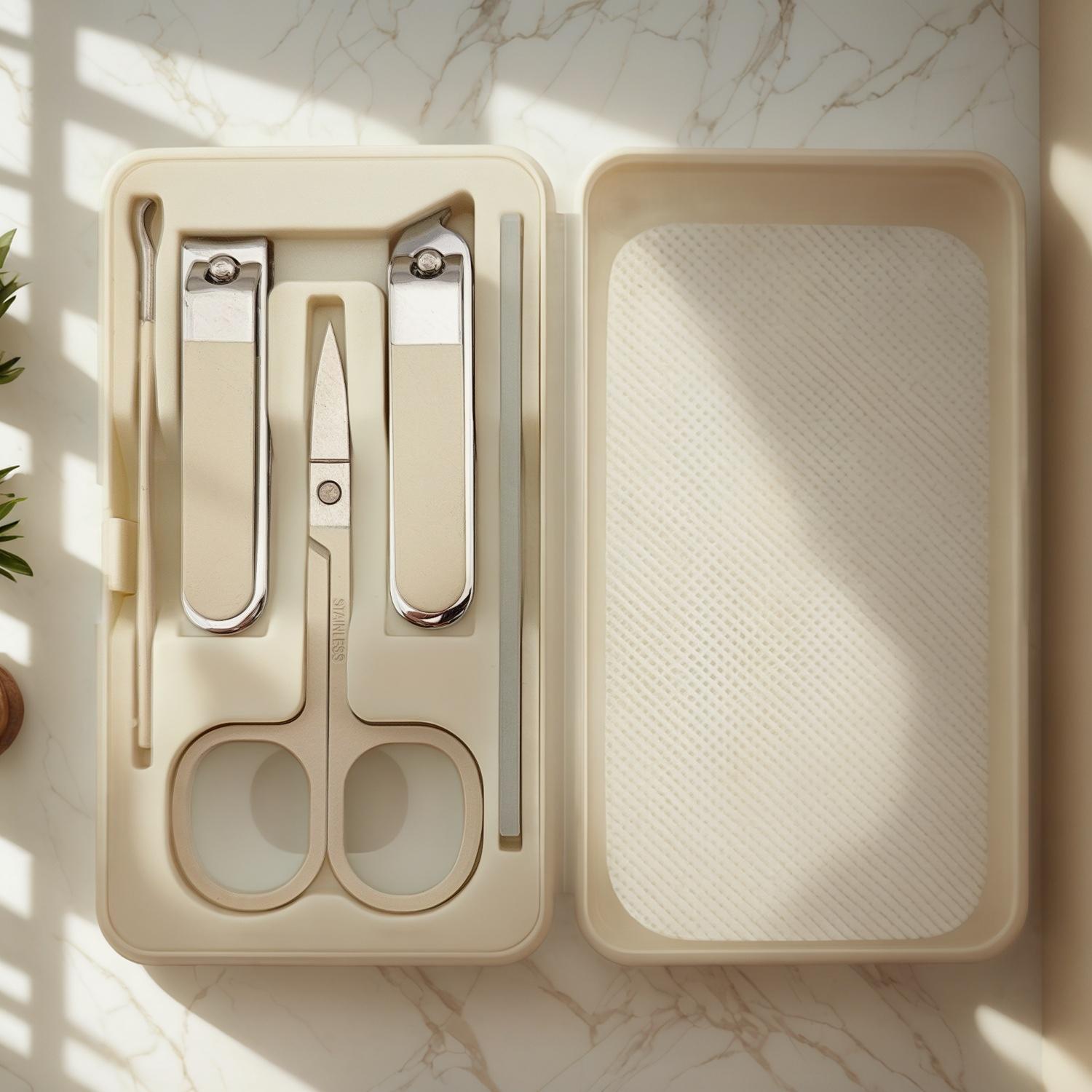
Wholesale Personal Care Tools for Salons, Spas and Retail Buyers
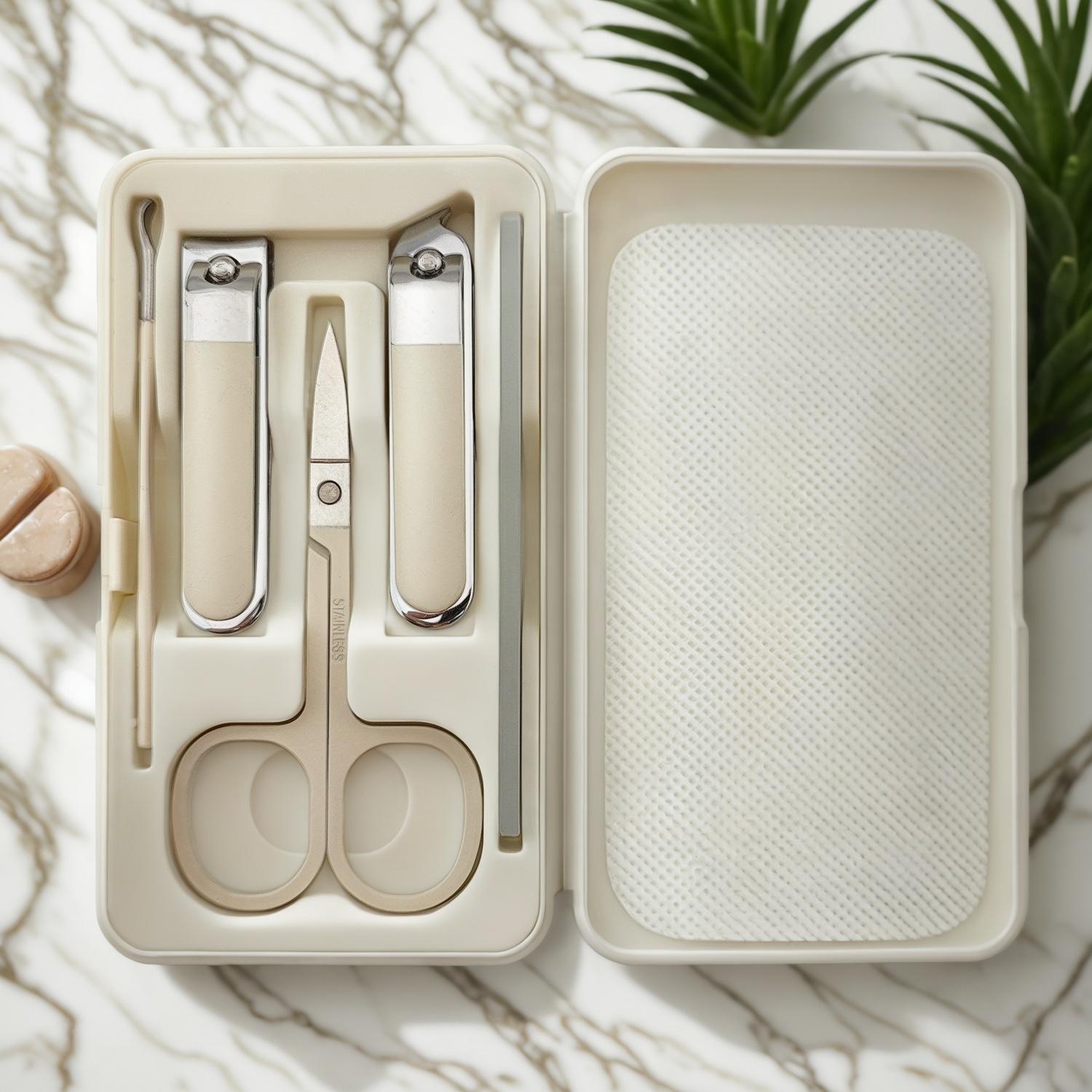
Wholesale personal care tools should be selected for one clear purpose: helping beauty businesses source reliable grooming tools that fit professional service, retail sale, travel kits or gifting programs. For salons, spas, hotels, beauty retailers and distributors, a nail clipper, scissor, tweezer, pedicure tool or compact kit is not just a small accessory. It affects customer experience, technician confidence, shelf presentation and repeat purchasing decisions.
Olimor Beauty supplies grooming essentials and manicure kit concepts for business buyers that need consistent presentation and practical daily use. The supplied product direction includes chic minimalist ivory shells, curated essential tools and high-grade, corrosion-resistant stainless steel. Buyers should still evaluate every sample against their own use case, local hygiene requirements and customer expectations before confirming a wholesale order.
This guide explains how to compare wholesale personal care tools, what to inspect in stainless steel manicure and pedicure items, how to plan a balanced assortment, and what questions to ask a supplier before buying in bulk.
Start With the Use Case Before Choosing a Kit
The best wholesale grooming tool order begins with the intended use. A set for a professional manicure station is not always the same as a retail kit for home customers or a compact item for hotel amenities. Defining the use case prevents overbuying, avoids crowded assortments and helps purchasing teams compare suppliers more objectively.
- Salon and spa service: Prioritize cutting precision, grip comfort, easy organization and consistent handling across multiple technicians.
- Retail sale: Focus on attractive case design, clear tool layout, packaging condition and an assortment customers understand quickly.
- Travel and gifting: Choose compact kits that hold tools securely, protect sharp edges and present neatly when opened.
- Pedicure programs: Confirm that the set includes tools suitable for foot-care tasks, not only basic fingernail grooming.
- Promotional channels: Balance perceived value, broad visual appeal and packaging durability for handling and distribution.
Business buyers comparing categories can review Olimor’s beauty tool products to identify which manicure, pedicure and grooming items fit their service menu or retail assortment before requesting specific wholesale details.
Who Buys Wholesale Personal Care Tools?
Wholesale personal care tools support different B2B channels, and each channel has its own selection priorities. A salon manager may care most about tool rotation and cleaning workflow. A retailer may focus on packaging, shelf display and product photography. A distributor may need a practical assortment that works for several types of customers without complicated explanation.
Nail Salons and Beauty Studios
Nail salons need manicure and pedicure tools that technicians can use repeatedly with control. Cutting edges should meet evenly, small scissors should open and close smoothly, and tools should feel stable in the hand. Consistency across units matters because different technicians should not experience noticeably different performance from the same bulk purchase.
Spas and Wellness Centers
Spas often position grooming tools as part of a broader self-care experience. A smooth finish, quiet handling, clean storage and polished presentation can influence how clients judge the service. For spa use, compact organization and professional appearance are often as important as the number of pieces included.
Retailers and E-Commerce Sellers
Retail buyers need tools that photograph well, explain themselves quickly and arrive in packaging suitable for storage and shipment. A kit with a tidy case and intuitive layout is easier for customers to compare online or on a shelf. Retailers should also consider whether the assortment creates repeat purchase opportunities or supports bundles with other personal care products.
Hotels, Resorts and Promotional Buyers
Hospitality and gifting buyers often prioritize compact formats, neutral appearance and secure storage. A minimalist ivory shell can work well in these channels because it feels clean and broadly suitable without depending on a narrow fashion trend.
What to Check in Stainless Steel Manicure and Pedicure Tools
Stainless steel is widely used for grooming tools because it supports a clean finish, resists rust better than ordinary carbon steel and is practical for repeated handling. The supplied Olimor product direction refers to high-grade, corrosion-resistant stainless steel, which is a useful baseline for manicure and pedicure tools. However, material naming alone is not enough. Buyers should inspect how each tool is formed, finished, aligned and assembled.
For nail clippers, the upper and lower cutting edges should meet evenly without visible offset. A clean closure helps reduce repeated pressure and supports a smoother trimming experience. For small scissors, the hinge should move smoothly without wobble, and the blades should not feel rough when opened or closed. For tweezers, nippers and detail tools, tips should meet accurately at the working end. Poor alignment can reduce control and make the tool feel unreliable.
Surface finishing is equally important. Stainless steel can still feel cheap if polishing is uneven or if burrs remain near edges, tips or handles. When evaluating a sample, handle each item the way an end user would: open it, close it, press it, remove it from the case, replace it and check whether it feels secure and controlled.
Where material specifications or test methods are relevant, buyers may refer to recognized public standards organizations such as ISO or ASTM for general stainless steel and product testing frameworks. The applicable standard, version and documentation depend on the market and product type, so buyers should verify requirements with the supplier and with local regulatory or industry guidance. Do not assume a certification or test result unless the supplier provides current documentation for the exact item being purchased.
Kit Design: Why the Case and Layout Matter
A grooming kit is more than a set of loose tools. The case protects the contents, communicates the product’s position and helps users keep small pieces organized. Olimor’s existing kit concept uses a chic, minimalist ivory shell, a suitable direction for buyers seeking a clean look across salon counters, retail shelves and gift programs.
When evaluating a kit, open and close the case several times. The closure should feel secure after all tools are returned to their positions. Inner holders, elastic loops or molded slots should keep pieces in place without making sharp tools difficult or unsafe to remove. If a tool shifts during handling, it may scratch the case, damage other items or create a poor first impression when a customer opens the kit.
The layout should be intuitive. Customers should understand the kit’s purpose at a glance. Too many similar tools can make the set feel crowded, while too few can make it look incomplete. For professional service, a more precise selection may be valuable. For general retail customers, a balanced everyday grooming kit is usually easier to explain and sell.
How to Build a Balanced Wholesale Grooming Tool Assortment
A strong wholesale order should reflect real customer use rather than a random mix of attractive products. Before confirming a bulk purchase of grooming tools, divide the order by purpose and expected rotation.
- Service tools: Items used by technicians during treatments, where comfort, durability and repeat handling matter.
- Retail tools: Products sold directly to customers, where appearance, packaging and clear use cases become more important.
- Starter kits: Sets for new clients, students, travel, gifting or promotional campaigns.
- Replacement items: Tools or accessories that require replenishment because of wear, hygiene policies or customer demand.
- Display samples: Units used for in-store demonstration, product photography or sales training.
Pedicure tools in bulk require especially careful planning. The right quantity is not only the number of technicians on duty. Buyers should consider the number of service chairs, peak appointment volume, cleaning and drying workflow, backup stock and tools removed from use for inspection or replacement. This prevents rushed cleaning cycles and reduces service delays during busy periods.
For a broader category review, buyers can browse Olimor’s personal care tool collection and then narrow the request by channel, kit style, tool type and packaging expectations.
Wholesale Evaluation Checklist
Before placing a bulk order, compare samples using the same inspection criteria across suppliers. A written checklist helps salon managers, retail merchandisers and purchasing teams make decisions based on function rather than photos alone.
| Evaluation area | What to check | Why it matters |
|---|---|---|
| Cutting performance | Clipper closure, scissor action and even edge contact | Supports clean trimming and reduces user frustration |
| Alignment | Tips, jaws and cutting edges meet accurately | Improves control and consistency across tools |
| Material finish | Consistent stainless steel polish with no rough burrs | Improves hand feel and perceived product quality |
| Ergonomics | Grip shape, pressure required and stability in hand | Helps technicians work comfortably during repeated use |
| Case security | Tools stay in place when opened, closed and moved | Protects the kit and keeps presentation neat |
| Packaging condition | Outer packaging protects the product during transit and storage | Reduces damage, returns and shelf-display problems |
| Batch consistency | Several samples show the same fit, finish and function | Supports repeat wholesale supply and buyer confidence |
Hygiene, Safety and Maintenance Considerations
Personal care tools are used close to skin, nails, lashes and feet, so hygiene planning must be part of the buying decision. Salons, spas and training centers should confirm whether each tool is practical to clean, store and inspect according to their local procedures. Smooth surfaces, accessible joints and simple shapes are generally easier to manage than tools with hard-to-reach gaps.
For professional use, buyers should create internal rules for tool assignment, cleaning after use, separation of used and clean tools, inspection for wear and removal of damaged items. Local health departments or equivalent public bodies may publish hygiene requirements for salon and spa operations. Buyers should verify the applicable rules in their market and request supplier documentation where relevant, rather than relying on general assumptions.
Retail tools also benefit from basic care guidance. Customers may not know technical maintenance details, but they notice when a tool becomes stained, loose or difficult to store. Clear handling and storage information can reduce misuse and improve satisfaction after purchase.
Supplier Evaluation for B2B Buyers
Choosing a wholesale supplier is not only about unit cost. The better question is whether the supplier can support the intended product strategy with suitable categories, consistent finishing and practical communication. For beauty businesses, supplier evaluation should cover product fit, sample review, packaging options, reorder planning and quality checks.
Olimor Beauty emphasizes production steps and quality checks from raw material selection through final packaging. Buyers should still review samples and confirm the selected items match their market, because the best tool is the one that fits both business use and customer expectations.
Questions to Ask Before Ordering
- Which tools are recommended for salon service, retail sale, travel kits or promotional programs?
- Can samples be reviewed before a bulk order is confirmed?
- What customization options are available for kits, cases or packaging?
- How are raw materials, finishing, assembly and final packaging inspected?
- What information is needed to confirm current MOQ, lead time and packaging details?
- How should repeat orders be planned if the tools become part of a regular retail or service program?
Buyers ready to discuss a specific assortment can contact Olimor through wholesale product inquiry with details about channel, expected use, packaging goals and any market-specific documentation needs.
Cost Factors Without Chasing the Lowest Unit Price
Wholesale personal care tool pricing can be affected by tool assortment, material choice, finishing complexity, case design, packaging format, customization requirements and order scope. A larger or more complex kit is not automatically the better choice. If several tools perform nearly the same function, the set may appear crowded and increase cost without improving customer value.
For salons, the cost should be viewed alongside service workflow. Tools that feel more consistent, store neatly and support cleaning rotation may reduce operational friction. For retailers, packaging and presentation affect perceived value, product photography and customer confidence. For hospitality or gifting, compactness and neat presentation may matter more than a large piece count.
A practical buying approach is to compare the total program value: tool function, finish, packaging, sample consistency, supplier communication and reorder suitability. This creates a more reliable decision than choosing only the lowest quoted unit price.
Common Problems and How to Prevent Them
Many wholesale issues can be avoided with structured sample review and clear ordering requirements. If tools arrive with uneven finish, the inspection process may not have included enough units. If a kit looks attractive but sells slowly, the assortment may not match the retail customer’s needs. If salon staff complain about handling, the buyer may have focused too heavily on appearance instead of repeated-use comfort.
- Problem: Tools look good in photos but feel rough in hand. Request samples and inspect edges, hinges, tips and surfaces manually.
- Problem: Pedicure stations run short during busy periods. Plan quantities around peak service volume, cleaning workflow and backup stock.
- Problem: Retail kits confuse customers. Choose a clear tool layout with recognizable everyday grooming functions.
- Problem: Packaging arrives damaged. Review packaging protection and storage requirements before placing a bulk order.
- Problem: Reorders vary from the first shipment. Compare multiple samples and discuss consistency expectations with the supplier.
When to Contact Olimor
If your business needs wholesale manicure tools, pedicure tools in bulk, compact grooming kits or retail-ready personal care tool assortments, Olimor can help clarify suitable product directions. Share your channel, use case, packaging preference and any customization needs so the discussion stays practical and specific. To start a restrained sourcing conversation, visit contact Olimor Beauty.
FAQ
Can I request samples before placing a wholesale order?
Sample review is a practical step before buying personal care tools in bulk. Buyers should use samples to check cutting action, finish, alignment, case security and packaging condition before confirming a larger order.
What is the MOQ for wholesale personal care tools?
MOQ can depend on the product type, kit configuration, packaging format and customization requirements. Buyers should ask Olimor for current details based on the exact assortment and market needs.
Can grooming kits be customized for retail or gifting?
Customization may involve tool assortment, case style, presentation or packaging direction. The available options should be confirmed during inquiry so the final kit matches the selling channel and brand expectations.
What quality checks should buyers request?
Useful checks include raw material review, surface finishing, tool alignment, cutting function, case fit, packaging condition and consistency across multiple units. Buyers should also verify any required documentation for their market.
How should lead time be planned?
Lead time can vary with product selection, order scope, packaging and customization. Buyers should confirm timing during the quotation stage and allow time for sample review, approval and any documentation checks.
Tag: