

Vegan Manicure Tools Wholesale for Ethical Nail Care Buyers
Vegan manicure tools wholesale sourcing is about more than adding an ethical label to a nail care set. For salons, beauty retailers, distributors, private-label brands and promotional buyers, the real goal is to source tools that avoid animal-derived components while still performing reliably in daily grooming use.
A strong wholesale manicure program should be clear on material choices, tool function, packaging, inspection standards, customization needs and end-user expectations. Olimor Beauty supports buyers looking for practical manicure and grooming tool solutions, including stainless steel tool sets and vegan-friendly product directions suitable for retail, salon, travel and gift channels.
This guide explains how to evaluate vegan manicure tools before placing a bulk order, how to compare 12-piece and 15-piece set formats, what quality checks matter most, and what to ask a supplier before moving from sample approval to production.
What Vegan Means in Manicure Tool Sourcing
In manicure tools, vegan usually means the complete product avoids animal-derived materials. The metal implement itself may be stainless steel, but the full set can include a case, lining, elastic holder, adhesive, logo patch, decorative trim, insert card or outer packaging. Any of these details can affect whether the finished product supports a vegan or cruelty-free retail message.
Common materials to review include genuine leather, animal hair, shell, horn, bone and animal-derived decorative components. Buyers should also confirm the material used for leather-style pouches or wraps before describing the set as vegan in packaging or online listings.
For B2B buyers, the safest approach is to define the vegan requirement at the brief stage. State which materials are not acceptable, which synthetic or paper-based alternatives are preferred, and whether the requirement applies only to the tools or to the full retail-ready kit. This reduces confusion when comparing samples from different suppliers.
Vegan positioning should not distract from tool performance. A nail clipper must still cut cleanly. A tweezer must still align correctly. A cuticle pusher must feel controlled near delicate skin. Ethical sourcing is strongest when the tool is both values-aligned and practical for repeat use.
Who Buys Vegan Manicure Tools Wholesale?
The audience for vegan manicure tools is broader than a single niche. Demand can come from professional nail salons, beauty retailers, spa and wellness stores, travel grooming sellers, online self-care brands, subscription programs, gift-set companies and distributors serving multiple sales channels.
- Professional salons: Need reliable daily handling, smooth edges, tool balance and surfaces that are easy to clean between uses.
- Retail stores: Need attractive presentation, clear tool descriptions and packaging that explains the vegan positioning without overclaiming.
- Travel and gifting programs: Need compact cases, secure tool placement and a practical mix of essentials.
- Online brands: Need tools that photograph well, with accurate product copy and close-up images showing the case layout and tool heads.
- Private-label buyers: Need early decisions on set composition, case design, logo placement, colors, packaging format and quality expectations.
Before selecting a set, define the use case. A compact retail grooming kit, a salon replacement tool range and a premium gift set may all use similar tools, but they need different packaging, inspection priorities and customer explanations.
Core Tools in a Vegan Manicure Range
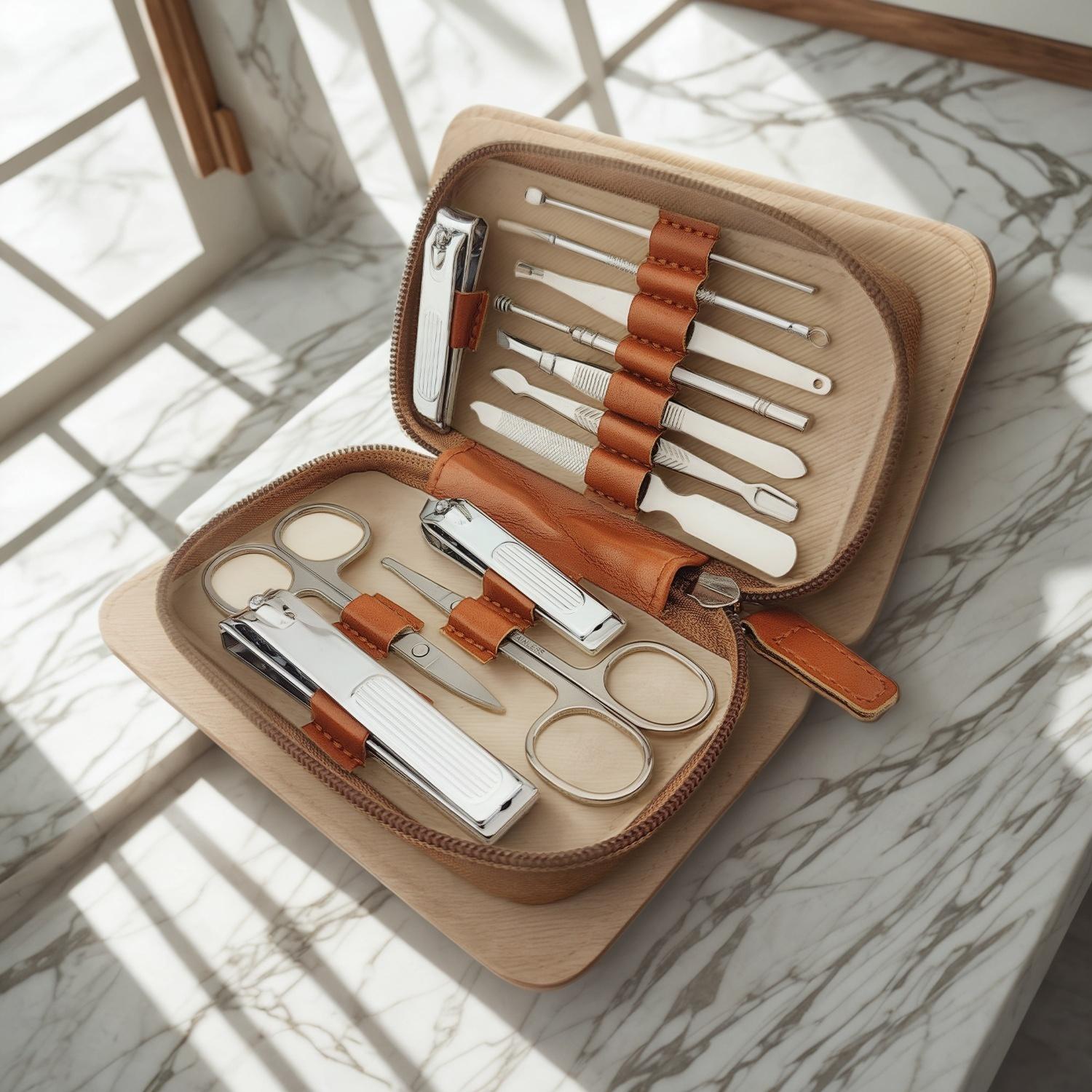
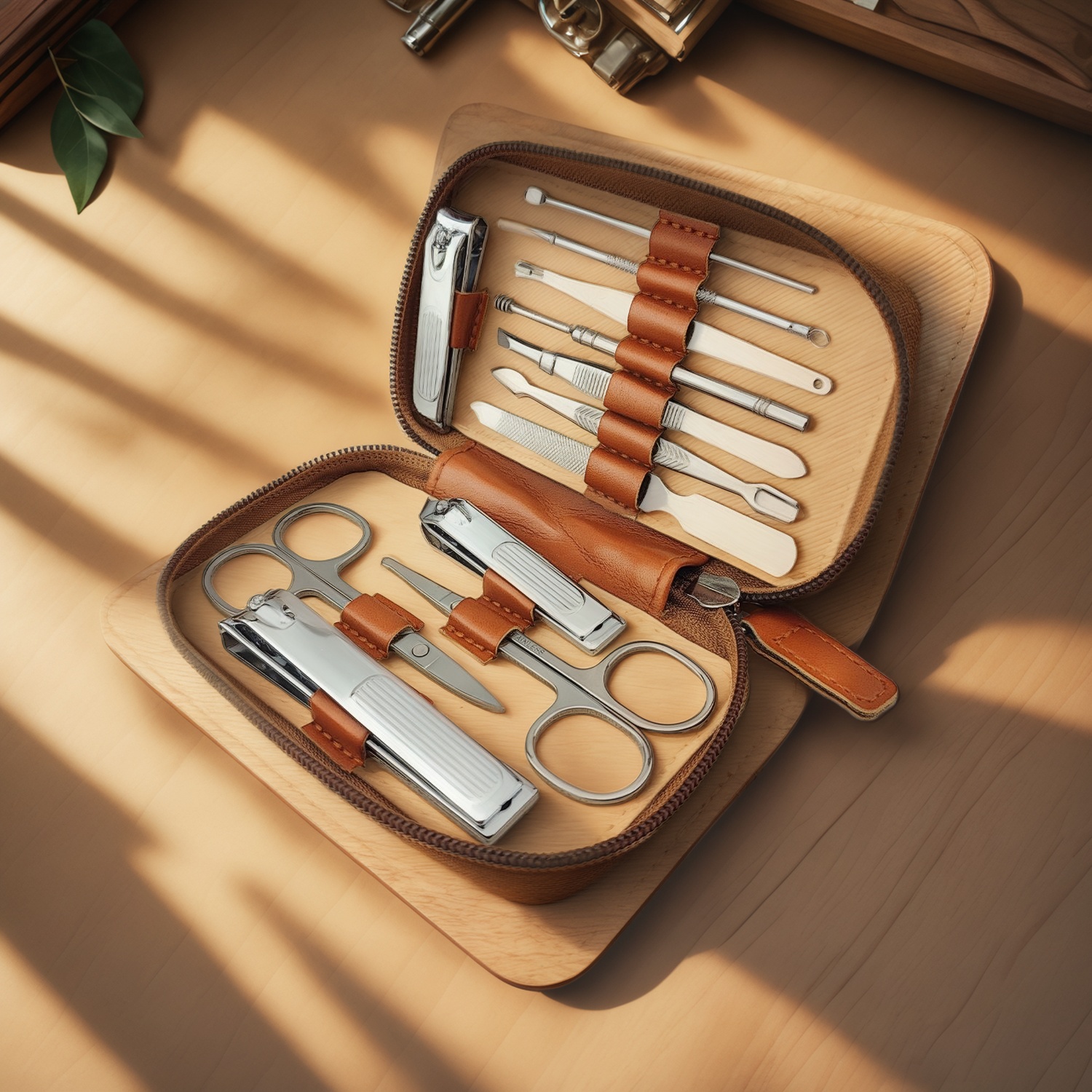
A wholesale manicure set should cover real grooming needs without adding unnecessary pieces only to increase the count. Olimor product directions referenced for this category include precision nail clippers, ergonomic cuticle pushers, nail scissors, files and multi-functional tweezers, with 12-piece and 15-piece set options available for different buying strategies.
Nail Clippers
Nail clippers are the foundation of most manicure sets. Buyers should check cutting edge alignment, lever comfort, opening and closing action, and whether the clipper cuts cleanly without requiring excessive pressure. If a set includes both fingernail and toenail clippers, each should have a clear size and function.
Cuticle Pushers and Trimmers
Cuticle tools are used near delicate skin, so finishing matters. Edges should be functional but not carelessly sharp where the user grips or rests the tool. A pusher should feel stable in the hand and controlled at the working end.
Tweezers
Tweezers are often included in grooming sets because they extend the kit beyond nail care. Tip precision, symmetry and tension matter more than decorative styling. Misaligned tips can make the tool frustrating even if the finish looks attractive.
Nail Scissors and Files
Small scissors should open and close smoothly without loose joints. Files should feel firm, easy to control and suitable for the target user. A file included for convenience should still perform predictably rather than acting as a filler item.
Cases and Organizers
For vegan manicure sets, the case is especially important. It should avoid animal-derived coverings when vegan positioning is required, hold tools securely, protect edges during shipping and look organized when opened. A weak zipper, loose elastic or fragile tray can lower perceived quality even when the tools themselves are acceptable.
Choosing Between 12-Piece and 15-Piece Manicure Sets
Piece count affects cost, packaging, perceived value and inspection workload. A 12-piece set can be easier to present as a compact essential kit. A 15-piece set can create stronger shelf appeal for gift or premium retail programs if every item has a clear purpose.
| Buying Factor | 12-Piece Set | 15-Piece Set |
|---|---|---|
| Best fit | Everyday personal grooming, travel retail, compact gift sets | Fuller manicure, pedicure and grooming assortments |
| Retail message | Simple essentials with less clutter | More complete grooming solution when well organized |
| Packaging needs | Usually easier to keep slim and portable | Requires careful layout so the case does not feel crowded |
| Quality inspection | Fewer components to check in each set | More tools require a more detailed inspection checklist |
| Customer education | Most tools are easy to understand | May need clearer descriptions for specialized tools |
More pieces do not automatically create a better product. A smaller kit with useful, comfortable tools can outperform a larger set filled with overlapping items. When comparing samples, remove and replace each item in the case, test the basic function, and decide whether the set feels practical rather than crowded.
Material, Finish and Construction Details That Matter
Stainless steel is widely used for manicure and grooming tools because it supports strength, edge definition, clean appearance and routine cleaning when manufactured and maintained properly. It also fits vegan beauty positioning because the main tool body is not animal-derived. However, the phrase stainless steel alone does not guarantee quality.
Buyers should inspect cutting edges, tips, joints, hinges, grinding, polishing and surface consistency. A clipper should close evenly. A scissor blade should meet cleanly. A tweezer should grip accurately. A cuticle tool should not have burrs or rough points where it touches the user.
Ergonomics are part of quality. A tool that slips, pinches or requires too much force can feel cheap even if the material is durable. For salon and retail buyers, comfort affects repeat use, reviews and repurchase potential.
For vegan positioning, examine non-metal components with the same attention. Synthetic pouches, inserts, straps, adhesives, printed cards and decorative trims should match the buyer’s stated requirements. If your brand plans to communicate animal-free materials, the visible components and documentation should support that message.
How to Evaluate Samples Before a Wholesale Order
Sampling is where product differences become clear. Photos can show shape and shine, but they cannot fully show tension, edge alignment, hand feel or case durability. Use a repeatable inspection process so every supplier sample is compared fairly.
- Confirm set composition: List every tool and check whether each one supports the intended use case.
- Inspect visible finish: Look for burrs, stains, uneven polishing, scratches, plating inconsistency or rough grip areas.
- Test basic function: Open, close, clip, file, push or grip as appropriate, using safe and realistic nail care tasks.
- Check comfort: Hold each tool as a customer or technician would. Note slipping, pressure points or awkward angles.
- Review alignment: Cutting edges, tweezer tips and scissor blades should meet consistently across samples.
- Assess case retention: Open, close and gently move the packed sample to see whether tools remain secure.
- Verify vegan-related components: Review case, lining, trims, straps, patches and packaging against your animal-free requirements.
- Record changes clearly: Use written notes and photos so the final order can be compared with the approved sample.
This process keeps the decision focused on customer experience rather than only on appearance or the lowest initial cost. Buyers comparing manicure options can review Olimor’s broader beauty tool products to align set composition with retail, salon or gifting needs.
Packaging for Ethical Beauty Retail
Packaging plays a major role in vegan manicure tool sales because it carries both the product story and the practical explanation. Customers want to know what is included, how the tools are used and why the set fits an ethical beauty routine. Clear, specific wording is more trustworthy than broad claims.
For retail packaging, identify key tools in plain language and avoid overstating performance. If the set includes nail clippers, cuticle tools, tweezers and files, explain their common grooming uses. Larger sets may benefit from an insert card or layout diagram so users understand each tool.
For e-commerce, product images should show the closed case, open layout, close-ups of tool heads and packaging details. Since manicure tools touch the user’s hands and nails, images should communicate cleanliness, smooth finish and organization.
Buyers should also make sure packaging claims match actual materials. If vegan-friendly positioning is used, confirm that the case material, decorative trim and packaging components support that statement. In some markets, environmental and ethical marketing claims may be reviewed under public guidance such as the U.S. Federal Trade Commission Green Guides or ISO 14021 for self-declared environmental claims. These are not vegan tool certifications, and buyers should verify the applicable version, market rules and supplier documentation before finalizing claims.
Customization and Private Label Planning
Customization can make a vegan manicure set easier to sell, but it should begin with function. Private-label decisions may include tool combination, case material, case color, surface finish, logo placement, packaging structure, insert copy and retail display style. The best projects connect each decision to the target customer.
A clear sourcing brief should include target market, product format, vegan material requirements, preferred tool list, handling expectations, branding needs and packaging language. For example, a travel retail kit may prioritize compact storage and secure tool retention, while a salon-focused set may prioritize grip, cleaning and easy identification.
Olimor Beauty places emphasis on practical customization and quality checks. Buyers developing an ethical nail care line can explore category options through the Olimor collection and then prepare a concise brief for sample discussion.
Supplier Evaluation and Cost Factors
Wholesale buyers often ask how to compare vegan manicure tool suppliers when samples look similar. The answer is to evaluate both product and process. A reliable supplier should be able to discuss tool composition, material alternatives, finishing expectations, packaging feasibility, customization steps, sample approval and inspection communication.
Cost is influenced by more than piece count. Important cost factors include tool selection, stainless steel construction details, edge finishing, case material, packaging complexity, logo method, quantity, inspection requirements and any customization. A low initial quote may not be the best value if the set needs rework, the case fails during shipping, or claims are unclear.
When discussing supplier capability, ask how approved samples are controlled, how changes are documented, what quality checks are used before shipment, and what information can be provided for your product files. If a supplier references a management system such as ISO 9001, buyers should verify the applicable version and request relevant documentation rather than assuming certification status. Olimor should not be described as holding any certification unless that documentation has been supplied and verified for the specific purchasing context.
China remains an important sourcing location for manicure tools because of manufacturing experience, component availability and the ability to support varied wholesale programs. Even so, supplier selection should not be based on location alone. The right partner should help connect ethical positioning with consistent tool performance and realistic production planning.
Wholesale Buyer Checklist
| Area | What to Confirm | Why It Matters |
|---|---|---|
| Vegan requirement | Animal-derived materials excluded from tools, case, trims and packaging as required | Supports accurate product claims and customer trust |
| Tool function | Clippers cut, tweezers align, scissors move smoothly, files perform evenly | Determines user satisfaction and repeat sales |
| Surface finish | No rough burrs, stains, sharp unwanted edges or inconsistent polishing | Improves comfort, safety perception and retail value |
| Case quality | Tools stay secure when opened, closed and transported | Reduces scratches, messy presentation and complaints |
| Packaging copy | Claims match actual contents and materials | Reduces compliance and reputation risk |
| Customization | Logo, color, layout and packaging are approved before production | Helps maintain consistency across bulk orders |
| Supplier communication | Sample notes, specifications and quality expectations are documented | Makes reorders and issue resolution more efficient |
When to Contact Olimor
If you are planning a vegan manicure set for retail, salon use, gifting or private label, the most useful first step is to share your target channel, preferred tool list, case direction and vegan material requirements. Olimor can then discuss suitable manicure tool options, sample needs and customization possibilities without forcing unnecessary specifications too early.
To start a sourcing conversation, visit contact Olimor Beauty or send project details through the wholesale inquiry form. Keep the brief practical: who will use the tools, where they will be sold, what materials must be avoided and what packaging style you prefer.
FAQ
Can I request samples before placing a wholesale order?
Yes. Sample review is recommended because buyers need to test hand feel, cutting alignment, finish quality, case retention and packaging details before approving a bulk order. Sample availability should be discussed based on the selected product and customization needs.
Does Olimor publish a fixed MOQ for vegan manicure tools?
MOQ can depend on the tool set, packaging format, customization level and production plan. Buyers should ask Olimor for the applicable MOQ after sharing the intended configuration and branding requirements.
Can vegan manicure tools be customized for private label?
Customization may include tool selection, case style, color direction, logo placement, packaging structure and insert copy. Buyers should confirm which materials must be avoided so the private-label product supports the intended vegan positioning.
What quality checks should buyers request?
Useful checks include tool finish, cutting performance, tip alignment, hinge movement, grip comfort, case retention, packaging accuracy and confirmation that non-metal components match the vegan requirement. The approved sample should be used as the reference for production expectations.
How should lead time be handled for customized manicure sets?
Lead time depends on sampling, packaging approval, customization and production scheduling. Buyers should confirm timing directly with Olimor for the specific project rather than relying on generic estimates.
Tag: