

Vegan Manicure Tools Wholesale: How to Source Ethical Nail Kits That Still Perform
Vegan manicure tools wholesale is a growing category for nail salons, beauty retailers, private-label brands, spa operators, and distributors that want ethical grooming products without sacrificing practical performance. For buyers, the word “vegan” is not only about marketing language. It affects material selection, packaging decisions, product claims, and the way a manicure set is presented to customers who care about cruelty-free purchasing.
A well-planned vegan manicure kit should be easy to use, durable enough for repeated grooming tasks, and clear about what makes it animal-free. Stainless steel instruments, such as nail clippers, cuticle pushers, nail files, and grooming scissors, can fit vegan positioning because they do not rely on animal-derived components. The bigger sourcing questions often appear in case materials, adhesives, polishes or coatings, inserts, packaging, and any decorative trims. Wholesale buyers should review the entire set, not only the metal tools.
Olimor Beauty works with manicure tool buyers who need practical sets for retail, promotional programs, salon supply, and private customization. If you are comparing options, browse related beauty tool products or review broader product collections to understand how different tool formats can support your target market.
What “Vegan” Should Mean in a Manicure Tool Set
For manicure tools, vegan positioning generally means the product avoids animal-derived materials and is not promoted through animal-based components. In a manicure kit, that claim can involve more than the visible tools. A stainless steel cuticle pusher may be simple to verify, but a soft case lining, leather-like exterior, glue, printed label, or decorative tassel may need closer review.
Wholesale buyers should define the vegan standard before comparing suppliers. Some brands want an animal-free product construction. Others also require cruelty-free claims, supplier declarations, or documentation that supports vegan labeling. Because requirements vary by market, the safest approach is to create a written checklist that covers every component in the set.
- Metal instruments: Confirm that the main tools are made from non-animal materials such as stainless steel.
- Storage case: Check whether the outer material, lining, padding, thread, zipper pull, and decorative parts are animal-free.
- Adhesives and coatings: Review whether glues, finishes, or color coatings contain animal-derived ingredients.
- Packaging: Consider paper cards, molded trays, labels, and printed claims as part of the vegan product presentation.
- Documentation: Keep supplier declarations, material statements, or certification records when vegan claims appear on retail packaging.
Choosing the Right Tools for Wholesale Nail Care Kits
The best wholesale configuration depends on the end user. A salon may prefer robust tools that are easy to clean between uses. A retail customer may prefer a compact set in a portable case. A travel kit needs fewer pieces and secure storage, while a complete home grooming set can include more specialized instruments.
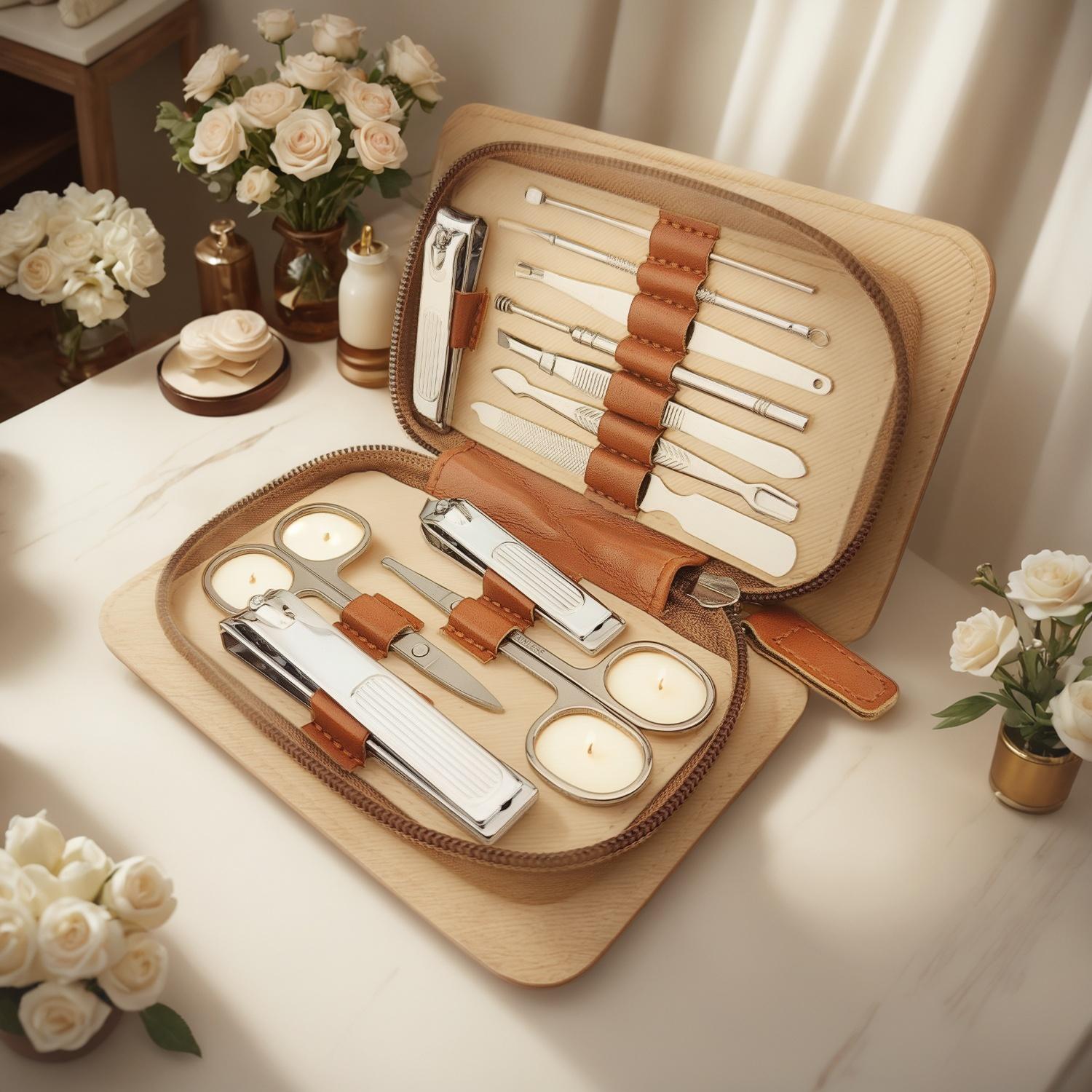
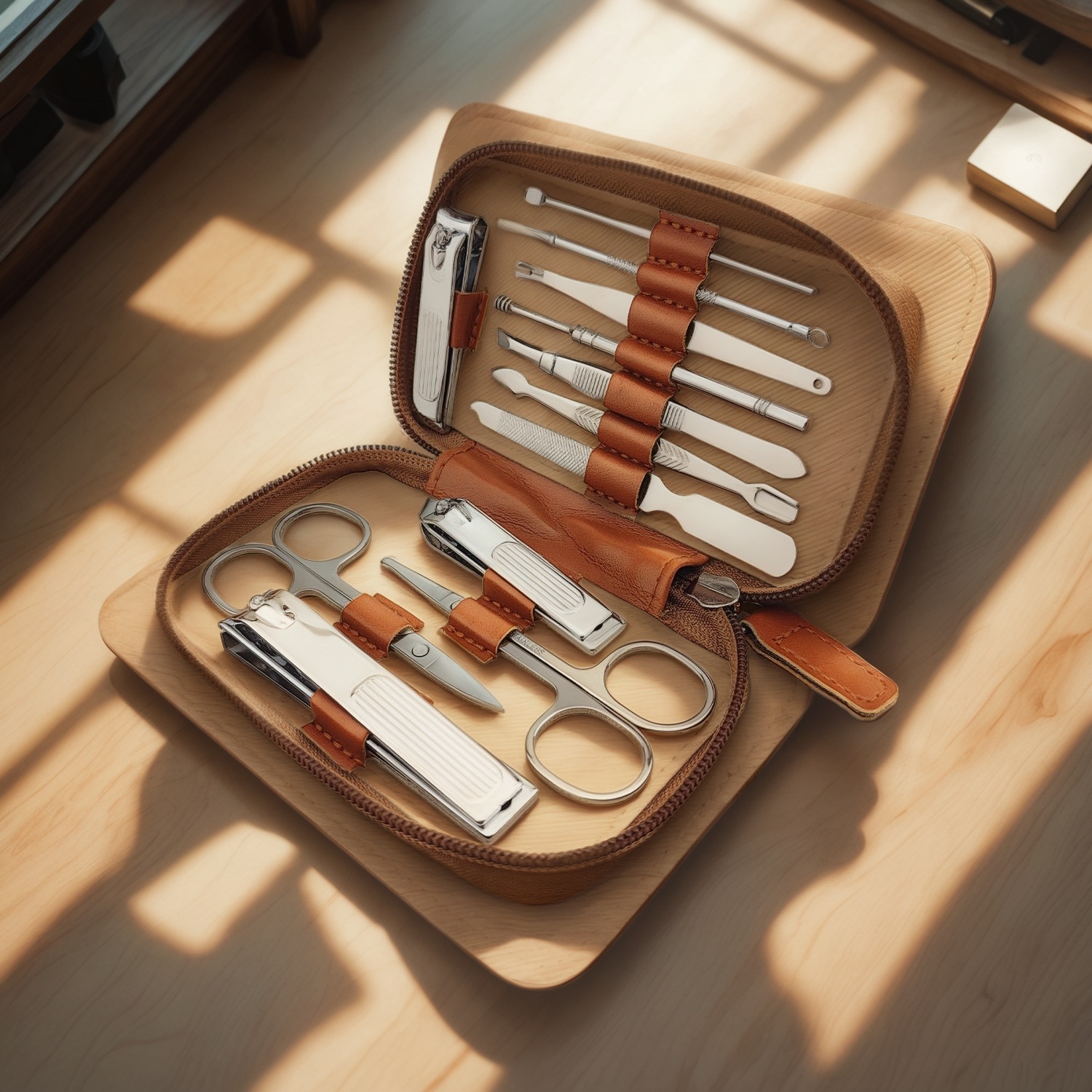
The original product direction includes 12-piece and 18-piece manicure collections, which are useful formats for different buyer segments. A 12-piece set can cover everyday grooming needs without becoming bulky. An 18-piece set can appeal to customers who want more complete nail and personal care coverage. The exact tool list should match the intended channel and price position.
Common manicure kit components may include nail clippers, cuticle pushers, nail files, grooming scissors, tweezers, and related nail care tools. When comparing sets, focus on whether each item has a clear purpose. Adding more pieces only helps if the tools are usable, safe to handle, and relevant to the customer. A crowded set with duplicate or confusing tools can create complaints even when the piece count looks attractive.
Quality Details Buyers Should Inspect Before Ordering
Ethical positioning does not replace tool quality. Customers still expect clean cutting edges, comfortable handling, and tools that do not feel weak or unfinished. For wholesale buyers, inspection should cover both individual tools and the complete kit presentation.
- Cutting performance: Nail clippers and scissors should cut cleanly without crushing, slipping, or requiring excessive force.
- Edge finishing: Cuticle tools and files should be smooth enough to use safely, with no sharp burrs on unintended areas.
- Tool alignment: Clippers, tweezers, and scissors should meet evenly and operate without wobbling.
- Surface finish: Stainless steel surfaces should look consistent, with no obvious stains, rough polishing marks, or residue.
- Handle comfort: Tools should be easy to grip, especially for salon professionals who repeat the same motions throughout the day.
- Case function: The case should hold each tool securely so pieces do not fall out or scratch one another during shipping and daily use.
- Packaging clarity: Product claims, care instructions, and included-piece descriptions should be accurate and easy to understand.
Buyers sourcing from a beauty tools supplier in China or any other production market should also decide how samples will be evaluated. A useful sample review includes practical use, visual inspection, packaging review, and a comparison against the approved reference sample. This process is especially important for custom orders, because small changes in case material, color, tool finish, or logo placement can affect the final retail impression.
Custom Options Without Weakening the Vegan Claim
Customization is one of the main reasons brands search for a custom beauty tools manufacturer. Manicure sets can often be adapted through case color, logo placement, packaging artwork, tool arrangement, and retail presentation. For vegan manicure tools, customization should be planned carefully so that a design upgrade does not introduce animal-derived materials.
For example, a brand may want a premium-looking case. Instead of genuine leather, the buyer can explore animal-free case materials that still match the desired look and hand feel. If a case uses a leather-like texture, packaging should avoid misleading language unless the material is correctly described. A clean, accurate product description is better for long-term trust than an unclear premium claim.
Logo methods should also be reviewed. Printing, embossing, metal plates, hangtags, and inserts may all be possible depending on the product structure, but each choice affects cost, appearance, durability, and documentation needs. If vegan certification or cruelty-free positioning will appear on the package, align the wording with the materials and records available for that specific order.
How to Match Set Configuration to Your Sales Channel
Different buyers need different kit strategies. A distributor may want broad appeal and easy storage. A salon supplier may prioritize repeated performance and a professional look. A gift retailer may care more about case design, packaging, and perceived value. Before choosing between a 12-piece and 18-piece format, define where the set will be sold and how customers will compare it with alternatives.
| Buyer Type | Useful Focus | Key Sourcing Question |
|---|---|---|
| Salon supplier | Durable tools, easy cleaning, secure case | Will the tools stay aligned and comfortable after repeated use? |
| Retail brand | Clear vegan positioning, attractive packaging | Can the material claims be supported across the full kit? |
| Gift or travel channel | Portable case, neat arrangement, compact size | Does the set look complete without feeling bulky? |
| Private-label buyer | Logo, color, packaging, consistent presentation | Do custom details match the approved sample and brand guidelines? |
This type of comparison helps avoid overbuying features that do not matter to your audience. It also makes communication with the manufacturer clearer, because every custom request is connected to a sales purpose.
Care, Cleaning, and Customer Instructions
Wholesale buyers should not overlook maintenance information. Even a strong manicure set can receive poor reviews if customers do not understand how to clean, dry, and store the tools. Stainless steel instruments should be kept dry after cleaning, stored in the case when not in use, and handled carefully to protect cutting edges. For personal kits, users should avoid sharing tools without proper cleaning. For professional environments, local hygiene rules and salon sanitation practices should guide tool handling.
Simple care instructions can reduce returns and improve customer satisfaction. A small printed card or packaging panel can explain how to wipe tools after use, dry them before storage, keep sharp items away from children, and replace tools if they become damaged. These details are not dramatic, but they are useful for real customers.
Questions to Settle Before Confirming a Wholesale Order
Before placing a wholesale order for vegan manicure tools, prepare a concise decision checklist. This helps purchasing, design, compliance, and sales teams agree on the same product standard.
- Which pieces must be included in the set, and which are optional?
- Is the preferred format a 12-piece collection, an 18-piece collection, or another configuration?
- What materials are used in the tools, case, lining, adhesives, labels, and packaging?
- What vegan or cruelty-free wording will appear on the product page or retail package?
- Are logo placement, case color, and packaging artwork confirmed with samples?
- How will the finished goods be inspected for tool alignment, surface finish, and packaging accuracy?
- What care instructions should be included for the end user?
If your team is preparing a private-label or wholesale program, you can send an inquiry with your target set size, market, and customization needs. For sourcing questions that require direct discussion, contact Olimor to review practical options for vegan manicure tool sets.
Building a Better Vegan Manicure Tool Program
A successful vegan manicure tools wholesale program depends on more than choosing an ethical label. It requires a complete review of materials, tool performance, case construction, packaging claims, and customer use. When each detail is aligned, the final set can serve both professional and at-home grooming needs while supporting a cruelty-free purchasing decision.
For buyers, the strongest approach is to balance values with function. Choose tools that cut, shape, push, and groom effectively. Select case and packaging materials that support vegan positioning. Keep product claims accurate and documented. With that foundation, vegan manicure sets can become a dependable category for salons, retailers, and brands that want ethical nail care products customers can use with confidence.
Tag: