

Custom Tweezers for Business: What Buyers Should Check Before Ordering
For beauty brands, grooming retailers, salons, brow studios, and promotional product buyers, tweezers are small items with a large impact on customer perception. A pair that grips cleanly, feels stable in the hand, and keeps its finish looking professional can support repeat sales and positive reviews. A pair that slips, pinches skin, corrodes, or arrives with inconsistent tips can create complaints that cost far more than the unit price difference.
This is why many business buyers compare standard, off-the-shelf tweezers with custom tweezers for business use. The goal is not simply to add a logo. It is to source a tool that suits the end user, fits the sales channel, and represents the brand with dependable quality. Olimor Beauty supplies beauty tools for professional and resale needs, and this guide explains how to evaluate tweezers more carefully before you commit to a bulk purchase.
Standard Tweezers vs. Custom Tweezers: The Business Difference
Standard tweezers can be useful for low-risk, general-purpose retail programs where the buyer needs a simple product quickly. However, standard options often limit decisions around finish, packaging, grip feel, and brand presentation. For a retailer building a private label line or a salon group looking for tools used by staff and sold to clients, those limitations can become noticeable.
Custom tweezers for business sourcing give buyers more room to align the product with the target customer. A brow specialist may care most about clean tip contact and hand control. A gift set buyer may care about visual consistency and packaging compatibility. A reseller may need a product that photographs well online and arrives with consistent finishing across the order.
The comparison should not be based on price alone. A cheaper tweezer that fails to grip fine hair cleanly can lead to returns, low ratings, or reduced professional trust. A better-built tweezer can support a stronger product page, a more credible retail display, and a more consistent service experience in professional settings.
Material, Finish, and Tip Design Matter More Than They Look
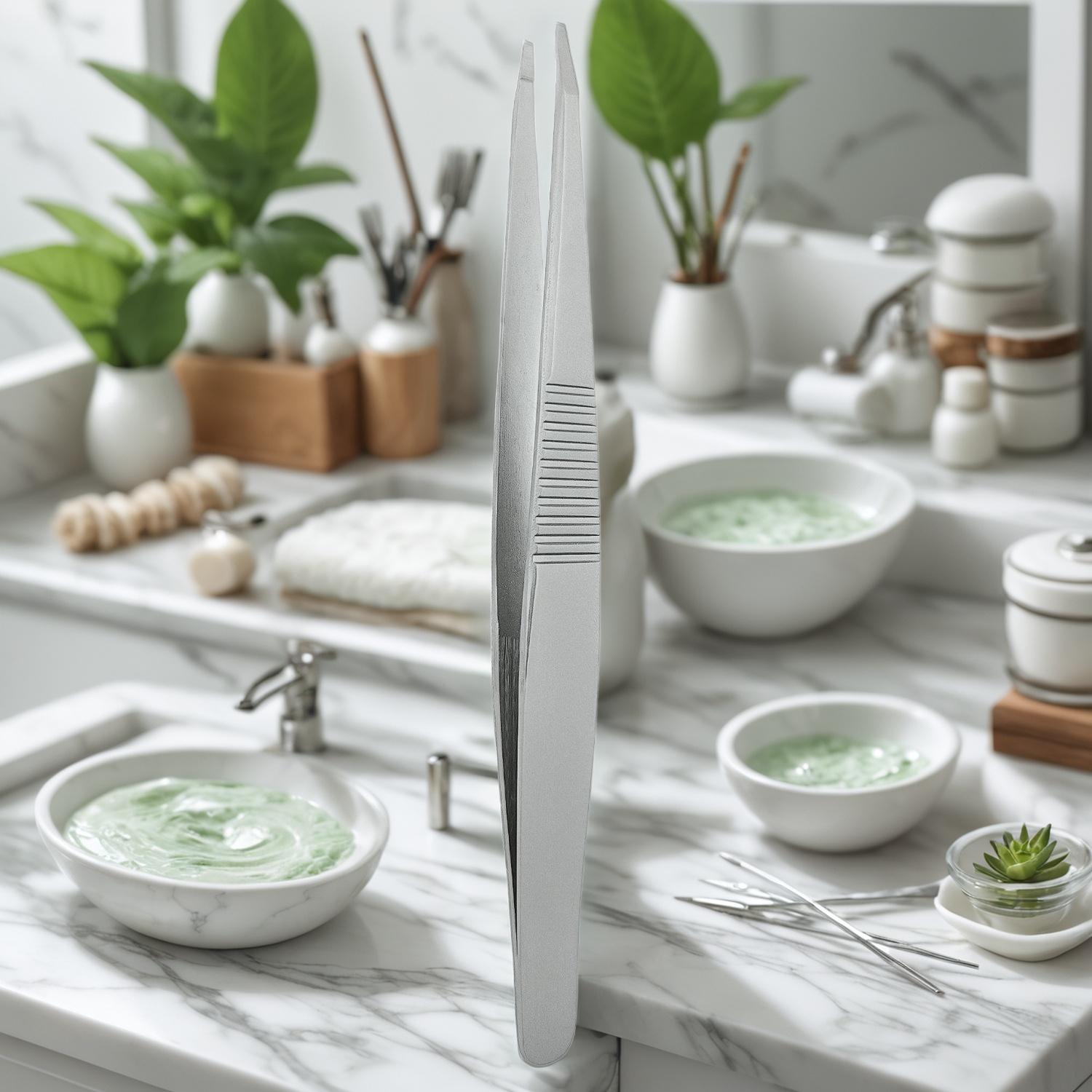
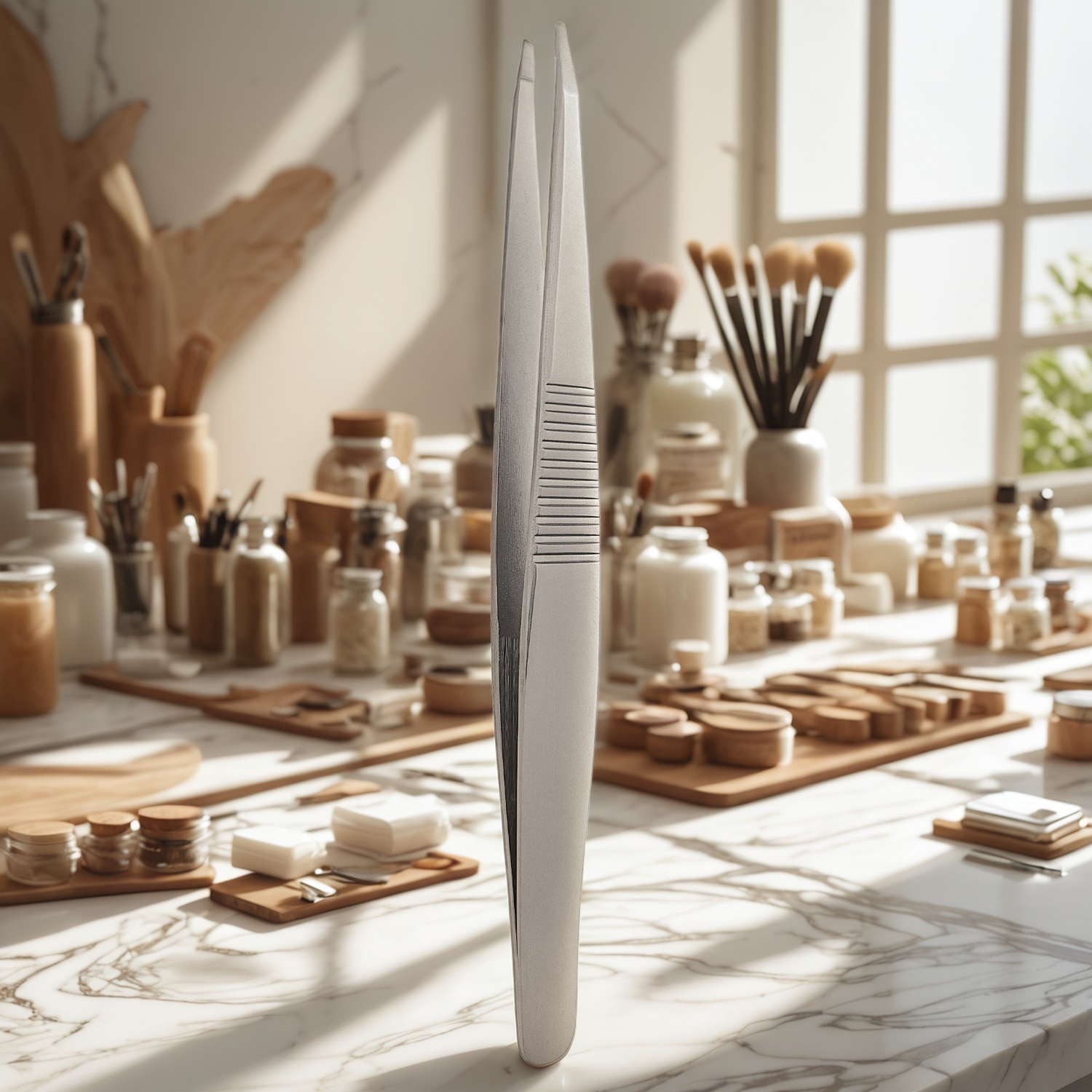
The original product details highlight stainless steel construction, a satin finish, a slant-tip design, and ergonomic grooves along the handle. These are practical features for professional and resale buyers because they affect both performance and perceived quality.
Stainless steel is commonly preferred for beauty tools because it supports a clean appearance and is suitable for repeated handling. A satin finish can also be valuable in a retail or salon environment because it gives the tool a refined look without relying on overly decorative styling. For many buyers, a restrained professional finish is easier to position across multiple customer groups.
The slant tip is especially important. Slant-tip tweezers are widely used for brow shaping and general grooming because the angled edge helps users approach hair from a controlled direction. The buyer should look for clean alignment between the two tips, consistent contact at the gripping edge, and smooth closing tension. If the tips are uneven, too blunt, or too sharp for the intended use, the tool may be frustrating even if the handle looks attractive.
Handle grooves are another detail worth testing. Grooves can improve control, particularly when the tool is used for longer service sessions or handled with skincare residue nearby. The purpose is not decoration; it is grip stability. For professional users, a stable hold reduces slipping and supports more precise movements.
What to Evaluate Before Buying B2B Tweezers in Bulk
Bulk tweezers sourcing should include a sample review process. A photo can show the general shape, but it cannot confirm tension, tip contact, comfort, or packaging fit. Before placing a larger order, buyers should examine the tool from the viewpoint of the actual end user.
- Tip alignment: The two sides should meet evenly enough to grip fine hair without repeated attempts.
- Closing tension: The tweezer should not feel weak, stiff, or uneven when squeezed.
- Edge comfort: The tip should support precision without feeling unsafe or poorly finished.
- Grip stability: Grooves or handle texture should help control the tool, not irritate the hand.
- Finish consistency: The surface should look uniform across samples, especially for retail display.
- Packaging compatibility: The tweezer should fit securely in the chosen pouch, card, box, or set.
- Branding area: Any logo or mark should be placed where it remains readable and does not interfere with use.
- Cleaning expectations: Professional buyers should consider how the finish and shape support normal handling and hygiene practices.
This checklist helps separate a low-cost item from a reliable business product. It also makes discussions with suppliers more specific. If you are comparing several beauty tool products, apply the same criteria across samples so the final decision is based on measurable performance rather than appearance alone.
How Customization Supports Resellers, Salons, and Beauty Brands
Customization should serve a commercial purpose. For resellers, custom tweezers can help create a product that fits the brand story and looks consistent across online listings, retail displays, and customer packaging. For salons and brow studios, custom tweezers can support a professional image when tools are used during services or sold as aftercare products. For beauty brands, tweezers can be part of a broader tool assortment, travel kit, brow set, or seasonal gift program.
Useful customization decisions may include finish selection, logo placement, packaging approach, and how the product is positioned within a collection. A clean satin stainless steel tweezer with a slant tip can work across many channels because it is easy to understand: it is a grooming tool designed for precision. The buyer can then decide whether the presentation should feel professional, retail-friendly, minimalist, or giftable.
When planning branding, avoid adding design elements that make the tool harder to use. A logo should not create roughness where the fingers rest. Packaging should protect the tips, not bend them. Decorative choices should support the selling message without compromising function.
Cost, Bulk Price, and Long-Term Brand Value
Bulk tweezers price is always part of the decision, but price should be compared with risk. If a tool is inexpensive but inconsistent, the business may pay through returns, replacements, negative feedback, or reduced buyer confidence. A higher-quality tweezer may offer better long-term value if it performs reliably and supports the brand’s position in the market.
Use the table below to compare sourcing options in a practical way:
| Decision Area | Low-Priority Approach | Stronger Business Approach |
|---|---|---|
| Tip performance | Check only the product photo | Test sample grip, alignment, and tension |
| Material and finish | Choose mainly by appearance | Review stainless steel feel, surface consistency, and handling |
| Branding | Add a logo wherever it fits | Place branding where it remains visible without affecting comfort |
| Packaging | Select the cheapest available option | Match packaging to retail channel, protection needs, and brand image |
| Quality control | Assume all units will match the sample | Define inspection points for tips, finish, logo position, and packing |
This type of comparison is useful for resellers because it connects product cost with customer experience. A well-made tweezer can be easier to photograph, easier to explain in a product listing, and easier to position as part of a trusted grooming range.
Quality Control Points for Professional Tweezer Orders
The supplied product information notes internal quality control from raw material inspection to final packaging. For business buyers, this kind of process matters because tweezers are precision tools. Small inconsistencies are easy for users to notice. The most important quality checks are usually the ones that affect function first and appearance second.
During sampling and order confirmation, consider defining clear expectations around tip contact, handle finish, logo clarity, and packaging condition. If the tweezers are part of a larger beauty set, check that each item sits correctly in the packaging and that the tweezer tips are protected from pressure during shipping. Tip damage can turn an otherwise acceptable product into a customer service problem.
Buyers should also think about how the product will be used after purchase. A salon user may handle the tool many times a day, while a retail customer may use it only occasionally at home. Those use cases create different expectations for comfort, durability, and presentation. Choosing a tool that performs well in the more demanding scenario can make the product more versatile.
Choosing the Right Supplier Conversation
A productive supplier conversation is specific. Instead of asking only for the lowest bulk tweezers price, prepare details about your market, sales channel, preferred finish, packaging direction, and performance expectations. This makes it easier to identify whether the product is suitable for professional use, resale, gifting, or inclusion in a broader beauty tool assortment.
Business buyers can also review related product collections to see how tweezers may fit with other grooming tools. If you are planning a private label assortment, matching design language across several tools can make the final range feel more coherent. For tailored sourcing questions, you can send an inquiry or contact Olimor with your project requirements.
Final Buying Guidance
Custom tweezers for business should be selected as working tools, not just small branded accessories. The best choice balances stainless steel construction, a consistent satin finish, precise slant-tip performance, stable grip, suitable packaging, and reliable quality control. For salons, this supports professional service. For resellers, it supports repeatable customer satisfaction. For beauty brands, it helps protect the credibility of the product line.
Before ordering, test samples with the same attention your customers will apply during daily use. Check whether the tweezer grips cleanly, feels controlled, looks consistent, and fits your brand presentation. A carefully chosen B2B tweezer can become a simple but dependable part of a beauty business, while a poorly chosen one can create avoidable complaints. The difference is in the details buyers decide to verify before production.
Tag: