

Professional Tweezers for False Lash Application and Styling
False lash application is detailed work. Whether a technician is placing strip lashes, selecting individual lash clusters, or working around eyelash extensions, the tweezer controls visibility, pressure, and placement accuracy. A small mismatch in tip angle or grip tension can slow down service, increase hand fatigue, or make it harder to separate natural lashes cleanly.
For salons, lash studios, training academies, and beauty distributors, choosing tweezers is not only about appearance. The right buying decision should consider tip type, alignment, length, finish, grip security, inspection consistency, and how the tool performs through repeated use. Olimor Beauty supplies beauty tools for professional buyers who need practical, repeatable performance across single purchases and bulk orders.
Why Tweezers Matter in False Lash Work
False lash application requires controlled contact with very small materials. The tweezer must hold a lash firmly enough to move it, but not so tightly that the lash bends, twists, or slips out at the last moment. When applying strip lashes, the tool helps position the band close to the lash line without blocking the artist’s view. For clusters or extension-related work, the tool must support isolation, pickup, and placement with minimal adjustment.
Professional lash artists often keep more than one tweezer within reach because no single shape is ideal for every task. A straight tip can support clean handling and shaping, while a curved tip may be more comfortable for isolation. A 45-degree angled tip can help with detailed placement in areas that are difficult to reach directly. The current Olimor Beauty design includes several specialized tips for these different working needs, giving buyers a practical set of options for varied lash services.
Key Features of the Olimor Beauty False Lash Tweezers
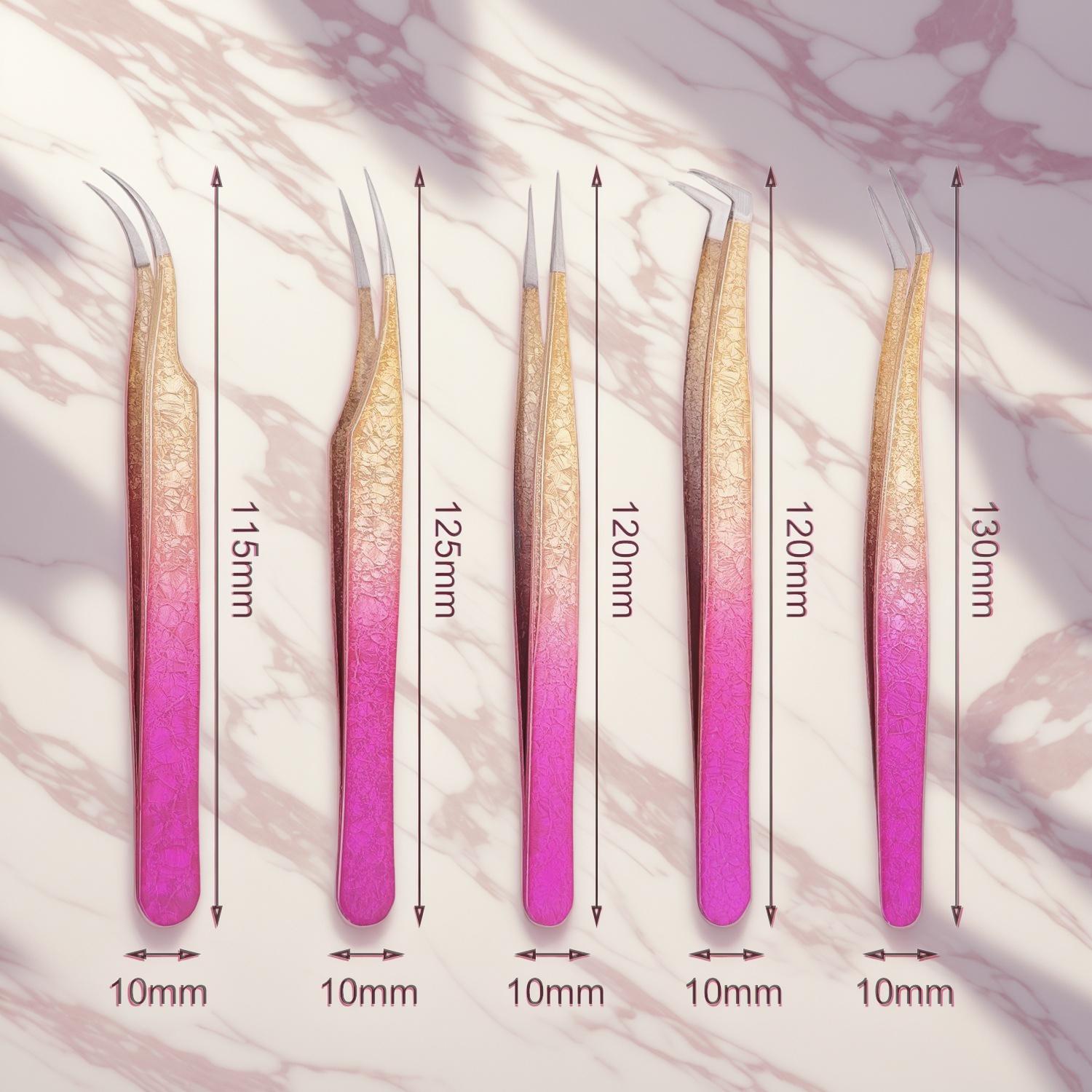
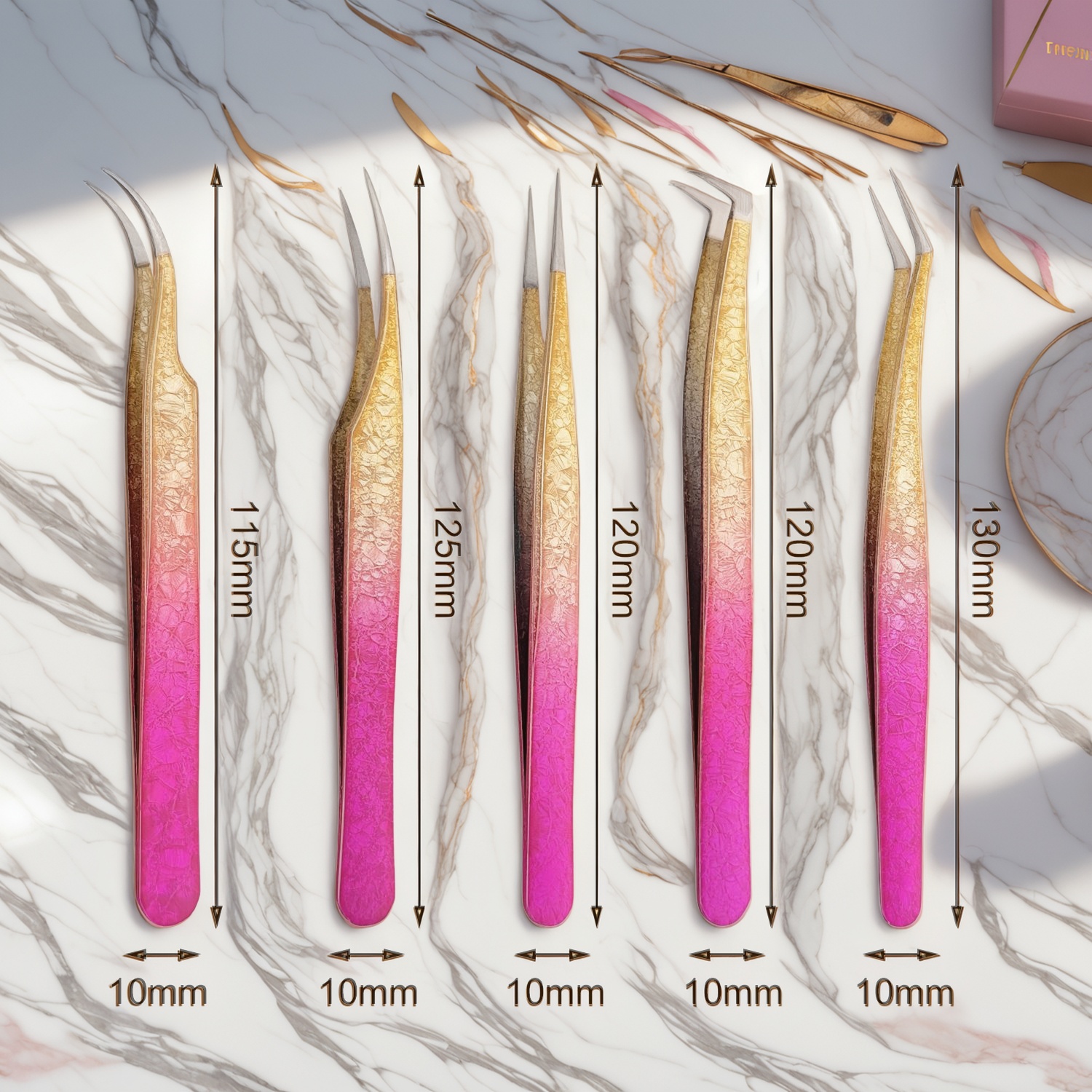
The false lash tweezers described here are designed for professional beauty use, with a visual finish and functional details suited to salons, studios, and retail tool displays. The gradient color transitions from vibrant pink to sleek gold, creating a polished look that is easy to identify in a working kit. Appearance is useful in a retail setting, but the working details are what matter most during service.
Available lengths range from 115mm to 130mm. This range gives technicians a choice between compact control and slightly longer reach, depending on hand size, application method, and service style. The tools also include specialized tip shapes: curved tips for isolation, straight tips for shaping, and 45-degree angled tips for detailed work. The ergonomic, lightweight design is intended to support comfort and control during longer appointments, while the metallic embroidery pattern helps provide a secure grip.
For buyers comparing beauty tool products, these features should be assessed together rather than separately. A beautiful finish cannot compensate for poor alignment, and a sharp-looking tip is not enough if the grip surface is uncomfortable. The best result comes from a balanced tool: aligned tips, stable spring feel, suitable length, and a handle that stays secure in the hand.
Choosing the Right Tip Shape for Each Lash Task
Tip shape affects the entire workflow. A lash artist may prefer one angle for isolation, another for pickup, and another for final adjustment. For businesses ordering tweezers in quantity, it is helpful to match tip styles to the services your team performs most often.
| Tip style | Best use | What to check before buying |
|---|---|---|
| Curved tip | Isolation and work around the lash line | Confirm the curve gives visibility without forcing the wrist into an awkward angle. |
| Straight tip | Shaping, handling, and general lash placement | Check that the points meet evenly and can hold fine lash materials without slipping. |
| 45-degree angled tip | Detailed placement and controlled access to corners | Review whether the angle suits inner and outer corner work and does not block sight lines. |
For training schools, it can be useful to provide students with several tip styles so they learn how tool shape changes technique. For experienced technicians, preference is more personal. Some artists like a shorter 115mm feel for close control, while others may prefer up to 130mm for reach and balance. Because hand size and working posture differ, distributors and salons should avoid assuming one shape will satisfy every user.
What Professional Buyers Should Inspect
When purchasing tweezers for false lash application in bulk, consistency matters. A single pair may look good in a photo, but a salon or distributor needs multiple units to behave predictably. Olimor Beauty emphasizes internal quality control, with inspection from raw stainless steel selection through final packaging. Buyers can also create their own receiving checklist to confirm the shipment matches their working needs.
- Tip alignment: The two ends should meet evenly, with no visible crossing or gap at the working point.
- Grip tension: The squeeze should feel controlled, not too stiff for long sessions and not so loose that pickup becomes unreliable.
- Surface finish: Check that the gradient coating and metallic embroidery pattern are clean and comfortable to hold.
- Tip condition: Look for smooth, precise points without rough edges that could catch on lashes or packaging.
- Length consistency: Confirm the supplied lengths match the intended selection within the stated 115mm to 130mm range.
- Packaging condition: Tools should arrive protected so the tips are not bent during storage or transport.
These checks are especially important for B2B beauty supplies because the tool may pass through several hands before reaching the final user. A distributor may sell to salons, salons may assign tools to different artists, and training centers may issue them to students. Reliable inspection helps prevent avoidable service interruptions.
Bulk Buying Considerations for Salons and Distributors
For businesses searching for affordable tweezers in bulk, price is only one part of value. A very low-cost tweezer that requires frequent replacement or slows down application can become expensive in daily use. Better purchasing decisions come from comparing working performance, finish durability, comfort, and consistency across units.
Before placing a larger order, consider how the tweezers will be used. A lash studio may need more curved and 45-degree angled tools for precision services. A beauty retailer may want a visually attractive assortment that includes straight and angled options. A training academy may prefer a balanced mix so students can practice different techniques. If your business is building a broader tool range, it may also help to review Olimor product collections to plan compatible beauty tools around the same customer group.
It is also useful to define internal acceptance standards before ordering. Decide which tip shapes you need, what length range works for your users, how tools should be packed for storage, and what visual finish is appropriate for your brand or retail display. Clear standards reduce confusion when comparing samples, confirming orders, or training staff to inspect incoming goods.
Comfort, Control, and Long Service Sessions
Lash work often involves repetitive hand movements and close visual focus. Over time, a poorly balanced tweezer can increase fatigue in the fingers, wrist, and forearm. The lightweight design of these tweezers supports extended use, while the ergonomic shape is intended to help maintain control. The metallic embroidery pattern is more than decoration; a secure grip can reduce the need to squeeze harder than necessary.
Technicians should also pay attention to how the tool works with their posture. If the wrist must bend sharply to reach the lash line, a different tip angle may be better. If the tool blocks the view of the lash band, a slimmer or angled approach may improve placement. If lashes slip during pickup, inspect the contact point and tension before assuming the technique is the only issue.
For salon managers, comfort feedback from technicians is valuable purchasing data. A tool that looks good in a product photo may not be the best option for all-day use. Encourage staff to test different tip styles and report which ones they prefer for isolation, strip lash placement, cluster pickup, and finishing adjustments.
Cleaning, Storage, and Daily Care
Proper care helps preserve alignment and working performance. Stainless steel tools are selected for durability, but fine tweezer tips can still be damaged by drops, careless storage, or contact with hard surfaces. Even a small bend can affect pickup accuracy.
- Wipe the tool after use according to the hygiene process used in your salon or studio.
- Avoid scraping adhesive residue aggressively against the tip, as this can affect the contact point.
- Store tweezers with tip protection when possible, especially during transport.
- Do not mix precision tweezers loosely with heavier tools that may bend the points.
- Inspect alignment regularly and remove damaged tools from professional service.
For retail or wholesale buyers, packaging and storage instructions can reduce returns and customer complaints. Precision tweezers should be treated as working instruments, not general-purpose metal accessories.
When to Contact Olimor Beauty
If you are selecting tweezers for false lash application for a salon team, retail store, training program, or distribution channel, start with the real working scenario: who will use the tool, which lash services they perform, and how many tip styles are needed. The Olimor Beauty false lash tweezers offer a professional appearance, multiple practical tip options, a 115mm to 130mm length range, ergonomic lightweight handling, stainless steel construction, and inspection-focused quality control.
To compare available beauty tools or plan a business order, you can contact Olimor with your purchasing requirements. For order discussions and product selection support, you may also send an inquiry. A clear buying brief that includes tip style, intended use, quantity planning, and packaging expectations will help you choose tweezers that support reliable lash work and efficient business purchasing.
Tag: