

Wholesale Tweezers for Beauty Retailers: How to Choose Precision Tools That Support Your Brand
For beauty retailers, salons, brow studios and grooming brands, tweezers are small tools with a large impact on customer trust. A tweezer that grips cleanly, aligns properly and feels comfortable in the hand can become a repeat-purchase item or a reliable professional workstation essential. A poorly made pair, however, can slip, rust, pinch the skin or lose alignment after limited use. When sourcing tweezers wholesale, the goal is not simply to find a low unit cost. The better question is whether the tool performs consistently enough to protect your brand reputation across every order.
Olimor Beauty supplies professional beauty tools for buyers who need practical, durable and presentable products for retail or service environments. When evaluating stainless steel tweezer sets, private label options or eco-conscious packaging, the most important decisions come down to tip design, material quality, finishing, handling comfort and supplier reliability. This guide explains what to look for before placing a wholesale order, especially if you are building a beauty tool line or selecting products for salon resale.
Why Tweezers Are Difficult to Source Well
Tweezers look simple, which is one reason sourcing problems are often discovered late. A buyer may receive a sample that looks acceptable in packaging, but the tool may fail under repeated daily use. Common problems include uneven tip closure, weak grip, rough edges, visible surface defects, poor tension or packaging that does not match the retail position of the product.
For professional users, performance is judged immediately. Brow artists and beauty technicians need tweezers that pick up fine hairs without repeated pulling. Retail customers expect a tool that remains clean-looking and functional after normal use. If the tweezers are part of a branded kit, the quality of the tool also influences how customers judge the rest of the line.
Wholesale buyers should therefore review more than appearance. A good sourcing process tests how the tweezer grips, how it feels after several minutes of use, whether the tip alignment is consistent across multiple pieces and whether the product presentation supports the intended sales channel.
Match Tip Shapes to Real User Needs
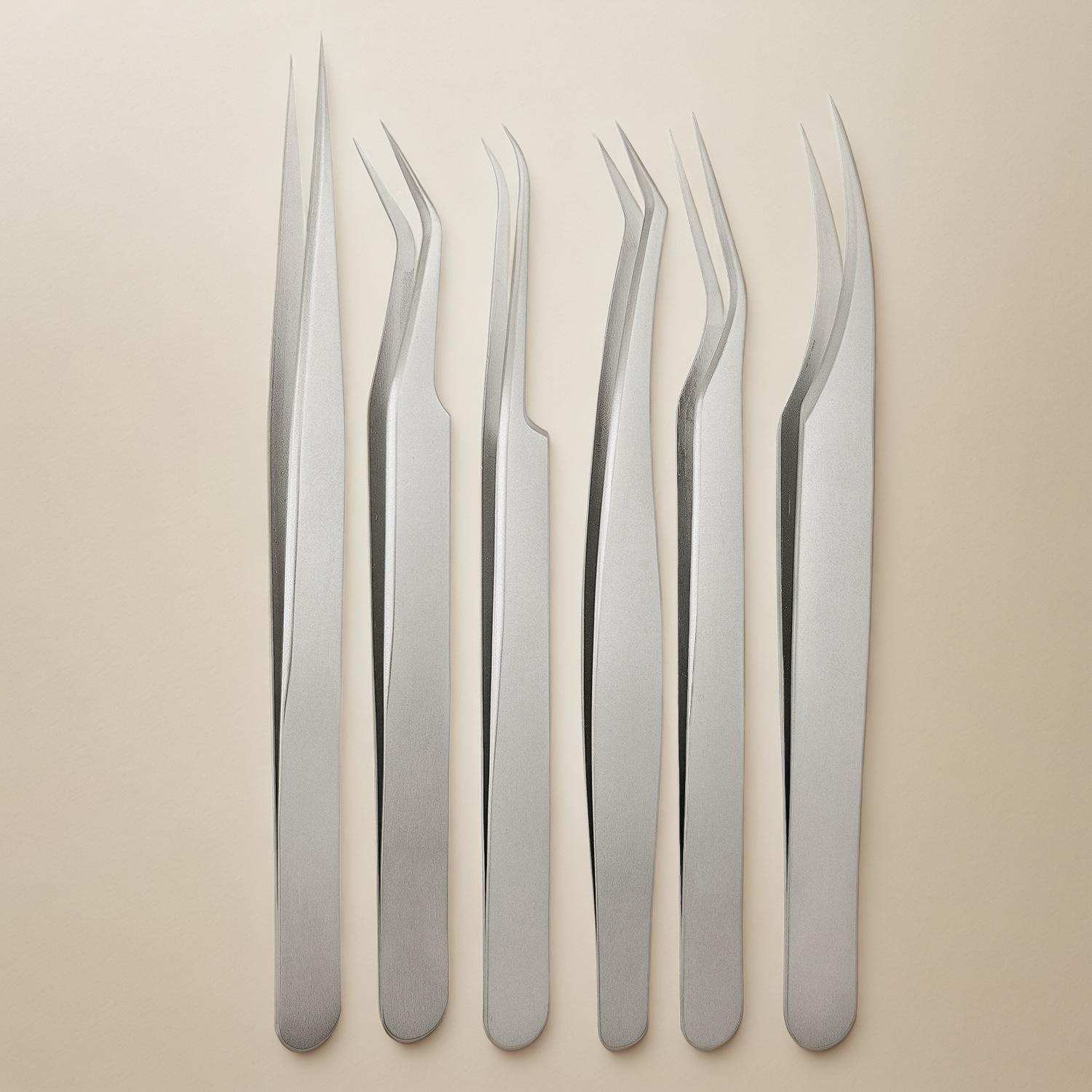
The original Olimor Beauty product positioning includes stainless steel tweezer sets with straight, angled and curved tips. This variety matters because one tip shape does not serve every grooming or detail task equally. Offering a set with multiple tip styles can make the product more useful for salons, brow professionals, makeup artists, personal grooming customers and even detail-oriented crafting users.
| Tip type | Best suited for | What buyers should check |
|---|---|---|
| Straight tip | General gripping, applying small items, controlled detail work | Even closure across the full tip edge and no rough corners |
| Angled tip | Brow shaping and precise hair removal at a comfortable hand angle | Clean point alignment and balanced tension for repeated use |
| Curved tip | Specialized grooming or detail tasks where a curved approach improves visibility | Smooth curvature, consistent finishing and stable grip |
For retail buyers, the tip mix should reflect the customer. A brow-focused brand may prioritize angled tips. A general personal care kit may benefit from multiple tip shapes in one set. A salon distributor may prefer tools that cover several services because professionals value versatility. If you are comparing options from beauty tool products, consider how the set will be explained on the shelf, online product page or salon service menu.
Stainless Steel Quality and Finishing: What to Inspect
Olimor Beauty’s existing product description highlights stainless steel construction, rust-free performance and sharpness. Stainless steel is a practical choice for beauty tools because it is associated with durability, cleanability and a professional feel. However, the term alone is not enough for a purchase decision. Buyers should inspect the finished tool, not only the material claim.
Useful inspection points include the surface finish, tip symmetry, spring tension and edge smoothness. The tweezer should open and close without a gritty feeling. The arms should not twist easily during normal pressure. The tips should meet cleanly when closed, without a gap that causes fine hairs or small items to slip. On pointed or angled tips, the ends should be precise but not jagged.
In a wholesale order, consistency is as important as a good sample. Review several units from the same batch when possible. If one pair grips well and another does not, the product can create inconsistent customer feedback. For brand owners, inconsistent performance leads to returns, negative reviews and difficulty building repeat business.
Ergonomics Matter for Professionals and Daily Users
The supplied product information notes ergonomic designs intended to reduce hand fatigue. This is especially relevant for salon professionals, brow technicians and anyone using tweezers for extended periods. A tweezer with awkward tension may feel acceptable for one quick task but become tiring during repeated appointments.
Comfort is influenced by several factors: the width of the arms, the resistance required to close the tips, the surface grip and the weight balance. Buyers should test the tool with the same type of use their customers will perform. For example, a brow professional should test repeated fine-hair gripping, not simply open and close the tool once. A retail customer may prefer a tool that feels secure and intuitive without needing professional technique.
Ergonomic design also supports perceived value. When a customer picks up a well-balanced stainless steel tweezer, the tool feels more reliable than a thin, flimsy alternative. This can help retailers justify stronger positioning, especially when the product is part of a premium personal care display or a private label beauty kit.
Private Label Tweezers: Build Branding Without Ignoring Function
Private label manicure tools are mentioned in the original product information, including the option to feature a business logo on premium products. For buyers creating a house brand, this can be valuable. Tweezers are compact, frequently used and easy to include in kits, making them a practical branded beauty accessory.
Branding should not be treated as a substitute for product quality. A logo can improve recognition, but the customer will remember how the tool performs. Before finalizing private label presentation, define the intended buyer: professional salon user, beauty retail customer, travel grooming customer or gift set shopper. The answer affects packaging style, instructions, kit composition and acceptable price position.
- Logo placement: Confirm that branding is visible without interfering with grip comfort or tool function.
- Packaging message: Explain the tip types and intended uses clearly, especially for multi-piece tweezer sets.
- Retail presentation: Check whether the package works for online images, shelf display or salon resale.
- Quality consistency: Review samples with the same finish, branding and packaging proposed for the order.
- Customer care information: Include simple cleaning and storage guidance to reduce misuse and complaints.
If you are developing a new branded range, you can review related product collections to consider whether tweezers should be sold alone, in a grooming kit or alongside other manicure and personal care tools.
Packaging and Sustainability Considerations
The existing article notes stylish, eco-friendly packaging and positions the tools for businesses promoting eco-friendly personal care tools. Packaging is a key part of the buyer’s sourcing decision because it affects both customer perception and product protection. A tweezer with a precise tip should be protected from bending, abrasion and contamination during shipping and display.
For sustainability-minded buyers, packaging choices should be specific rather than vague. Consider how much material is used, whether the structure is easy for consumers to separate, how durable the package is during transport and whether it communicates the product benefits without excessive plastic or oversized components. Eco-conscious packaging should still protect the tool effectively; damaged tips create waste and customer dissatisfaction.
Packaging also needs to explain the product quickly. For a set with straight, angled and curved tips, clear labeling helps customers understand why multiple tools are included. This is especially useful for online sales, where customers rely on product images and descriptions, and for retail shelves, where buyers make decisions in seconds.
A Practical Wholesale Evaluation Checklist
Before committing to wholesale tweezers, use a structured review process. This helps compare suppliers fairly and keeps the discussion focused on performance, presentation and brand fit.
- Define the use case. Decide whether the tweezers are for brow services, general grooming, retail kits, salon resale or multipurpose detail work.
- Test tip alignment. Close the tweezer slowly and check whether the tips meet evenly without crossing or leaving a gap.
- Check grip performance. Test fine hair or similar small items to confirm the tool grips without slipping.
- Review surface finishing. Look for rough edges, scratches, uneven polishing or areas that may feel uncomfortable.
- Assess hand comfort. Use the tool repeatedly for several minutes to judge tension and fatigue.
- Inspect packaging protection. Make sure the tips remain protected during shipping, storage and display.
- Confirm branding requirements. If private label is needed, review logo placement, packaging artwork and final sample appearance.
- Plan after-sales guidance. Provide cleaning and storage instructions so customers maintain the tool properly.
Care Guidance That Helps Reduce Returns
Even durable stainless steel beauty tools benefit from proper care. Retailers and salon suppliers can reduce complaints by communicating simple maintenance steps. Tweezers should be wiped clean after use, dried before storage and kept with their tips protected where possible. They should not be dropped on hard surfaces, because impact can affect alignment. For salon environments, cleaning routines should follow the business’s hygiene procedures and local requirements.
Clear care guidance also improves the customer experience. When buyers understand that precision tips require protection, they are less likely to store tweezers loose in a crowded drawer or cosmetic bag. For branded products, a small care note inside the package can support perceived professionalism without adding unnecessary complexity.
Working With a Beauty Tools Supplier
Olimor Beauty is positioned as a professional beauty tools supplier and manicure tools exporter in Guangdong, with internal quality control described from raw material inspection through final packaging. For wholesale buyers, that supplier role matters because beauty tools require repeatable quality across production, not only attractive samples.
When you compare sourcing options, focus on clear communication, sample review, packaging expectations and the ability to support your market position. If you need stainless steel tweezer sets, private label manicure tools or packaging suitable for eco-conscious personal care lines, prepare a concise brief before making contact. Include your target customer, expected sales channel, preferred tip types, branding needs and packaging direction. To discuss a project, contact Olimor or send an inquiry with your product requirements.
Wholesale tweezers are worth selecting carefully because they sit close to the customer’s daily routine and directly influence trust in your brand. By prioritizing tip precision, stainless steel finishing, ergonomic comfort, protective packaging and a reliable supplier review process, beauty businesses can source tools that are practical, presentable and suitable for long-term customer satisfaction.
Tag: