

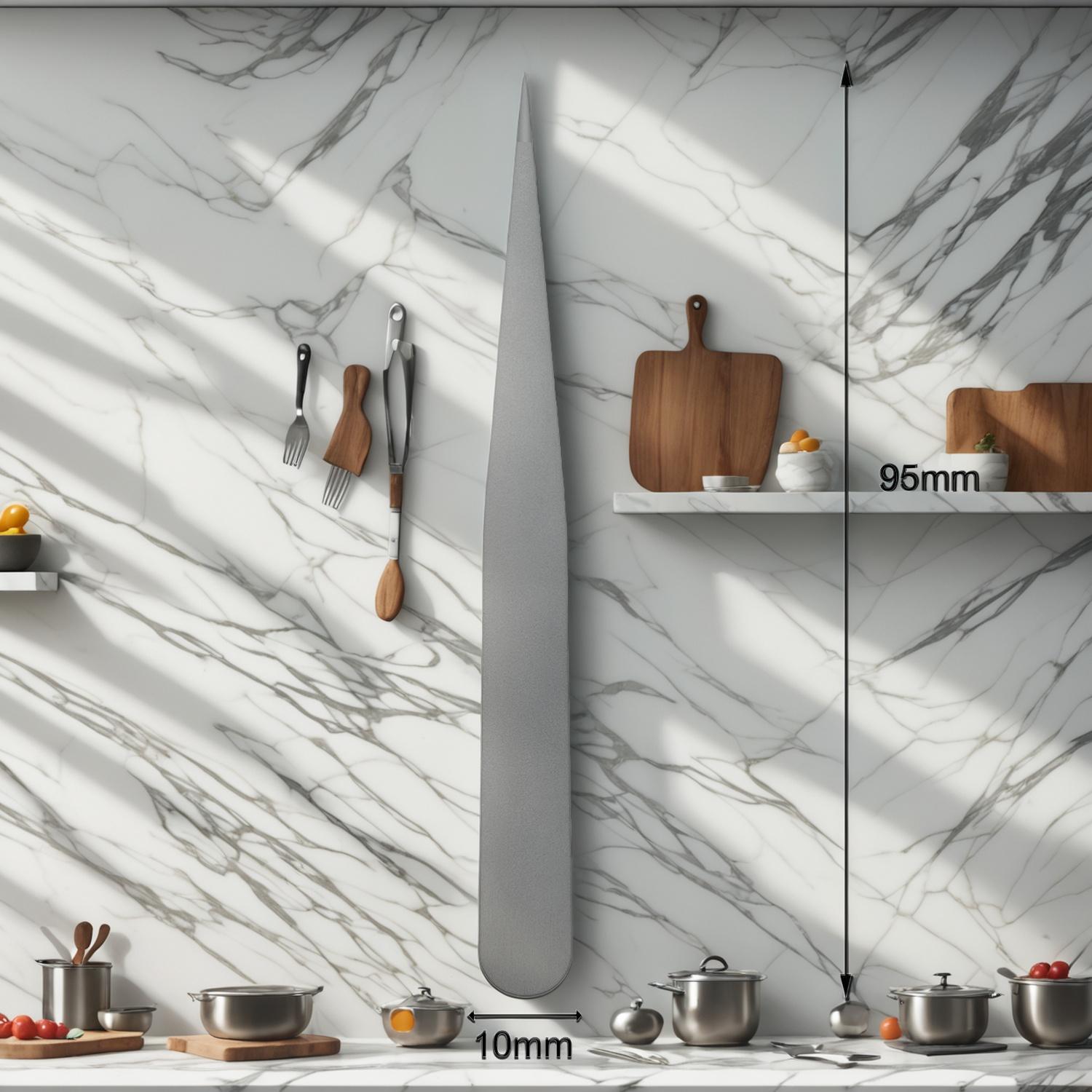
Wholesale Tweezers and Sustainable Beauty Tool Sourcing
Wholesale tweezers sit in a small but important category of the beauty tools market. They are low-profile products, yet buyers judge them quickly: a tweezer either grips cleanly, aligns properly, and feels controlled in the hand, or it does not. For retailers, salon suppliers, beauty brands, and private label buyers, that makes sourcing decisions more technical than the product size suggests.
Olimor Beauty supplies professional beauty tools for personal and professional grooming use, including the Pointed Tip Tweezer forged from premium stainless steel. For buyers building a dependable assortment, the goal is not only to find an attractive unit cost. The better question is whether the tool can deliver consistent precision, support brand presentation, and fit a more responsible sourcing strategy as demand grows for recyclable grooming tools.
This guide explains what to examine when buying tweezers wholesale, how private label manicure tools can support brand differentiation, and which sustainability questions are useful before placing a bulk order.
Why Wholesale Tweezers Require More Than a Price Comparison
At wholesale level, tweezers often look similar in catalog images. The differences appear during use. A pointed tip tweezer must be able to isolate fine hairs, grip without excessive pressure, and return to alignment after repeated handling. When the tips do not meet evenly, the product can pinch skin, break hair instead of removing it, or feel unreliable to a professional user.
Beauty tool buyers should evaluate tweezers as precision instruments rather than simple accessories. This is especially important for businesses that sell to salons, brow artists, makeup professionals, or customers who expect repeatable performance. A good wholesale decision protects the brand from returns, poor reviews, and inconsistent customer experience.
Useful comparison factors include:
- Tip alignment: The two ends should meet evenly without visible gaps or crossing.
- Grip feel: The tweezer should hold fine hair or small material without forcing the user to squeeze too hard.
- Edge finishing: Tips should be precise but not rough or unsafe around skin.
- Spring tension: The body should flex smoothly and return predictably.
- Surface finish: A clean finish supports both hygiene perception and retail presentation.
- Consistency across units: A bulk order is only useful if quality is stable from piece to piece.
For buyers comparing beauty tool products, these criteria help separate a viable long-term item from a low-cost product that may create after-sale problems.
Choosing a Pointed Tip Tweezer for Professional and Retail Use
The Pointed Tip Tweezer mentioned for Olimor Beauty is designed around precision. Pointed tips are typically selected for detailed tasks where control matters, such as targeting isolated hairs or handling fine grooming work. This does not make them the right choice for every user, but it does make them valuable in a complete beauty tool range.
When sourcing pointed tweezers wholesale, buyers should think about the intended channel. A salon-oriented buyer may prioritize performance in continuous use, tip accuracy, and easy sanitation. A retail beauty brand may also weigh packaging, finish consistency, and whether the product can be positioned clearly for consumers who may be less experienced with sharp precision tools.
A pointed tweezer should be presented responsibly. Product copy and packaging should make the intended use clear, especially because pointed tips require careful handling. Retailers can reduce misuse by explaining that the tool is intended for precise grooming rather than broad hair removal. This helps customers choose the correct tweezer type and improves satisfaction after purchase.
Material and Durability Considerations
The original product information identifies premium stainless steel as the material used for the Pointed Tip Tweezer. Stainless steel is widely used in beauty tools because it can support strength, a clean surface finish, and long service life when properly manufactured and maintained. For wholesale buyers, the key issue is not simply seeing the words “stainless steel” in a product description. The full sourcing discussion should cover finishing quality, corrosion resistance expectations, and how the tool should be cared for by end users.
Durability matters for sustainability as well. A tool that keeps its alignment and surface finish over time may reduce unnecessary replacement. In the beauty industry, sustainable sourcing is not only about whether an item can be recycled at the end of life. It also involves avoiding short-lived tools that enter the waste stream quickly.
Buyers can use the following checklist during sample review:
- Inspect the tweezer tips under good lighting and confirm that they meet evenly.
- Test the grip on fine synthetic fibers or similar material to compare precision across samples.
- Open and close the tweezer repeatedly to assess tension and return.
- Check the edges for burrs, uneven grinding, or uncomfortable contact points.
- Review the finish for stains, scratches, inconsistent polishing, or coating defects if applicable.
- Confirm care instructions are suitable for the sales channel and end user.
This process is simple, but it gives procurement teams a much clearer view of quality than a specification sheet alone.
Private Label Manicure Tools as a Brand Strategy
Private label manicure tools can help retailers and beauty brands create a more coherent product range. Instead of selling generic tools with little customer recognition, a brand can develop packaging, product naming, instructions, and merchandising that match its audience. Tweezers, nail tools, and grooming accessories can then work together as part of a practical personal care assortment.
Private label success depends on more than printing a logo. The tool must still perform. If a customer associates the brand with weak grip, poor finishing, or uncomfortable handling, the private label effort works against the business. That is why quality checks, ergonomic review, and sample approval should come before packaging decisions.
Olimor Beauty’s stated focus on ergonomic designs and quality checks is relevant for buyers who want salon-quality grooming tools under their own presentation. When exploring private label options, buyers should prepare clear requirements in advance: target user, preferred finish, packaging format, retail price position, care instructions, and any sustainability claims that need substantiation. A focused brief helps avoid vague development and reduces the chance of mismatched expectations.
Businesses reviewing broader assortments can compare relevant product collections to see how tweezers may fit alongside manicure or grooming tools.
How to Approach Recyclable Grooming Tools Without Greenwashing
Consumer interest in environmentally responsible beauty products continues to influence sourcing. However, sustainability claims need care. A grooming tool should not be described as sustainable only because it contains metal, and “recyclable” should be used in a way that reflects realistic end-of-life handling in the markets where the product is sold.
For stainless steel tweezers, recyclability may be part of the conversation, but buyers should also consider packaging, product lifespan, and repair or replacement expectations. A durable tool with minimal unnecessary packaging may support a more responsible product strategy than a cheaply made item promoted with broad environmental language.
Useful sustainability questions include:
- Is the primary tool material recyclable in the target sales region?
- Are mixed materials, coatings, adhesives, or decorative parts likely to complicate recycling?
- Can the packaging reduce plastic while still protecting the precise tips during transport?
- Are sustainability claims written specifically and conservatively?
- Does the product’s expected durability support lower replacement frequency?
- Can instructions encourage proper care to extend tool life?
These questions help buyers make practical decisions without relying on vague eco-friendly language. They also support more credible marketing for retailers and private label brands.
Wholesale Quality Control Points Before Bulk Ordering
In wholesale sourcing, one excellent sample is not enough. Buyers should define how bulk quality will be checked and which defects are unacceptable. For pointed tweezers, even small manufacturing variations can affect performance. A batch may look acceptable at a glance but contain units with uneven tips, weak tension, or rough edges.
A practical incoming inspection plan can include visual checks, functional grip tests, surface review, and packaging inspection. For branded or private label goods, label placement and print accuracy should also be included. If the product will be sold online, consistency matters because customer reviews often mention details such as tip precision and feel.
The following table summarizes common sourcing review areas:
| Review Area | What to Check | Why It Matters |
|---|---|---|
| Tip precision | Alignment, contact point, sharpness, symmetry | Determines whether the tweezer grips fine hairs cleanly |
| Body tension | Smooth flex and reliable return | Affects comfort during repeated grooming tasks |
| Finish quality | Polishing, marks, burrs, surface consistency | Influences safety perception and retail value |
| Packaging | Protection for tips, accurate labels, clean presentation | Reduces transit damage and supports brand trust |
| Sustainability fit | Material, packaging, durability, claim accuracy | Supports responsible sourcing and avoids weak claims |
For new projects, buyers can send an inquiry with product goals, intended market, packaging expectations, and any private label requirements. Clear information at the beginning usually leads to a more useful sourcing discussion.
Maintenance Guidance That Adds Value for End Users
Care instructions are often overlooked, but they can reduce complaints and extend product life. Tweezers should be kept clean and dry, stored with the tips protected, and handled carefully to avoid bending the ends. Dropping a pointed tweezer can damage alignment, even if the body remains intact.
Retail packaging or online product pages can include short instructions such as wiping after use, avoiding harsh storage conditions, and keeping the tips covered when not in use. For professional settings, users should follow their own hygiene and sanitation procedures appropriate to their services and local requirements.
Good maintenance content benefits both the end user and the seller. It sets realistic expectations and shows that the brand understands the tool as a precision item, not a disposable accessory.
Building a Better Wholesale Tweezer Program
A strong tweezers wholesale program combines precision, consistency, brand presentation, and responsible material thinking. Olimor Beauty’s Pointed Tip Tweezer, forged from premium stainless steel, fits a category where small design and manufacturing details make a large difference in user experience. For buyers, the best results come from evaluating samples carefully, defining quality criteria, and aligning private label or packaging choices with the actual product performance.
Sustainability should be treated with the same discipline. Recyclable grooming tools and reduced-impact packaging can be part of a stronger sourcing strategy, but claims should remain specific and supportable. Buyers who balance durability, function, and clear communication will be better positioned to serve both professional and retail customers.
To discuss wholesale tweezers, private label manicure tools, or recyclable grooming tool sourcing, buyers can contact Olimor with project details and intended use cases.
Tag: