

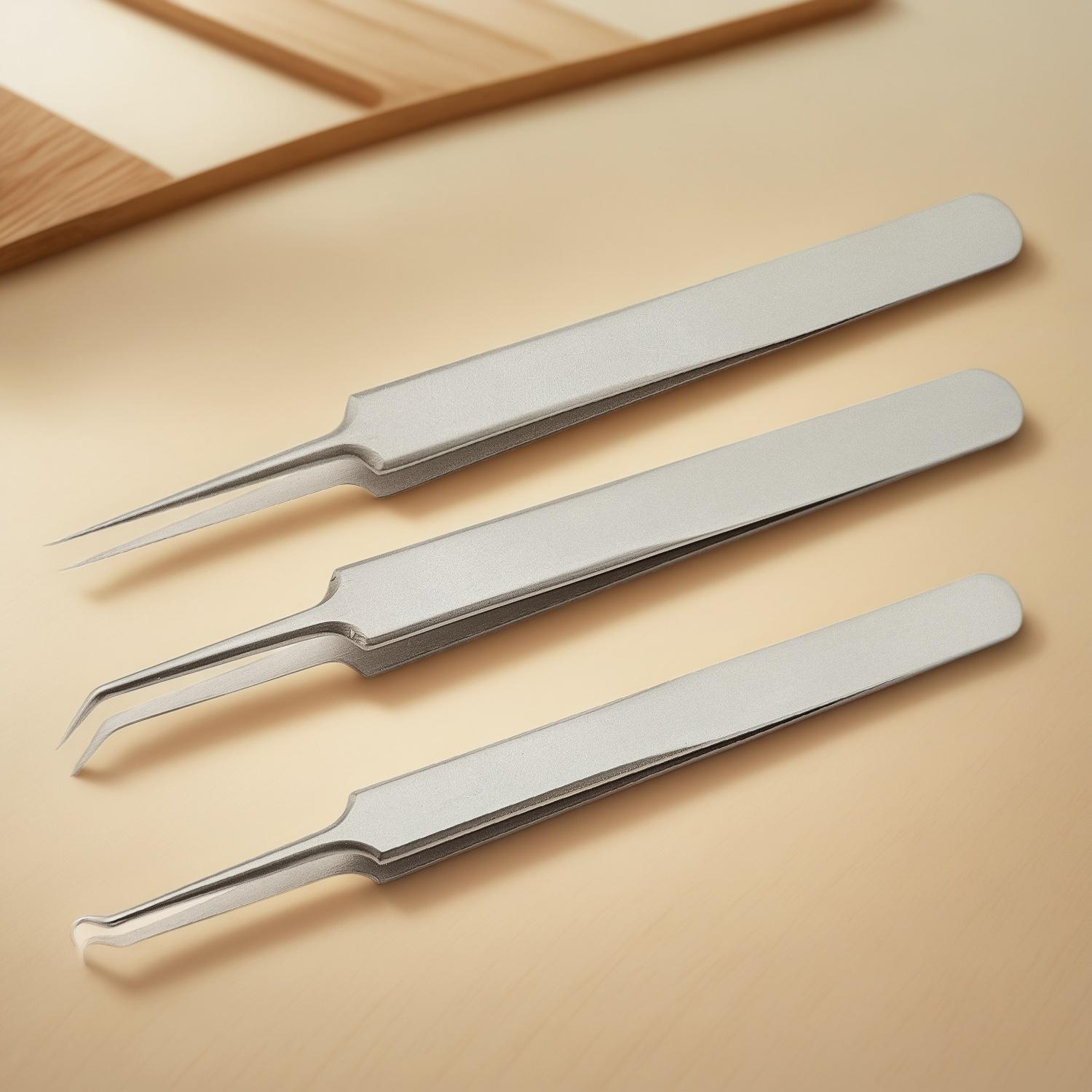
Wholesale Tweezers for Professional Beauty and Hospitality Buyers
Wholesale tweezers are small tools with a big effect on service quality. In salons, spas, esthetics, retail kits, and hotel amenity programs, the right tweezer should feel controlled in the hand, close cleanly, and suit the intended task. The wrong one can look acceptable on a shelf but disappoint in use.
The main buying question is simple: which tweezers will work consistently for your channel, your users, and your presentation standard? For buyers comparing beauty tool products in bulk, the best approach is to focus on application, material, tip geometry, finish, and inspection rather than price alone. If you want to review related items while you source, you can browse the current tool range or compare formats in the beauty tool collection.
What a wholesale tweezer should do well
A professional tweezer is expected to do more than grip hair or hold a lash. It should help the user work with confidence, reduce wasted effort, and support a clean, presentable experience for the end customer. In salon and spa settings, that means reliable tip alignment and controlled tension. In hospitality, it means a neat appearance, practical grooming value, and durable everyday use. In retail, it also means the product must explain itself clearly through the set design and packaging.
That is why wholesale sourcing should be based on use case. A tweezer for brow grooming is not automatically the best choice for false lash placement. A tool that suits a guest amenity kit may not be the right fit for a professional esthetician. Buyers who define the use first usually make better bulk decisions.
How to evaluate tweezers beyond unit price
Price matters, but unit cost alone rarely tells the full story. A lower-cost tool may become expensive if the tips do not meet evenly, the finish feels rough, or the tension makes the tool tiring to use. For wholesale buyers, the more useful question is the total value of the tool across its expected life in the channel.
- Tip alignment: The working ends should meet evenly so the user gets a controlled grip.
- Tip shape: Straight, curved, and hooked tips serve different tasks and should match the job.
- Closing tension: The tool should not feel too stiff or too loose.
- Grip and handling: A stable grip helps during close-detail work and repeated use.
- Finish quality: Surfaces should feel smooth and professional, without rough edges.
- Packaging fit: Bulk, retail, and amenity packaging have different needs.
- Cleaning workflow: The tool should fit the buyer’s hygiene and storage process.
These checks are practical for salons, spas, distributors, beauty retailers, and hospitality buyers. They are also useful when comparing samples, because they help separate visual appeal from real working performance.
Straight, curved, and hooked tips: choosing the right shape
Tip geometry has a direct impact on function. The same bulk order may need more than one style if it serves multiple users or applications. A mixed assortment often works better than a single generic shape.
| Tip type | Best suited for | What to inspect | Common sourcing mistake |
|---|---|---|---|
| Straight | General precision gripping and controlled handling | Even tip meeting, clean closure, steady feel | Choosing it for every task, even where access is limited |
| Curved | Work at angles where visibility and access matter | Whether the curve supports the intended technique | Buying a curve that blocks sightlines instead of improving them |
| Hooked | Specialized detail work with a different approach angle | Tip protection in storage and clear user understanding | Assuming the shape is self-explanatory without product guidance |
A mixed set such as a Precision Blackhead Tweezer Set shows how straight, curved, and hooked tips can cover different detail needs in one assortment. That kind of structure is useful for professional buyers who want flexibility without overbuying one shape.
Material and finish: why stainless steel is commonly preferred
Stainless steel is widely valued in professional beauty tools because it offers a durable, clean-looking, and practical base material. For tweezers, the appeal is straightforward: the tool can support repeated handling, looks more professional than short-life disposable alternatives, and can fit a careful cleaning routine.
For salons and spas, the material should support hygiene workflows without feeling fragile. For retail, stainless steel often signals a more serious tool. For hospitality, it can present a better impression than low-value plastic accessories. Buyers should still evaluate the actual finish, because a clean material choice does not guarantee good alignment or a comfortable grip.
Responsible sourcing does not require exaggerated claims. A durable stainless steel tweezer is not automatically sustainable in every case, but it can be a better direction than short-life plastic grooming items when the program is designed to last and replacement expectations are realistic.
Channel-by-channel sourcing priorities
Different buyers need different things from wholesale tweezers, even when the product category looks the same on paper.
Salons and estheticians
Professional users usually care most about control, grip confidence, and repeatable performance. They often notice problems in tip alignment and tension before anyone else. Sample testing should include feedback from the people who will actually use the tool during treatments.
Beauty retailers
Retail buyers need the tool to perform well and present well. Packaging, clarity of use case, and shelf appeal all matter. A tweezer with a premium finish can help, but only if the working end also feels credible.
Hospitality buyers
Hotel amenity programs usually value clean presentation, practicality, and durability. The tool should feel appropriate for guest use, be easy to store, and align with the property’s quality standard. If the program is trying to reduce short-life accessories, a durable grooming tool can be a better fit than disposable alternatives.
Distributors and kit assemblers
Distributors need repeatable supply, clear assortment logic, and fewer quality surprises. Kit assemblers also need packaging compatibility, because a good tool can still fail commercially if it does not fit the kit structure or presentation.
Inspection checklist for bulk orders
Wholesale purchases should be reviewed sample-first whenever possible. A quick appearance check is not enough. Before confirming a larger order, compare the tool using the same criteria across each candidate style.
- Check whether the tips meet evenly at the working point.
- Feel the closing tension and confirm it is neither too loose nor too stiff.
- Look for smooth edges and a consistent finish across the body.
- Test whether the grip supports controlled handling without over-squeezing.
- Confirm that the shape matches the intended use case and packaging plan.
- Review how the tool will be cleaned, stored, and displayed in your channel.
If a supplier references a formal quality system such as ISO 9001, buyers should ask which version applies and request current supplier documentation rather than assuming coverage. The same principle applies to any market-specific product safety or labeling requirement: verify the applicable rule set for your market and the paperwork that supports it.
Example product logic: precision and premium presentation
Two examples from professional beauty-tool sourcing illustrate how different features serve different buyers. A Precision Blackhead Tweezer Set is useful because it groups multiple tip styles for detail work, which can be practical for salons, estheticians, and retail buyers who want a flexible assortment. A Gold Edition False Lash Tweezer highlights another sourcing angle: a premium visual finish paired with a textured anti-slip grip for controlled lash placement.
The lesson is not that one finish is always better than another. It is that appearance, grip, and tip design should work together. A gold finish may help shelf appeal, but the buyer still needs to confirm that the tool feels balanced and performs as expected. In wholesale sourcing, the working end matters more than decoration alone.
Packaging and customization questions buyers should ask
Packaging affects both cost and channel fit. Bulk packaging may suit distributors or internal kit assembly, while retail-ready presentation matters for consumer sales. Hotel programs often need compact, tidy packaging that fits amenity trays or pouch systems. Before ordering, ask how packaging protects the tip, how it presents the product, and whether it supports your brand story.
Customization also needs a practical brief. Buyers may ask about finish options, color, case style, set configuration, branding, or insert format. The most useful discussion starts with the intended channel, because the right customization for a salon display may be different from the right customization for a hospitality kit.
If you want to discuss a sourcing brief, sample request, or packaging direction, use the inquiry page or contact Olimor directly for a practical follow-up.
What makes a supplier easier to work with
For B2B buyers, a good tweezer supplier is not only a factory or catalog source. The supplier should help you narrow the assortment, match the tool to the channel, and keep quality checks straightforward. Look for clear product descriptions, consistent sample behavior, and honest conversation about what can be customized without compromising the tool’s function.
- Clear distinction between straight, curved, and hooked options
- Consistent sample quality before bulk commitment
- Practical guidance on finish, packaging, and use case
- Readable documentation for quality and order confirmation
- Responsive support when you are comparing assortment options
For Olimor buyers, the goal is to build an assortment that works in real use, not just in a product photo. That is especially important when the same tool may be sold, included in a kit, or used directly by service staff.
FAQ
Can I request samples before placing a bulk order?
Yes. Samples are the best way to compare tip alignment, closing tension, finish, and handling before committing to a larger order.
What should I ask about MOQ and customization?
Ask how MOQ changes with finish, packaging, branding, or set configuration. Customization is usually easier to evaluate when you already know your channel and presentation needs.
How do I check quality before shipment?
Confirm the inspection points that matter to your business: tip meeting, surface finish, grip feel, packaging protection, and overall consistency across the sample set.
How long is the lead time?
Lead time depends on the item, order size, customization, and production schedule. Ask for the current timing in writing before confirming the order.
Are stainless steel tweezers always the right choice?
They are often preferred for professional beauty tools, but the right choice still depends on use case, finish, packaging, and the cleaning workflow in your business.
Ready to source wholesale tweezers?
If you are building a salon assortment, hospitality amenity set, or retail beauty line, start with the function you need and then compare tip shape, alignment, finish, and presentation. That approach helps you avoid tools that look good but underperform in daily use.
Olimor Beauty supports buyers who want practical, market-ready tools in bulk. Review the wider assortment at Olimor products, compare related categories in the tool collection, and reach out when you are ready to discuss a sourcing brief or sample request.
Tag: