

Tweezers Wholesale: How to Source Precision Beauty Tools for Retail, Salon and Private Label
Wholesale tweezers are small products, but they can have a large effect on customer satisfaction. A tweezer that grips cleanly, aligns accurately and feels comfortable in the hand is easier to sell, easier to recommend and less likely to create returns. For beauty retailers, salon suppliers, manicure tool distributors and private label buyers, the goal is not simply to find the lowest unit price. The goal is to source a reliable grooming tool that matches the intended user, price position and brand promise.
This guide explains how to evaluate tweezers wholesale options with practical sourcing criteria. It also looks at where a Tweezer with LED may fit in a product range, how to approach private label manicure tools, and what to consider when buying professional beauty tools supplies in bulk. If you are comparing categories beyond tweezers, you can also browse Olimor beauty tool products to understand how different grooming tools can work together in a retail or salon assortment.
Why wholesale tweezer sourcing deserves careful attention
Tweezers are often purchased as everyday grooming tools, impulse retail items, salon counter accessories or part of a manicure and beauty kit. Because they are familiar products, buyers may assume sourcing is simple. In practice, small differences in tip alignment, finish, grip tension and packaging can separate a dependable tool from one that disappoints the end user.
For retailers, consistent supply is important because tweezers are repeatable items that customers expect to find in stock. For salons and beauty establishments, the tool must feel predictable in daily use. For private label programs, the tweezer must support the identity of the brand while still meeting basic performance expectations. Bulk procurement can improve cost efficiency and inventory planning, but only when the product is chosen with the right quality benchmarks.
Before comparing quotations, define the use case. Eyebrow shaping, facial hair removal, splinter removal, lash application and manicure kit assembly may require different tip styles or handling preferences. A buyer who starts with use case clarity can compare samples more intelligently and avoid choosing a product only because it looks appealing in a catalog photo.
Key selection criteria for tweezers wholesale buyers
A good wholesale evaluation should combine visual inspection, functional testing and commercial review. The following points are useful when comparing samples from a manicure tools exporter, a professional beauty tools supplier or a private label manufacturer.
- Tip alignment: The tips should meet evenly. Poor alignment makes it difficult to grip fine hairs and can cause users to squeeze harder than necessary.
- Grip performance: Test whether the tweezer can hold fine material without slipping. For beauty use, precision is often more important than excessive tension.
- Hand feel: The tweezer should open and close smoothly. If the tension is too stiff, it may feel tiring; if it is too loose, it may feel imprecise.
- Surface finish: Check for sharp burrs, rough edges, uneven coating or discoloration. These details affect perceived value and customer confidence.
- Tip protection: Protective caps, sleeves or packaging help reduce damage during shipping, storage and retail handling.
- Packaging compatibility: Confirm whether the packaging format suits retail pegs, e-commerce fulfillment, salon kits or gift sets.
- Batch consistency: Samples should be compared with bulk delivery expectations. A strong sample is not enough if production consistency is not controlled.
When evaluating a supplier, it is reasonable to discuss inspection steps, packaging durability, labeling options and how nonconforming items are handled. Olimor Beauty emphasizes quality assurance through inspection, and buyers can use sample approval and incoming checks to align expectations before scaling an order.
Where a Tweezer with LED fits in the range
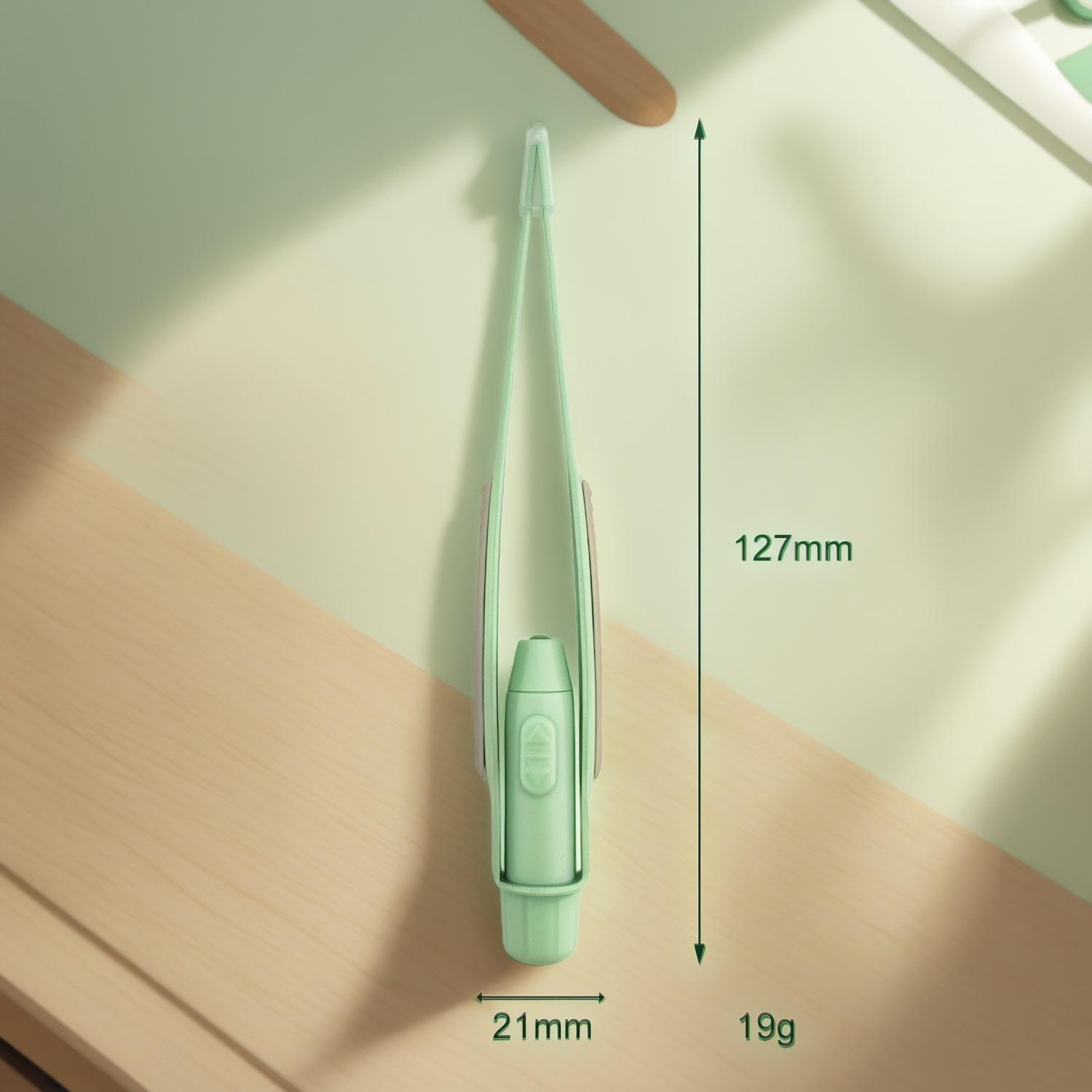
The supplied product direction includes a Tweezer with LED, a design that combines a familiar precision tool with built-in lighting. This type of tweezer can be useful when customers want better visibility for detail work, especially around eyebrows or small grooming tasks. It can also create a more differentiated retail item than a basic tweezer, particularly for giftable beauty accessories or travel grooming categories.
An LED tweezer should still be judged first as a tweezer. The light can support visibility, but it cannot compensate for poor tip alignment or weak grip. Buyers should test whether the LED position illuminates the working area without creating glare or obstruction. It is also important to check whether the product feels balanced in the hand, because added components can change the weight and grip experience.
For retail buyers, the packaging should clearly communicate the LED function without making unrealistic claims. For salon suppliers, the product may be positioned as a convenient detail tool rather than a replacement for all professional instruments. For private label buyers, the LED feature can help create a distinct product line, provided the design, instructions and packaging match the audience.
Private label manicure tools: what to decide before production
Private label manicure tools can help a business build a recognizable product range rather than reselling generic items. However, private label work requires decisions beyond adding a logo. Tweezers must fit the brand’s quality level, price point, packaging style and customer promise.
Start by defining whether the tweezer will be sold alone, included in a grooming kit, paired with nail care tools or used as a salon retail item. A single retail product may need stronger shelf presentation, while a kit component may prioritize consistent size, finish and fit within the case. If the item is intended for e-commerce, packaging should protect the tips and resist crushing during fulfillment.
Branding decisions may include logo placement, color direction, instruction copy, packaging artwork and barcode or label requirements. Buyers should keep these decisions practical. A highly decorative finish may look good in photography, but it still needs to withstand handling and remain comfortable in use. A simple design with clean finishing and accurate tips can often perform better than a visually complicated product with inconsistent workmanship.
Guangdong is known for a strong manufacturing base, and buyers sourcing from the region often compare manicure tools exporters on responsiveness, sample quality and ability to manage packaging details. Rather than focusing only on location, compare how each supplier supports sampling, product clarification and quality inspection.
Eco-conscious and professional beauty tool considerations
Many buyers are now looking for recyclable grooming tools in bulk or packaging choices that reduce unnecessary waste. For tweezers, sustainability conversations should be specific. Ask what parts are recyclable, whether packaging can be simplified, whether plastic components are necessary and how products are packed for transport. Avoid vague environmental claims that cannot be explained clearly to your customers.
Eco-conscious buying does not mean ignoring durability. A tweezer that lasts longer, arrives with fewer defects and uses appropriate protective packaging may reduce waste compared with a cheaper product that is frequently replaced. For professional beauty tools supplies, durability and reliable performance are part of responsible sourcing.
If your customers value sustainability, consider presenting clear product information instead of broad slogans. For example, explain whether the tool is designed for repeated use, how to clean it, how to protect the tips and how to store it safely. These details are more useful to customers than unsupported claims.
Sample testing checklist for bulk tweezer orders
Before committing to a wholesale order, a structured sample review helps reduce avoidable problems. Use the same testing steps across suppliers so your comparison is fair.
- Inspect appearance: Look for finish flaws, scratches, uneven coating, burrs and packaging damage.
- Check tip closure: Hold the tweezer against light and confirm the tips meet evenly without a visible gap.
- Test fine grip: Try gripping fine hair-like material or thin paper fibers to evaluate precision.
- Review tension: Open and close the tweezer repeatedly to confirm the hand feel is comfortable and consistent.
- Assess LED usability if applicable: Confirm the light direction, switch access and overall balance of the Tweezer with LED.
- Evaluate packaging: Check whether tips are protected and whether the package suits your sales channel.
- Document the approved sample: Keep photos, notes and physical reference samples for later bulk comparison.
This checklist is useful for retailers, salons and private label teams because it turns a subjective impression into repeatable criteria. It also gives the supplier clear feedback if changes are needed before production.
How to build a practical wholesale assortment
A strong tweezer assortment does not need to include every possible shape and feature. It should match the customers you serve. A salon distributor may focus on dependable professional beauty tools with clean finishes and ergonomic handling. A retail buyer may want a basic tweezer, an LED tweezer and a packaged beauty kit option. A private label brand may choose fewer items but invest more attention in packaging consistency and brand presentation.
Consider how tweezers connect with other grooming and manicure tools. A cohesive range can help customers buy multiple items with confidence. To compare related categories, review Olimor product collections or contact Olimor with your target use case, packaging format and expected sales channel.
Finally, keep product claims accurate. If specifications, certifications or material details are important for your market, verify them through documentation and sample review before using them in product listings. Clear claims protect your brand and make it easier for customers to understand what they are buying.
Choosing a supplier for long-term consistency
The best wholesale supplier is not only the one that provides an attractive sample. It is the one that can maintain alignment between sample approval, production, packaging and delivery expectations. When comparing suppliers, look at communication quality, willingness to clarify details, inspection process, packaging control and ability to support your brand requirements without overpromising.
For a Tweezer with LED, confirm the functional details as carefully as the cosmetic details. For private label manicure tools, confirm artwork, labeling and packaging structure early. For eco-conscious positioning, keep claims factual and easy to explain. These steps help create a product that customers can understand, use and repurchase.
If you are preparing a wholesale tweezer program or comparing professional beauty tools supplies for a new range, you can send an inquiry with your intended channel, quantity planning, packaging needs and sample requirements. A focused brief will make it easier to match the tweezer design, inspection criteria and presentation to your market.
Tag: