

Wholesale Acne Tweezers: How to Source Precision Tools for Professional Skincare
For beauty distributors, skincare tool brands, salons and private label buyers, tweezers are small products with a large impact on customer trust. A poorly aligned tip, weak grip or uncomfortable handle can turn a routine extraction tool into a product complaint. When sourcing tweezers wholesale, the goal is not only to find a low unit cost. The more important goal is to build a dependable line of precision tools that performs consistently, supports safe professional technique and reflects the standard of your brand.
Olimor Beauty supplies beauty tools for businesses that need practical, reusable implements for skincare and manicure programs. The acne tweezer highlighted here is designed for controlled work around acne and blackheads, with finely pointed tips, stainless steel construction and three size options for different professional preferences. This guide explains how to evaluate the product, where it fits in a wholesale assortment and what buyers should review before adding it to a private label or distribution range.
Why Acne Tweezers Require More Careful Sourcing Than Basic Tweezers
General tweezers are often judged by their ability to grip hair. Acne tweezers are different. They are used for close, detailed skincare work where control, tip accuracy and hygiene are critical. The tool must allow the user to approach a small target area without unnecessary pressure or slipping. For this reason, the shape and finish of the tip matter as much as the material.
The acne tweezer from Olimor Beauty is crafted from stainless steel and uses finely pointed tips engineered for meticulous extraction of acne and blackheads. For wholesale buyers, this product direction is important because it gives the tool a defined purpose. Rather than adding a generic tweezer to your catalog, you can position it for estheticians, skincare retailers, grooming kits, facial care sets and professional personal care assortments.
When reviewing samples, pay close attention to whether the tips meet evenly, whether the spring tension feels controlled and whether the handle is comfortable during repeated use. These details are not cosmetic; they affect how the tool performs in real skincare settings.
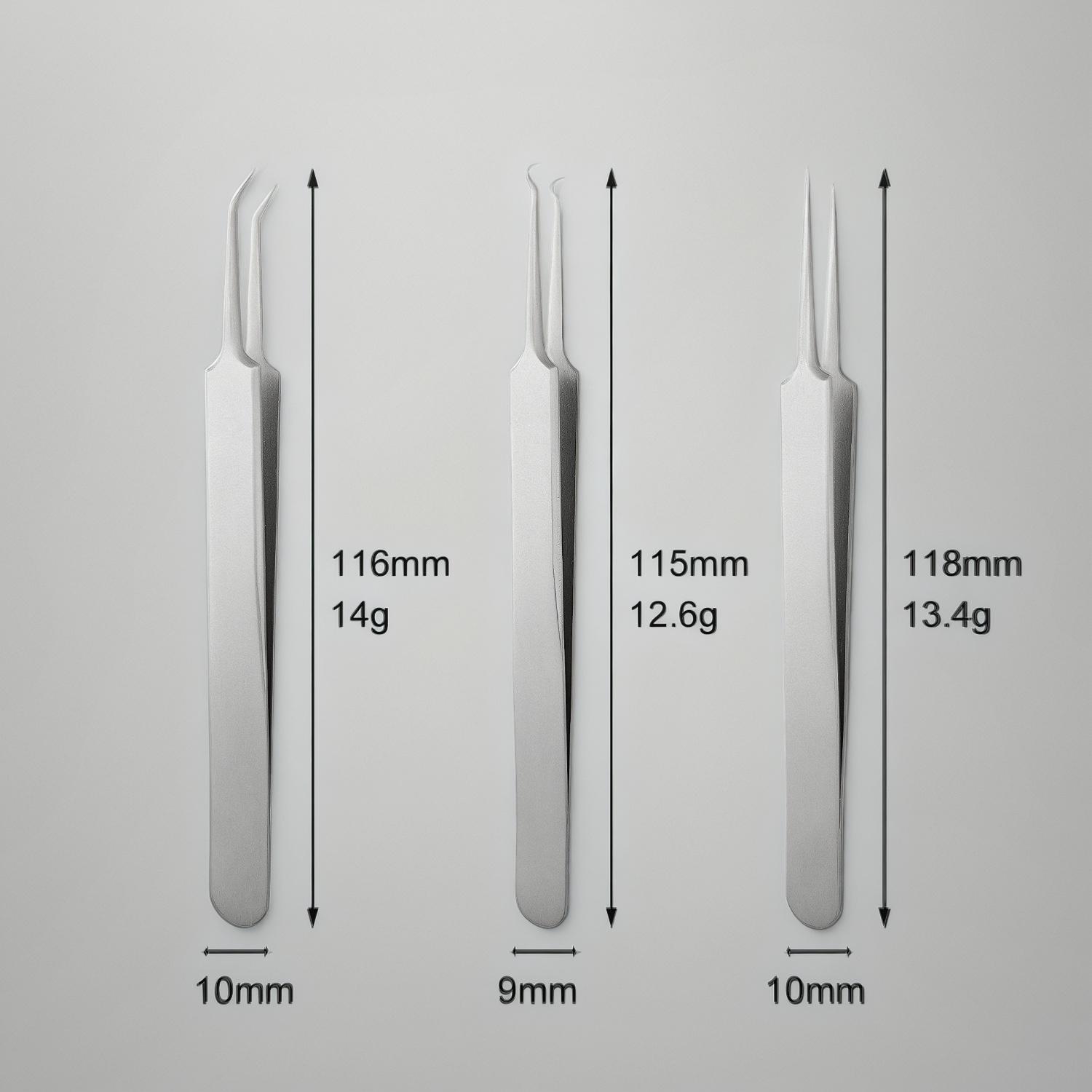
Choosing Between the 115mm, 116mm and 118mm Specifications
One useful feature of this acne tweezer range is the availability of three specifications. The original size options are clearly differentiated: a 116mm version for stable control, a lighter 115mm model for delicate work and a 118mm option for balanced reach and finesse. For buyers building a wholesale line, the choice depends on your customer profile and how the tool will be merchandised.
| Specification | Best fit | Buying consideration |
|---|---|---|
| 115mm lighter model | Delicate work and users who prefer a lighter hand feel | Good for compact skincare kits or retail sets focused on detail work |
| 116mm version | Stable control during close extraction tasks | A practical core option for professional or general wholesale programs |
| 118mm option | Balanced reach and finesse | Useful when buyers want a slightly longer tool without losing control |
If you are unsure which specification fits your market, consider how your customers typically buy. A salon distributor may prefer to test all three sizes with professional users before selecting the main wholesale item. A retail brand may choose one size for a simple SKU plan, then add the other sizes later if customer feedback supports a broader range. A private label buyer may also combine one acne tweezer with other skincare or manicure items from beauty tool products to create a more complete care set.
Material, Hygiene and Reusability Considerations
Stainless steel is a practical choice for skincare tools because it supports durability and hygiene when properly cleaned and maintained. The acne tweezer described here is made from premium stainless steel, which is a key selling point for professional buyers looking for reusable tools rather than disposable alternatives. A reusable stainless steel implement can also support consumers who want personal care products with longer service life.
That said, a buyer should avoid making unsupported claims about sterilization, medical performance or skin outcomes unless they have the correct documentation and testing for their market. A responsible product listing should focus on what can be verified: stainless steel construction, pointed tips, non-slip grip and the intended use for acne and blackhead extraction. If you sell into regions with specific cosmetic tool regulations, your compliance team should review labeling, care instructions and any required import documentation.
Maintenance guidance also improves customer satisfaction. Retail packaging or online product pages can explain that tools should be cleaned before and after use, kept dry before storage and protected from impact that could damage the pointed tips. For professional environments, cleaning procedures should follow the salon’s local hygiene rules.
Grip, Tip Alignment and User Control
For an acne tweezer, the grip design helps determine whether the user can apply careful pressure. The Olimor Beauty acne tweezer features a smooth, non-slip grip intended to support precision and reduce unnecessary irritation from unstable handling. This matters because extraction tools are often used in small areas where hand movement must be controlled.
During sample evaluation, buyers can use a simple inspection process before placing a larger order:
- Check that both tips are symmetrical and meet cleanly at the point.
- Open and close the tweezer repeatedly to feel whether tension is consistent.
- Hold the tool with dry hands and slightly damp hands to assess grip confidence.
- Inspect the surface finish for rough edges, burrs or uneven polishing.
- Confirm that the chosen size feels appropriate for the target user group.
- Review packaging protection so pointed tips are not bent during transport.
This type of review is simple, but it helps prevent the most common problems in wholesale beauty tools: inconsistent alignment, uncomfortable handling and tip damage before the product reaches the end user.
Private Label Use: Building a Coherent Skincare Tool Range
Acne tweezers can be sold as a single precision skincare tool, but they often perform better as part of a wider care assortment. Private label brands may pair them with manicure implements, brow tools or facial care accessories, depending on the audience. Olimor Beauty also supports businesses sourcing private label manicure tools, making it possible to evaluate related categories while developing a consistent brand presentation.
When planning a private label program, buyers should define the role of the acne tweezer in the range. Is it a professional extraction tool for salon resale? A retail skincare accessory for personal grooming? A component in a travel-size care kit? Each direction affects packaging, instructions, quality checks and order planning.
A useful sourcing brief should include:
- The preferred size option or combination of sizes.
- The target sales channel, such as salon distribution, e-commerce or retail sets.
- Packaging needs, including tip protection and instruction space.
- Branding requirements for private label presentation.
- Any market-specific compliance or labeling requirements.
- The inspection standard you expect before shipment.
Keeping the brief clear helps both sides avoid vague expectations. It also makes it easier to compare samples, confirm packaging direction and prepare product pages that accurately describe the tool.
Quality Control Questions Wholesale Buyers Should Review
Olimor Beauty describes internal quality control from raw material selection to final packaging. For a buyer, that full-process approach is valuable because defects in a pointed tweezer can occur at multiple stages. Material selection affects durability. Forming and finishing affect alignment. Packaging affects whether the tips arrive in usable condition.
Before finalizing a wholesale purchase, review the practical quality points that matter most for this type of tool. Ask how tip consistency is checked, how surface defects are identified, how products are protected in packing and what inspection steps are used before shipment. For private label orders, also review whether the final packaging presents the tool clearly and includes appropriate use and care information for your market.
Buyers sourcing from Guangdong often compare several manicure tools exporters, but the best fit is not simply the supplier with the broadest catalog. The right partner should understand the product’s intended use, communicate clearly about options and help you build a stable repeat program rather than a one-time purchase.
When This Acne Tweezer Is a Good Fit
This wholesale acne tweezer is suitable for buyers who need a stainless steel precision tool with pointed tips for acne and blackhead extraction. It is especially relevant for skincare distributors, beauty tool wholesalers, salon supply businesses and private label brands that want a reusable implement with defined size options. The three specifications give buyers flexibility without forcing them to create an overly complicated product line.
If you are developing a wider assortment, review Olimor Beauty’s product collections to see how acne tweezers may fit alongside manicure or personal care tools. For a focused sourcing discussion, you can send an inquiry with your preferred size, packaging direction and target sales channel. If you need help deciding which option suits your market, you may also contact Olimor for a direct conversation.
Good wholesale sourcing starts with a clear product purpose. For acne tweezers, that purpose is precision, control and dependable handling. By evaluating size, tip alignment, grip, packaging and quality control before committing to a program, buyers can build a skincare tool offering that feels professional, sells clearly and supports long-term brand trust.
Tag: