

Wholesale False Lash Tweezers: How to Choose Precision Tools for Lash Work
For lash artists, beauty retailers, training academies, and private-label buyers, tweezers are not a small accessory. They directly affect placement accuracy, hand comfort, client experience, and the repeatability of lash services. When sourcing tweezers wholesale, the most useful question is not simply whether the tool looks attractive, but whether its shape, tip alignment, grip surface, and durability match the way it will be used every day.
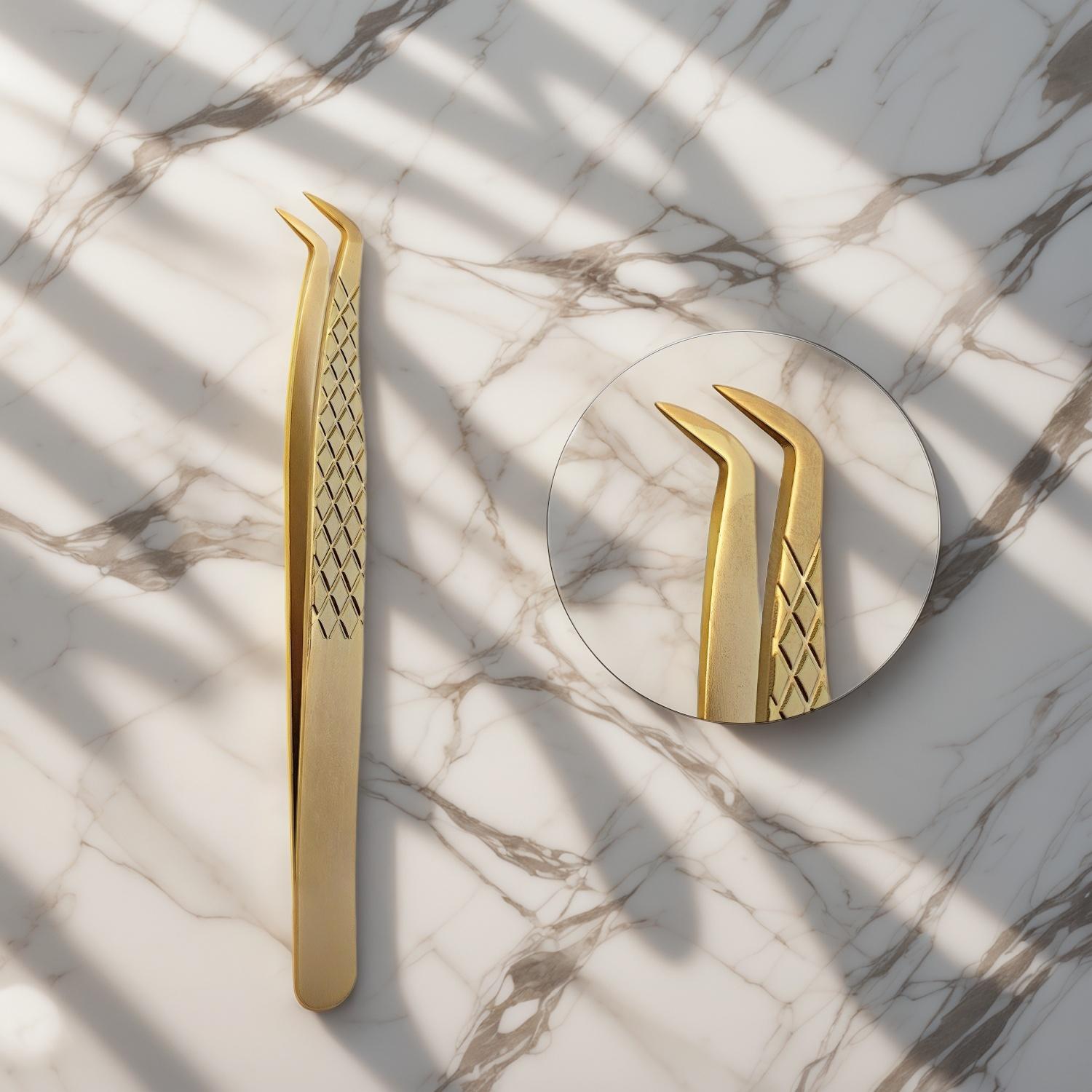
Olimor Beauty’s False Lash Tweezer is designed for false lash application and is presented with a gold finish, a slightly curved ergonomic profile, finely tuned angled tips, and a cross-hatch pattern on the body for secure handling. These details make it relevant for buyers who need a practical lash tool for strip lash placement, individual lash handling, retail beauty kits, or professional salon use. If you are comparing options across beauty tool products, this guide explains what to evaluate before placing a wholesale order.
What Makes a False Lash Tweezer Different from General Tweezers?
General grooming tweezers are often designed for plucking, brow shaping, or splinter removal. A false lash tweezer has a different job: it must pick up delicate lash strips or individual extensions without crushing them, then help place them close to the lash line with control. That means the working end, handle balance, and grip texture matter as much as the material.
The False Lash Tweezer from Olimor Beauty uses a slightly curved design, which can make the hand position more natural during lash placement. Instead of forcing the wrist into an awkward angle, a curved profile can support a clearer view of the lash line and help the user approach from a practical direction. The angled tips are also important because lash placement often requires access to small areas near the inner and outer corners of the eye.
For wholesale buyers, this distinction is important. A tweezer that performs well for brow hair removal may not be the right option for lash application, and a lash tweezer that feels comfortable in one hand position may be less suitable for another technique. Before choosing a product, consider the primary customer: professional lash technicians, makeup artists, beauty students, retail shoppers, or kit assemblers.
Key Design Features to Check Before Buying Tweezers Wholesale
When evaluating lash tweezers in bulk, focus on the details that affect repeat use. A polished appearance can help retail presentation, but professional buyers should also test the tool’s handling, grip, and tip behavior. Olimor Beauty’s False Lash Tweezer includes a gold finish and a cross-hatch pattern on the body, combining visual appeal with a surface designed to reduce slipping during use.
- Tip angle: Angled tips can help users grip lash strips or individual extensions and place them with better visibility.
- Tip contact: The tips should meet cleanly enough to hold lashes without requiring excessive pressure.
- Curved profile: A slightly curved tweezer can support more comfortable hand positioning during detailed lash work.
- Grip texture: The cross-hatch pattern helps create a more secure hold, especially when hands are gloved or working under time pressure.
- Finish quality: A gold finish can improve shelf presentation and kit aesthetics, while still needing smooth edges and consistent coverage.
- Resistance to wear: Durable materials and resistance to rust and wear are important for tools that may be cleaned, handled, and stored frequently.
Wholesale sourcing should include more than a visual inspection. Buyers can compare samples by performing the same movement repeatedly: pick up a lash strip, rotate it slightly, place it against a guide surface, then release it. This simple test often reveals whether the tool feels balanced, whether the tips hold evenly, and whether the handle texture provides enough control.
Use Cases: Lash Strips, Individual Extensions, and Beauty Kits
The supplied product information identifies the False Lash Tweezer as suitable for working with lash strips and individual extensions. These two use cases require slightly different handling. Lash strips are wider and can bend if gripped too aggressively. Individual extensions are lighter and demand steadier tip control. A tweezer with angled, finely tuned tips can support both tasks when the user applies the right pressure.
For salons and lash studios, wholesale tweezers may be used as daily working tools, backup tools, or items for junior technicians in training. In that environment, consistency matters. A team needs tools that feel predictable from piece to piece, because changes in tension, grip, or tip alignment can slow down service time.
For beauty retailers, presentation and customer education are also important. A gold false lash tweezer can fit well in lash application kits, gift sets, or counter displays, but the product copy should explain its function clearly. Customers should understand that the curved profile, angled tips, and textured grip are practical features for lash placement, not just decorative details.
For academies and beginner-focused brands, the grip pattern can be especially useful. New users often apply too much pressure or lose control when positioning lashes. A body texture that helps reduce slippage can make practice sessions more manageable, though proper technique and hygiene still remain essential.
Durability, Cleaning, and Day-to-Day Care
The original product details state that the False Lash Tweezer is made from high-quality, durable material and is resistant to rust and wear. For wholesale buyers, those qualities are important because tweezers are handled frequently and may be exposed to adhesive residue, cleaning routines, cosmetic products, and storage friction.
Care instructions should be practical and easy for end users to follow. Even durable tools can be damaged by careless storage or harsh handling. Lash tweezers should not be tossed loosely into a drawer with heavier tools, because tip alignment can be affected by impact. Tips should be protected during shipping, storage, and retail display whenever possible.
- Remove visible lash adhesive or cosmetic residue after use with an appropriate cleaning method for the working environment.
- Dry the tweezer thoroughly before storage to help preserve the finish and reduce moisture exposure.
- Store the tool with the tips protected, especially in salon stations, travel kits, and retail sample drawers.
- Avoid using lash tweezers for unrelated tasks such as opening packaging, scraping product, or bending metal parts.
- Inspect the tips regularly for alignment, rough edges, or signs of damage that may affect lash handling.
Buyers planning to include tweezers in kits should also think about packaging structure. A simple insert, sleeve, or tip guard can help protect the tool during transport. If the tweezer is sold as part of a lash set, the surrounding packaging should prevent movement that might damage the tips before the customer opens it.
Wholesale Quality Checks That Matter
Olimor Beauty’s product description refers to internal quality control and extensive inspections. For buyers, the most useful approach is to translate quality control into measurable receiving checks. Whether purchasing for a salon chain, retail store, online shop, or training program, create a short inspection process that your team can repeat.
| Check Point | What to Look For | Why It Matters |
|---|---|---|
| Tip alignment | Tips meet evenly and hold light lash materials | Supports controlled pickup and placement |
| Grip surface | Cross-hatch texture feels secure without sharp discomfort | Reduces slipping during detailed lash work |
| Curved shape | Profile supports a natural working angle | Helps visibility and hand comfort |
| Finish consistency | Gold surface appears even and smooth | Improves retail presentation and user confidence |
| Packaging protection | Tips are protected from impact during transport | Reduces arrival damage and complaints |
It is also helpful to define acceptable and unacceptable conditions before inventory arrives. For example, a tiny cosmetic variation may be less serious than a misaligned tip, because the latter affects performance. If your business sells professional tools, prioritize functional consistency over purely decorative features.
How to Match the Tweezer to Your Buying Channel
Not every wholesale buyer needs the same presentation. A salon buyer may care most about hand comfort and durability. An e-commerce buyer may need clear product photos, concise feature descriptions, and protective packaging. A distributor may compare how well the tweezer fits into existing product collections across lash tools, brow tools, and personal care accessories.
If your customers are professional lash artists, highlight the angled tips, curved ergonomic shape, and secure cross-hatch grip. If your customers are makeup users applying strip lashes at home, emphasize control, comfort, and careful placement. If you are building a training kit, consider whether the tool is easy for beginners to hold and whether the finish and shape help students identify it quickly among other tools.
For private-label or custom program planning, avoid deciding only from catalog images. Sample evaluation is a practical step because lash tweezers are tactile tools. Test the pressure, balance, and tip contact with the type of lashes your customers commonly use. When your team is ready to compare sourcing options or discuss a wholesale purchase, you can send an inquiry or contact Olimor for product-related communication.
Final Buying Guidance
A strong wholesale false lash tweezer should combine precise handling, comfortable grip, durable construction, and reliable presentation. Olimor Beauty’s False Lash Tweezer brings together several useful features for lash work: a gold finish, ergonomic slightly curved body, angled finely tuned tips, cross-hatch grip pattern, and resistance to rust and wear. These features make it a relevant option for beauty professionals, retailers, and buyers assembling lash-focused tool kits.
The best purchasing decision comes from matching the tool to the user. Consider whether your market needs strip lash assistance, individual extension handling, beginner-friendly grip, salon-ready durability, or attractive retail display. Then evaluate samples with a consistent checklist. In wholesale beauty tools, small details such as tip alignment and grip texture can determine whether a product becomes a repeat purchase or an avoidable complaint.
Tag: