

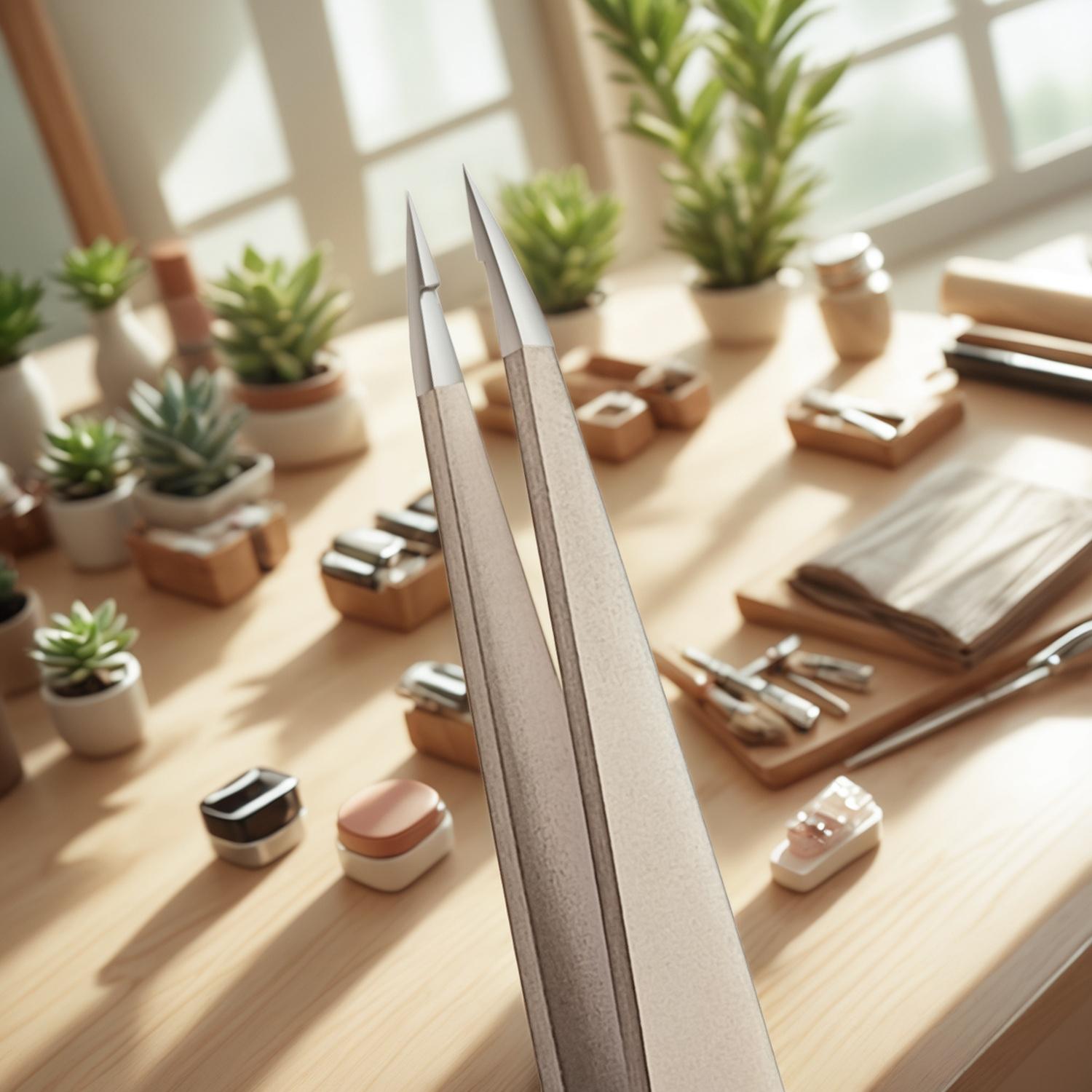
Tweezers Wholesale: Private Label and Eco-Friendly Sourcing Guide
Wholesale tweezers may look simple at first glance, but buyers know that small differences in tip alignment, material finish, hand feel, and packaging can affect customer satisfaction. For beauty retailers, salons, distributors, and private label brands, the goal is not only to find a tweezer that looks attractive in a kit. The tool also needs to grip reliably, feel balanced in the hand, and match the quality expectations of the audience buying it.
Olimor Beauty supplies beauty and manicure tools from Guangdong, including stainless steel tweezers designed for professional and personal care use. The Pointed Tip Tweezer referenced in Olimor Beauty’s product range is a useful example for buyers who need precision-focused grooming tools with a sleek metallic appearance. If you are comparing tweezers wholesale options for a branded line, salon retail display, travel kit, or manicure set, the sections below explain what to review before placing an order or building a private label specification.
Why pointed tip tweezers require closer wholesale evaluation
Pointed tip tweezers serve a different purpose from slanted or flat tip tweezers. Their narrow, precise ends are commonly chosen for detailed grooming tasks where visibility and accuracy matter. Because the contact area is small, the user depends heavily on the tweezer’s alignment and tension. A tweezer that looks acceptable in a product photo can still disappoint if the tips do not meet evenly or if the squeeze feels too stiff after repeated use.
For wholesale buying, this means evaluation should go beyond the surface finish. Buyers should inspect how consistently the tips close, whether the arms spring back smoothly, and whether the edges feel clean without sharp burrs. These details become even more important when tweezers are sold as part of professional manicure tools or personal care kits. A customer may forgive plain packaging, but they are less likely to accept a precision tool that cannot grip fine hairs or small objects with control.
Olimor Beauty’s focus on stainless steel tools, ergonomic precision, and quality checks is relevant here because tweezers are judged by repeated daily performance. A polished metallic finish can support shelf appeal, but the real value comes from stable construction and reliable closing action.
Key selection criteria for wholesale tweezers
Before comparing prices or packaging ideas, define the working requirements of the tweezer. A clear specification helps avoid vague samples and makes it easier to compare suppliers on the same basis. For beauty brands and distributors, the following checklist is a practical starting point:
- Tip type: Confirm that the order is for pointed tip tweezers if precision work is the intended use. Do not substitute slanted or flat tips unless the product position changes.
- Tip alignment: The two ends should meet evenly when light pressure is applied. Gaps or offset points can reduce grip accuracy.
- Hand tension: The tweezer should close with controlled pressure, not feel weak, loose, or overly rigid.
- Material choice: Stainless steel is commonly selected for beauty tools because it supports durability and a clean metallic appearance.
- Surface finish: Review whether the finish fits your market, such as a sleek metallic look for salon retail or minimalist kits.
- Edge comfort: Check that the arms and tip area are smooth enough for safe handling.
- Packaging fit: Decide whether the tweezers will be sold individually, bundled in a manicure set, or included in a travel grooming kit.
- Inspection process: Confirm how the supplier checks alignment, finish consistency, and visible defects before shipment.
These points are especially useful when comparing beauty tool products for different sales channels. A product intended for a professional salon counter may need different packaging and presentation from a basic accessory sold in a value kit.
Private label tweezers: what to decide before production
Private label manicure tools give brands more control over product identity, but they also require careful decisions. The tweezer itself must perform well, while the branding should be clear, durable, and appropriate for the sales environment. A buyer who starts with packaging design before confirming tool quality may end up with a beautiful product that earns poor reviews.
For private label tweezers, begin with the product role. Is it a hero item sold on its own, a component in a brow grooming set, or an add-on within a manicure collection? This decision affects the finish, packaging, instructions, and quality threshold. A standalone pointed tip tweezer may need more refined presentation and stronger consumer education, while a kit component must match the rest of the tools visually and functionally.
Branding decisions can include outer packaging, insert cards, care instructions, and product markings where suitable. Avoid adding claims that are not supported by the product or manufacturing documentation. For example, if you want to promote eco-friendly personal care tools, define what that means in practical terms: reduced packaging, recyclable paperboard, reusable storage, fewer mixed-material components, or longer-lasting tool construction. Clear wording is safer and more useful than vague green claims.
Olimor Beauty is positioned as a supplier of private label manicure tools, so wholesale buyers can use the inquiry stage to share artwork needs, packaging direction, and target retail channel. When project details are ready, buyers can send an inquiry with sample requirements, packaging references, and expected use cases.
Eco-friendly options without vague sustainability claims
Eco-friendly sourcing in beauty tools should be practical and specific. A stainless steel tweezer is not disposable by nature when it is made to last, but packaging and presentation choices can still create unnecessary waste. For many brands, the most realistic improvements come from reducing excess plastic, choosing compact packaging, and providing care guidance that extends product life.
When reviewing eco-conscious options, look at the full product experience. A durable tweezer packaged in oversized, non-recyclable material may not align with a sustainability message. On the other hand, a minimal carton with clear care instructions can support a more responsible product position without overpromising.
- Minimize packaging layers: Use only the protection needed for storage, shipping, and retail display.
- Prefer simple material combinations: Packaging that avoids unnecessary mixed materials can be easier for customers to understand and sort.
- Include care instructions: Cleaning and drying guidance helps users keep the tool in service longer.
- Avoid unsupported claims: Terms such as “green” or “sustainable” should be supported by specific packaging or product decisions.
- Design for long-term use: A precision tool that performs consistently is often more responsible than a low-quality item that is quickly replaced.
This approach is particularly helpful for retailers building product collections around practical, long-lasting personal care tools rather than short-lived promotional items.
Quality checks that matter for pointed tip tweezers
Quality control for tweezers should be simple, repeatable, and focused on the functions customers notice. Olimor Beauty’s original product information references strict quality checks, and buyers can support that process by defining what should be checked in samples and production lots.
Useful inspection points include visual finish, tip symmetry, closing feel, and packaging condition. For pointed tips, alignment deserves special attention because tiny differences can affect control. A buyer can review samples by testing light gripping action on fine material, checking whether the tips meet without twisting, and confirming that the tweezer returns to its original shape after normal pressure.
It is also worth checking consistency across multiple pieces, not just one perfect sample. Wholesale orders are judged by the average customer experience, so sample review should include several units when possible. Look for repeated issues such as uneven polishing, inconsistent tension, rough edges, or packaging that scuffs the metallic finish during transit.
Matching tweezers to your sales channel
Different buyers need different versions of the same core tool. A salon distributor may prioritize professional appearance, easy sanitation guidance, and consistent performance. An online beauty brand may care more about packaging photography, unboxing presentation, and clear product copy. A gift set buyer may need the tweezer to coordinate with other manicure tools in shape, finish, and storage.
For salon and professional retail, the product message should be direct: precision pointed tip tweezers made with stainless steel and designed for controlled grooming tasks. For personal beauty kits, care instructions and safe handling guidance are especially important because pointed tips require careful use and storage. For private label ecommerce, consider adding concise usage notes to reduce returns caused by customers choosing the wrong tip style for their needs.
If your range includes more than tweezers, keep the product hierarchy clear. A pointed tip tweezer should not be described as a universal replacement for every brow or manicure tool. It is best positioned as a precision tool within a broader beauty or grooming assortment.
Supplier questions to prepare before ordering
A strong wholesale conversation starts with a clear brief. Instead of asking only for a catalog and price, prepare information that helps the supplier recommend a suitable route. Include the desired tweezer type, target customer, sales channel, packaging style, expected branding needs, and any market requirements that apply to your business.
Useful questions include: What inspection steps are used for tip alignment and finish? What packaging formats are practical for individual tweezers or manicure sets? Can the tool be reviewed as part of a wider private label range? What artwork files are needed for packaging discussion? How should samples be evaluated before confirming a larger order?
For buyers comparing stainless steel pointed tip tweezers, Olimor Beauty offers a practical starting point for wholesale and private label discussions. To clarify project details, share your target use case, packaging expectations, and quality priorities through contact Olimor. A well-prepared brief makes it easier to source tweezers that look consistent, feel precise, and support your brand’s position in the beauty tools market.
Tag: