

Tweezers Wholesale: How to Build a Reliable Beauty Tool Program
Tweezers are small products, but they carry a large responsibility in a beauty retail or salon supply business. Customers use them close to the skin, expect accurate grip, and notice immediately when the tips do not align. For wholesalers, distributors, private label brands, and beauty retailers, buying tweezers wholesale is not simply a cost-saving decision. It is a sourcing decision that affects product reviews, repeat orders, brand trust, and the efficiency of your inventory planning.
A strong wholesale tweezer program starts with clear product expectations. Are the tweezers intended for brow shaping, lash application, ingrown hair care, manicure kits, grooming sets, or general retail display? Each use case calls for a different tip shape, tension feel, finish, packaging format, and quality inspection focus. Olimor Beauty supplies beauty tools for business buyers, and the right conversation should begin with how the tools will be sold and used, not only with the lowest unit price.
Why Tweezers Wholesale Can Improve Beauty Business Margins
Buying tweezers in bulk can reduce per-unit procurement cost, but the more important benefit is consistency. When a retailer or brand relies on occasional small purchases from different sources, the product may vary from batch to batch. That inconsistency can create customer complaints: one tweezer grips well, another slips; one has clean tips, another feels rough; one package looks retail-ready, another does not match the display standard.
Wholesale purchasing allows a business to plan around a defined product specification. This is useful for stores that sell beauty accessories, salons that resell after service, subscription box companies, gift set developers, and brands building entry-level grooming kits. A dependable inventory also helps prevent stockouts during seasonal demand, promotional campaigns, and new product launches.
There is also a merchandising advantage. Tweezers can be sold alone, bundled with manicure tools, paired with brow scissors, or included in travel grooming sets. Their small size makes them efficient for retail shelves, online fulfillment, and promotional kits. The key is to avoid treating all tweezers as identical. A low-quality tweezer may look acceptable in product photos, but it fails at the moment the customer tries to grip a fine hair.
Choosing the Right Tweezer Type for Your Customer
The best wholesale tweezer selection depends on the end user. A brow studio may prioritize ultra-precise alignment and comfortable hand tension, while a supermarket beauty aisle may need a durable, affordable, easy-to-understand product. Online brands should also consider how the tip type can be explained clearly in product listings.
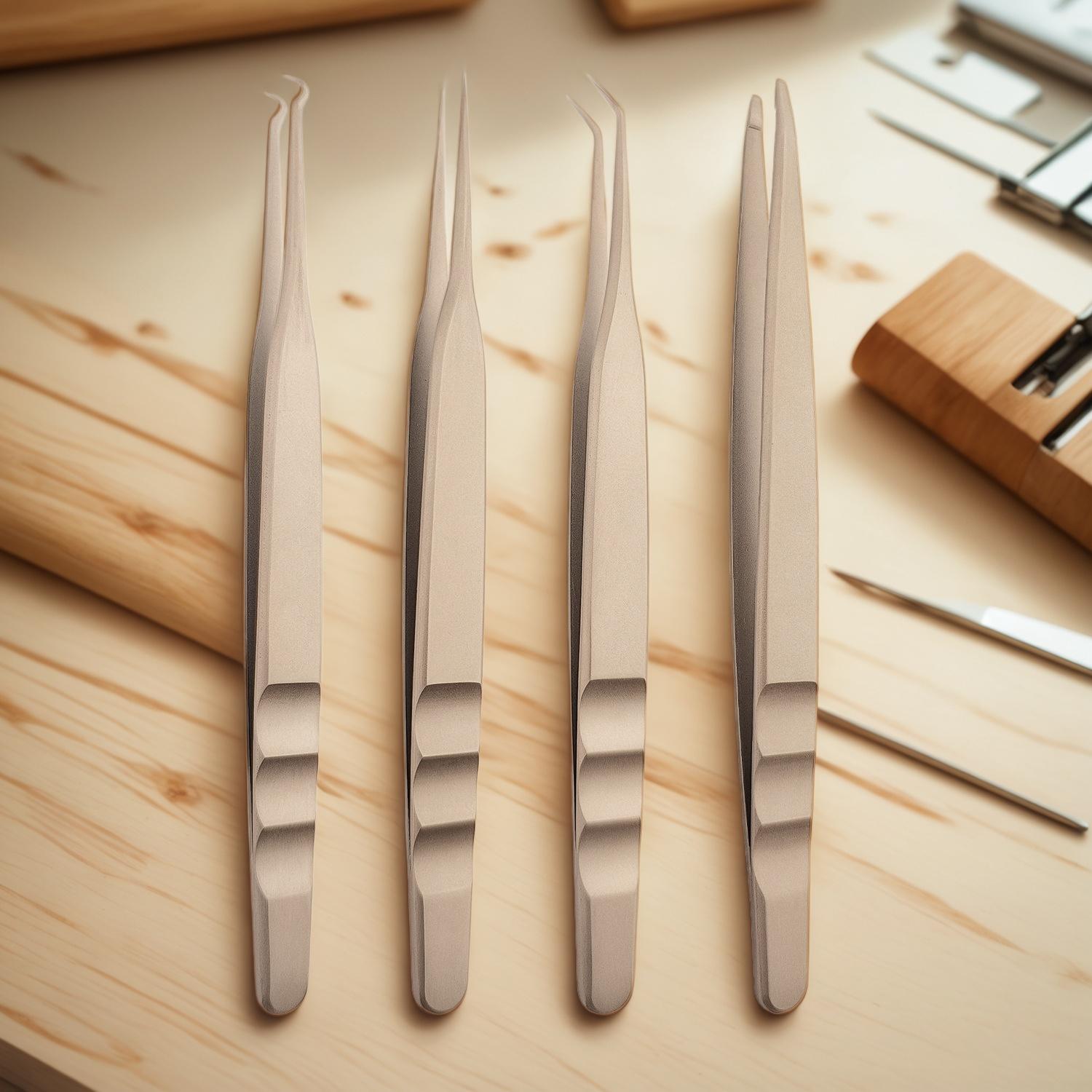
| Common tweezer type | Typical use | Buyer focus |
|---|---|---|
| Slant tip | Eyebrow shaping and general grooming | Tip alignment, edge smoothness, comfortable tension |
| Point tip | Precision work and fine hair removal | Sharpness control, protective packaging, safety instructions |
| Flat tip | Gripping broader items or thicker hairs | Even contact surface and stable pressure |
| Curved tip | Lash placement or detailed cosmetic use | Controlled curve, visibility, and balanced hand feel |
For most beauty retail programs, a slant tweezer is the practical starting point because it suits the widest audience. More specialized tips can be added as the range matures. If you sell professional beauty supplies, however, offering several tip shapes can help customers choose the right tool for specific services.
Quality Details That Matter More Than They Appear
Because tweezers are compact, buyers sometimes focus mainly on finish color or packaging. Those elements matter for retail presentation, but functional details should come first. A tweezer must close evenly, grip reliably, and feel controlled in the hand. Poorly aligned tips are the most common reason a customer decides a tweezer is useless.
When evaluating samples or planning a wholesale order, use a checklist that covers both appearance and performance:
- Tip alignment: The two sides should meet evenly without visible gaps or twisting.
- Grip performance: The tweezer should hold a fine hair or thin test material without sliding immediately.
- Edge comfort: Tips should not feel jagged, burred, or unexpectedly rough.
- Hand tension: The spring feel should be firm enough to control but not tiring for repeated use.
- Surface finish: Coating, polish, or color should look even and suitable for the target retail position.
- Packaging protection: Tips should be protected during shipping and storage, especially for pointed styles.
- Batch consistency: Samples should represent the intended production standard, not only a hand-selected best piece.
These inspection points are especially important when tweezers are part of a branded manicure or grooming set. One weak tool can affect how customers judge the entire kit. If your assortment includes nail tools, brow tools, and other accessories, review related beauty tool products to keep material choices, finishes, and packaging direction aligned across the range.
Private Label Manicure Tools and Brand Expansion
Private label manicure tools can help a beauty business move beyond simple resale. A branded tool line gives retailers, salons, and e-commerce sellers more control over presentation, perceived value, and customer loyalty. Tweezers are a practical entry point because they are familiar to customers, easy to bundle, and suitable for both basic and premium positioning.
Before developing private label tweezers or manicure tools, define the role of the product in your assortment. A budget retail line may need simple packaging, clear usage language, and reliable everyday performance. A salon-oriented line may prioritize professional appearance, stronger packaging, and refined finishing. A giftable grooming set may require a coordinated visual system across tweezers, clippers, scissors, files, and cuticle tools.
Branding decisions should be made after the product specification is clear. Logo placement, packaging artwork, color selection, and set configuration all depend on the tool type and retail channel. For example, a sharp point tweezer may require more protective packaging than a standard slant tweezer. A travel grooming kit may need compact packaging that prevents tools from rubbing against each other. A retail peg display may need a package that communicates the tip type at a glance.
Olimor Beauty works with business buyers who need beauty tools for retail and supply channels. If you are comparing product directions, it can be useful to browse product collections and consider how tweezers could fit with manicure tools, grooming accessories, or personal care kits.
Recyclable Grooming Tools in Bulk: What to Consider
Sustainability is becoming a stronger factor in beauty tool sourcing, but buyers should approach recyclable grooming tools in bulk with practical questions. A product may include recyclable packaging, recyclable metal components, reduced plastic use, or a simpler packaging structure that lowers waste. These are different choices, and each affects cost, presentation, and logistics.
For tweezers and manicure tools, the tool itself is often long-lasting, which can support a lower-waste product story when the quality is dependable. A durable tweezer that performs well for a long time is usually a better customer experience than a disposable-feeling product with excessive packaging. Packaging choices also matter: paper-based cards, minimal plastic, protective sleeves, and compact cartons can all influence the environmental profile and shipping efficiency.
When planning a more eco-conscious bulk program, document your priorities clearly. Decide whether your first goal is recyclable packaging, reduced packaging volume, a longer product life, or a complete grooming set with fewer disposable components. This avoids vague sustainability claims and helps your team compare options on practical terms.
Selecting a Manicure Tools Exporter in Guangdong
Guangdong is a major sourcing region for beauty tools and consumer goods, so buyers often compare manicure tools exporters there when building a wholesale program. The right exporter should be able to communicate clearly about product options, sample review, packaging feasibility, inspection points, and shipment preparation. For tweezers, the conversation should include both cosmetic appearance and functional performance.
A reliable sourcing process usually follows a simple sequence:
- Define the sales channel: retail shelf, salon resale, online store, gift set, distributor catalog, or promotional program.
- Choose the tweezer style: slant, point, flat, curved, or mixed set based on customer use.
- Review samples carefully: test grip, alignment, finish, tension, packaging, and labeling clarity.
- Confirm branding needs: logo method, packaging artwork, barcode needs, instructions, and carton marks.
- Set inspection expectations: decide what defects are unacceptable before bulk production is completed.
- Plan replenishment: estimate reorder timing so popular styles do not run out during peak sales periods.
This structure helps prevent common problems such as choosing packaging before confirming tool dimensions, approving a finish without testing grip, or ordering too many specialized tip styles before knowing customer demand.
How to Build a Balanced Wholesale Tweezer Assortment
A balanced assortment does not need to be large at the start. Many businesses begin with one or two reliable core styles, then add variations after customer feedback. A practical launch could include a slant tweezer for everyday brow care and a point or curved tweezer for more precise applications. If your customer base includes salons, you may add professional-looking finishes or multi-tool sets. If your customer base is general retail, clear packaging and simple use descriptions may be more important than a wide technical range.
Inventory planning should also consider replacement and gifting behavior. Tweezers are often purchased as personal tools, backup tools, travel tools, and components in manicure sets. This makes them suitable for checkout displays, bundled promotions, and beauty kits. However, avoid expanding too quickly into many colors or tip shapes unless you have a merchandising plan. Too many similar options can confuse customers and slow inventory turnover.
For private label buyers, keep the first program focused. Confirm that the core tweezer performs well, the packaging survives transportation, and the product information is easy to understand. After the first market response, expand into additional grooming tools or sets with greater confidence.
Next Steps for Wholesale and Private Label Buyers
Tweezers wholesale can support a profitable beauty tool category when the products are selected with care. The strongest programs combine reliable grip, suitable tip design, consistent finishing, protective packaging, and a clear role within the wider assortment. Whether you are building a retail line, adding private label manicure tools, or exploring recyclable grooming tools in bulk, the best results come from matching product details to real customer use.
If you are planning a wholesale tweezer or manicure tool project, prepare your target channel, preferred tip styles, packaging direction, and expected brand positioning before comparing options. To discuss a sourcing plan, contact Olimor or send an inquiry with your product requirements. A clear brief makes it easier to evaluate samples, refine specifications, and build a beauty tool program that customers will want to buy again.
Tag: