

Tweezers Supplier Guide for Custom Beauty Tool Lines
Choosing a tweezers supplier is not only about finding a low-cost grooming tool. For beauty brands, salons, distributors and e-commerce sellers, tweezers affect how customers judge the quality of an entire personal care range. A tweezer that slips, pinches unevenly or loses alignment quickly can create returns and negative reviews, while a well-made tool supports precise brow shaping, facial hair removal, lash application and small grooming tasks.
Olimor Beauty works with buyers looking for stainless steel tweezers and custom beauty tool solutions. The goal is to help brands think clearly about product use, construction, finish, packaging and quality expectations before moving into production. If you are comparing beauty tool products or preparing a private-label project, the points below will help you evaluate suppliers in a more practical way.
Start with the Customer’s Real Use Case
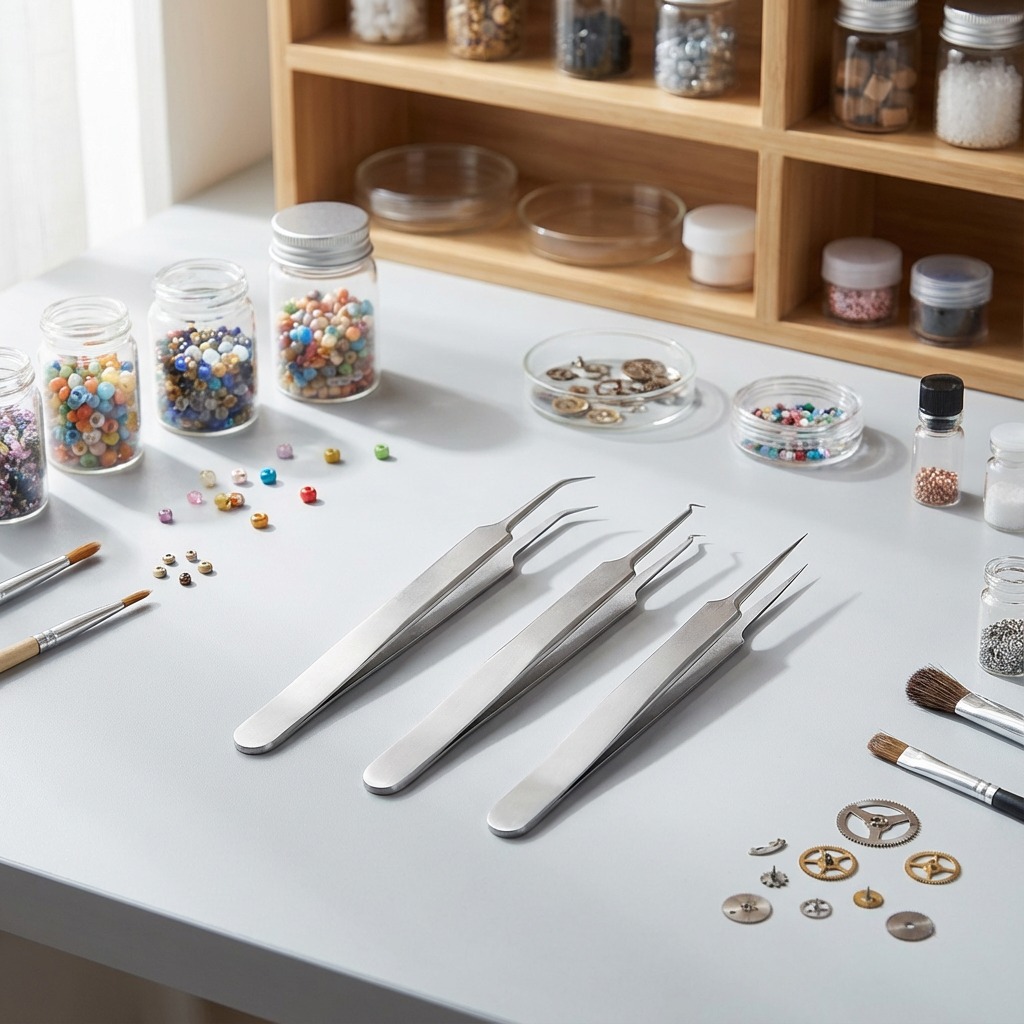
Before selecting a tweezer style, define who will use it and what task it must perform. A consumer brow kit, a professional salon set and a travel grooming accessory may all need different handling, tip shapes and presentation. A supplier conversation becomes more productive when the use case is specific rather than simply requesting “good tweezers.”
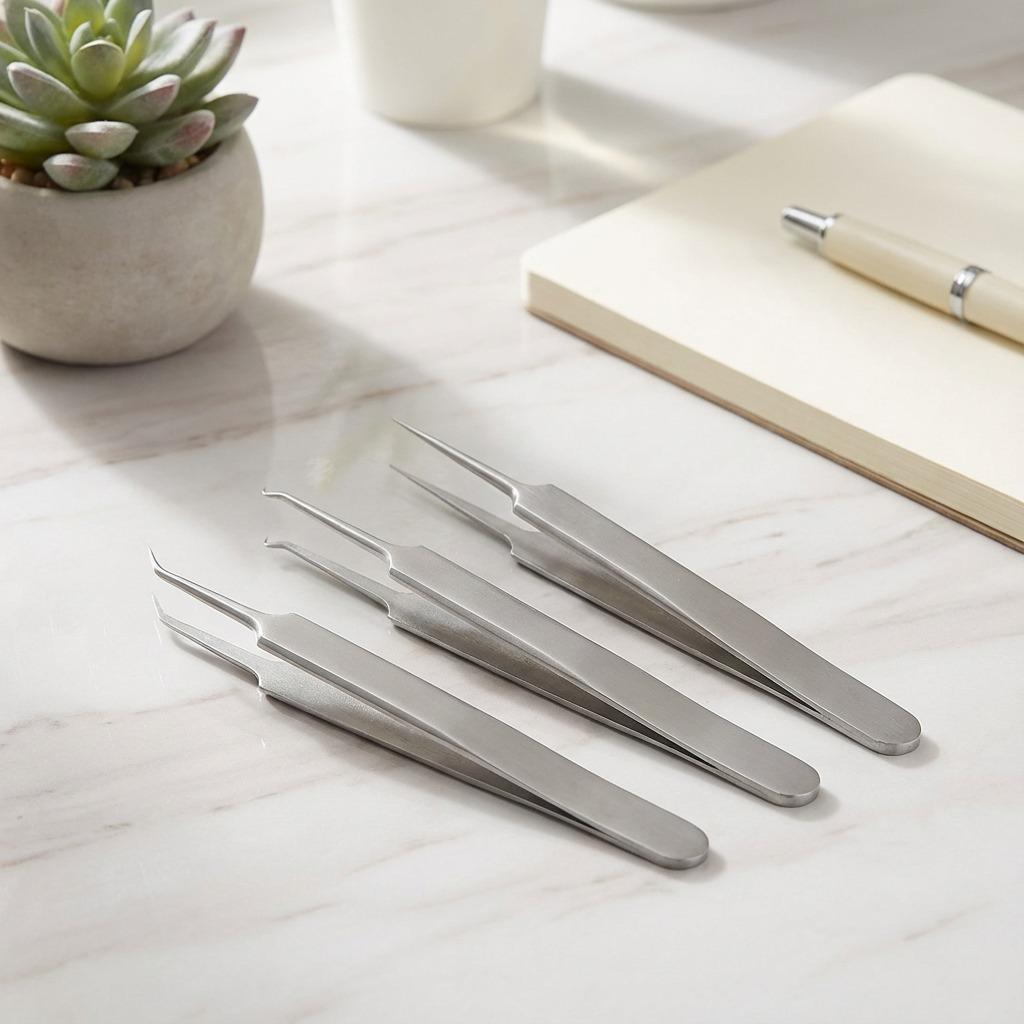
For eyebrow shaping, the customer usually needs grip, visibility and control. Slanted or angled tips are commonly chosen because they can catch hairs close to the skin while remaining easy to position. For precision removal of fine hairs, splinters or ingrown hairs, a pointed tip may be more suitable, but it must be manufactured and packaged carefully because the end is delicate. Straight tips can be useful for general grooming and may also suit tasks such as applying false lashes.
When planning a set, consider whether the customer benefits from a trio of tweezers rather than a single tool. A stainless steel tweezer set can communicate value when each piece has a clear role. However, a set should not include redundant shapes simply to increase item count. The better question is: does each tweezer solve a distinct grooming need?
What to Check in Stainless Steel Tweezers
Stainless steel is widely used for tweezers because it is durable, hygienic and easy to clean. Even so, the material name alone does not guarantee performance. Buyers should look at how the tool is formed, finished and inspected. Tip alignment is especially important. If the two sides do not meet cleanly, the tweezer may cut hair, slide over hair or require too much pressure.
Hand-filing and detailed finishing can help improve the way the tips meet. For private-label and OEM projects, it is useful to request samples that reflect the intended final design, not only a generic reference piece. Test the samples on realistic tasks: brow hairs of different thicknesses, very fine hairs, and repeated gripping motions. A tweezer may look attractive in packaging but fail when tested on hair pickup and release.
- Tip alignment: the two sides should meet evenly without visible gaps at the gripping point.
- Grip tension: pressure should be firm enough to grasp hair, but not so stiff that it causes hand fatigue.
- Edge finish: tips should be precise without rough burrs that scratch skin or damage packaging.
- Surface finish: coating, polish or texture should be consistent across the tool and stable during normal handling.
- Cleaning suitability: the shape and finish should allow easy wiping and routine hygiene maintenance.
These checks are simple, but they often reveal differences between suppliers. A reliable tweezers supplier should be able to discuss how products are checked from incoming material through final inspection without relying only on appearance.
Comparing Tweezer Tip Styles for a Product Range
The right tip style depends on the product promise. For an eyebrow-focused range, an angled tweezer may be the hero item. For a practical grooming kit, a combination of angled, pointed and straight tips may make sense. For a lash accessory range, a straight or carefully shaped tip may be considered depending on how the customer applies lashes.
| Tip style | Typical use | Buyer considerations |
|---|---|---|
| Angled or slanted tip | Eyebrow shaping and general hair removal | Check that the slant angle gives clear visibility and catches short hairs cleanly. |
| Pointed tip | Fine hairs, splinters and targeted work | Require careful safety, packaging and tip protection because the point is delicate. |
| Straight tip | General grooming, lash handling and broader grip tasks | Confirm the flat meeting edge is even and does not leave gaps across the contact area. |
A table cannot replace sample testing, but it helps buyers avoid matching the wrong tool to the wrong customer. If your line includes several grooming categories, review related product collections so the tweezer design feels consistent with the rest of the assortment.
OEM Customization: Design Choices That Matter
Tweezers OEM work should begin with functional choices before decorative decisions. Color, logo and packaging are important for retail appeal, but they cannot compensate for poor alignment or uncomfortable tension. Start with the base design: length, tip shape, grip area, weight, finish and intended cleaning method. Then consider how the product will be presented to the customer.
Customization may include selecting the tweezer type, refining grip feel, choosing a surface finish, applying branding and developing packaging. A soft-touch or textured grip can reduce slipping during extended use, while a lightweight construction may improve comfort. The exact choice should follow the market position: a professional salon customer may prioritize performance and cleaning, while a giftable retail set may also require attractive packaging and a clear explanation of each tool’s purpose.
For buyers who want to design your own tweezers, prepare a concise specification before requesting samples. Include the intended use, target customer, preferred tip styles, finish direction, logo placement, packaging format and any market requirements the product must meet. This reduces back-and-forth and helps the supplier determine whether an existing tool can be customized or whether a more tailored development route is needed.
Quality Control Questions for Supplier Evaluation
Quality control for tweezers should focus on repeatable performance. A beautiful sample is not enough if bulk production varies from piece to piece. When evaluating a tweezers supplier, ask how consistency is maintained during production and what inspection points are used before shipment. The supplier should be able to explain practical controls in plain language.
- How are raw materials checked? Confirm that material inspection is part of the production process rather than an afterthought.
- How is tip alignment inspected? Alignment is central to performance, so understand whether checks are visual, manual, sample-based or more detailed.
- How is tension controlled? Excessive stiffness or weak spring-back can both make a tweezer unpleasant to use.
- How are pointed tips protected? Sharp or fine tips need suitable handling and packaging to prevent damage in transit.
- How are branded finishes checked? Logo clarity, color consistency and surface defects should be reviewed before goods leave the factory.
These questions do not require invented technical claims or unnecessary complexity. They help buyers identify whether the supplier understands the product beyond its appearance. For a grooming tool used close to the skin, small manufacturing differences can have a large effect on user satisfaction.
Packaging and Product Education for Better Reviews
Many tweezer complaints come from mismatched expectations. Packaging and product copy should tell the buyer what each tool is for and how to care for it. If a set includes angled, pointed and straight tweezers, label each one clearly. A simple diagram or short instruction can reduce confusion and help the customer choose the right tool for the task.
Care instructions should also be practical. Recommend wiping the tips clean after use, keeping the tool dry before storage and protecting fine pointed tips from impact. Avoid making unsupported claims about sterilization, medical use or professional certification unless those claims are verified for the specific product and market. Clear, accurate instructions are better for long-term trust than exaggerated promises.
When to Contact Olimor Beauty
If you are building a beauty tool range, sourcing a stainless steel tweezer set or comparing OEM options, prepare your desired tip styles, target retail channel and packaging idea before beginning the discussion. Olimor Beauty can review the direction and help you think through functional design, appearance and production considerations.
For general questions, you can contact Olimor. If you already have a project brief, product reference or customization plan, you can send an inquiry with your requirements. The more clearly the tool’s use case is defined, the easier it is to develop tweezers that support your brand and meet your customers’ daily grooming needs.
Tag: