

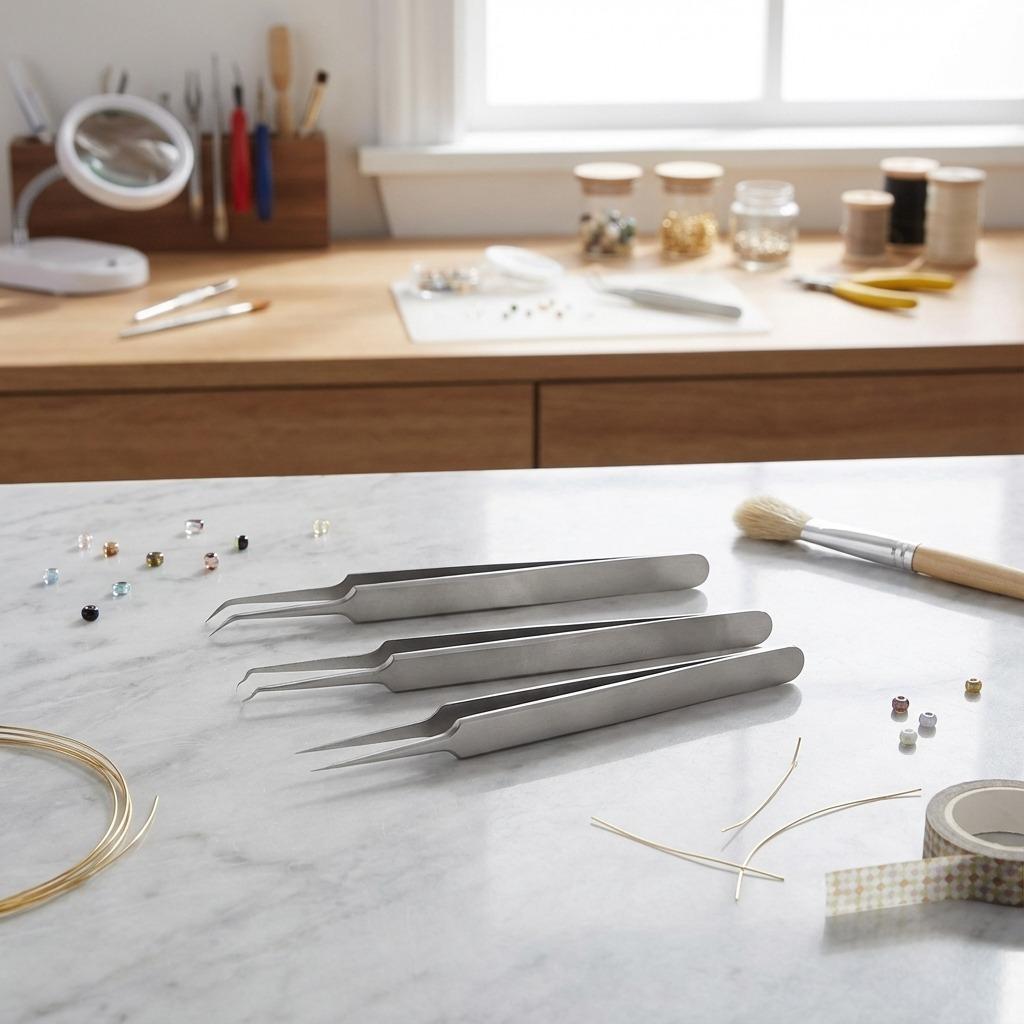
How to Choose a Tweezers Supplier for Precision Beauty Tools and OEM Projects
Choosing a tweezers supplier is a practical product decision, not just a purchasing task. For beauty brands, salon buyers, distributors, retailers and private-label teams, the right supplier should help you control tip alignment, grip comfort, material selection, finish quality, packaging protection and OEM customization details before the tool reaches your customers.
Tweezers look simple, but small differences affect real use. A brow tool with uneven tips may miss fine hairs. A lash or nail detail tweezer with poor visibility may slow down the user. A retail product with attractive packaging but weak tip protection may arrive damaged. This guide explains how to evaluate a precision tweezers supplier for standard products, private-label sourcing and custom beauty-tool projects without overcomplicating the buying process.
Start With the Main Use Case Before Comparing Suppliers
The best tweezers supplier discussion begins with the task the tool must perform. A product for eyebrow grooming, lash handling, skincare routines, nail art, craft work or general beauty kits may require a different tip profile, grip feel and packaging plan. If the intended use is unclear, samples may look acceptable but fail in the hands of the final user.
For eyebrow shaping, buyers often prioritize clean closing tips, balanced tension and a slanted profile that helps isolate individual hairs. For lash and nail work, a finer point or curved design may help with placement and visibility around small components. For crafting or other detailed work, repeatable grip, stable alignment and comfortable handling may matter more than decorative finishes.
Separate retail appearance from working performance. A polished surface, color finish or printed logo can improve shelf appeal, but the tool still needs smooth edges, tips that meet evenly and a body that remains comfortable during repeated use. When reviewing Olimor beauty tool products, compare appearance and function together rather than treating design as a cosmetic step after performance has already been decided.
What a Good Tweezers Supplier Should Help You Control
A capable supplier should do more than offer a basic product list. Precision tweezers are judged by details that may not be visible in a photo. Buyers should ask how the supplier supports decisions around tip shape, closing alignment, surface condition, packaging and product consistency from one batch to the next.
- Tip alignment: The two sides should meet evenly so the user can grasp fine hairs or small beauty items without slipping.
- Tip style: Slant, pointed, curved and broader tip options serve different beauty and detail tasks.
- Grip comfort: The body shape and surface feel should suit the user’s hand, especially in professional settings.
- Material direction: Stainless steel is commonly selected for beauty tweezers because it supports durability and rust resistance when the tool is properly handled and maintained.
- Finish quality: The finish affects visual value, hand feel and the buyer’s perception of the final product.
- Packaging compatibility: The package should hold the tool securely and protect the tip area during storage and transport.
For B2B buyers, these points are also commercial risk controls. Poor alignment can lead to returns. Rough edges can reduce customer confidence. Packaging that does not secure the tip area can damage the product before it is used. A supplier who can discuss these checkpoints clearly is easier to evaluate than one who only responds with generic catalog images.
Choose the Right Tweezer Tip Shape
The tip is the core specification for any precision tweezer. A buyer may describe a product as precision tweezers, but real precision depends on the tip shape, closing contact, edge finishing and how the tips behave under normal finger pressure. Olimor supports common tweezer directions such as angled, pointed and curved styles, giving buyers a practical starting point for different market needs.
Angled or Slant Tips
Angled tips are widely used for brow shaping because the slanted edge helps approach hair at a controlled angle. They are familiar to both professional and home grooming users, making them a practical option for brow-focused retail lines, salon kits and everyday beauty tools.
Pointed Tips
Pointed tips are useful when a narrow contact point is needed. They may suit very fine detail work, careful placement or applications where visibility around the working area is important. Buyers should review the intended task carefully because a fine point must also be finished and packaged in a way that protects the tip.
Curved Tips
Curved tips are often selected for lash, nail or craft applications where the user benefits from visibility around the object being handled. The curve can help the hand stay out of the working area, but the shape should still close evenly and feel controlled.
Flat or Broader Tips
Flat or broader tips may help grip larger pieces, although they are not usually the best choice for the finest brow or lash tasks. They can be relevant for general grooming sets or detail work where surface contact is more important than a fine point.
When comparing samples, do not judge the tip only by looking at it under bright light. Open and close each sample several times. Confirm that the tips meet without one side crossing, check whether the closing force feels consistent and feel whether the edges are controlled rather than harsh against the skin.
Plan Tweezers OEM Customization Around Function
Tweezers OEM services may involve simple branding on an existing design or a more tailored project covering tip shape, overall length, grip treatment, finish direction, logo placement and packaging. The main goal is not to make the tool look different; it is to make it suitable for the user, sales channel and brand position.
Before requesting samples, prepare a short product brief. It does not need to be complicated, but it should identify the intended customer, main use, preferred tip shape, finish direction and packaging expectation. A salon-focused tool may prioritize comfort and reliable tip contact. A retail gift product may place more emphasis on presentation while still requiring tip protection. A lash or nail detail item may need visibility and controlled handling more than a highly decorative finish.
- Target user: Professional brow artist, lash technician, nail artist, home grooming customer, crafter or mixed retail audience.
- Main task: Brow shaping, fine hair removal, skincare use, lash handling, nail art, detail placement or general grooming.
- Tip preference: Slant, pointed, curved or another profile matched to the main application.
- Size direction: Overall length and handle width should suit the user’s hand and the product category.
- Grip and handling: Surface texture and hand feel should support repeated use without making cleaning or packaging difficult.
- Finish direction: Matte, polished, colored or textured choices should be evaluated for both appearance and handling.
- Branding and packaging: Logo placement, protective sleeve, retail box, set packaging or bulk preparation should be discussed early.
If your team is still defining the range, browsing Olimor product collections can help compare tool formats and narrow the brief before a custom sample discussion.
Design Your Own Tweezers Without Adding Unnecessary Complexity
Design your own tweezers projects should solve a real user need. Customization can include adjusting the tip shape, selecting a finish, changing grip treatment, adding branding or aligning the tool with a wider beauty kit. Each change should be connected to the way the customer will use and judge the product.
A brow-focused retail line may benefit from an angled tip, comfortable tension and a simple protective sleeve. A lash or nail detail tool may justify a finer or curved tip and packaging that protects the working end. A craft-oriented item may need a stable grip surface for longer sessions. These are not only style choices; they influence customer satisfaction and repeat purchase potential.
Keep the first custom version focused. Too many changes at once can make it difficult to identify which feature improves the tool and which feature adds cost or production complexity without adding value. A practical development sequence is to approve the base shape and working performance first, then finalize finish, branding and packaging once the tool function is acceptable.
Sample Checks Every Buyer Should Perform
Even before formal inspection, buyers can learn a great deal from structured sample checks. These checks are useful for sourcing teams, salon managers, brand owners and distributors reviewing a potential tweezers supplier.
- Tip contact: Close the tweezer gently and confirm the tips meet evenly, with no visible gap or mismatch.
- Grip performance: Test the tool on fine hair, thread, paper fiber or another small item that reflects the intended use.
- Tension feel: Open and close the tweezer repeatedly to judge whether the spring feel is too stiff, too loose or consistent.
- Edge comfort: Check that edges feel smooth and controlled, especially near the working tip and handle.
- Surface condition: Look for rough marks, inconsistent coating, visible defects or areas that may affect perceived quality.
- Packaging fit: Confirm the tool sits securely in its sleeve, box or kit position and that the tips are protected.
These checks do not replace a supplier’s production inspection, but they help buyers compare samples more objectively. They also create clear feedback that can be used during OEM adjustment and approval.
Comparison Checklist for Supplier Evaluation
The following table can be used when comparing tweezers supplier options, samples or OEM quotations. It focuses on practical buying questions rather than abstract claims.
| Buyer checkpoint | Why it matters | What to ask or inspect |
|---|---|---|
| Intended use match | A brow, lash, nail or craft tool may need different handling. | Ask which tip shape and grip style best fit the target user and task. |
| Tip alignment | Alignment determines whether fine hairs or small items can be grasped accurately. | Inspect even closing, clean contact and no visible crossing or gap. |
| Material selection | Material affects durability, maintenance and buyer confidence. | Confirm the material direction offered and how it should be cared for. |
| Grip comfort | Comfort matters in salons and for repeated use. | Open and close samples repeatedly and compare hand feel. |
| Finish quality | Surface appearance influences retail value and brand presentation. | Review consistency, smoothness and whether the finish supports practical handling. |
| OEM communication | Clear specifications reduce misunderstandings during sampling and production. | Provide a brief covering target user, tip, size, finish, branding and packaging. |
| Packaging protection | Tips can lose precision if bent or pressed during transport. | Check whether the package secures the tool and protects the working end. |
| Inspection plan | Consistent checks help reduce batch-to-batch surprises. | Discuss tip, surface, tension and packing checkpoints before order confirmation. |
Cost Factors That Affect Custom Tweezer Projects
Buyers often ask for a price before the specification is clear, but tweezer cost is influenced by several practical decisions. Tip complexity, finish direction, branding method, packaging format, sampling work and inspection requirements can all affect the final quotation. A simple standard tweezer with existing packaging is usually easier to quote than a private-label product with a new finish, custom pack and special presentation requirements.
To compare quotations fairly, send each supplier the same brief. Include the target use, preferred tip profile, expected finish, logo needs, packaging direction and any reference requirements. Avoid comparing a basic catalog item with a customized retail-ready product as if they were the same scope. A reliable supplier should help clarify what is included in the quotation and what remains to be confirmed during sampling.
Quality, Documentation and Responsible Supplier Questions
Because tweezers are precision beauty tools, quality control should be considered from material selection through final packaging. Olimor discusses practical quality checkpoints such as tip alignment, surface condition, closing tension and packing condition so buyers can connect inspection to real user experience.
For supplier evaluation, buyers may also use quality-management references such as ISO 9001 as a framework for asking about process control, records and corrective action. This does not mean every supplier or project is certified, and buyers should verify the applicable version, current documentation and relevance to their own market requirements. Do not rely on unsupported claims; request supplier documents that apply to the actual product and order.
For beauty tools sold in specific markets, buyers should also confirm local import, labeling and consumer product requirements with their own compliance advisers or relevant public authorities. A tweezers supplier can support product details, but the brand or importer remains responsible for confirming what documentation is required for its sales channel.
How to Brief Olimor for a Tweezers Sourcing Project
A strong brief makes the sourcing conversation faster and more accurate. If you are choosing a standard precision tweezer, share the intended user, main application and packaging preference. If you are planning OEM tweezers, include reference images or descriptions, but also explain what performance problem the product must solve.
Useful information includes target customer, use case, tip style, preferred finish, logo location, packaging format and quality concerns from previous products. If you need help narrowing the scope, you can contact Olimor with your project background. For a defined private-label or OEM requirement, send the details through the Olimor inquiry page so the discussion can focus on samples, customization and order planning.
The most successful tweezer projects balance appearance, function and inspection. A product should look appropriate for the brand, feel controlled in the user’s hand and arrive with the tip area protected. When those basics are clear, supplier selection becomes more objective and OEM customization becomes easier to manage.
FAQ
Can I request tweezers samples before placing an order?
Sample availability depends on the product type and customization scope. Standard styles may be easier to review, while OEM samples require a clearer brief covering tip shape, finish, branding and packaging direction. Ask the supplier what can be sampled and what details must be confirmed first.
What MOQ applies to custom tweezers?
MOQ can vary by design, finish, packaging and production requirements. Buyers should not assume one fixed quantity for every project. Share the intended specification with Olimor so MOQ can be discussed based on the actual product scope.
Can Olimor support logo, finish and packaging customization?
Olimor supports OEM discussions for tweezers, including practical choices such as finish direction, branding placement and packaging planning where available. The best approach is to confirm working performance first, then finalize appearance and retail presentation.
What quality checks should I confirm before approval?
Confirm tip alignment, grip performance, tension feel, edge comfort, surface condition and packaging protection. For private-label projects, these checkpoints should be agreed before production so both buyer and supplier evaluate the product in the same way.
How should I ask about lead time?
Lead time depends on whether the order uses an existing style or requires custom sampling, finish work, branding or packaging. Ask for the schedule after the specification is clear, and verify what stage the timing covers, such as sampling, production or shipment preparation.
Tag: