

How to Choose a Tweezers Supplier for Lash, Brow and OEM Beauty Tools
For lash artists, brow technicians, beauty retailers and private-label brands, tweezers are not a small accessory. They are the tool that controls isolation, pickup, placement, removal and finishing details. A supplier that cannot deliver consistent tip alignment or comfortable handling can affect service speed, client comfort and repeat purchasing. Choosing a tweezers supplier is therefore less about finding a simple catalog item and more about evaluating precision, usability, customization options and quality control.
Olimor Beauty supplies precision beauty tools for professional and commercial use, including stainless steel tweezers and OEM services for businesses developing their own tool lines. This guide explains how to evaluate tweezers for lash and brow work, what to look for in OEM customization, and how to build a clear sourcing checklist before placing an inquiry.
What professional buyers should expect from a tweezers supplier
A reliable tweezers supplier should understand the difference between a general grooming tool and a professional beauty instrument. In lash and brow services, the tweezer tip must meet cleanly, the body should be balanced, and the grip should allow controlled pressure without hand fatigue. Even a small inconsistency at the tip can make it harder to isolate natural lashes, pick up extensions or remove fine brow hairs cleanly.
For buyers comparing suppliers, the first step is to define the intended use. Lash extension application, lash removal, brow shaping, brow maintenance and retail consumer use may all require different tip shapes and tension. Olimor Beauty focuses on precision and durability, with stainless steel tweezers designed for beauty routines and professional application. When reviewing beauty tool products, consider whether each tweezer is built for a specific hand movement rather than only a visual style.
Good suppliers also provide practical communication around manufacturing and inspection. Useful details include how raw materials are checked, how final packaging is reviewed and how ergonomic handling is considered. The original tool may look simple, but repeatable quality depends on attention to each stage from material selection to finished presentation.
Why tip shape matters for lash and brow work
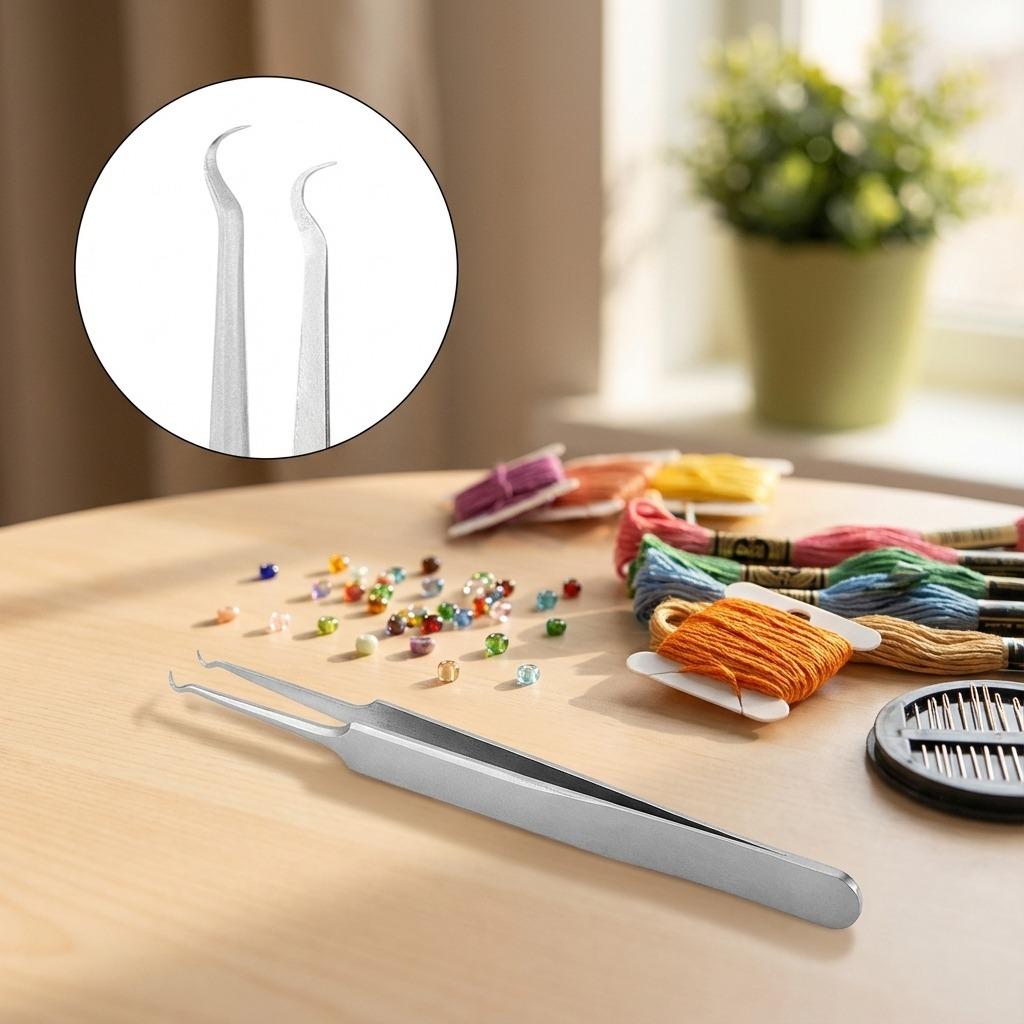
The most important part of any beauty tweezer is the tip. For lash work, curved tips can help technicians follow the natural direction of the lash line and make controlled contact during application or removal. The Professional Curved Eyelash Tweezers from Olimor Beauty are described with curved tips that conform to natural lash shapes, supporting accurate application and removal. This type of design is especially relevant for lash artists who need to work close to the eyelid while maintaining control.
Fine, curved tips are also useful when the goal is a gentle yet firm grip. A tip that grips too aggressively may pinch or pull in an uncomfortable way, while a weak or uneven tip can slip. In lash extension work, slipping can waste time and interrupt the flow of a service. In brow maintenance, poor gripping can break hair rather than remove it cleanly.
When evaluating tip shape, buyers can use the following criteria:
- Contact point: The tips should meet evenly without visible gaps at the gripping edge.
- Angle: A curved or angled tip should match the intended hand position and service technique.
- Grip control: The tweezer should hold fine hairs or lash fibers securely without excessive pressure.
- Surface finish: The tip area should feel smooth and should not scratch the skin or damage lashes during normal use.
- Consistency: Samples should be checked across multiple pieces, not only one display item.
Stainless steel, durability and rust-resistant performance
Stainless steel is a common choice for professional tweezers because beauty tools are frequently cleaned, handled and stored in busy workspaces. Olimor Beauty’s stainless steel tweezers are described as offering rust-resistant performance, an important factor for salons, lash studios and retail customers who expect tools to last through repeated use.
Durability is not only about the metal itself. The tweezer body must keep its shape and tension over time. If the arms become too loose, the user loses precision. If the tension is too stiff, the hand may tire quickly during extended lash sessions. The best way to judge durability is to look at the full tool: material, alignment, spring tension, finishing, and packaging protection during shipping.
For brands planning OEM tweezers, material and finish should be discussed in practical terms. Instead of focusing only on appearance, decide how the tool will be used after purchase. A tweezer sold to professional lash artists may need a different balance of weight, grip and tension than a retail brow tool for occasional home use. Clear use cases lead to better product decisions and fewer revisions.
Ergonomic design and comfort during extended use
Professional lash and brow services require repetitive hand movements. A tool may feel acceptable for one minute but become uncomfortable after a long appointment. This is why ergonomic design should be part of supplier evaluation. Olimor Beauty emphasizes ergonomic designs and refined, lightweight tool concepts that can help reduce strain during extended use.
Comfort depends on several elements working together. Weight should feel controlled, not heavy at the tips. The arms should open naturally after each press. The grip area should allow the user to hold the tweezer securely without forcing the fingers into an awkward angle. For lash artists creating volume effects, comfort becomes even more important because repeated pickup and placement require steady fine motor control.
A practical sample test can reveal whether the design is suitable. Hold the tweezer as it would be used in service, apply light pressure repeatedly, and check whether the tip stays aligned. Test both delicate pickup and firmer gripping. If the hand must compensate for uneven tension or misalignment, the tool is unlikely to perform well in a professional setting.
OEM tweezers: what customization should cover
Tweezers OEM services are valuable for beauty brands that want to create a consistent product line, match a particular audience, or add professional tools to an existing assortment. Olimor Beauty offers OEM services that allow businesses to create bespoke tools tailored to specific needs. The goal of OEM is not simply adding a logo; it is making choices that fit the market, service type and customer expectations.
Customization can include design direction, ergonomic preferences, tip style, finish, packaging approach and branding presentation. For example, a lash-focused brand may prioritize fine curved tips for isolation and extension handling, while a brow-focused retailer may prefer a shape suited to routine maintenance. A professional salon distributor may care most about durability and comfortable tension across repeat orders.
Before starting an OEM project, prepare a concise product brief. Include the primary user, the service scenario, preferred tip shape, desired feel in the hand, packaging expectations and any market positioning requirements. This helps avoid vague decisions and supports a more efficient development process. If you are ready to compare options, you can send an inquiry with your target use case and customization needs.
Quality checks from material to final packaging
Quality assurance is especially important for tweezers because small errors are easy to feel during use. Olimor Beauty describes quality checks from raw materials to final packaging, supporting reliable performance and salon-quality results. For buyers, this means inspection should not be limited to the finished appearance. The process should confirm that the tool is suitable before it reaches the customer.
A practical inspection checklist can include:
- Raw material review: Confirm that the selected stainless steel is appropriate for the intended beauty tool application.
- Tip alignment check: Inspect whether the tweezer tips meet cleanly and consistently.
- Tension test: Press and release the arms repeatedly to judge comfort and recovery.
- Grip test: Pick up fine fibers or hairs to see whether the tool slips, pinches or holds evenly.
- Surface and edge review: Check that the body and tips are smooth and comfortable for close beauty work.
- Packaging check: Make sure each tool is protected so the tips are not damaged during handling or shipment.
This type of checklist is useful for private-label buyers, wholesalers and salon supply companies. It also helps teams compare samples in a consistent way, instead of relying only on first impressions.
Matching tweezers to professional use cases
Not every tweezer should be marketed for every task. A precise curved eyelash tweezer may be ideal for lash application or removal, while a different shape may be better for general brow grooming. The Professional Curved Eyelash Tweezers are particularly relevant where curved tips can follow natural lash shapes and support controlled work. For voluminous lash effects, a tool with fine, curved tips and stable grip may help artists manage delicate fibers with less unnecessary pressure.
For brow maintenance, the buyer should focus on clean hair removal, comfortable control and a tip that can access small areas without scratching the skin. For retail beauty sets, ease of use and packaging clarity may matter more than advanced professional technique. When building a product assortment, view product collections to consider how tweezers can sit alongside other beauty tools in a coherent range.
Clear positioning reduces customer confusion. A product page, carton or retail listing should explain the intended use in plain language: lash extension application, lash removal, brow shaping, or everyday maintenance. This helps customers select the right tool and supports better satisfaction after purchase.
How to compare samples before choosing a supplier
Sample review should be hands-on and repeatable. If possible, test multiple pieces from the same sample batch to judge consistency. Look closely at the tips under good lighting, then perform a short usage simulation that matches the actual service. A lash artist may test isolation and pickup, while a brow technician may test removal of fine hairs.
Record observations in a simple table so decisions are not based on memory alone:
| Evaluation area | What to check | Why it matters |
|---|---|---|
| Tip precision | Even contact and clean grip | Supports accurate lash or brow work |
| Hand feel | Weight, tension and comfort | Reduces strain during repeated use |
| Material finish | Smooth stainless steel surface | Improves durability and user confidence |
| Packaging | Protection for tips and presentation | Helps prevent damage before use |
| OEM fit | Branding, shape and use-case match | Creates a product suitable for the target market |
A strong supplier relationship starts with clear product expectations. Whether you need precision eyelash tweezers, brow maintenance tools or a customized OEM line, focus on alignment, grip, ergonomic handling and quality control. To discuss suitable tweezers for your market or private-label project, contact Olimor with your product goals and intended application.
Tag: