

Tweezers OEM: How Beauty Brands Can Build Better Custom Tweezers
For beauty brands, private-label retailers and distributors, tweezers can look simple at first glance. In practice, they are precision tools where small details affect user comfort, hair removal accuracy, shelf appeal and repeat purchase potential. A tweezers OEM project should not begin with color or packaging alone. It should start with the user, the application and the quality points that determine whether the tool feels reliable in the hand.
Olimor Beauty supports brands looking for OEM custom tweezers and related beauty tools. Whether you are planning a focused brow-grooming item, a compact travel accessory or a broader beauty tool range, this guide explains the key decisions to review before production. It uses practical selection criteria, including tip shape, stainless steel construction, grip design, inspection points and packaging considerations, so your sourcing team can move from idea to a clearer product brief.
What Tweezers OEM Means for a Beauty Brand
Tweezers OEM refers to manufacturing tweezers according to a buyer’s product requirements. The buyer may define the tool shape, finish, grip area, packaging style and branding approach, while the manufacturing partner helps turn those requirements into a producible item. For beauty brands, this is useful because tweezers often need to match a wider line of brow tools, manicure tools, facial grooming accessories or retail gift sets.
A strong OEM brief should include the intended use, target customer, expected retail channel and any non-negotiable design features. For example, a professional salon-oriented tweezer may prioritize a secure grip and consistent tip alignment, while an entry-level retail tool may focus on reliable daily grooming and approachable packaging. A travel-focused item may need compact presentation and protection for the tips.
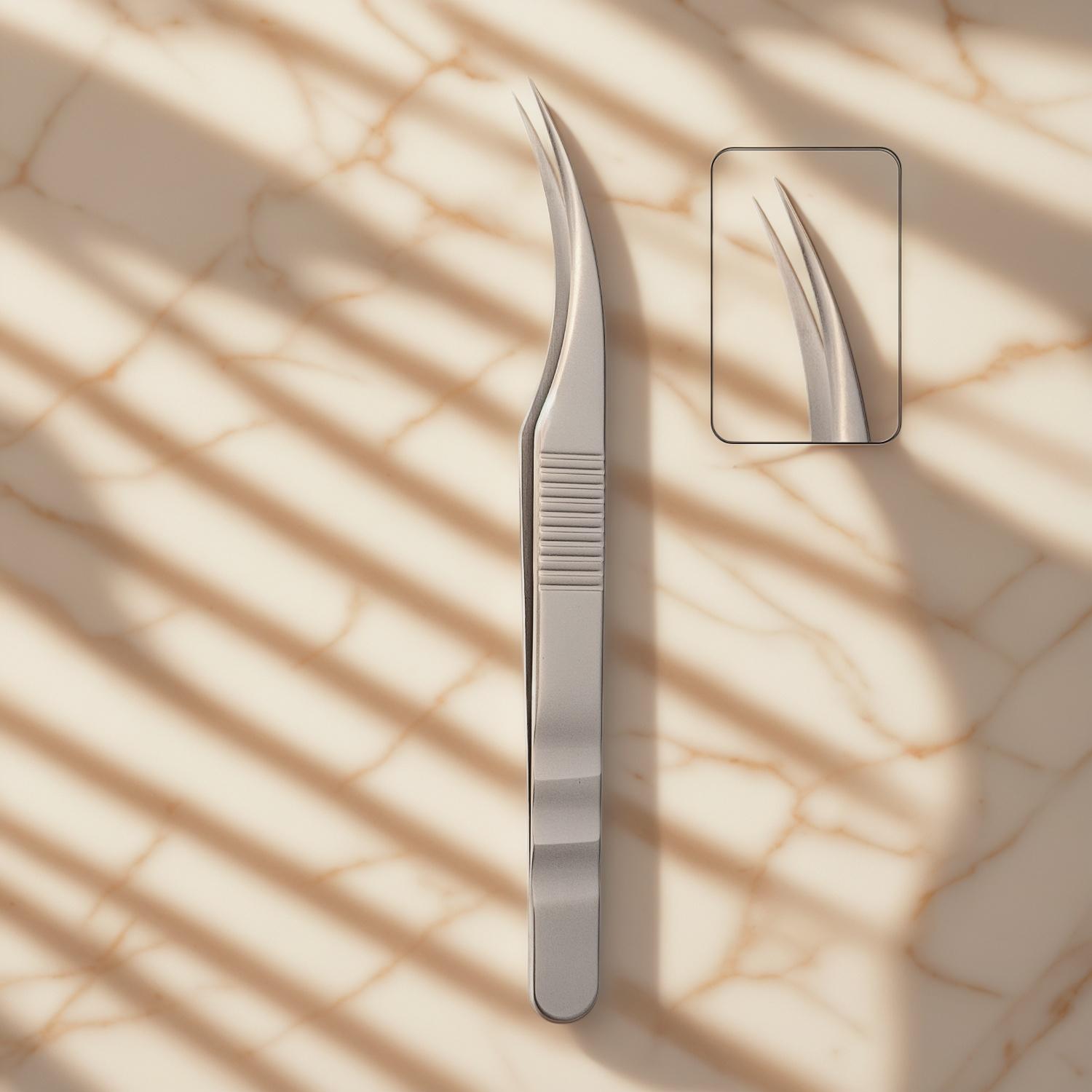
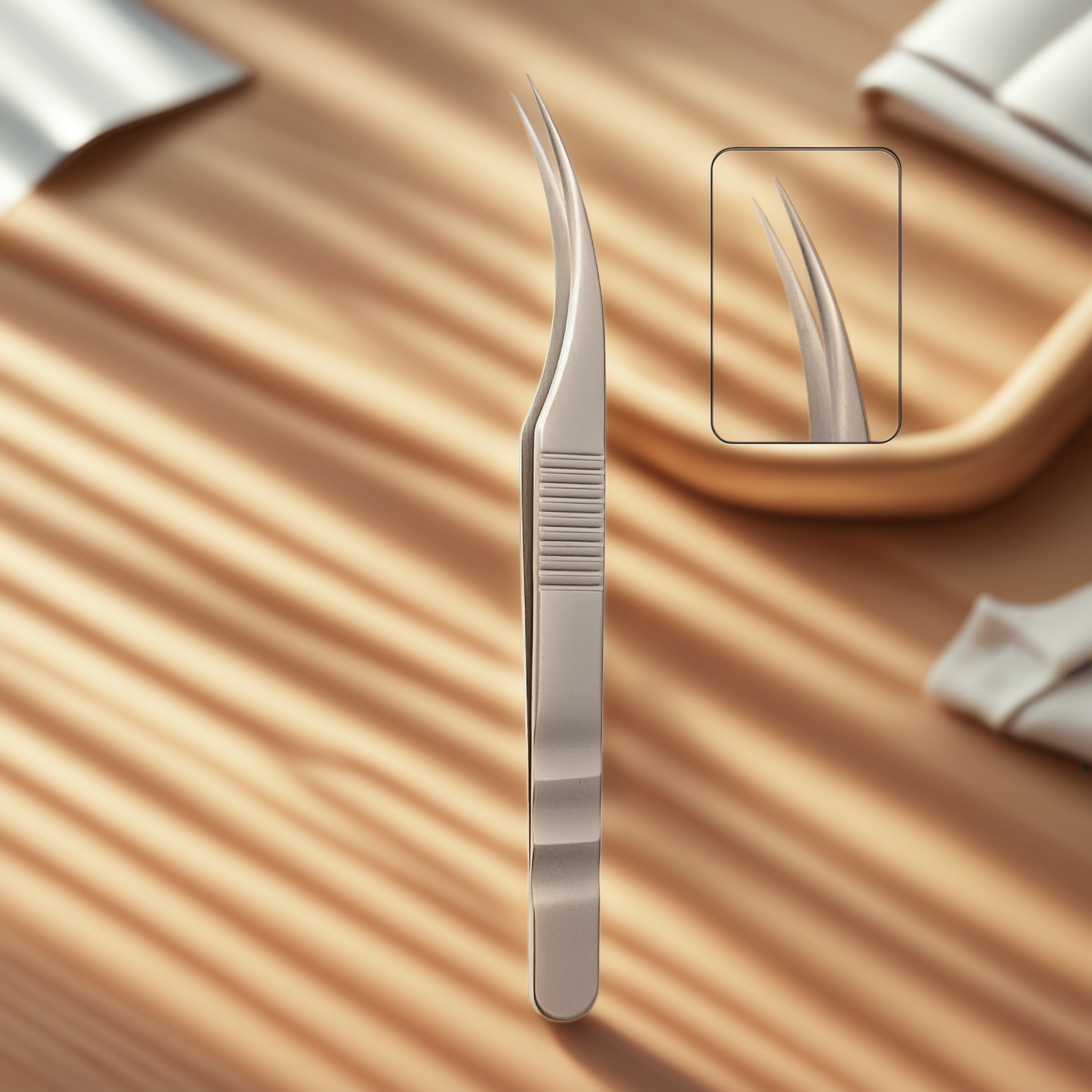
The supplied product example highlights several important features: polished stainless steel, ergonomic design, curved tips and pressed ridges on the handle area. These details are not decorative only. They influence durability, cleaning, control and comfort during repeated grooming tasks.
Key Design Choices for OEM Custom Tweezers
Before discussing colors, logos or outer packaging, buyers should decide what the tweezer must do well. Different users hold tweezers differently, work at different angles and have different expectations for precision. The more clearly those use cases are defined, the easier it becomes to evaluate samples.
- Tip shape: Curved tips can support precise hair removal and detailed beauty applications. They may be useful when the user needs visibility and controlled contact at the working end.
- Tip alignment: The two sides should meet cleanly. Poor alignment can make the tool feel weak or unreliable, even if the overall body looks attractive.
- Material and finish: Polished stainless steel, as used in the referenced Deluxe Curved Tweezers, can provide a clean appearance and practical durability for grooming tools.
- Handle feel: Ergonomic shaping and pressed ridges can help reduce slipping and improve control, especially when the user is working slowly around the brow area.
- Spring tension: The resistance should feel controlled rather than stiff or loose. This affects comfort over repeated use.
- Edge safety: Tips need precision, but the finished product should also be appropriate for retail handling and end-user care.
For an OEM custom tweezers program, these features should be recorded in a product specification sheet. A written specification helps keep sampling, inspection and future repeat orders consistent.
Why Stainless Steel and Finish Quality Matter
Stainless steel is widely used in beauty tools because it suits products that require strength, a clean surface and repeated handling. The original product information identifies polished stainless steel as a material feature, which is especially relevant for tweezers. A polished finish can make the tool look clean and professional, while also supporting easier wipe-down care after use.
However, buyers should look beyond the material name. In a sourcing discussion, the more useful question is how the finished tweezer performs. Does it grip fine hairs without excessive pressure? Do the tips close evenly from sample to sample? Does the surface finish feel smooth at the edges and handle? Are the pressed ridges consistent and comfortable rather than sharp?
Beauty brands should also consider the environment in which the product will be sold. For online sales, close-up images and customer reviews may focus heavily on finish and alignment. For retail stores, shoppers may judge the tool by its visible polish, weight and packaging presentation. For professional buyers, repeatable performance and comfort may matter more than decorative effects.
How to Evaluate a Tweezers Supplier Before Ordering
Choosing a tweezers supplier is not only a purchasing decision. It affects product consistency, brand reputation and the time your team spends solving avoidable problems. A useful supplier conversation should cover product engineering, sampling discipline, quality control and communication.
Olimor Beauty’s approach described in the product information includes quality controls from raw material selection to final inspections. For buyers, that kind of process focus is important because tweezers require precision at a small scale. A slight issue at the tip can change the entire user experience.
| Evaluation Area | What to Check | Why It Matters |
|---|---|---|
| Sample consistency | Compare several samples, not just one approved piece. | Helps confirm that the design can be repeated in production. |
| Tip closure | Check whether the tips meet evenly and grip fine hair or test fibers. | Directly affects precision and user satisfaction. |
| Grip and ridges | Hold the tool with dry and slightly moisturized hands. | Shows whether the handle provides control in realistic beauty routines. |
| Surface finish | Look for rough edges, uneven polish or visible defects. | Influences perceived quality and safe handling. |
| Inspection process | Define which points are checked before shipment. | Reduces disputes and supports repeat orders. |
If your team is comparing tweezers with other beauty accessories, review Olimor’s broader beauty tool products to understand how a tweezer item may fit into a complete tool range.
Branding, Packaging and Retail Positioning
OEM custom tweezers often need to sit within a brand system. That may include a consistent color direction, logo placement, packaging format, product description and photography style. These decisions should support the actual performance of the tool rather than distract from it.
For example, a polished stainless steel curved tweezer can be positioned as a precise grooming tool for brow shaping, facial hair removal or detailed beauty use. Packaging copy should be clear about care and intended use. If the tool has pressed ridges, the copy can mention grip control. If the handle is ergonomic, the packaging can explain that it is designed for steadier handling during grooming.
For retail and e-commerce teams, product presentation should answer the customer’s practical questions quickly: What is the tip shape? What is the tool made from? How should it be used and stored? Is it suitable for detailed grooming? Clear product pages and packaging reduce confusion and help shoppers compare the item fairly.
Brands building a coordinated line can also explore Olimor’s product collections to plan how tweezers may pair with other grooming or beauty tools without creating mismatched items.
Quality Control Points for Custom Tweezers
Quality control for tweezers should be concrete. A visual check alone is not enough because the tool’s value depends on alignment, grip and feel. Buyers should define practical checks before confirming an order, especially if the tweezers will be sold under their own brand name.
- Material and finish review: Confirm that the surface is smooth, clean and consistent with the approved sample.
- Tip alignment check: Inspect closure at the working end and verify that both sides meet as expected.
- Grip performance check: Test whether the tweezer can hold fine hair or an equivalent test material without slipping.
- Handle comfort check: Review the ergonomic shape and pressed ridges for secure control and comfortable pressure.
- Packaging check: Confirm that the tool is protected, correctly labeled and presented according to the approved layout.
- Final inspection record: Keep a written checklist so future repeat orders can be compared with the same criteria.
These checks are especially important when a brand plans to scale a product or reorder it over time. Consistency is often what separates a one-time promotional tool from a dependable SKU in a beauty assortment.
Maintenance Guidance to Include for End Users
A beauty tool brand should also think about the instructions the customer receives. Good maintenance guidance helps protect the tweezer and reduces avoidable complaints. The exact care wording depends on the final product and packaging, but several general points are useful for stainless steel tweezers.
End users should keep the tips clean after grooming, dry the tool before storage and avoid dropping it on hard surfaces, as impact can affect tip alignment. If the product includes a tip cover or protective package, encourage customers to use it. For curved tweezers, users should avoid twisting the tips sideways during hair removal because the tool is designed to grip through controlled closing pressure, not bending force.
Care instructions do not need to be long, but they should be visible. A small card, back-of-pack note or online product description can help customers use the tool correctly and keep it in better condition.
Building a Clear OEM Inquiry
When preparing an OEM inquiry, bring together the design, function and market information your manufacturing partner needs. A clear inquiry can shorten sampling time and reduce misunderstandings. Include the desired tweezer type, material direction, surface finish, grip details, packaging concept, logo requirements and target sales channel. If you already have a benchmark product or approved sample, note what should be matched and what should be improved.
For a curved tweezer project, specify whether the curved tip is central to the product positioning, whether the handle should include pressed ridges and whether the final item should have a polished stainless steel appearance. Also define your inspection priorities, such as tip alignment, grip feel and packaging protection.
Olimor Beauty works with buyers seeking practical beauty tool manufacturing support. To discuss an OEM custom tweezers project, you can send an inquiry with your product brief, or contact Olimor for sourcing and development questions. A well-prepared brief helps both sides focus on the details that matter: a tweezer that looks professional, feels controlled in the hand and performs reliably for the intended user.
Tag: