

Tweezers OEM Supplier Guide for Custom Precision Beauty Tools
For beauty brands, private-label distributors and salon tool buyers, tweezers are small products with a big quality burden. A customer may judge the whole grooming kit by whether the tips meet evenly, grip a fine hair cleanly and feel comfortable in the hand. That is why choosing a tweezers OEM partner is not only a purchasing decision; it is a product-positioning decision.
Olimor Beauty supports OEM custom tweezers for brands that need practical beauty tools with reliable handling, precise tips and consistent presentation. Whether your assortment focuses on eyebrow shaping, eyelash-related applications, grooming kits or professional salon tools, the right supplier process helps turn a simple accessory into a product customers trust and repurchase.
What Beauty Brands Should Expect from a Tweezers OEM Partner
A strong OEM relationship starts with clarity. Before discussing surface finish or packaging artwork, define the intended use of the tweezers. Eyebrow shaping requires dependable hair-gripping performance. Delicate applications may call for finely pointed tips and stable control. Salon use often places extra emphasis on durability, hygiene-friendly materials and repeatable quality across batches.
Olimor Beauty works with tweezers projects where precision, ergonomic handling and stainless steel construction matter. The original product focus includes stainless steel curved tweezers, finely pointed tips, non-slip handling and inspection from raw materials to packaging. For a buyer, these details should become part of a written product brief instead of being left to assumptions.
Useful details to define early include the target user, the main grooming task, preferred tweezer shape, grip feel, edge sharpness, finish appearance, packaging format and brand positioning. A value-range eyebrow tool and a salon-oriented precision tweezer may look similar at first glance, but the acceptable tolerances, user expectations and packaging message can be very different.
Key Performance Criteria for Custom Tweezers
Most buyers evaluate tweezers visually first, but performance is felt in the tips. If the two sides do not meet correctly, the tool may cut hair, miss fine strands or require too much pressure. Tip alignment, closing tension and the smoothness of the gripping surface should be checked before production decisions are finalized.
For OEM custom tweezers, consider the following criteria when reviewing samples:
- Tip contact: The tips should close evenly and meet at the intended gripping point without visible gaps.
- Grip reliability: A good tweezer should hold fine hair without excessive squeezing or slipping.
- Hand comfort: Ergonomic grips and a natural hand contour help reduce strain during repeated use.
- Material suitability: Stainless steel is widely used for beauty tweezers because it supports durability and a clean grooming experience.
- Surface finish: The finish should feel smooth, look consistent and avoid rough areas that affect user comfort.
- Handle control: Non-slip handle features can improve confidence, especially for precision eyebrow work.
- Packaging fit: The tool should sit securely in its packaging without tip damage during storage or shipping.
These points are simple to list but important to test in real handling. A tweezer that looks elegant in photography may still fail if the tension is too hard, the tips are too blunt or the grip surface feels unstable.
Stainless Steel, Curved Shapes and Tip Design
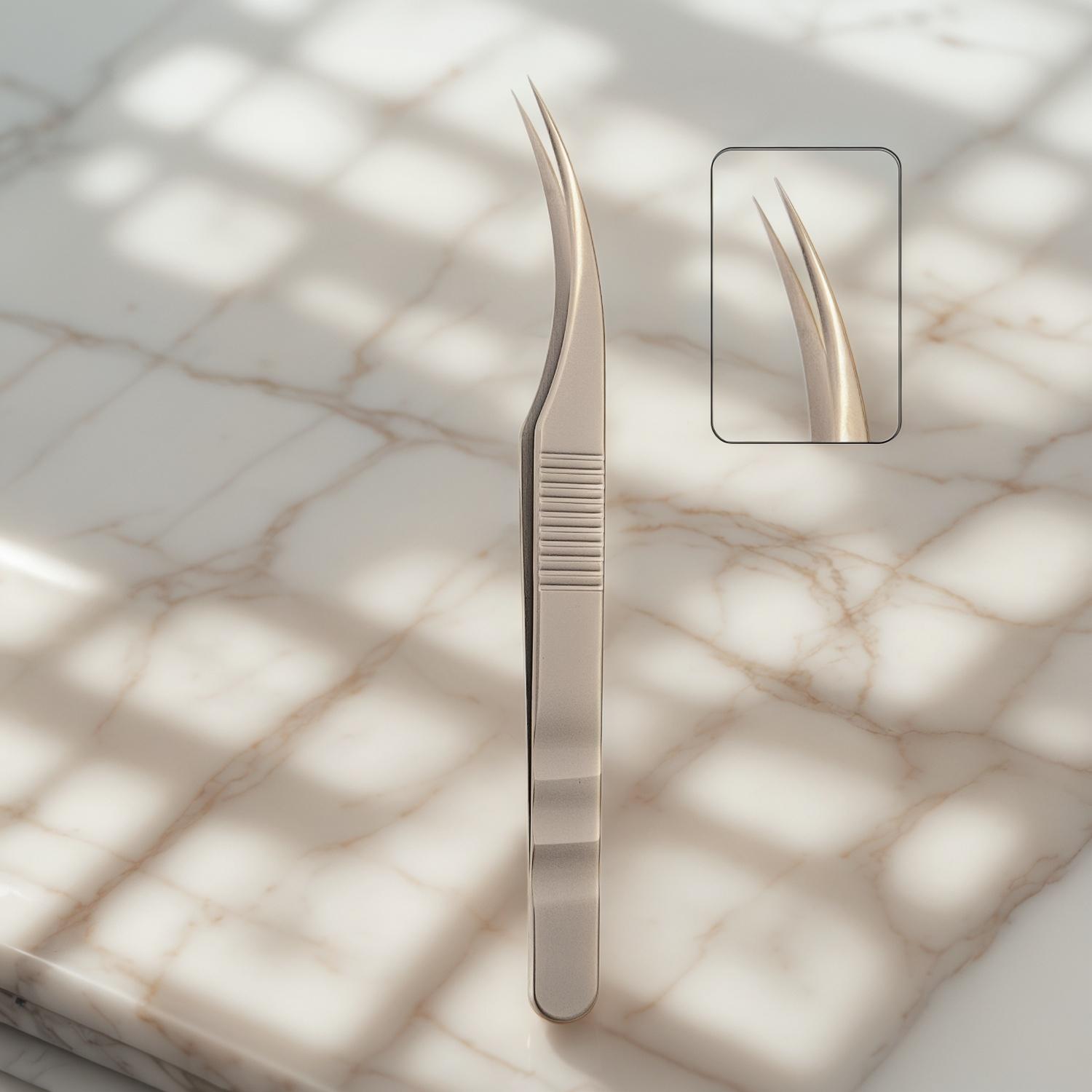
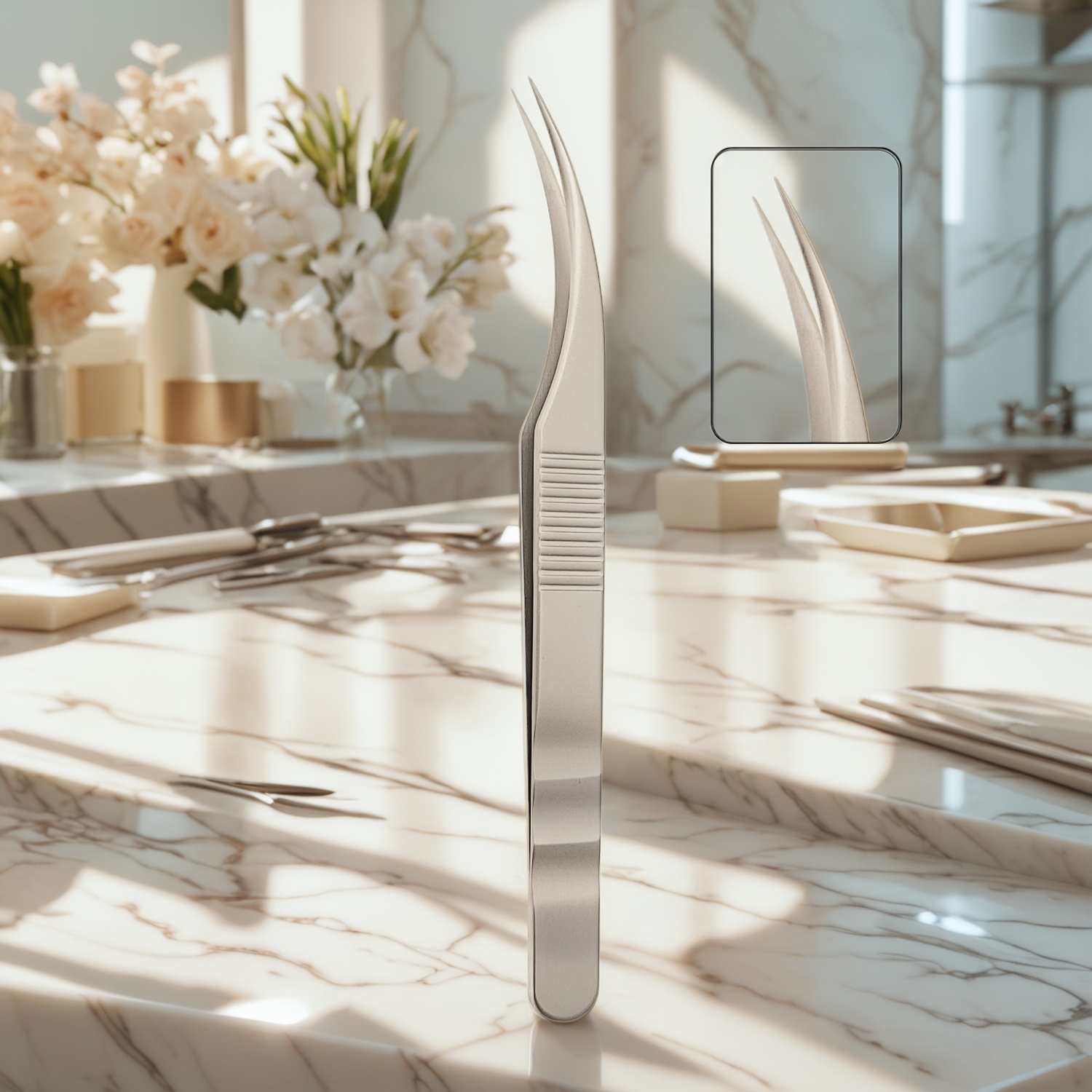
The supplied product information highlights stainless steel curved tweezers with finely pointed tips. This combination is relevant for brands selling tools for eyebrow shaping and delicate beauty applications. Stainless steel construction supports longevity and is commonly preferred for grooming tools that need a firm structure and clean appearance. Curved designs can also help some users approach the working area more comfortably, depending on the task.
Tip design deserves special attention. Pointed tips can provide controlled access to fine or isolated hairs, while broader gripping areas may feel more forgiving for everyday users. A curved tweezer with a fine tip may appeal to customers who want precision, but it also needs careful manufacturing and inspection because small alignment errors become more noticeable at the tip.
When preparing an OEM brief, do not rely on broad descriptions such as “premium tweezer” or “professional quality.” Instead, describe the intended experience: light closing force or firmer tension, a pointed or angled working end, a smooth or textured grip area, and packaging that protects the tips. This makes communication with the supplier more objective and reduces the chance of misunderstandings during sampling.
OEM Customization Decisions That Affect Brand Value
Customization can involve more than placing a logo on a tool. For tweezers, the most meaningful decisions are those that improve usability, presentation and consistency. A beauty brand may customize the shape, surface look, grip style, packaging and assortment role. For example, one tweezer may be sold as an eyebrow shaping essential, while another may be part of a complete grooming kit.
Before approving a custom tweezer project, create a decision checklist:
- Define the use case: eyebrow shaping, salon grooming, eyelash-related work, travel kits or general personal use.
- Choose the tweezer form: curved, pointed or another suitable shape based on the target task.
- Confirm handling requirements: ergonomic grip, non-slip areas and comfortable closing tension.
- Review finish expectations: consistent appearance, smooth edges and brand-appropriate color or surface treatment if available for the project.
- Plan packaging protection: prevent tip deformation and present the tool clearly at retail or online.
- Set inspection points: raw material review, in-process checks and final packaging inspection.
If you are comparing options across a wider beauty tool assortment, browse Olimor beauty tool products to understand how tweezers may fit alongside other grooming and makeup accessories. Buyers building a broader seasonal or category launch can also review product collections for range-planning ideas.
Quality Control from Raw Materials to Packaging
The original product information notes inspection from raw materials to packaging. For tweezers, this type of quality control matters because small deviations can affect the entire user experience. A minor bend, uneven tip contact or rough edge may lead to poor product reviews, even if the rest of the package looks attractive.
A practical quality-control plan should cover three stages. First, material and component review should confirm that the tweezer body matches the agreed construction and finish expectations. Second, production checks should focus on shape consistency, tip alignment, closing tension and surface condition. Third, final checks should include functional gripping tests, visual inspection and packaging protection.
For brand owners, it is helpful to approve a reference sample and then compare later production against it. The reference sample becomes a shared quality target for color, shape, tip contact and hand feel. If a project includes multiple tweezer types, each one should have its own approved sample because tension and precision can vary by shape.
How to Compare Tweezers Suppliers
Choosing a tweezers supplier should not be based only on the lowest quote. A lower unit cost can become expensive if products arrive with uneven tips, weak packaging protection or inconsistent finish. A better approach is to compare suppliers by communication, sampling discipline, inspection process and ability to understand the beauty tool market.
| Evaluation Area | What to Check | Why It Matters |
|---|---|---|
| Product understanding | Can the supplier discuss use case, tip shape and grip feel? | Reduces the risk of a generic tool that misses the target customer. |
| Sample review | Are samples consistent in tension, finish and tip alignment? | Shows whether the production direction is stable enough to scale. |
| Inspection process | Are checks included from raw materials through packaging? | Helps catch defects before shipment and protects brand reputation. |
| Packaging awareness | Does the packaging prevent tip damage and support the sales channel? | Important for online shipping, retail display and gifting formats. |
| OEM communication | Are specifications, revisions and approvals documented clearly? | Keeps custom projects organized and easier to repeat. |
These questions help buyers make sourcing decisions without depending on vague promises. They also create a common language between brand teams, designers and factory contacts.
Building a Reliable Tweezer Line with Olimor Beauty
Olimor Beauty positions its tweezers OEM service around precision beauty tools, stainless steel construction, ergonomic handling and quality checks. For a brand, the best results come when the product brief is specific: who will use the tweezers, what task they need to perform, how the tool should feel in the hand and how it should be presented after production.
Well-made tweezers can serve several market needs: personal eyebrow maintenance, salon grooming, compact travel kits and beauty retail assortments. The same tool category can also support different price positions through finish, packaging and set configuration, provided the core gripping performance remains consistent.
If you are preparing a new tweezer project, organize your sample requirements and comparison notes before requesting production details. To discuss OEM custom tweezers or related beauty tool sourcing, contact Olimor or send an inquiry with your intended use case, preferred shape, packaging direction and any reference requirements. Clear information at the start makes it easier to develop tweezers that look right, feel controlled and meet the expectations of your customers.
Tag: