

Tweezers OEM Customization for Precision Beauty Tools
For beauty brands, distributors, salon suppliers and private-label buyers, tweezers may look like a simple product. In practice, they are one of the most detail-sensitive tools in a beauty range. A slight difference in tip alignment, grip texture, spring tension or finishing can change how the tool feels in the hand and how reliably it removes fine hair or handles delicate work. That is why choosing the right tweezers OEM partner matters for both product quality and brand consistency.
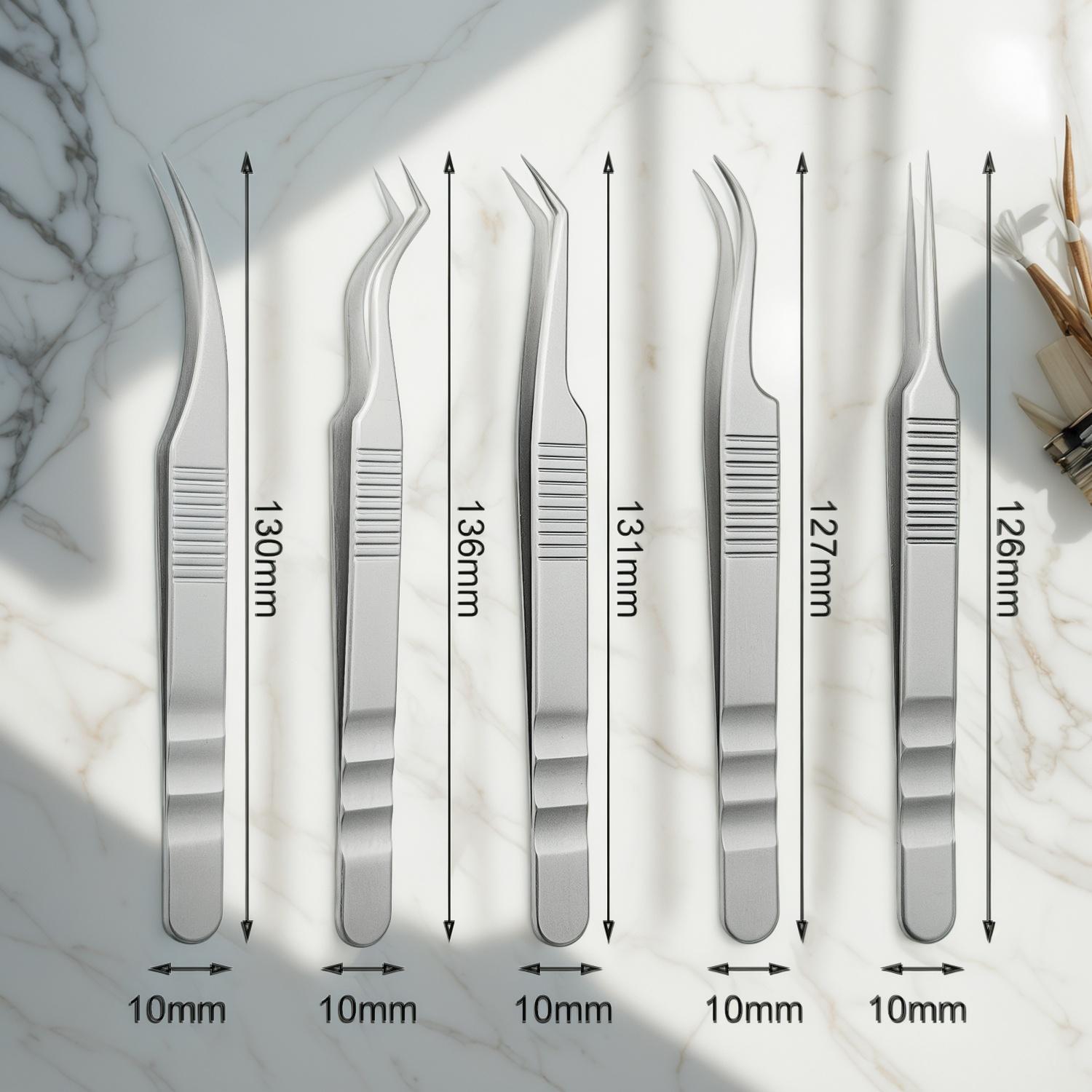
Olimor Beauty supports buyers looking for OEM custom tweezers with practical customization options, including varied lengths and tip styles for different use cases. The supplied product example includes a 130mm curved precision tweezer for tight spots and a 126mm fine tip version for intricate tasks, with 10mm width grips and ergonomic ridges for comfort. These are useful reference points when planning a tweezer line because they show how small design choices can serve different end users.

What Buyers Should Define Before Starting a Tweezers OEM Project
A strong OEM project begins with a clear product brief. Instead of asking only for “a tweezer,” buyers should define the user, the retail channel and the expected task. Tweezers for brow shaping, lash handling, nail art, laboratory-style precision work or craft use may require different tip geometry and handling characteristics.
Before comparing suppliers, prepare a simple sourcing brief that covers the essentials:
- Primary use: eyebrow grooming, fine hair removal, lash placement, detailed beauty work, salon use or multi-purpose retail kits.
- Tip style: curved, fine point, slanted or other designs suitable for the intended task.
- Length target: compact for travel sets or longer for controlled professional handling. The examples of 130mm curved and 126mm fine tip tweezers show how length can be matched to use.
- Grip preference: smooth, ridged or textured grip areas. A 10mm grip width with ergonomic ridges can help improve control for repeated use.
- Finish and appearance: surface color, polishing level and brand presentation, subject to available production options.
- Packaging role: single retail item, set component, promotional bundle or professional supply pack.
This type of brief helps the tweezers supplier evaluate feasibility, recommend practical adjustments and reduce sampling cycles. It also gives internal teams a shared standard for comparing quotations and samples.
Choosing Tip Styles for Real Beauty Applications
The tip is the working edge of a tweezer. For an OEM custom tweezers project, tip choice should not be treated as a decorative decision. It directly affects accuracy, visibility and user confidence.
A curved precision tweezer can be useful when the user needs access around tight spots or wants better visibility at the working point. The curve may help keep fingers away from the immediate contact area, which is helpful in detailed beauty tasks. A fine tip tweezer, such as the 126mm fine tip version referenced in the product information, is better suited to intricate work where the user needs to isolate very small targets. Fine tips require careful alignment and finishing because any mismatch can reduce gripping performance.
For a beauty brand building a broader range, it can be useful to offer more than one tip style instead of forcing one tweezer to cover every task. A simple two-piece concept might pair a curved precision tweezer with a fine tip tweezer, giving the end user clearer tool selection. If you plan to develop a family of related tools, review Olimor’s broader beauty tool products to understand how tweezers can fit into a complete personal care or salon accessory line.
Material, Grip and Comfort Considerations
The original product information identifies stainless steel tweezers and highlights resistance to wear. Stainless steel is widely used for beauty tools because it offers a balance of durability, clean appearance and practical maintenance. For buyers, the key is not only the material name but also the consistency of forming, polishing, tip finishing and final inspection.
Grip design is another important selection factor. A tweezer that looks elegant but slips during use can create user frustration. Ergonomic ridges, as described in the supplied product details, provide tactile feedback and help the user position the fingers consistently. A 10mm width grip gives a defined contact area without making the tool feel bulky. For retail beauty products, this type of detail can be mentioned in packaging copy because it explains a practical benefit the customer can feel immediately.
Comfort also depends on spring tension. The tweezer should open and close smoothly without feeling weak or overly stiff. During sampling, evaluate whether the tool can be used repeatedly without hand fatigue. This is especially important for salon professionals, brow artists and users who perform detailed tasks for longer periods.
OEM Custom Tweezers: What Can Be Specified
OEM custom tweezers allow a buyer to shape the product around brand positioning and user needs. The exact customization scope should be confirmed during development, but a practical specification discussion usually includes dimensional, functional and presentation details.
| Specification Area | Why It Matters | Buyer Notes |
|---|---|---|
| Length | Affects control, portability and perceived professional quality. | Use known references such as 130mm or 126mm samples when comparing hand feel. |
| Tip style | Determines suitability for tight spots, fine detail or general grooming. | Match each tip to a specific use case rather than choosing by appearance only. |
| Grip texture | Improves control and reduces slipping during precision work. | Ergonomic ridges can support repeated use and clearer finger placement. |
| Surface finish | Influences shelf appeal and brand fit. | Check appearance under normal retail lighting and close-up photography. |
| Packaging | Protects tips and communicates the tool’s intended use. | Plan packaging around retail display, e-commerce shipping and user storage. |
When the product is part of a larger line, consistency matters. A buyer may want the tweezers to coordinate with scissors, lash tools, nail tools or other accessories in shape language, color direction or packaging style. Olimor’s product collections can help sourcing teams think about how a tweezer fits into a wider beauty tool assortment.
Quality Checks That Matter for Tweezers
Tweezers should be inspected not only as metal parts but as hand tools. The user expects the tips to meet evenly, grip reliably and feel controlled. A visually attractive product that fails at the tip will not satisfy professional or consumer users.
Useful inspection points include:
- Tip alignment: the two sides should meet accurately at the intended contact point.
- Closing feel: the tool should close smoothly and reopen consistently.
- Edge finishing: tips should be finished for precision while avoiding roughness that could scratch or catch.
- Grip area: ridges or textures should feel clean, even and comfortable.
- Surface consistency: polishing, color and visible finish should be consistent across the order.
- Packaging protection: tips should be protected during storage, handling and transport.
For e-commerce brands, sample photography is also part of quality review. Fine tips, curved tips and grip ridges should photograph clearly. If the tool is sold online, customers rely on images to understand shape and scale before purchase.
Packaging and Brand Presentation for Private Label Tweezers
Packaging for tweezers has two jobs: it should protect the precision tips and help the customer choose the right tool. Many returns and complaints come from unclear expectations. If a tweezer is designed for fine detail, the packaging should say so. If it is a curved precision tool, the description should explain where that shape is useful.
Consider adding clear use guidance rather than broad beauty claims. For example, packaging copy can distinguish between “fine tip for detailed tasks” and “curved tip for controlled access in tight areas.” This makes the retail choice easier and reduces the risk of the customer using the wrong tweezer for the job.
Private label buyers should also think about storage. A cap, sleeve, insert or rigid box can help protect fine tips, especially for pointed designs. The more precise the tip, the more important protection becomes during shipping and daily use.
How to Work Efficiently With a Tweezers Supplier
A productive OEM discussion is specific, measured and sample-based. Share your target market, expected use and any reference dimensions you want to evaluate. If you are comparing a 130mm curved precision tweezer and a 126mm fine tip version, test both with the intended user group rather than relying only on catalog images.
For sourcing teams, a practical development sequence is to confirm the use case, review available tip styles, approve samples, check packaging fit and then finalize order documentation. Keeping these steps organized reduces confusion between design, purchasing and quality teams.
If you are developing tweezers for a beauty brand, salon channel or private-label program, you can send an inquiry with your target specifications, packaging direction and intended market. For broader questions about product planning, you may also contact Olimor to discuss how tweezers can fit into your beauty tool assortment.
Building a Better Tweezers Line With OEM Customization
The best tweezers OEM projects are built around the user’s hand and the task in front of them. Stainless steel construction, accurate tips, comfortable ridged grips and appropriate length all contribute to a tool that feels dependable. By defining the application clearly and checking samples against real use, buyers can create OEM custom tweezers that support their brand promise without relying on vague claims.
Whether your project focuses on a single precision tweezer or a coordinated set for retail beauty, start with practical decisions: who will use it, what task it must perform, how it will be packaged and how quality will be evaluated. Those choices make the difference between a generic accessory and a reliable beauty tool your customers will use with confidence.
Tag: