

Tweezers for False Lash Application: How to Choose Precision Tools for Professional Results
False lash work depends on small movements: separating natural lashes, picking up lightweight clusters, positioning a strip, or correcting placement before adhesive sets. In each step, the tweezer is not just an accessory. It affects control, speed, comfort, and the final look. For salons, lash technicians, distributors, and beauty tool buyers, choosing the right tweezers for false lash application is also a sourcing decision. A tool that looks attractive but has uneven tip contact, poor spring tension, or uncomfortable grip can slow down service and frustrate both technician and client.
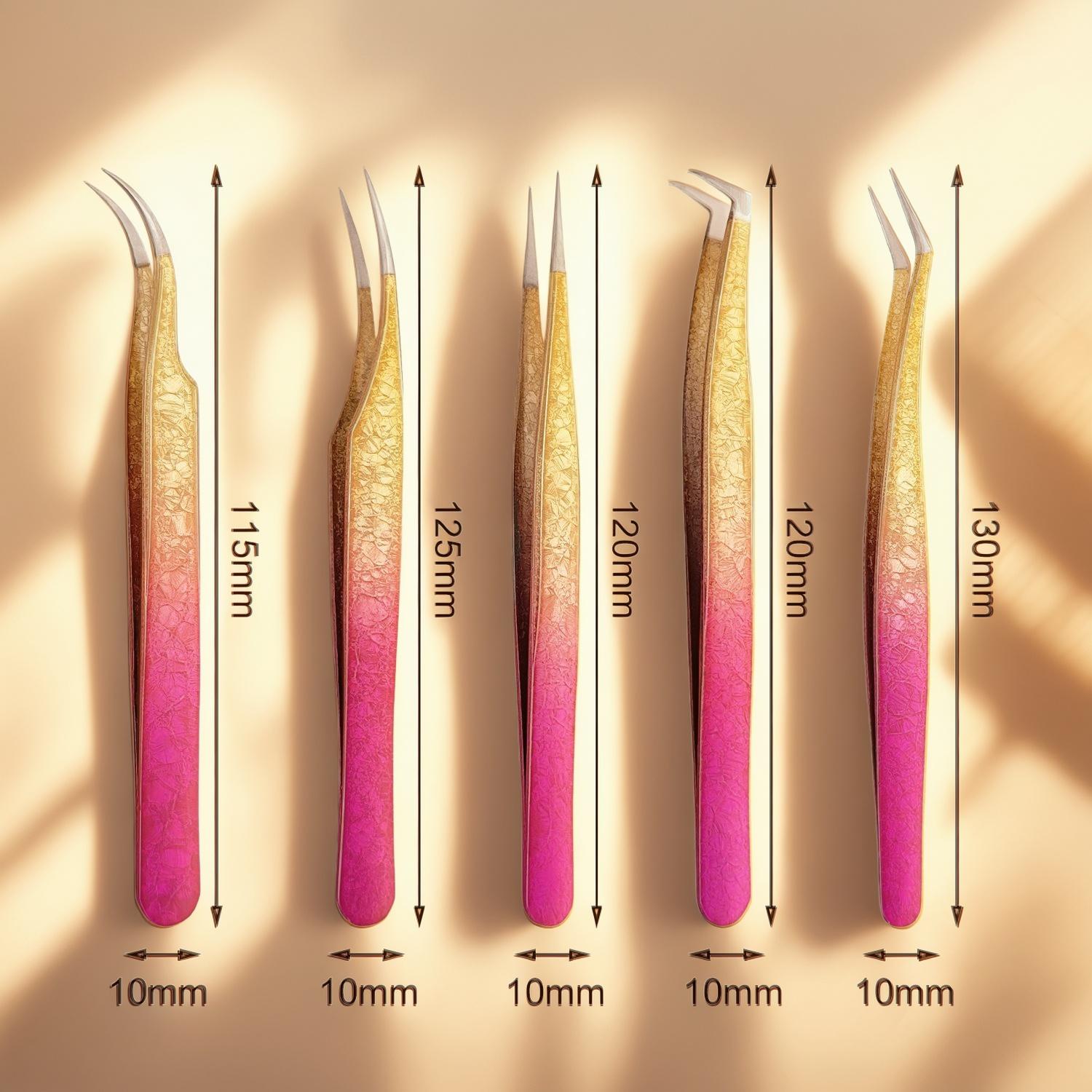
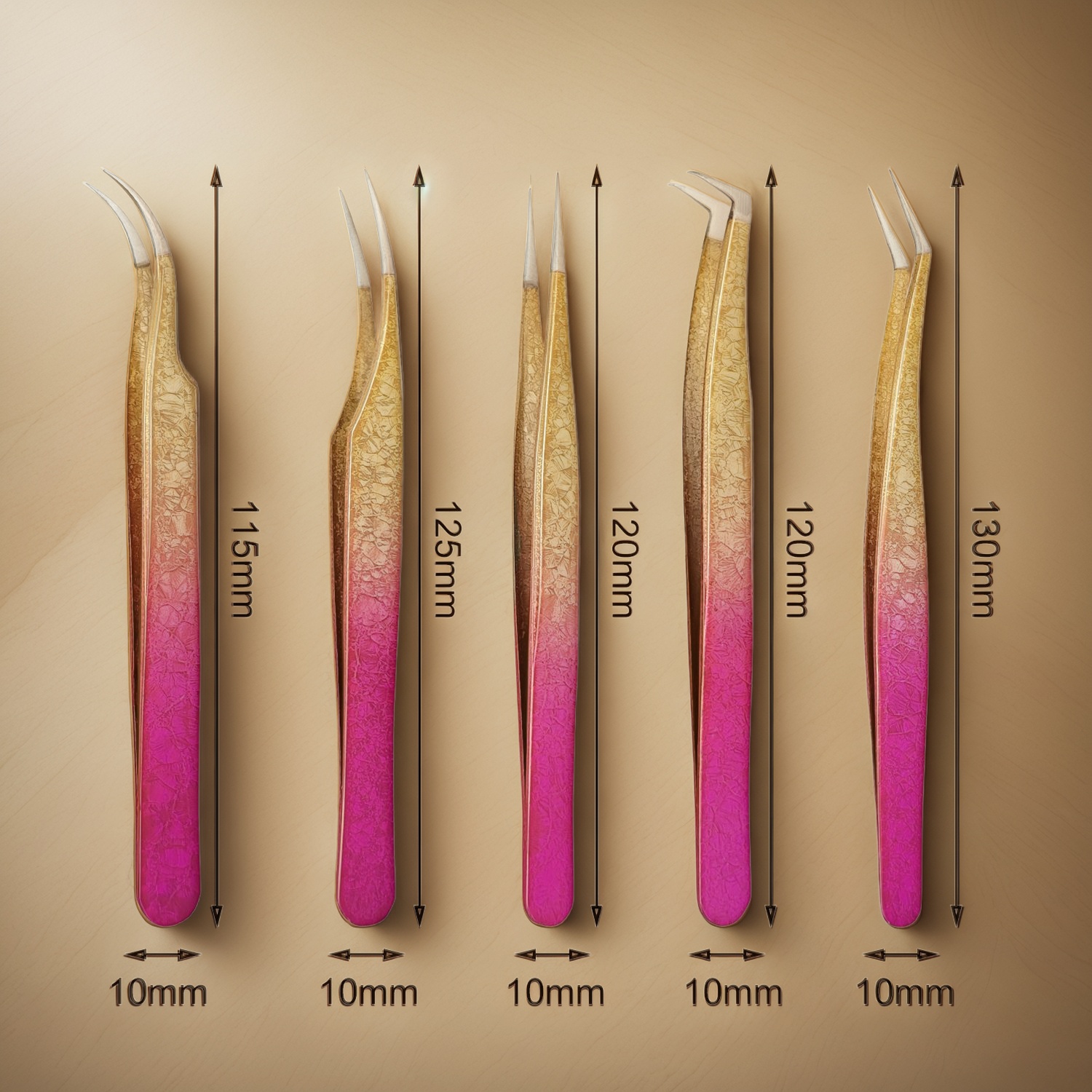
Olimor Beauty focuses on practical beauty tools for professional and B2B use, including tweezers designed for false lash application and isolation. The product shown here features a gradient gold and pink finish, with options including a 120mm straight-tip tweezer and a 120mm curved tweezer for isolation. The 10mm width is designed to support a comfortable hold during detailed work. This guide explains how to evaluate these tools before buying, how to match tip shapes to real lash tasks, and how to maintain tweezers so they remain reliable in daily salon use.
Why Tweezer Precision Matters in False Lash Work
False lash application often requires working close to the eyelid margin while keeping the client comfortable. The tweezer must allow accurate gripping without crushing delicate lash fibers or forcing the technician into awkward hand positions. Precision is especially important when applying individual clusters, isolating natural lashes, or adjusting a strip lash corner that has lifted.
A good pair of tweezers supports three core functions: controlled pickup, stable placement, and clean release. If the tips do not meet evenly, a lash may slip or rotate at the moment of placement. If the tool is too stiff, the hand tires quickly. If the tips are too blunt for detail work, isolation becomes slower and less accurate. These issues may seem minor during a single application, but in a salon setting they can affect service time, consistency, and technician comfort throughout the day.
Straight-Tip and Curved Tweezers: Choosing the Right Shape
The original product information highlights two useful shapes: a 120mm straight-tip tweezer and a 120mm curved tweezer for isolation. Both can belong in a professional kit, but they serve different purposes.
| Tweezer type | Best suited for | Buyer evaluation points |
|---|---|---|
| 120mm straight-tip tweezer | Picking up strip lashes, placing lash segments, general handling | Check that tips close evenly, grip firmly, and release cleanly without pulling fibers. |
| 120mm curved tweezer for isolation | Separating natural lashes, reaching angled areas, detailed placement work | Look for a smooth curve, stable closing tension, and tip alignment that supports precise isolation. |
Straight tips are often preferred for straightforward gripping and positioning because the technician can see the lash line and tool contact point clearly. Curved tweezers are helpful when the hand needs to approach from an angle or when isolation requires more visibility around the natural lashes. For businesses buying in quantity, stocking both shapes can make the assortment more useful to a wider range of technicians.
Grip Comfort, Length, and Hand Fatigue
Comfort is a technical feature, not just a preference. The Olimor Beauty false lash tweezers described here include a 120mm length and 10mm width. These dimensions can help provide a stable hold while still allowing fine control. In lash work, the hand may repeat the same small compression motion hundreds of times. A tool that is too narrow, too slippery, or too resistant can increase fatigue and reduce accuracy near the end of an appointment.
When evaluating tweezers for professional use, pay attention to how the body sits between the fingers. The surface should allow control without requiring excessive pressure. The closing tension should feel consistent from the first compression to the last. If the tweezer body twists when pressed, or if the tips shift sideways, precision can suffer. For bulk buyers, testing samples across several technicians can reveal whether a design suits different hand sizes and working styles.
Material and Finish Considerations for B2B Buyers
The supplied product information notes the use of stainless steel and a gradient gold and pink finish. Stainless steel is commonly chosen for beauty tools because it supports durability and a clean appearance when properly maintained. For lash tweezers, however, material is only one part of performance. Tip finishing, alignment, edge smoothness, and spring behavior are equally important.
The gradient gold and pink look can make a tool kit more visually coordinated, especially for salons, training academies, and beauty retailers that care about presentation. Still, sourcing decisions should not be based on appearance alone. A decorative finish should be evaluated alongside handling, tip consistency, and packaging protection. For distributors, attractive colorways can help the product stand out, but repeat buyers will return because the tools work reliably.
A Practical Inspection Checklist Before Bulk Ordering
Businesses sourcing tweezers in bulk often need to balance cost, consistency, and professional usability. A lower unit cost is only valuable if the tools can perform in real salon conditions. Before placing a larger order, review the following points with samples or production references:
- Tip alignment: The two tips should meet cleanly without visible gaps or crossing.
- Grip strength: The tweezer should hold false lash fibers securely without crushing or bending them.
- Release control: Lashes should release predictably when pressure is eased.
- Edge smoothness: Tips and sides should feel smooth, with no rough areas that could snag lash fibers.
- Spring tension: Compression should be stable, neither too stiff for long services nor too loose for accurate control.
- Surface finish: The gradient finish should look even and consistent across the batch.
- Packaging protection: Tips should be protected during transport to prevent deformation.
- Assortment planning: Decide whether your buyers need straight-tip tweezers, curved isolation tweezers, or a mixed set.
This checklist is useful for salons buying working tools, distributors building inventory, and private buyers comparing professional beauty supplies. For a broader view of available categories, you can explore Olimor beauty tool products or review related product collections.
Use Cases for Salons, Retailers, and Training Kits
False lash tweezers are purchased by several types of buyers, and each group has different priorities. A working salon may focus on daily comfort, cleaning routine, and reliable application. A lash educator may need consistent tools for students so technique, not equipment variation, becomes the main learning challenge. A distributor may prioritize visual appeal, batch consistency, and packaging that protects the tips during shipping and storage.
For salons, the most useful approach is to assign tools by task. Keep straight-tip tweezers available for strip lash placement and general pickup. Keep curved tweezers ready for isolation and angled detail work. This prevents technicians from forcing one tool to perform every step, which can reduce efficiency. For training kits, including both styles helps students understand how tool geometry affects precision. For retail and B2B assortments, clearly describing the difference between straight and curved options can reduce buyer confusion and improve product selection.
Cleaning, Storage, and Daily Care
Even well-made tweezers can lose performance if they are dropped, stored loosely, or exposed to adhesive buildup. False lash work often involves contact with lash glue, makeup residue, and skin oils, so regular cleaning is part of tool performance. Always follow the hygiene procedures appropriate for your market and service environment, and avoid harsh handling that can damage fine tips.
- Remove visible adhesive residue after use before it hardens on the tips.
- Wipe the tool carefully, paying attention to the contact area where the tips meet.
- Dry the tweezers completely before storage to help protect the stainless steel surface.
- Use a tip guard or individual sleeve so the tips are not bent in a drawer or kit.
- Do not use lash tweezers for unrelated tasks such as opening packaging or scraping containers.
A dropped tweezer should be checked before returning to service. Even a small bend at the tip can make pickup inconsistent. In a professional setting, keeping backup tweezers available prevents one damaged tool from interrupting appointments.
How to Source False Lash Tweezers with Confidence
When selecting tweezers for false lash application, focus on the relationship between design and use. The 120mm straight-tip tweezer is a practical option for controlled pickup and placement. The 120mm curved tweezer supports isolation and angled work. The 10mm width can contribute to a steadier grip during fine movements, while the gradient gold and pink finish gives the tool a polished appearance for salon and retail presentation.
For B2B buyers, the strongest purchasing decisions come from clear evaluation: inspect alignment, test grip, compare tip shapes, review packaging, and consider how the assortment will be used by technicians or end customers. Beauty tools do not need exaggerated claims to be valuable. They need to be comfortable, precise, consistent, and suitable for the service they are meant to support.
If you are planning a salon restock, retail assortment, or distributor purchase, Olimor Beauty can help you review false lash tweezer options and related professional tools. To discuss sourcing details, contact Olimor or send an inquiry with your intended use, preferred tweezer shapes, and quantity planning needs.
Tag: