

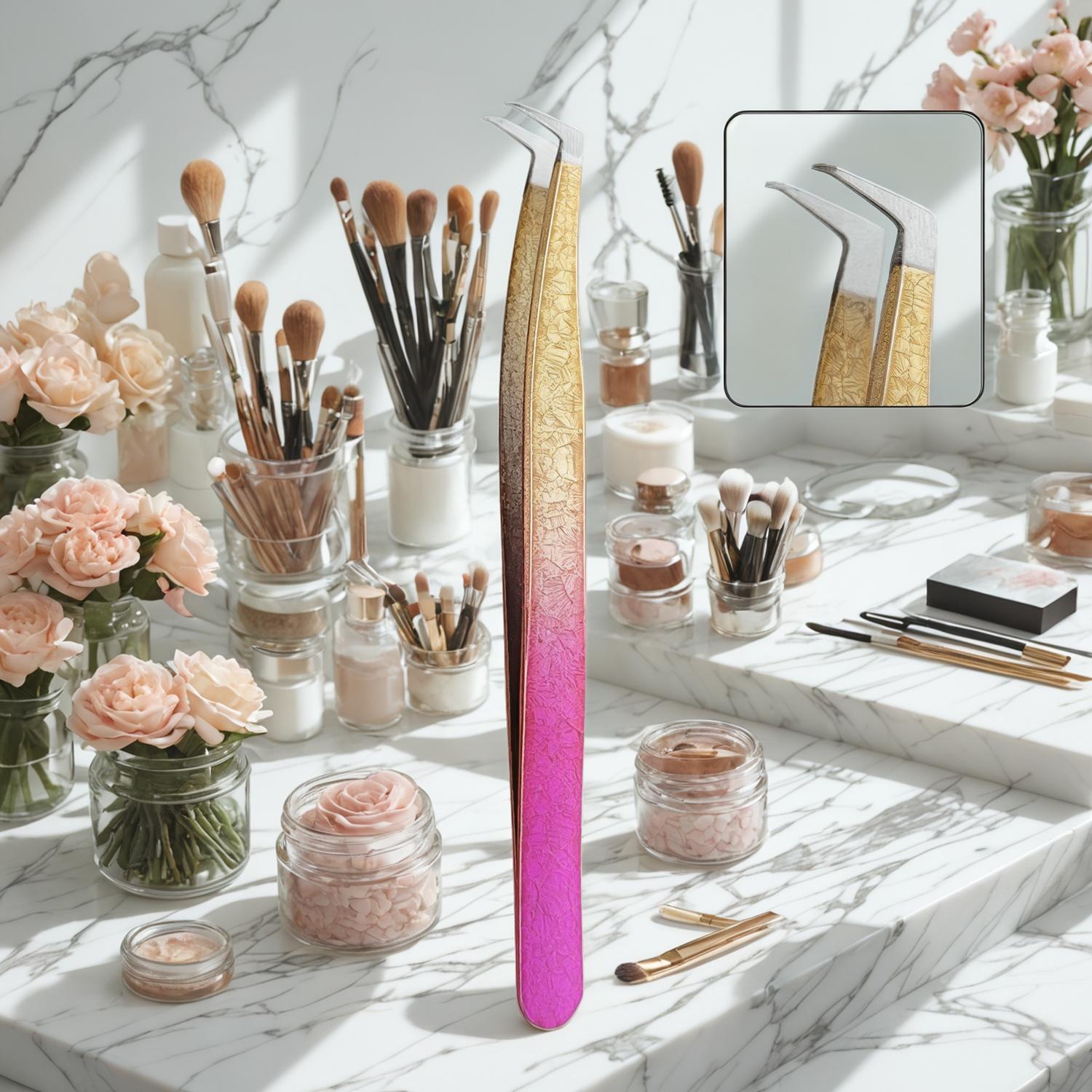
False Lash Tweezers Buying Guide for Beauty Professionals
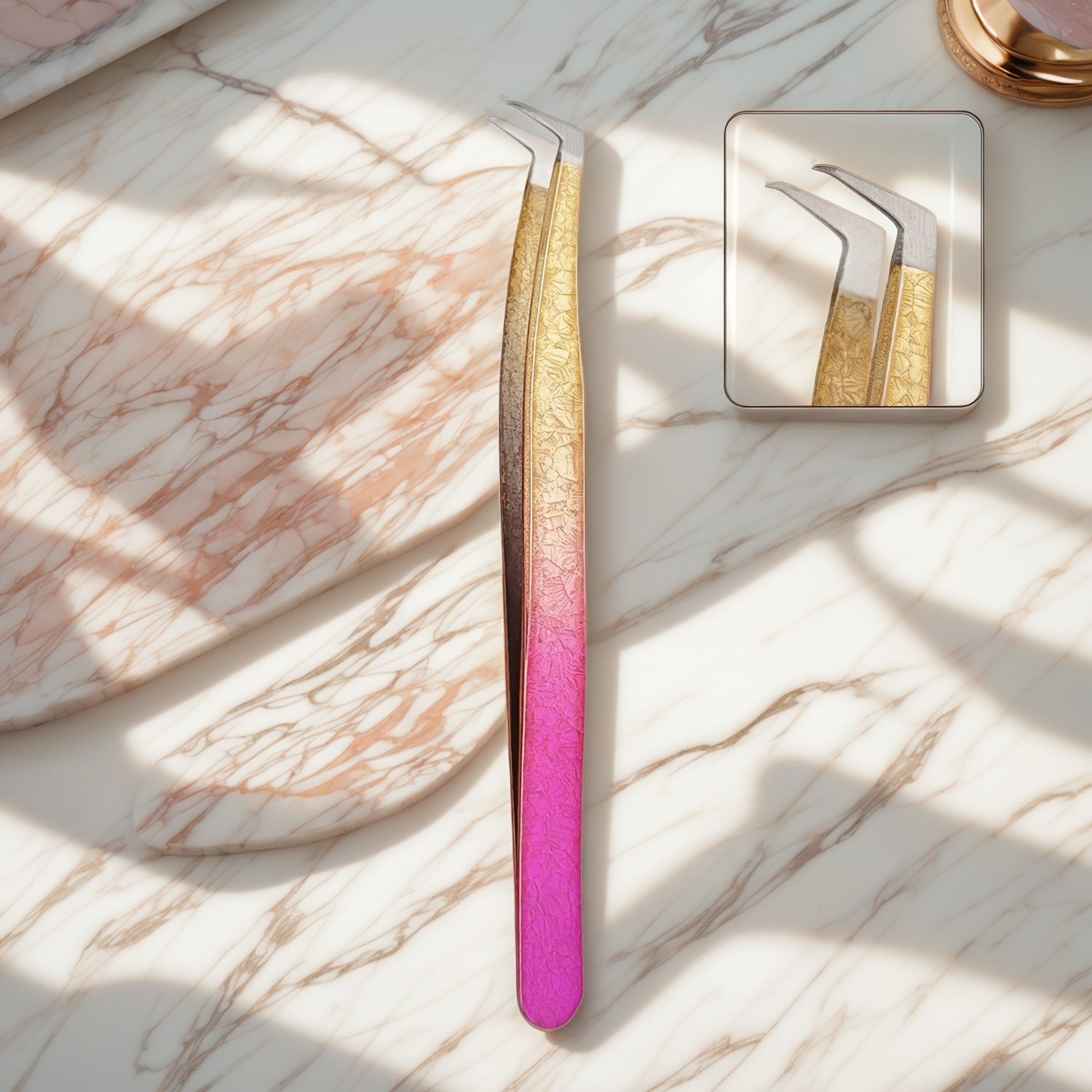
False lash tweezers turn small hand movements into accurate placement. For salons, lash studios, beauty retailers, and distributors, the right tool should pick up delicate fibers cleanly, hold the lash band securely, and release it without shifting the placement. A good pair also needs stable tension, a comfortable grip, and a finish that still looks polished after repeated use.
Olimor Beauty develops professional beauty tools with attention to practical handling and finish detail. If you are comparing lash tools for a salon kit or retail assortment, you can review our beauty tool products and then check the wider tool collection to see how false lash tweezers fit into a broader range.
Why false lash tweezers are different from standard tweezers
False lash tweezers do a different job from eyebrow or grooming tweezers. Instead of removing hairs, they must hold a flexible lash band or fine lash fibers, guide them close to the natural lash line, and release them without bending the strip out of shape. That means the shape, tension, and balance of the tool matter as much as the sharpness of the tip.
Many false lash tweezers use a curved, angled, or tapered working end. A curve can improve visibility because the hand sits slightly out of the direct line of sight. A tapered end can help with precise pickup and corner adjustment. The right choice depends on how the user works, the type of lashes being applied, and whether the tool is meant for beginner use, professional services, or retail kits.
In practice, a lash tweezer should feel predictable. If the arms are too stiff, the user may press harder than necessary. If the tension is too loose, the lash can slip at the exact moment of placement. If the tips do not meet evenly, the user may need to correct the lash repeatedly, which slows the service and makes the work feel less controlled.
What buyers should evaluate before placing an order
When sourcing false lash tweezers, avoid choosing by appearance alone. A decorative finish can help a product stand out, but performance depends on the way the tip closes, the feel of the grip, and the quality of the material. The following table gives a practical comparison point for B2B buyers.
| Feature | What to check in a sample | Why it matters |
|---|---|---|
| Tip alignment | The tips should meet evenly without gaps or twisting | Uneven contact can cause slipping, uneven pickup, or lash distortion |
| Tip shape | Curved, angled, or tapered form should match the intended application style | The right shape improves visibility and access near the lash line |
| Tension | The arms should close smoothly without feeling weak or overly stiff | Balanced tension helps reduce hand fatigue and supports steady release |
| Grip surface | The handle should feel stable and not slip during controlled movements | A better grip supports precision when working near the eye area |
| Material | Look for stainless steel construction and consistent finishing | Stainless steel is valued for durability and everyday tool care |
| Edge finish | Check for smooth edges and no rough burrs near the working end | Clean finishing helps prevent snagging on lash fibers or packaging inserts |
| Packaging protection | The tip should be protected during shipping and storage | Even a small bend can affect precision and user confidence |
Curved, tapered, and textured grip designs explained
A curved tweezer is often useful for false lash work because it gives the hand a more natural working angle. The curve can help the user approach the lash line without blocking the view of the eye area. That is especially helpful when placing a strip lash, adjusting the center point, or refining the inner and outer corners.
A tapered tip supports detail work because it can reach into small spaces and guide fine lash pieces with more control. This is useful for isolation, pickup, and minor adjustments. The taper should still feel stable. If the tip is too delicate or poorly aligned, it may not grip consistently enough for repeated use.
Some models also include a textured grip or slender ergonomic body. That can help the tool feel secure between the fingers, especially during repeated applications. For makeup artists and lash technicians, comfort is not a luxury feature. It affects how long the tool can be used before the hand begins to tire.
When comparing designs, think about the actual workflow:
- Strip lash placement: a curved profile can improve visibility and help align the lash band.
- Individual or cluster work: a tapered tip can help isolate and guide delicate fibers.
- Corner adjustment: a stable working end helps position inner and outer edges without disturbing adhesive.
- Retail display: a polished finish can support presentation, but it should never replace functional testing.
Material, finish, and daily durability
High-quality stainless steel is the core material called out in the supplied product information. For beauty tools, stainless steel is popular because it offers a strong balance of durability, cleanability, and everyday wear resistance when the tool is handled and stored correctly. In a salon or retail environment, tweezers are touched often, cleaned regularly, and stored with other tools, so material stability matters.
Surface finish also matters. Olimor Beauty supplies false lash tweezers with polished and decorative looks, including elegant metallic tones and custom visual details. Examples from the supplied material include a golden hue, pink and gold ombre, and floral etching. These design choices can help a tool line feel more distinctive on a shelf or in a professional kit. They should still remain smooth, comfortable, and easy to handle.
For B2B buyers, the main rule is simple: decorative elements are useful only if they do not interfere with grip, alignment, or cleaning. A finish that looks attractive but feels slippery or hides edge defects is not a good sourcing choice. Ask for samples and test them as working tools, not only as display items.
How to test false lash tweezers before bulk sourcing
Sample testing should mirror real use. A quick squeeze test does not show enough. Instead, ask how the tweezer behaves during actual lash pickup and placement. This approach is helpful whether you are buying for a salon team, assembling a retail assortment, or evaluating custom made tweezers for a brand line.
- Pick up a single fine lash fiber and observe whether it grips cleanly.
- Rotate the lash gently and check whether the tips keep it stable.
- Hold a strip lash at the center, then adjust the corners without slipping.
- Repeat the motion several times to see whether tension stays consistent.
- Check that the tool feels comfortable after repeated open and close cycles.
Multiple testers are useful because hand size, grip style, and application habits vary. What feels controlled to one user may feel stiff to another. For this reason, buyers should review more than one sample if possible and compare the results in realistic working conditions.
If your team needs support with product selection or sourcing questions, you can submit an inquiry for more detail or contact Olimor about the best match for your channel.
What to look for in B2B quality control
For wholesale and private label buyers, quality control should cover both function and consistency. A single attractive sample is not enough if other units differ in tension, finish, or tip alignment. Build a simple inspection routine around the points that affect the end user most.
- Check that the tips close evenly across several samples.
- Confirm that the grip surface feels stable and not slippery.
- Inspect the finish for smoothness and visual consistency.
- Make sure the tool remains comfortable after repeated use.
- Review packaging so the working end is protected from bending.
It is also reasonable to ask for supplier documentation that matches the expectations of your market. If your channel requires formal quality or hygiene references, buyers often look at procedures aligned with standards such as ISO 22716 or the guidance of the relevant local cosmetics authority. Verify the applicable version and ask for the supplier documents that support your purchasing review. Do not assume a standard applies unless it is clearly relevant to your product and market.
For distributor and retailer programs, consistency across the batch is especially important. Customers notice when one pair feels different from another. Reliable tension, even tips, and protected packaging all support a more dependable product line.
Customization without sacrificing function
Custom made tweezers can strengthen a beauty brand, but visual choices should never override performance. Color, logo placement, and packaging format are valuable for shelf appeal and private label identity. They should be planned after the core working features are defined.
A practical customization brief separates function from appearance. For example:
- Functional requirements: curved or tapered tip, controlled tension, smooth edges, reliable pickup, comfortable grip.
- Visual requirements: brand color direction, decorative finish, logo placement, retail packaging style.
This approach helps product development stay focused. A tool that looks refined but performs poorly will create complaints and returns. A tool that works well and also carries a distinct visual identity is more likely to support repeat sales.
Customization is especially useful for lash educators, salon chains, and beauty retailers that want a cohesive display. It can also support kit building, where tweezers need to match other beauty tool products in the same assortment.
Care and maintenance for longer tool life
Even a well-made pair of tweezers for false lash application needs proper care. Adhesive residue, careless storage, and accidental drops can affect the tip more quickly than users expect. Because the tool works close to the eye, it should stay precise and clean.
- Remove visible product residue after use according to your normal cleaning practice.
- Dry the tool before storage so moisture does not affect the finish over time.
- Keep the tips protected from contact with other metal tools.
- Avoid dropping the tweezer, since a small bend can change the working point.
- Inspect alignment regularly so the tool still closes evenly.
For professional settings, care instructions can also reduce user complaints. If the buyer understands how to store and protect the tool, performance remains more consistent and the product keeps its value longer.
Supplier evaluation checklist for beauty buyers
If you are sourcing false lash tweezers for retail or salon use, use a simple checklist during evaluation. The goal is to choose a tool that feels dependable in the hand and fits the way your customers work.
- Does the sample grip fine lash fibers securely?
- Do the tips meet evenly under close inspection?
- Is the curve or taper suitable for the intended lash task?
- Does the grip feel controlled during repeated movements?
- Is the finish smooth, clean, and appropriate for your market?
- Is the packaging protective enough to preserve tip alignment?
- Can the supplier support sampling, customization, and product questions clearly?
These questions are useful whether you are reviewing a single product or comparing several beauty tool products at once. They also help keep conversations with suppliers focused on practical quality instead of vague marketing language.
Frequently asked questions
Can I request samples before placing a larger order?
Yes, sample review is the best way to check tip alignment, grip feel, finish, and packaging protection before committing to a larger order. Ask the supplier what sample options are available.
What should I ask about minimum order quantity?
MOQ can vary by design, finish, branding, and packaging. Ask for the MOQ that applies to your specific specification rather than assuming one number fits every version.
Which customization options are safest for performance?
Color, logo placement, decorative finish, and packaging can usually be discussed first. Keep the tip geometry, tension, and grip requirements fixed before planning visual changes.
How do I check quality when the shipment arrives?
Inspect several samples from the batch for alignment, smooth closure, consistent finish, and packaging protection. If possible, test them with real lash bands instead of relying on appearance alone.
What affects lead time for custom lash tweezers?
Lead time can depend on the tool design, finish, packaging, and order scope. The supplier is the right source for current scheduling once your specification is confirmed.
Choosing the right partner for lash tool sourcing
For professional beauty buyers, the best supplier is one that treats tweezers as functional tools, not just attractive accessories. Olimor Beauty focuses on practical construction, careful finishing, and product options that can support salon, retail, and distributor needs. If you are building a lash tool range or refining an existing one, start with samples, inspect the working tip closely, and choose the design that gives your users the most control.
When you are ready to compare options, review the available beauty tools, explore the full collection, or send a direct product inquiry for sourcing guidance.
Tag: