

Tweezers for False Lash Application: Precision, Grip and B2B Buying Criteria
False lash application depends on small movements: picking up a lash strip without bending it, positioning the band close to the natural lash line, pressing corners into place and making final adjustments before adhesive sets. For consumers, the wrong tweezer can make the process slow and uneven. For beauty brands and professional buyers, an inconsistent tool can lead to returns, poor user reviews and weak repeat purchase rates. Choosing the right tweezers for false lash work is therefore not just a cosmetic decision; it is a product performance decision.
Olimor Beauty focuses on practical beauty tools that support accuracy, control and reliable daily use. For lash tweezers, the details that matter most are the tip shape, alignment, surface finish, grip comfort and quality control before packing. This guide explains how to evaluate a false lash tweezer for personal use, salon kits or B2B beauty supplies, with special attention to sourcing decisions for brands considering tweezers ODM development.
Why False Lash Tweezers Need More Than a Sharp Tip
Many people assume that a lash tweezer only needs pointed ends. In real use, sharpness is only one part of the equation. A lash tweezer must hold a thin lash band securely without cutting, crushing or slipping. It should also allow controlled release, because an adhesive-coated lash can easily shift if the tool opens too abruptly.
Good false lash tweezers help with three application stages. First, they lift the lash from the tray without damaging the curve of the band. Second, they position the strip or cluster along the lash line with enough visibility for the user to see placement clearly. Third, they press or nudge the lash into the desired position. If the tips are poorly aligned, the user may compensate with extra pressure, which can deform delicate lash fibers or leave adhesive marks.
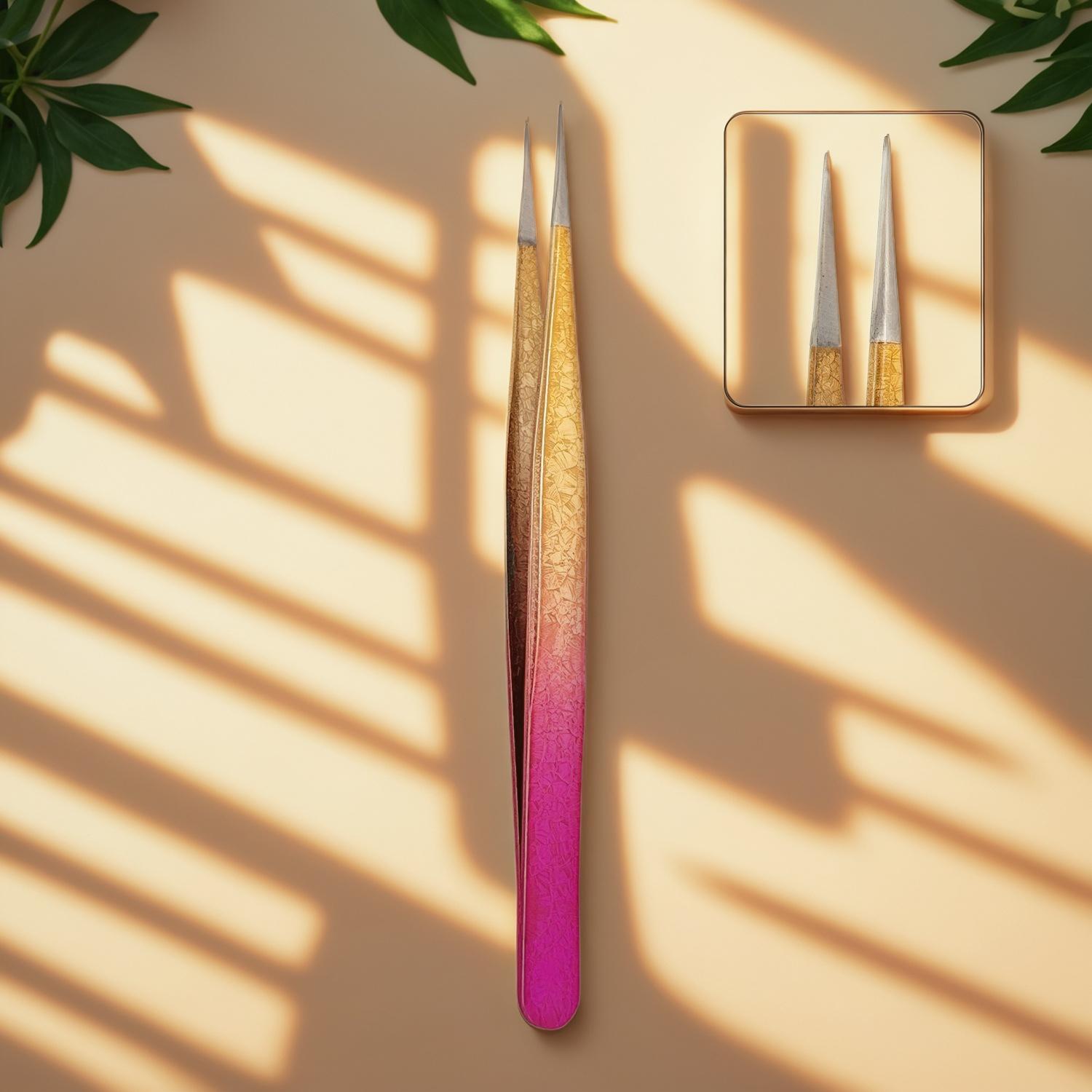
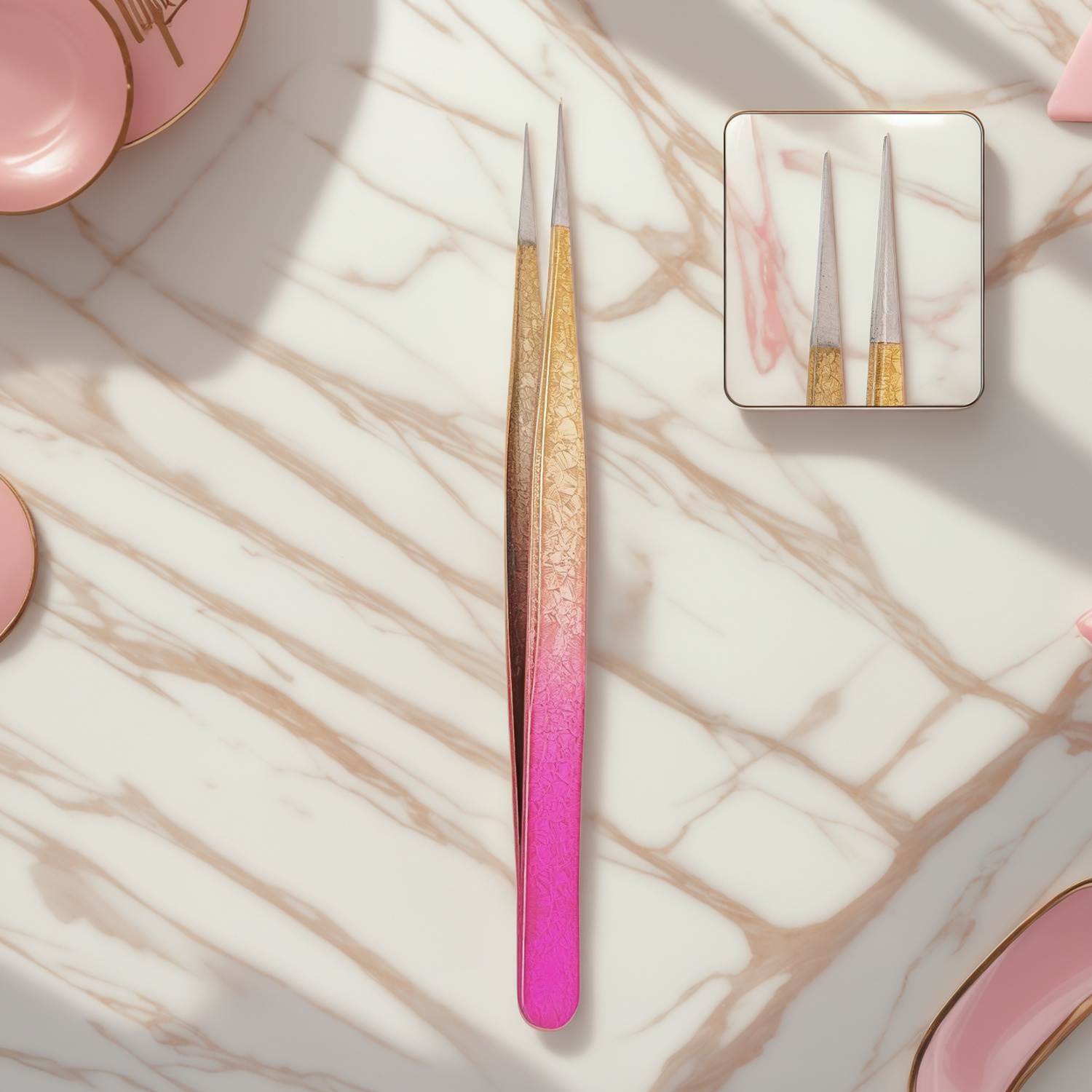
The original Gradient Precision Tweezers concept highlights this balance between appearance and function. A visually distinctive finish can make the tool attractive for retail, but the value comes from its working parts: tapered, aligned tips and a handle texture that supports a steady hold during detailed application.
Key Features to Evaluate Before Choosing Lash Tweezers
Whether you are buying one tool for a makeup bag or comparing options for a product line, evaluate the tweezer as a working instrument. The following criteria are more useful than judging by color or packaging alone:
- Tip alignment: The two sides should meet evenly at the working point. Gaps or crossed tips reduce control when picking up lashes.
- Tip profile: Tapered tips are useful for delicate placement. The ends should be fine enough for visibility but not so fragile that they bend easily during normal use.
- Grip surface: A textured or non-slip handle can help reduce hand movement, especially when adhesive timing makes fast, accurate placement important.
- Spring tension: The tweezer should open and close smoothly. Excessive tension may cause fatigue; weak tension may feel unstable.
- Edge finishing: Contact areas should feel clean and controlled, without rough burrs that could catch lash fibers or irritate skin.
- Balance in hand: A comfortable handle shape matters for professionals who repeat the same motion many times in one session.
- Visual finish: Gradient or decorative finishes can support shelf appeal, but they should not interfere with grip, cleaning or practical use.
For buyers comparing beauty tool products, these points provide a simple framework for sampling and approval. A tool that photographs well still needs to pass hand testing, tray removal testing and lash line placement testing.
How Tip Shape Affects Strip, Cluster and Detail Work
False lash tools are often grouped together, but different lash formats require different control. Strip lashes need a secure hold across a section of the band, especially at the center during first placement. Outer corners may need precise pressing after the band is positioned. Cluster or segment lashes require a lighter touch because each piece is smaller and may rotate easily if gripped at the wrong angle.
A tapered precision tweezer is versatile because it gives the user visibility near the lash line. It can pick up a strip at the band, place a corner, or adjust an individual section after adhesive becomes tacky. However, the tweezer should not be judged only by how fine the end looks. If the very end closes before the rest of the tip, it may pinch at one point and cause the lash to twist. If the inner portion touches before the point, the tool may fail to grasp thin material at all.
During product evaluation, test the tweezer with the types of lashes your audience actually uses. A retail consumer line may need an easy, forgiving tool for strip lashes. A professional supply range may prioritize higher control for detailed placement. For private label or ODM discussions, defining the target lash format early helps guide decisions about tip angle, length, surface treatment and handle texture.
Comfort and Control During Real Application
Ergonomics are often described in broad terms, but with lash tweezers the practical question is simple: can the user hold the tool steady while looking closely in a mirror or working on a client? A handle that feels slippery can make the user grip harder than necessary. Over time, that can cause hand fatigue and less precise placement.
A textured handle is valuable because it increases contact security without requiring excessive pressure. This is especially useful when hands may have skincare residue, makeup products or sanitizing dryness. The texture should feel intentional rather than abrasive, and it should not create deep areas that are difficult to clean.
Balance also affects confidence. A tool that feels too heavy at the tip can be awkward for beginners. A tool that feels too light may lack the stable feedback preferred by professionals. In B2B sourcing, sample testing by several users is more reliable than one-person approval. Include people with different hand sizes and experience levels so the final product supports a broader customer base.
Quality Control Questions for B2B Beauty Supplies
For brands, distributors and salon supply companies, the sourcing process should focus on repeatability. One excellent sample is not enough if bulk production varies. Olimor Beauty supports B2B beauty supply needs by emphasizing inspection from material review through final packaging, but buyers should still define the product checks that matter to their market and sales channel.
| Quality point | Why it matters for lash tweezers | Practical check |
|---|---|---|
| Tip alignment | Controls whether lashes can be picked up and released accurately | Close the tweezer under light pressure and inspect the meeting point |
| Surface finish | Affects grip comfort, cleaning and perceived retail quality | Check for rough spots, uneven coating or areas that feel slippery |
| Opening tension | Influences fatigue and placement stability | Open and close repeatedly to confirm smooth resistance |
| Packaging fit | Protects the tips during shipping and display | Confirm that the tool cannot move enough to damage the ends |
| Batch consistency | Reduces complaints and improves reorder confidence | Compare multiple pieces from a sample set, not only one unit |
These checks are especially important for tweezers ODM projects, where small design decisions can affect production consistency. If your brand wants a decorative gradient finish, for example, confirm that the finish does not compromise the handle feel or make visual inspection more difficult.
ODM Considerations: Building a Lash Tweezer for Your Market
ODM development should begin with the intended user. A beauty retailer may want a tweezer that looks appealing in a starter lash kit. A salon supplier may need a tool that withstands repeated handling and cleaning. An online brand may prioritize a distinctive appearance, but the product must still meet user expectations after unboxing.
Before approving a design direction, define the product brief in practical terms. Useful questions include:
- Will the tweezer be used mainly for strip lashes, cluster lashes or general makeup detail work?
- Should the handle prioritize a textured non-slip feel, a smooth decorative finish, or a balance of both?
- What type of packaging will protect the tips during warehousing, shipping and retail display?
- How will the product be positioned: beginner-friendly, professional, giftable or part of a larger lash kit?
- What inspection points should be documented before the order is accepted?
These decisions make communication clearer and reduce the chance of approving a tool that looks right but does not perform for the intended customer. To compare related tools or plan a coordinated retail range, browse Olimor product collections and consider how the tweezer will sit beside scissors, applicators, grooming tools or other beauty accessories.
Care and Maintenance for Longer Tool Life
False lash tweezers work close to adhesive, cosmetics and skin. Simple care habits help maintain grip performance and appearance. After use, remove adhesive residue gently rather than scraping aggressively at the tips. Wipe the tool clean and dry it before storage. If the tweezer has fine tapered ends, protect them from impact in a pouch, tray or fitted package.
Avoid using lash tweezers for unrelated tasks such as opening containers, prying plastic parts or pulling hard materials. These actions can bend the tips, and even a slight bend can affect lash placement. For salons and professional kits, separate tools by function so a lash tweezer remains dedicated to delicate work.
Retail brands can also improve customer satisfaction by adding clear care instructions to packaging or inserts. This reduces misuse and helps customers understand why a precision tweezer should be stored differently from ordinary household tweezers.
Choosing a Reliable Partner for Precision Lash Tools
The best tweezers for false lash application combine refined tip alignment, comfortable handling and consistent production. Appearance matters, especially for retail beauty tools, but the tool must first solve the user’s real problem: placing lashes accurately without frustration. Gradient Precision Tweezers from Olimor Beauty reflect this direction by combining a distinctive look with tapered tips and a textured handle designed for controlled use.
For B2B buyers, the smartest selection process is hands-on and criteria-based. Test multiple samples, confirm the intended lash use, review packaging protection and establish inspection points that can be repeated in bulk orders. If you are developing a branded lash tool range or comparing sourcing options, you can send an inquiry with your project requirements or contact Olimor to discuss suitable beauty tool solutions.
Tag: