

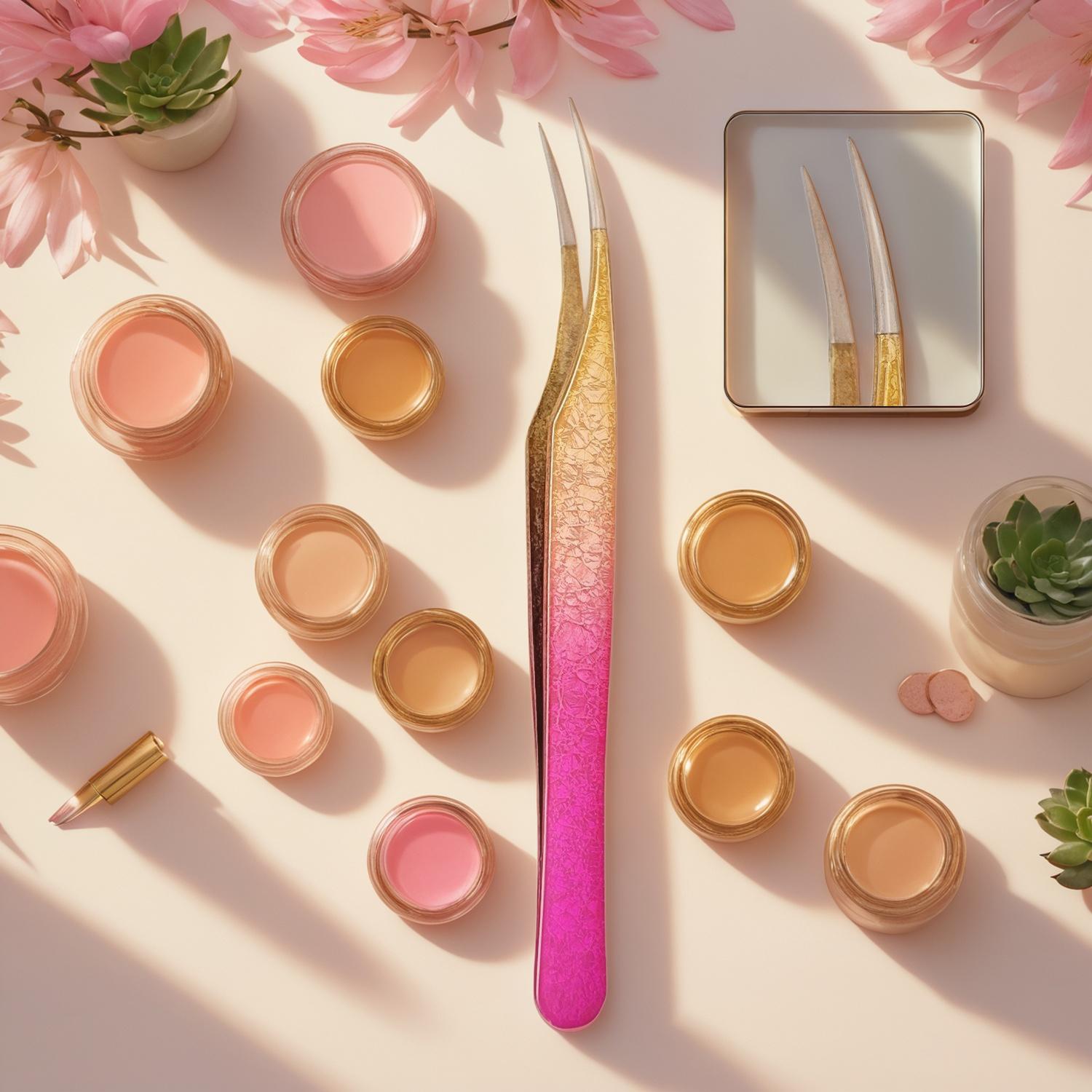
Tweezers for False Lash Application: How to Choose Precision Tools for Clean Placement
False lash application depends on small movements: picking up a strip or cluster without bending it, positioning the lash close to the natural lash line, and pressing it into place without disturbing the adhesive. Fingers can work for simple strip lashes, but they often block visibility and make fine adjustments harder. A well-designed pair of tweezers for false lash application gives the user better reach, steadier placement, and more control over the final look.
For salons, makeup artists, lash retailers, and beauty tool buyers, the right tweezer is not only a daily-use accessory. It affects application speed, user comfort, hygiene routines, and customer satisfaction. This guide explains the practical features to compare before selecting lash tweezers for personal kits, professional use, or wholesale sourcing.
Why Lash Tweezers Matter More Than They Look
False lashes sit in a narrow, sensitive area where precision matters. If the tool is too blunt, too slippery, or poorly aligned, the user may squeeze too hard, drop the lash, or place it above the ideal line. That can create visible gaps, uneven corners, adhesive mess, or discomfort for the wearer.
Good lash tweezers help in three ways. First, they improve visibility by keeping the hand slightly away from the eye. Second, they allow controlled pressure, so the lash band or segment is held securely without crushing it. Third, they make corrections easier, especially around the inner and outer corners where placement is more difficult.
Different users may need different handling characteristics. A beginner may prefer a tool that feels stable and easy to grip, while a professional may care more about tip responsiveness and fatigue reduction during repeated applications. Beauty brands and distributors should consider both groups when evaluating beauty tool products for their market.
Tip Shape: The Most Important Selection Point
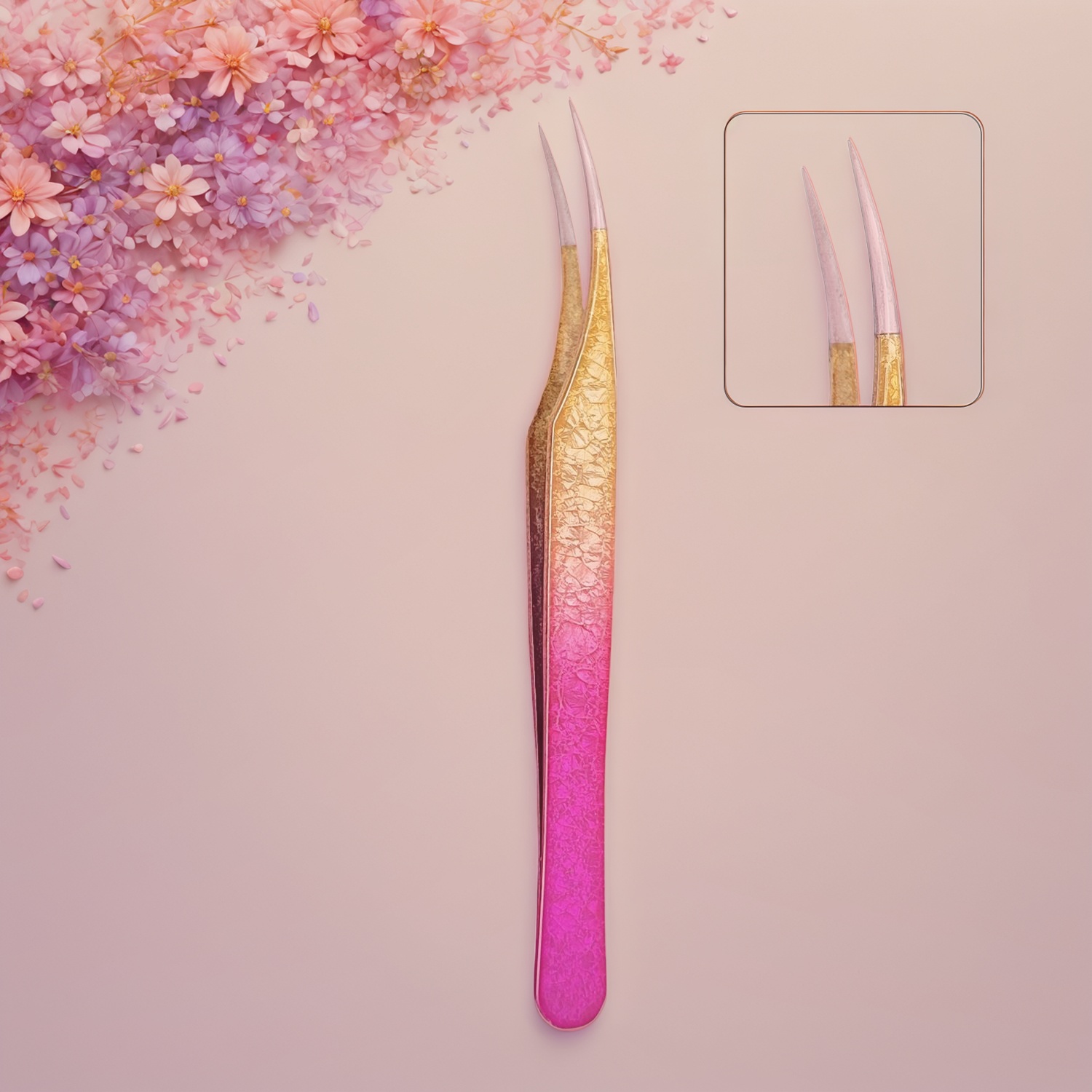
The tip is the working end of the tweezer, and it determines how the tool behaves during lash placement. The original product description highlights a curved-tip design, such as that used for the Rainbow Gradient Tweezers. A curved tip is especially useful for false lashes because it can approach the lash line at a comfortable angle while keeping the user’s view open.
Curved tips are commonly preferred for strip lashes and cluster placement because they can cradle the lash band. The curve helps the user set the lash down gradually rather than pushing it straight in. This is useful when aligning the center first and then adjusting each corner.
When comparing lash tweezers, look closely at these tip factors:
- Tip alignment: The two ends should meet evenly. Poor alignment can cause slipping or uneven pressure.
- Tip smoothness: The edges should feel refined, not sharp enough to cut or damage delicate lash bands.
- Opening width: The tweezer should open wide enough to pick up different lash styles without forcing the hand.
- Closing control: The tool should close smoothly without wobble or sudden movement.
- Application angle: A curved form can make it easier to place lashes close to the natural lash line while maintaining visibility.
For professional buyers, tip consistency is as important as the sample itself. If purchasing in quantity, compare multiple units from the same batch to check whether the tips close in the same way. Small inconsistencies can become a real issue for makeup artists and end users.
Material, Grip, and Comfort for Repeated Use
The supplied product information notes stainless steel construction, corrosion resistance, and an ergonomic shape with an embossed texture. These features are relevant because lash tools are handled frequently, cleaned often, and used in close contact with the eye area.
Stainless steel is a common choice for beauty tweezers because it supports durability and is suitable for routine cleaning when cared for correctly. For lash application, the material should feel stable in the hand rather than overly flexible. A tweezer that bends too easily can reduce control, while one that is too stiff can fatigue the fingers.
Grip texture also matters. Smooth tools may look attractive in packaging, but they can become slippery when hands are moisturized or when the user is working quickly. An embossed or textured gripping area helps create tactile feedback. This can be especially helpful for makeup artists who apply lashes repeatedly during appointments, events, or photo sessions.
Comfort should be judged by use, not only by appearance. Hold the tweezer in the same position you would use during lash placement. Check whether the finger contact points feel natural. A comfortable tool should allow fine movements without forcing the wrist into an awkward angle.
How to Match Tweezers to Different Lash Application Tasks
Not every lash task requires the same handling style. A single tool may cover most routine applications, but understanding the use case helps buyers choose more carefully.
| Application task | Helpful tweezer feature | Why it matters |
|---|---|---|
| Full strip lash placement | Curved tip with steady grip | Helps position the band close to the lash line while keeping the eye area visible. |
| Outer-corner adjustment | Fine, aligned tips | Allows small corrections without lifting the entire lash. |
| Cluster or segment lashes | Controlled closing pressure | Holds delicate pieces without crushing or twisting them. |
| Professional repeated use | Ergonomic body and textured grip | Reduces hand strain and improves consistency over multiple applications. |
| Retail beauty kits | Durable finish and easy handling | Supports a positive first impression for everyday users. |
For a beauty brand or distributor, this task-based approach can guide product presentation. Instead of describing the tweezer only as a general tool, explain whether it is suited to strip lash placement, delicate adjustments, professional kits, or at-home application. Clear positioning helps customers understand why the tool is useful.
Quality Checks Before Buying Lash Tweezers in Quantity
When sourcing tweezers for false lash application, a polished appearance is not enough. Buyers should evaluate the tool from the perspective of daily use, packaging, and repeat customer expectations. A good sample should be tested in real application motions, not only inspected on a desk.
Use the following checklist when reviewing a supplier sample or comparing options:
- Inspect the tip closure. Close the tweezer gently and confirm that both sides meet evenly without crossing or leaving a visible gap.
- Test the grip with a lash band. Pick up a strip lash or practice band several times. The lash should stay secure without needing excessive pressure.
- Check surface finish. Look for rough edges, uneven coating, scratches, or areas that may feel uncomfortable in the hand.
- Evaluate hand comfort. Repeat the opening and closing motion for several minutes to identify stiffness or fatigue.
- Review cleaning practicality. Consider whether the surface and shape are easy to wipe and keep free of adhesive residue.
- Compare multiple pieces. If buying for retail or professional distribution, consistency across units is essential.
- Assess packaging protection. Fine tips should be protected during shipping and storage to prevent bending or misalignment.
Olimor Beauty focuses on beauty tools, and buyers can browse broader product collections when building a coordinated line. For brands planning a custom beauty tool assortment, it is useful to compare tweezers alongside lash applicators, grooming tools, and other accessories that may be sold together.
Care and Maintenance for Longer Tool Life
Even a well-made tweezer can lose performance if adhesive builds up on the tips or if the tool is stored carelessly. Lash glue residue is one of the most common reasons a tweezer starts to feel less precise. Residue can make the tips sticky, uneven, or difficult to close cleanly.
After use, remove visible adhesive from the tips according to the cleaning method appropriate for the working environment and the tool finish. Avoid scraping the tips with hard objects, as this can damage alignment or create rough contact points. Dry the tool thoroughly after cleaning, especially around the joint and inner edges, to support long-term usability.
Storage is also important. Do not throw precision tweezers loosely into a crowded makeup bag where the tips can be bent. A sleeve, cap, or protected compartment helps maintain alignment. In professional settings, separate clean and used tools clearly to support hygienic workflow.
Choosing a Beauty Tool Partner for Lash Tweezers
For wholesalers, retailers, and private beauty businesses, product quality should be considered together with communication, sampling, and repeat order consistency. The best sourcing decision is based on practical questions: Does the sample match the intended use? Are the tips consistent? Is the finish suitable for the target customer? Will packaging protect the tool in transit? Can the supplier clearly discuss material, finish, and inspection expectations?
Because lash tweezers are small, buyers sometimes underestimate their role in customer experience. However, users notice immediately when a tweezer slips, pinches unevenly, or makes placement harder. A reliable tool encourages repeat use and supports the perceived quality of the full beauty kit.
If you are comparing lash tweezers for a retail line, salon program, or promotional beauty set, you can send an inquiry with your intended use and purchasing goals. For broader sourcing questions or help selecting suitable beauty tools, you may also contact Olimor.
A Practical Final Word on False Lash Tweezers
Tweezers for false lash application should be selected for control, comfort, and consistency. A curved-tip design can support accurate placement, stainless steel construction can offer durability with proper care, and a textured ergonomic grip can make repeated use easier. The most important buying step is to evaluate the tool in the same way it will be used: holding lashes, adjusting corners, cleaning residue, and storing it safely.
Whether you are building a professional kit or sourcing beauty tools for your customers, choose lash tweezers that make precise placement easier rather than simply looking attractive in packaging. A carefully selected tool can reduce application frustration, support cleaner results, and help users approach false lashes with more confidence.
Tag: