

Choosing a Tweezers Exporter: Quality, Cost and OEM/ODM Customization
For beauty retailers, salon suppliers, private label brands and promotional product buyers, tweezers may look like a simple item to source. In practice, small differences in tip alignment, steel quality, surface finish and packaging can decide whether customers reorder or complain. A low unit price is attractive, but it is only one part of the buying decision. The better question is whether a tweezers exporter can deliver consistent tools that match your market position, your branding needs and your expected retail experience.
This guide explains how to compare a tweezers manufacturer or exporter beyond the first quotation. It focuses on practical buying criteria: product performance, OEM/ODM customization, quality control, packaging, export communication and long-term cost. Olimor Beauty works with beauty tools including tweezers, and the same sourcing logic applies whether you are building a premium brow kit, adding an accessory to an existing cosmetics line or comparing standard wholesale tweezers for retail distribution.
Why the Cheapest Wholesale Tweezers Are Not Always the Lowest-Cost Choice
Many buyers begin by searching for the cheapest wholesale tweezers because the product appears easy to compare. If two suppliers show a similar tweezer shape, the lower price can seem like the obvious choice. However, tweezers are precision beauty tools. A tiny gap between the tips, a weak spring feel or an uneven edge can make the tool frustrating for brow shaping and detail work. When that happens, the real cost includes returns, damaged reviews, extra inspection time and the need to replace inventory sooner than planned.
Material and finishing are key cost drivers. The original product information highlights professional-grade stainless steel construction, which matters because beauty tools are handled frequently, cleaned repeatedly and often used in humid bathroom or salon environments. Stainless steel alone does not guarantee performance, but it is a meaningful starting point when combined with careful tip grinding, alignment and surface treatment. A budget supplier may reduce cost through looser tolerances, thinner material, inconsistent polishing or simpler packaging. Those savings may be acceptable for a low-risk promotion, but they can be damaging for a brand that promises dependable personal care tools.
Instead of comparing only the unit price, estimate the full commercial cost. Consider inspection effort, defect allowance, packaging damage, customer service time, replacement rate and the effect on brand trust. A reliable tweezers exporter should help you understand what is included in the price and what trade-offs are involved, especially if you are choosing between a standard wholesale item and a customized program.
Core Quality Checks Before Selecting a Tweezers Exporter
Before committing to a large order, buyers should create a simple performance checklist. This is especially important when comparing exporters from different markets or when evaluating OEM/ODM tweezers against generic wholesale options. A good tweezer should feel controlled in the hand, close evenly and grip fine hairs or small items without excessive pressure.
- Tip alignment: The two tips should meet evenly from edge to edge. Misalignment reduces grip and creates a poor user experience.
- Tip finish: Edges should be precise enough to grasp, but not so rough that they scratch the skin during normal use.
- Spring tension: The tweezer should open and close smoothly without feeling weak, stiff or unstable.
- Surface condition: Look for clean polishing, even color application and no visible burrs or stains.
- Grip comfort: Ergonomic designs and non-slip grips can improve control, particularly for salon and brow users.
- Cleaning practicality: Beauty tools should be easy to wipe and sterilize according to the user’s normal hygiene process.
- Packaging fit: The tool should be protected in transit and presented in a way that matches the intended retail channel.
Olimor Beauty’s original product details mention strict quality assurance from raw material inspections to final packaging. For a buyer, this kind of process is important because defects can occur at multiple points: material receiving, forming, grinding, finishing, assembly, logo application and packing. When you evaluate any tweezers manufacturer, request samples from the same production route that will be used for the order, then test them under realistic conditions rather than reviewing appearance alone.
OEM/ODM Tweezers Versus Standard Wholesale Options
Standard wholesale tweezers can be useful when speed, simplicity and budget are the priorities. They may suit entry-level retail, bundle items or short-term campaigns where deep customization is unnecessary. OEM/ODM tweezers are different. They allow a brand to develop a more distinct product through color, finish, shape, grip feel, packaging or functional assortment.
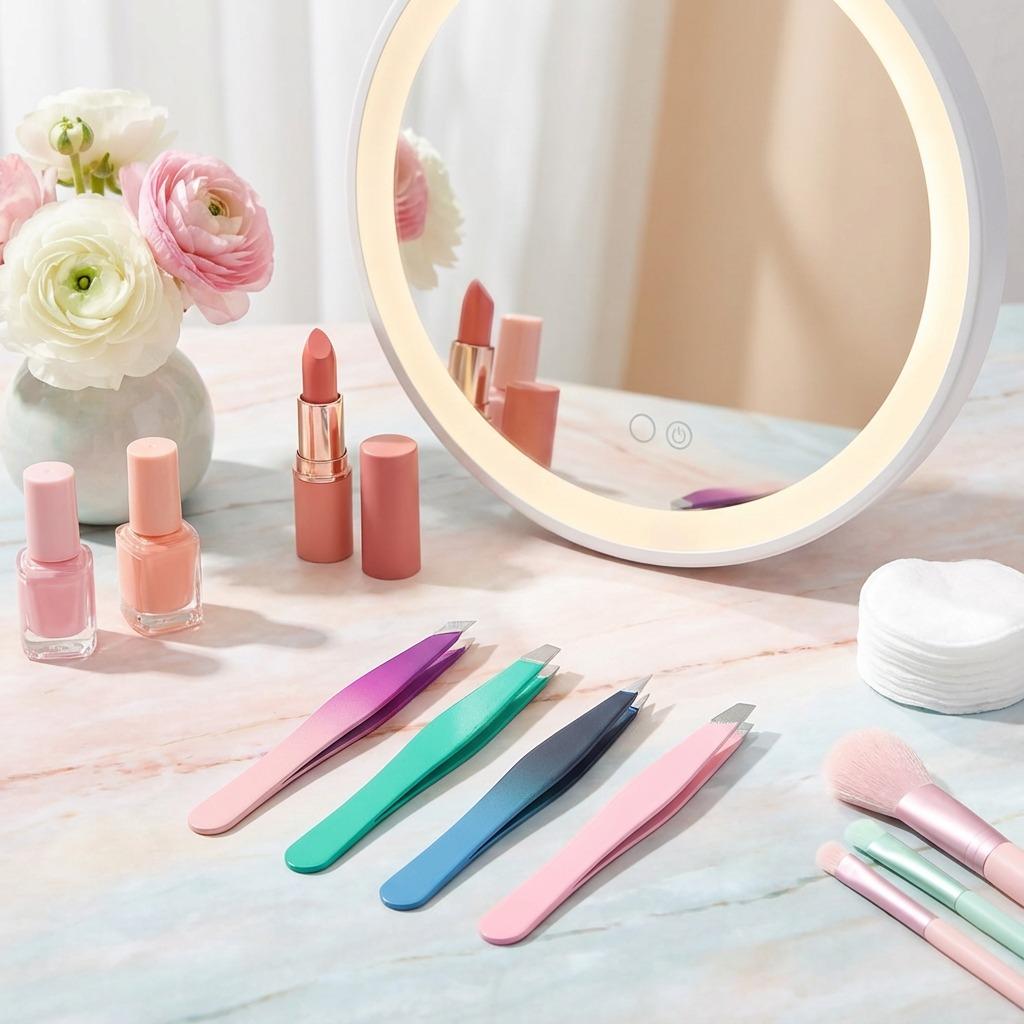
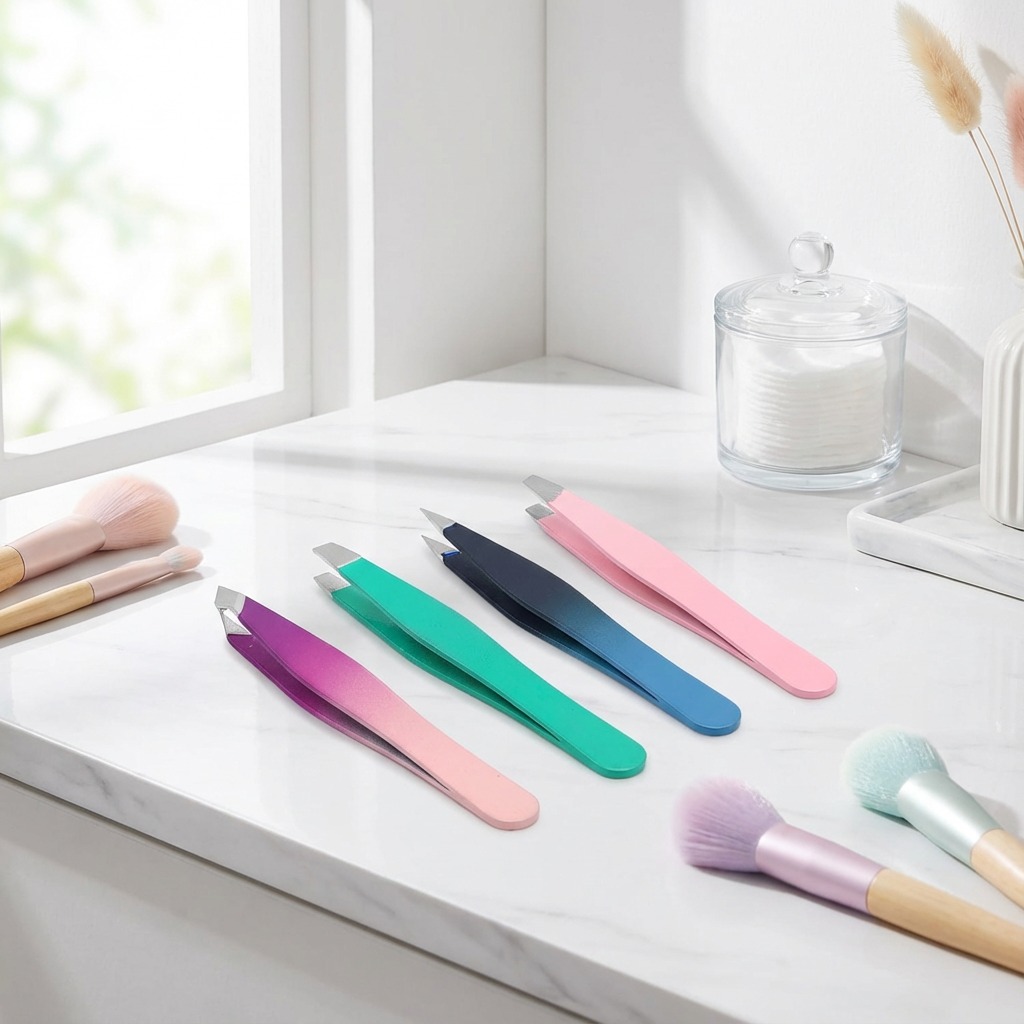
The supplied information refers to customization such as colors, gradients and functionality, including vibrant ombré effects in Precision Dual-Tone Tweezers. It also mentions the Gradient Collection Precision Tweezers Set, with ergonomic designs for salon-quality results. These details show why customization is not only decorative. A gradient finish can help a product stand out online and in store, while ergonomic features can support a better hand feel. Angled tweezers may fit brow shaping, while pointed tweezers are often chosen for precision tasks. A set can give shoppers a clearer reason to buy than a single generic tool.
For brands comparing OEM/ODM and wholesale purchasing, the decision should be based on the role of the product in the business. If tweezers are a minor accessory in a large assortment, a standard product may be enough. If tweezers are part of a branded beauty tool line, the extra work involved in customization can help create a stronger product story and clearer differentiation.
Customization Decisions That Actually Affect Sales
Not every custom option adds value. Some choices increase cost or production complexity without improving the customer experience. A practical customization plan should connect directly to your target user, retail price point and sales channel. For example, a salon-focused buyer may prioritize tension, tip precision, cleanability and protective packaging. A gift or retail buyer may place more emphasis on color coordination, set composition and shelf presentation.
| Decision Area | Why It Matters | Buyer Consideration |
|---|---|---|
| Tip style | Determines the main use case, such as brow shaping or detailed precision work. | Match angled or pointed options to the user’s expected task. |
| Finish and color | Influences perceived value and brand recognition. | Use gradients or dual-tone effects only when they support your brand identity. |
| Grip and shape | Affects comfort, control and repeat use. | Test samples with real users before approving a custom design. |
| Packaging | Protects the tool and communicates retail positioning. | Balance visual appeal with shipping durability. |
| Set configuration | Can raise perceived usefulness when multiple tweezer types are included. | Avoid unnecessary pieces that add cost without a clear function. |
When reviewing beauty tool products, think in terms of customer scenarios rather than isolated features. A brow-focused kit may require an angled tweezer and a protective sleeve. A precision grooming set may benefit from pointed tweezers and clearer instructions. A colorful retail line may need consistent finishes across related tools so the display looks intentional.
How to Compare Exporter Reliability Beyond Product Samples
A sample can show what a tweezers exporter is capable of, but it does not always prove what will arrive in a full shipment. Export reliability depends on communication, production control, packing consistency and the ability to manage details before they become problems. This is where the exporter’s process matters as much as the tweezer itself.
Start with documentation. Confirm the approved sample, finish, packaging method, logo placement if applicable and inspection standard in writing. Make sure product photos, measurements and packaging references are clear enough for both sides to use during production. If the order involves OEM/ODM tweezers, confirm which elements are custom and which are standard. This helps avoid confusion when colors, gradients or packaging details are being produced at scale.
Next, discuss how quality is checked. A useful process may include raw material inspection, in-process checks and final packaging review. The goal is not to demand unnecessary paperwork; it is to understand whether the exporter can keep the approved sample and the final goods aligned. A buyer sourcing for a professional beauty audience should be especially careful with tip performance and surface finishing, because these are the details customers notice immediately.
Finally, evaluate how the exporter responds to questions. Clear answers about options, limitations and trade-offs are more useful than vague promises. If you are comparing product directions or need a custom quotation, you can send an inquiry with your target market, expected order plan and required customization points.
Sourcing Questions for Brands Building a Tweezers Line
Before choosing between a low-cost wholesale supplier and a more quality-focused tweezers manufacturer, align your internal requirements. This prevents overbuying features you do not need or under-specifying a product that is important to your brand reputation.
- Who is the end user? A salon professional, brow enthusiast, gift buyer and entry-level consumer may value different features.
- What is the primary use? Brow shaping, fine precision work and general grooming can require different tip types.
- Is the tweezer a hero product or an accessory? Main-line products usually justify more attention to customization and packaging.
- What level of visual differentiation is needed? Gradient, dual-tone or coordinated colors can help, but only when they fit the brand.
- How will the product be sold? Online, salon distribution, retail shelves and kits may each require different packaging decisions.
- What defects would be unacceptable? Define issues such as poor tip closure, scratched finish, loose packaging or inconsistent color before production.
Olimor Beauty’s product collections can be useful for buyers studying how different beauty tools fit into a broader assortment. Even if your immediate need is tweezers, considering the wider product line helps with color strategy, packaging consistency and future expansion.
Balancing Cost, Quality and Brand Value
The right tweezers exporter is not automatically the cheapest supplier or the most expensive one. The right partner is the one whose product quality, customization ability and export process match your business model. If you sell on price alone, a standard wholesale tweezer may be suitable, provided the basic performance is acceptable. If your brand competes on trust, appearance and repeat purchase, stronger quality control and thoughtful OEM/ODM development usually provide better long-term value.
Look for practical evidence: aligned tips, comfortable tension, clean finishing, protective packaging and a clear production process. Use samples to test the tool, not just photograph it. Compare quotations by what they include, not just the final number. Most importantly, connect every sourcing decision to the customer experience you want to deliver.
For buyers developing stainless steel tweezers, gradient finishes, dual-tone designs or customized beauty tool sets, Olimor Beauty can support product discussions based on intended use and brand direction. To compare options or clarify a sourcing plan, contact Olimor with your project details and desired product positioning.
Tag: