

Tweezers Exporter Insights: Quality, Sourcing and Cost Decisions
For beauty brands, wholesalers, private-label sellers and distributors, tweezers look simple at first glance. In practice, they are small precision tools where material choice, tip alignment, grip comfort, finish consistency and packaging all affect customer satisfaction. A low-cost tweezer that cannot grip fine hair or loses alignment quickly can create returns, poor reviews and weak repeat orders. A well-sourced tweezer, by contrast, can become a reliable everyday grooming product across retail, salon and travel categories.
This guide explains how to evaluate a tweezers exporter or manufacturer with a focus on practical sourcing decisions: local versus global supply, in-house versus outsourced production, wholesale price trade-offs, and the quality details that matter before placing a larger order. Olimor Beauty offers beauty tool products for buyers who need practical selection support, including stainless steel tweezer options for brow shaping and grooming use. You can also browse related beauty tool products to compare categories and plan a broader sourcing range.
Local vs. Global Tweezers Exporters: What Buyers Should Compare
The first sourcing decision is whether to buy from a local supplier, a regional distributor or a global tweezers exporter. Local sourcing can be helpful when you need fast communication, smaller replenishment orders or easier after-sales coordination. It may also reduce shipping complexity for urgent launches. However, local options may have a narrower design range or higher unit costs if production, finishing or packaging is handled in a higher-cost market.
Global sourcing often gives buyers access to more design variety, OEM/ODM support and competitive manufacturing costs. The trade-off is that buyers need a stronger process for sampling, documentation, production approvals and inspection. For tweezers, this is especially important because visual appearance alone does not confirm performance. A shiny finish is not enough; the tips must meet evenly, grip hair securely and remain comfortable in the hand.
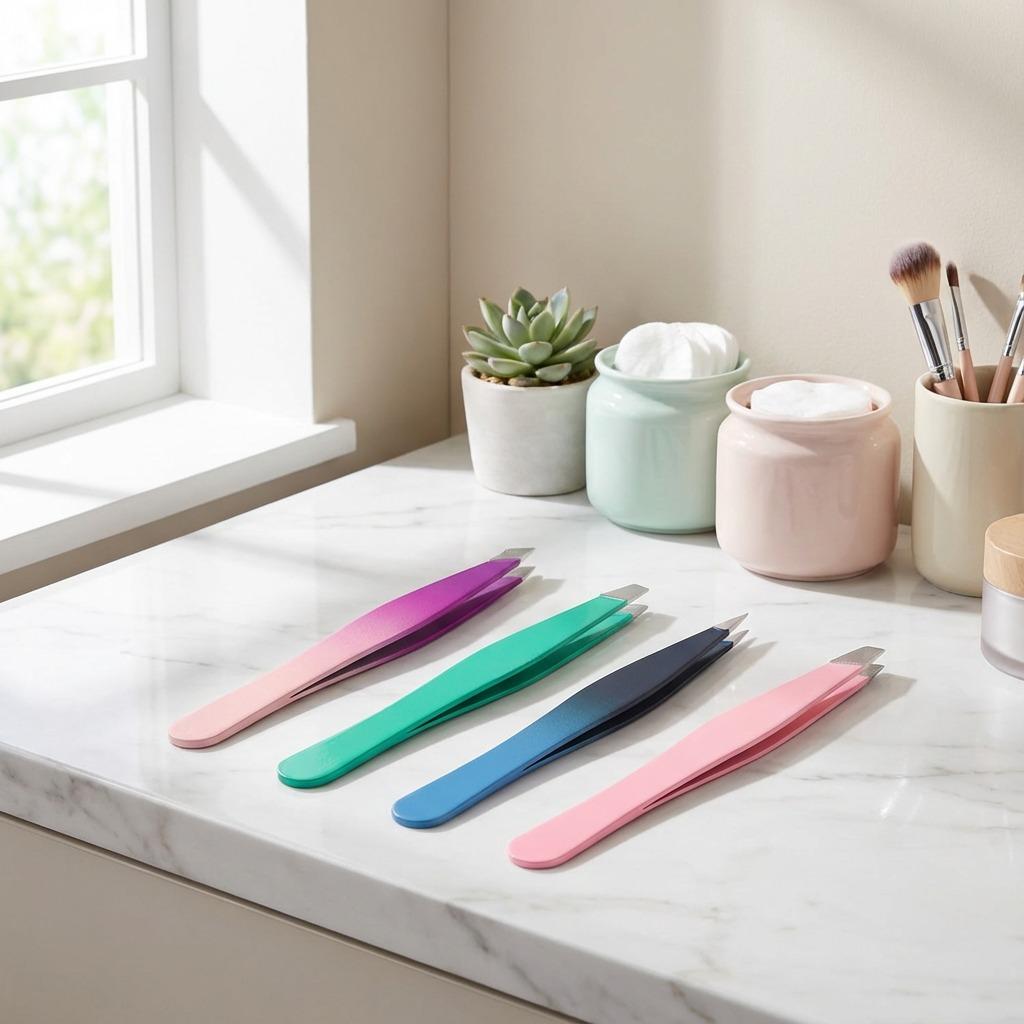
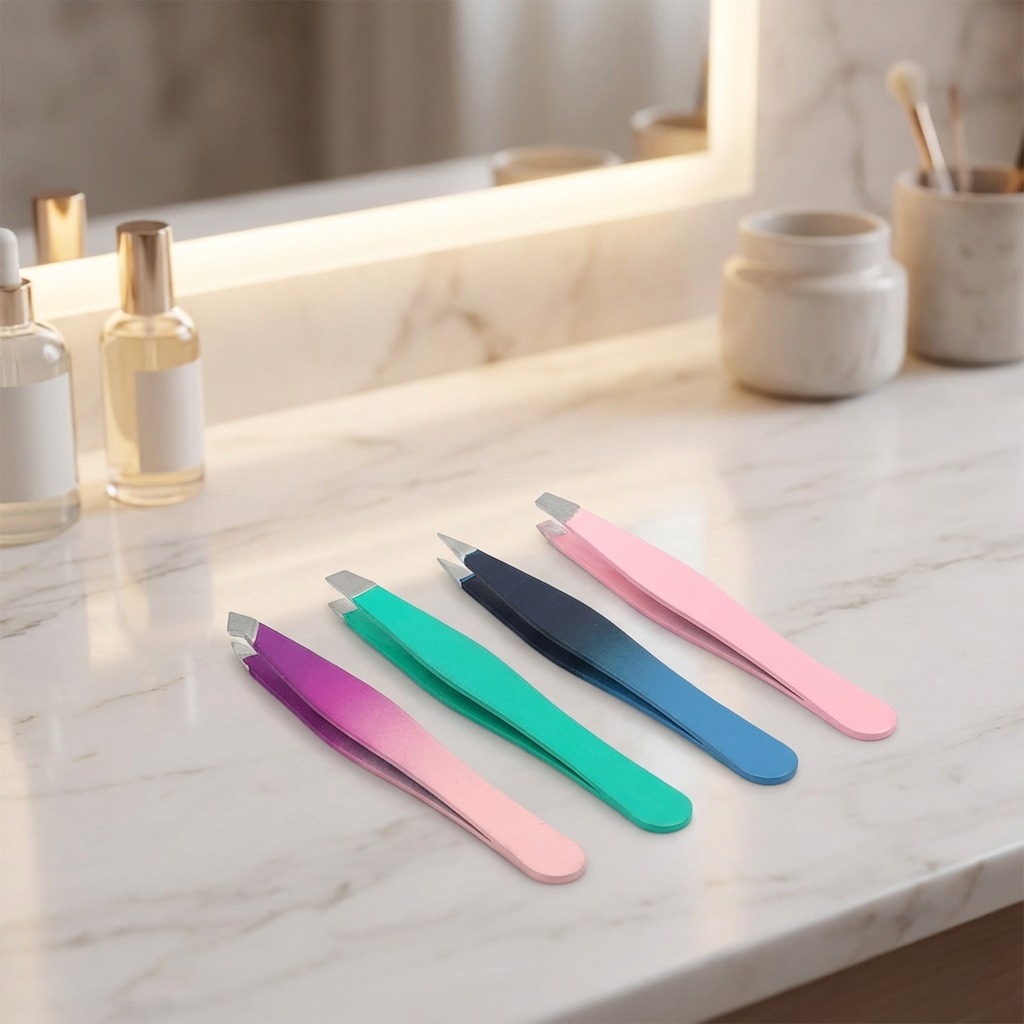
When comparing exporter options, consider the whole sourcing path rather than only the quoted price. A supplier who can help with product selection, packaging coordination and consistent inspection may reduce risk compared with a lower quote that leaves quality decisions unclear. Olimor Beauty’s product range includes stainless steel tweezers with aesthetic finishes, including gradient color styling from pink to purple in the Chromatic Tweezer Collection. For buyers building a retail display or beauty kit, visual consistency can be important, but it should always be checked alongside functional performance.
Manufacturer Options: In-House Production or OEM/ODM Outsourcing
Some larger companies consider in-house tweezer production to gain direct control over manufacturing. This can work when a business has the machinery, skilled operators, quality technicians and long-term order volume to justify the investment. The advantage is tight control over every step, from raw material handling to polishing and final inspection. The disadvantage is cost: equipment, training, maintenance, rejected goods and process management can become expensive before a single retail order is shipped.
Outsourced production through a tweezers manufacturer or OEM/ODM partner is often more practical for brands and distributors that want to launch or expand a line without building a factory operation. OEM/ODM sourcing can support shape selection, finish direction, packaging decisions and order planning. For example, the supplied product information highlights a Precision Gradient Slant Tweezer measuring 63mm, designed for precise brow shaping. It also references ergonomic design intended to reduce hand fatigue, a detail that matters for both professional and frequent personal use.
The best approach depends on your business model. If your brand needs a controlled custom range and you have predictable demand, a structured OEM/ODM program may be more efficient than buying generic stock. If you sell through multiple channels and need fast assortment testing, standard wholesale styles may be a better first step. In either case, request samples that represent the finish, tip shape and packaging you expect for production—not just a general sample from the factory shelf.
Quality Criteria That Matter More Than the Lowest Price
Wholesale buyers often search for the cheapest wholesale tweezers, but the lowest price can hide performance problems. Tweezers are judged by how they feel and how precisely they grip. If the arms are too stiff, users experience hand strain. If they are too loose, grip control suffers. If the tips do not align, the tool may cut hair, slip off the hair shaft or fail to remove short brow hairs cleanly.
Use the following checklist when evaluating samples from a tweezers exporter or manufacturer:
- Tip alignment: Close the tweezer slowly and check whether the edges meet evenly from corner to corner.
- Grip performance: Test on fine, short and slightly thicker hair types or equivalent sample fibers to confirm secure contact.
- Material and rust resistance: Stainless steel construction is useful for grooming tools, but buyers should still review finish quality and storage conditions.
- Arm tension: The tweezer should open and close smoothly without feeling weak or excessively stiff.
- Edge finish: Tips should be precise but not rough or uneven, which can scratch skin during brow work.
- Surface coating or color: Gradient and colored finishes should appear consistent across samples, especially for retail presentation.
- Packaging fit: Protective sleeves, cards or boxes should prevent tip damage during transport and shelf handling.
The original product details mention high-grade stainless steel, rust-resistant qualities and varied tip designs such as slant, pointed and flat. These are useful starting points for assortment planning. Slant tweezers are common for brow shaping, pointed tips support detail work, and flat tips can be helpful for broader gripping tasks. Buyers should match tip type to the intended customer rather than choosing one shape for every use case.
How to Balance Wholesale Cost and Long-Term Value
Cost is not only the unit price. Importers and wholesale buyers should calculate the total landed and selling cost, including packaging, freight, duties where applicable, inspection, storage, damaged goods, returns and customer service. A tweezer that costs less upfront may become more expensive if a high percentage fails basic grip tests or arrives with scratched finishes and misaligned tips.
A practical comparison table can make supplier evaluation easier:
| Decision factor | Low-price risk | Better sourcing approach |
|---|---|---|
| Tip precision | Uneven closure, weak hair grip | Approve production only after sample grip testing |
| Material finish | Rust, scratches or inconsistent coating | Check stainless steel quality, finish uniformity and storage protection |
| Packaging | Tip damage during transit | Use packaging that holds the tweezer securely and protects the tips |
| Assortment planning | Too many similar SKUs | Choose slant, pointed or flat tips based on customer use cases |
| Supplier communication | Unclear approvals and production changes | Confirm sample standard, artwork, finish and inspection criteria in writing |
For many buyers, the right supplier is not the one with the absolute cheapest quote, but the one that can deliver a stable balance of price, repeatability and product performance. This matters especially if tweezers are part of a larger beauty accessories program or a private-label grooming kit. Explore Olimor product collections if you are planning assortments across multiple beauty tool categories.
OEM/ODM Details to Confirm Before Production
When sourcing OEM/ODM tweezers, buyers should define the product standard before mass production begins. Do not rely only on broad descriptions like “premium” or “salon quality.” These words mean different things to different suppliers. Instead, document measurable and visible requirements wherever possible.
A clear pre-production file may include the selected tweezer shape, length if specified, finish color, logo placement if applicable, packaging structure, barcode needs, carton labeling requirements and acceptable appearance standards. If the product is based on a sample such as the 63mm Precision Gradient Slant Tweezer mentioned in the supplied information, keep one approved sample as a reference for production checks. The approved sample should represent the final material feel, tip alignment, color effect and packaging presentation.
Buyers should also clarify how inspections are handled. The supplied information states that Olimor Beauty conducts internal inspections from raw materials to packaging and that products undergo precise quality checks. For any sourcing project, it is still wise to define your own acceptance expectations: how many units will be checked, what counts as a major defect, and what happens if packaging or finish differs from the approved sample.
Maintenance Guidance for End Customers
A good exporter also thinks about how the end customer will use and care for the product. Simple maintenance guidance can reduce complaints and improve perceived value. Include care notes on packaging, inserts or product pages where appropriate.
- Wipe tweezer tips clean after use to remove oil, makeup or skin residue.
- Keep the tips protected during travel so they do not bend or chip.
- Store tweezers in a dry place rather than leaving them in standing water or damp cosmetic bags.
- Avoid dropping the tool on hard surfaces, as this can affect tip alignment.
- Use the correct tip style for the task; pointed tips require careful handling and are best for detailed work.
These instructions are not complicated, but they help customers understand that tweezers are precision grooming tools, not disposable accessories. For brands, that supports better product reviews and fewer avoidable service issues.
Choosing a Tweezers Exporter for Reliable Growth
The best tweezers sourcing decision combines product function, presentation, cost control and supplier reliability. Before committing to a large order, compare samples from several exporters, test them in real grooming scenarios, review packaging durability and calculate total cost rather than unit price alone. Pay close attention to tip alignment, arm tension, stainless steel finish, color consistency and the match between tip type and customer use.
Olimor Beauty supports buyers looking for stainless steel beauty tools, OEM/ODM options and practical product selection. If you are comparing tweezer styles, planning private-label packaging or building a grooming accessory range, you can contact Olimor or send an inquiry with your sourcing requirements. A clear brief and careful sample review will help you choose wholesale tweezers that are cost-effective, visually consistent and dependable in daily use.
Tag: