

Tweezers Buying Guide: How to Choose Precision Tools for Beauty and Grooming
A good pair of tweezers should feel simple in the hand, but the buying decision is more specific than many shoppers expect. The right tool depends on the work: shaping eyebrows, removing a single fine hair, separating lash extensions, handling small beauty accessories, or managing an occasional splinter. A slant tip that is excellent for brow clean-up may not be the best choice for an ingrown hair. A pointed tweezer that gives pinpoint access may require steadier handling than a broad straight edge.
This guide is written for beauty buyers, salon teams, private-label sourcing staff and everyday users who want a practical way to compare tweezers before purchasing. Olimor Beauty offers tweezer options within its wider range of beauty tool products, including stainless steel tools designed for precision tasks. Use the criteria below to decide which tip styles, grip details and maintenance expectations matter most for your routine or product assortment.
Start With the Task, Not the Tool Name
Many buyers begin by searching for “best tweezers,” but there is no single best style for every use. Start by listing the jobs the tool must perform. For personal grooming, brow shaping and stray hair removal may be the main priorities. For a salon or beauty retail assortment, customers may need several tip shapes for different service steps. For sourcing teams, the goal may be a balanced set that is easy for customers to understand and useful enough to reduce returns.
The supplied Olimor Beauty tweezer set is described as a four-piece precision set with specialized tweezers, including slant, angled fine-point, curved precision and straight-edge options. That range is useful because it lets one kit cover broad grooming work as well as smaller detail tasks. When comparing any tweezer set, look at whether every piece has a clear purpose. A set should not simply include multiple similar tools; each tip style should solve a different handling problem.
Compare Tip Shapes by Use Case
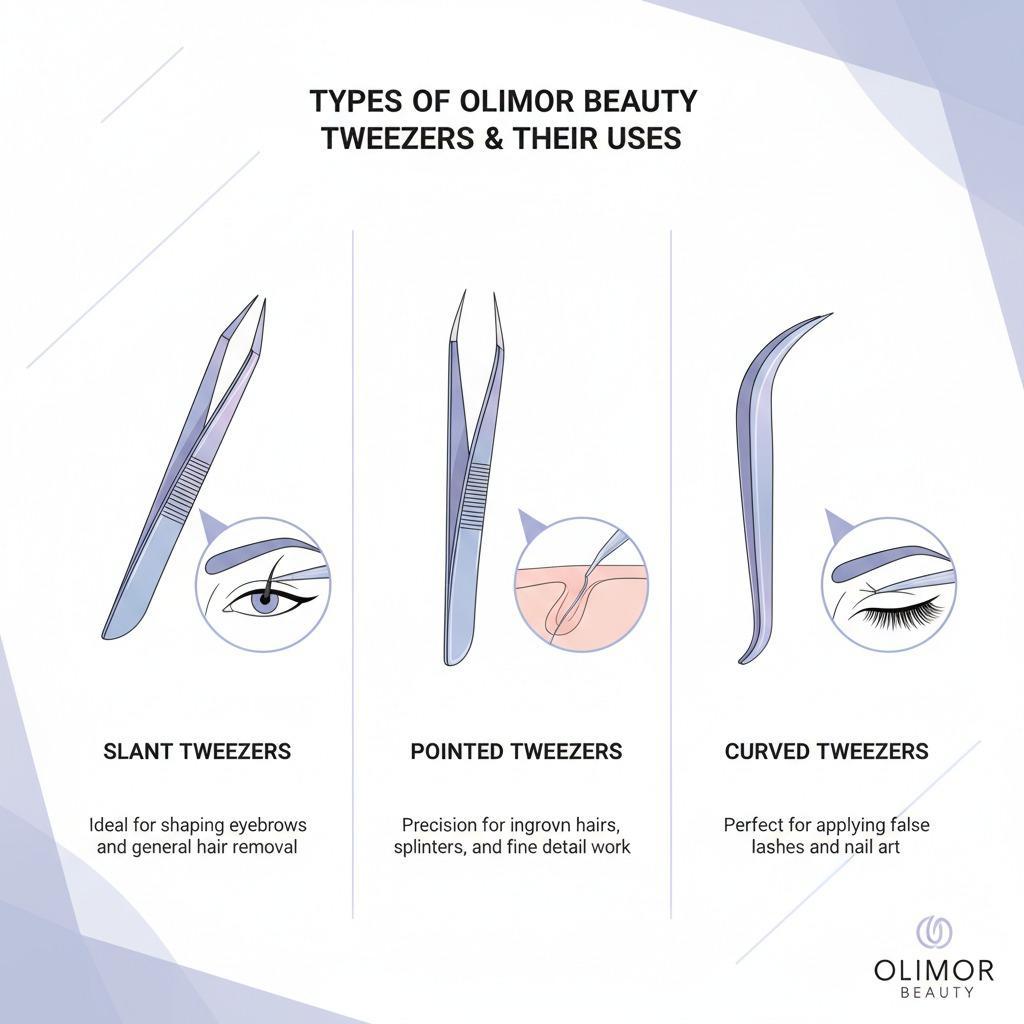
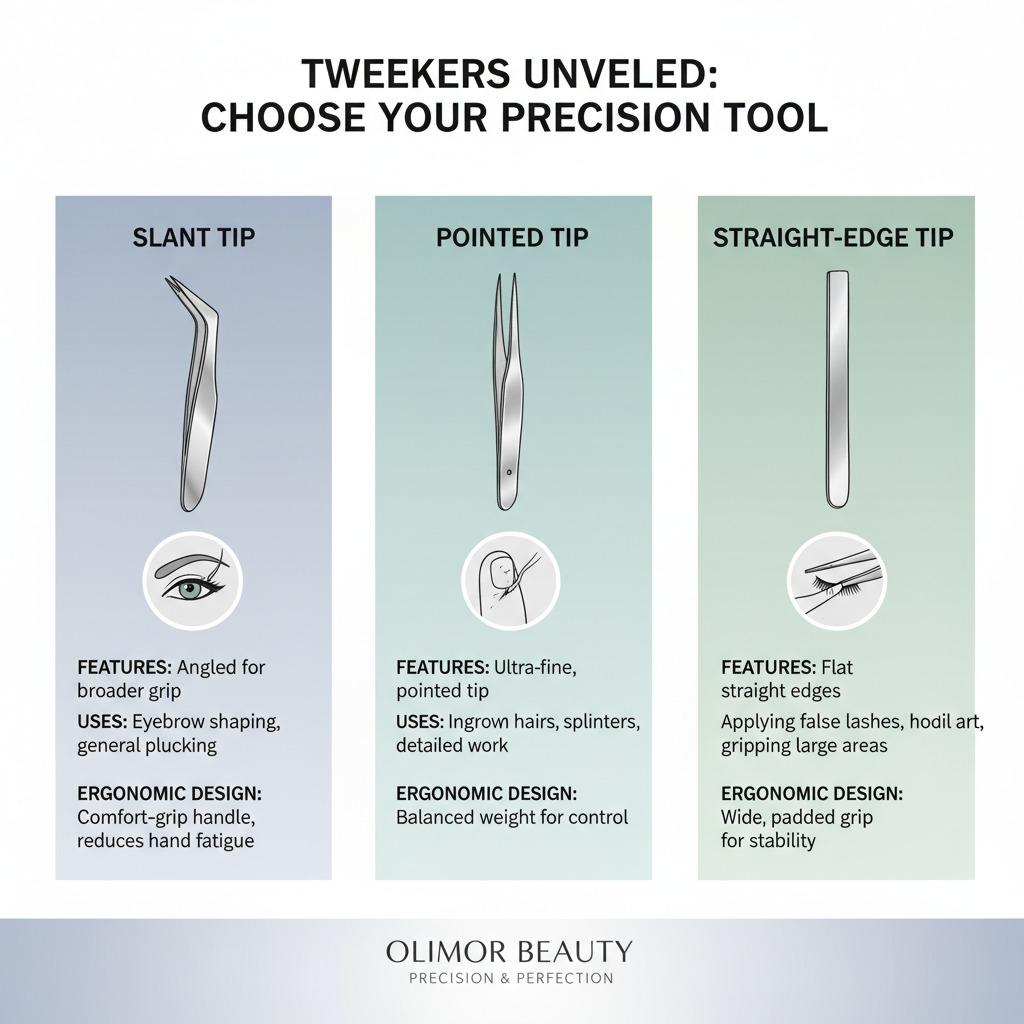
The tip is the most important part of a tweezer because it controls how the tool meets the hair or object. Even small differences in angle, width and alignment change the user experience. The table below gives a practical comparison of common tip styles found in precision grooming sets.
| Tip style | Best suited for | Buyer considerations |
|---|---|---|
| Slant tip | Eyebrow shaping, general facial hair removal and quick touch-ups | Look for clean alignment and a comfortable closing action so the user can grip fine hairs without excessive pressure. |
| Angled fine-point | Pinpoint work, ingrown hairs and very short visible hairs | Useful for accuracy, but it should be handled carefully because the narrow point focuses pressure in a small area. |
| Curved precision | Lash-related work, detail handling and small beauty accessories | The curve can improve visibility and approach angle when working close to the eye area or around delicate parts. |
| Straight edge | Gripping slightly wider areas, applying small items or controlled placement work | Check whether the edge closes evenly across the contact surface rather than only at one corner. |
For most users, slant tweezers are the everyday option. They offer a useful balance between access and control, especially when shaping brows in small sections. Pointed or fine-point tweezers are better treated as detail tools. They can be very effective, but they are not always the most forgiving option for rushed grooming. Curved and straight-edge tools add versatility for lash, craft-like beauty work and small placement tasks.
Why Stainless Steel and Alignment Matter
The original Olimor Beauty set is described as being made from stainless steel. For tweezers, stainless steel is a sensible material choice because it is commonly used for grooming tools that need a firm feel, a smooth surface and practical cleaning. Material alone, however, does not guarantee performance. Two stainless steel tweezers can behave very differently if the tips are not aligned or if the tension is uncomfortable.
When inspecting tweezers, close the tips slowly and look at where they meet. They should come together evenly for the intended style. If a slant tip only touches at the very end, it may miss finer hairs. If a pointed tweezer is visibly uneven, it can be harder to target a single hair. Also check the resistance when squeezing. Too loose, and the tool may feel unstable. Too stiff, and it can cause hand fatigue during repeated use. The Olimor Beauty description notes ergonomic designs and ridges, which are useful features because grip texture can help control the tool without forcing the hand to overwork.
Grip Comfort Is a Performance Feature
Comfort is sometimes treated as a minor detail, but with tweezers it directly affects accuracy. A user who has to pinch too hard may lose control of the angle, break hairs instead of removing them cleanly, or become inconsistent during a longer grooming session. For salon buyers, this matters even more because tools may be used repeatedly throughout the day.
Evaluate the grip area with dry hands and, if relevant, with hands that have recently handled skincare or makeup products. The surface should not feel slippery. Ergonomic ridges can provide extra purchase, especially on compact tools. Also consider the width of the tweezer body. Very narrow tools may look sleek, but they are not always comfortable for every user. A slightly broader gripping area can make the tool easier to hold for precise movements.
How to Choose a Tweezer Set for Retail or Professional Use
If you are selecting tweezers for a beauty business, the decision is not only about one user’s preference. You need a clear assortment logic. A four-piece set can work well when each piece has a distinct role and the packaging or product page explains those roles in plain language. Customers are more likely to value a set when they understand why the slant, pointed, curved and straight options are all included.
Use this checklist when comparing tweezer options for your store, salon or sourcing project:
- Tip variety: Confirm that the set includes genuinely different working ends rather than repeated shapes.
- Tip alignment: Inspect how the tips meet and whether they close evenly for their intended use.
- Material description: Look for clear information such as stainless steel construction without unsupported claims.
- Grip design: Check for ridges, contouring or surface texture that improves control.
- User education: Make sure customers can understand which tweezer to choose for brows, fine hairs, lashes or placement work.
- Cleaning practicality: Smooth surfaces and simple shapes are easier to wipe and maintain between uses.
- Packaging fit: For multi-tool sets, confirm that each tweezer is protected from tip damage during storage and shipping.
Businesses comparing broader beauty assortments can also review Olimor product collections to see how tweezers may sit alongside other personal care tools. For a custom sourcing discussion, you can send an inquiry with your required tool types, packaging goals and target market.
Care and Maintenance for Longer Tweezer Life
Even well-made tweezers can lose performance if the tips are damaged. The most common cause is dropping them point-first onto a hard surface or storing several tools loose in a drawer where the tips knock against metal objects. For pointed and fine-point tweezers, the risk is higher because the working end is narrow.
After use, wipe the tips clean and dry them before storage. Avoid using tweezers as a substitute for scissors, pliers or nail tools; twisting and prying can misalign the tips. If the tweezers are used in a shared or professional setting, follow the hygiene procedures appropriate for your service environment. For personal use, a clean storage pouch or separated tray helps protect the edges and makes it easier to select the right tweezer quickly.
Common Buying Mistakes to Avoid
One frequent mistake is choosing only by appearance. A polished finish or attractive color may look appealing, but the real test is whether the tips grip cleanly and the body feels controlled. Another mistake is buying a very sharp pointed tweezer for all tasks. Fine points are useful, but they are not the easiest choice for routine brow shaping. Many users get better everyday results from a slant tweezer and reserve the fine-point tool for specific detail work.
For business buyers, avoid vague product descriptions that do not explain tip style, material or intended use. Clear descriptions reduce confusion and help customers select correctly. If you need help matching tweezer types to your market, you can contact Olimor with the application details and desired assortment direction.
A Practical Way to Make the Final Choice
The best tweezer purchase is the one that matches real tasks, feels stable in the hand and can be maintained without special effort. For everyday grooming, prioritize a reliable slant tip and comfortable grip. For detailed beauty work, add angled fine-point, curved precision and straight-edge options so the user can switch tools instead of forcing one tweezer to do everything.
When comparing Olimor Beauty tweezers or any precision tweezer set, focus on the essentials: stainless steel construction, accurate tip alignment, controlled tension, ergonomic grip details and a sensible mix of tip shapes. These criteria help you choose tools that are not just attractive in a product photo, but useful in daily grooming, salon service or beauty retail assortments.
Tag: