

How to Choose an OEM Tweezers Supplier for Lash Isolation Tools
For lash artists, beauty distributors, and private-label brands, tweezers are not a minor accessory. The right pair affects isolation accuracy, hand comfort, speed, and the consistency of the finished lash set. When a tool is used repeatedly throughout the day, small details such as tip alignment, grip texture, curvature, and weight balance become important buying factors. That is why choosing a tweezers supplier should be treated as a product development decision, not just a purchasing task.
Olimor Beauty supplies precision beauty tools with a focus on tweezers for professional use, including isolation tweezers and customized OEM options. If you are comparing suppliers for salon replenishment, retail assortments, or your own branded tool line, the goal is to find a partner that can support practical performance, repeatable quality, and clear customization choices. This guide explains what to look for before placing an inquiry and how to evaluate tweezers for lash and beauty applications.
What Professional Buyers Should Expect from a Tweezers Supplier
A dependable tweezers supplier should help you make choices based on how the tool will be used. Lash isolation, volume fan handling, brow grooming, and general beauty work may require different tip shapes and handling preferences. For lash isolation in particular, the tip needs to separate natural lashes cleanly without blocking the artist’s view or causing unnecessary wrist movement.
Beyond the shape itself, consistency matters. A sample that feels good is only useful if repeat production can deliver similar alignment, finish, and handling. Olimor Beauty’s approach includes attention to raw material selection, stainless steel fabrication, ergonomic design, and quality checks through the production process. For buyers, this is important because a tweezer line must perform reliably across multiple pieces, especially when supplying salons or retail customers who expect the same feel from every unit.
Before choosing a supplier, define your application clearly. A salon may prioritize daily working comfort and easy cleaning. A beauty brand may need a custom surface finish, packaging direction, and logo placement. A distributor may need a balanced assortment that covers several popular tweezer shapes. Clear use cases make it easier to compare samples and avoid ordering tools that look attractive but do not match professional workflows.
Why Curved Tip Isolation Tweezers Matter for Lash Work
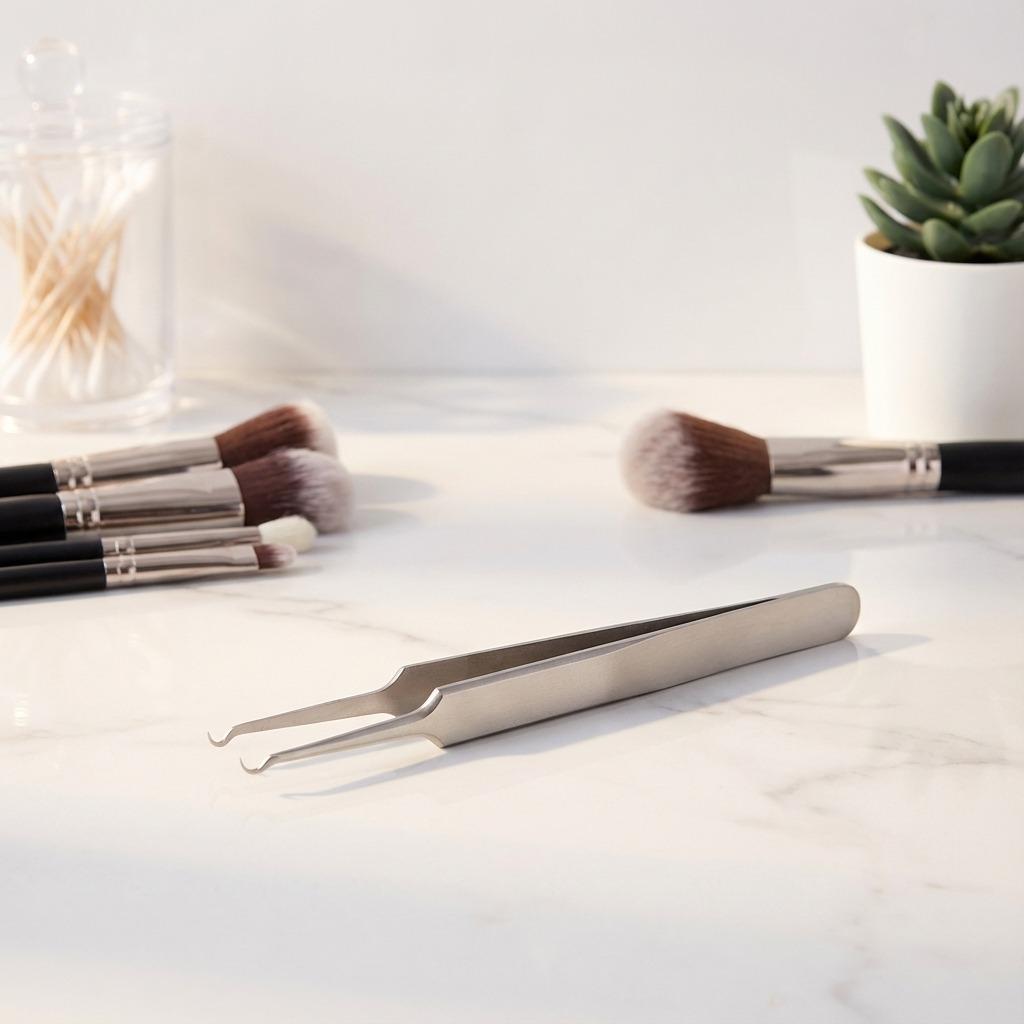
The original purpose of isolation tweezers is simple: separate one natural lash from surrounding lashes so an extension can be applied with control. In practice, this requires a tool that gives the artist a stable line of sight and a comfortable hand position. Olimor Beauty’s Curved Tip Isolation Tweezer is described with a subtle curvature for precise lash isolation and a non-slip matte finish for enhanced grip. Those two details are especially relevant for lash artists who work through long appointments.
A curved tip can help the hand approach the lash line at a more practical angle. Instead of forcing the wrist into an awkward position, the tweezer shape can support more natural movement while keeping the tip close to the target lash. The curvature should not be exaggerated unless the intended technique requires it; the best shape is the one that supports clean isolation without adding visual obstruction.
The non-slip matte finish is also worth considering. Lash procedures often involve repeated micro-movements, and a slippery surface can increase hand tension. A matte grip can help the artist maintain control without over-squeezing. When evaluating samples, do not judge only by appearance. Hold the tool in the position used during service, test the pressure needed to close the tips, and check whether the grip remains comfortable after repeated open-close movements.
OEM Tweezers: Customization Without Losing Function
Tweezers OEM services are useful for brands that want a more distinctive product line, but customization should not compromise working performance. A buyer may want to adjust the tip style, handle shape, finish, or branding, yet the core function remains the same: the tweezer must close accurately, feel controlled in the hand, and support the intended beauty application.
Olimor Beauty offers tweezers OEM manufacturing and a design your own tweezers approach for clients who need customized solutions. This can be valuable for beauty brands, lash training businesses, salon chains, and distributors developing their own product range. The most successful OEM projects usually begin with a technical brief, not only a visual concept. A good brief explains who will use the tweezers, what technique they support, what finish is preferred, and how the product will be positioned.
Useful customization questions include:
- Tip purpose: Will the tweezer be used mainly for lash isolation, pickup, brow grooming, or a broader beauty kit?
- Tip shape: Is a curved, straight, angled, or specialized profile most suitable for the intended task?
- Grip preference: Should the surface feel smooth, matte, textured, or otherwise easier to control during long use?
- Hand comfort: Does the handle shape reduce strain for artists who work several appointments per day?
- Branding area: Where can a logo or mark be placed without interfering with grip or cleaning?
- Packaging needs: Will the product be sold individually, included in a set, or used as a professional salon supply?
For a broader look at available tool categories, buyers can review Olimor beauty tool products or compare related product collections before narrowing the OEM direction.
Quality Checks to Discuss Before Ordering
Precision tweezers should be evaluated through both visual inspection and practical handling. Olimor Beauty describes quality checks from raw material selection to final assembly, which is important because small variations can affect the tool’s usefulness. Buyers should build their own approval process around measurable and practical criteria.
The following checklist can help when reviewing samples or preparing an order specification:
- Tip alignment: Close the tweezer gently and check whether the tips meet evenly. Misalignment can make isolation less accurate.
- Closing resistance: Test whether the tweezer requires too much force or feels too loose. A balanced spring feel helps reduce fatigue.
- Surface finish: Inspect for rough edges, uneven finish, or areas that may feel uncomfortable during use.
- Grip control: Hold the tweezer as a lash artist would and test whether the finish supports steady movement.
- Curvature consistency: For curved tip isolation tweezers, compare several pieces to confirm the shape is consistent.
- Cleaning practicality: Consider whether the design has unnecessary crevices that make sanitation more difficult.
- Packaging protection: Make sure the tips can be protected during transport and storage to prevent damage before use.
These checks are not complicated, but they prevent many common sourcing problems. A tweezer may look polished in a product photo yet fail in daily use if the tips are inconsistent or the hand feel is poorly balanced. Sampling and structured evaluation are especially important for private-label projects, because your customers will associate the tool’s performance with your brand.
Maintenance and Handling for Longer Tool Life
Even a well-made tweezer can be damaged by poor handling. Lash and beauty professionals should treat precision tips carefully, especially when the tool is used for isolation. Dropping the tweezer, storing it without tip protection, or using it for tasks outside its intended purpose can affect alignment.
Basic maintenance habits help preserve performance. Clean the tool according to the hygiene requirements of the working environment. Dry it properly after cleaning to avoid moisture-related issues. Store tweezers separately or with protective covers so the tips do not knock against other metal tools. If the tool begins to feel different, inspect the tip alignment before continuing to use it during client work.
For salons buying in quantity, it is useful to create a simple tool rotation system. Keep working tweezers, backup tweezers, and tools awaiting inspection in separate areas. This prevents artists from using damaged tools during appointments and helps the salon plan replenishment before shortages occur.
How to Prepare a Strong Tweezers Inquiry
A clear inquiry saves time and leads to better recommendations. Instead of asking only for “custom tweezers,” provide details that connect the product to its real use. Mention whether the order is for lash isolation, a retail beauty tool line, a salon supply program, or a mixed assortment. If you already have a preferred shape, such as a curved tip isolation tweezer, include that information early.
Helpful inquiry details include the intended application, preferred tip style, finish direction, branding requirements, packaging concept, and target market. If you are comparing several options, explain the differences you want to test. For example, you may want to compare a curved isolation shape with another tweezer style for a professional lash kit. The more specific the brief, the easier it is to discuss practical possibilities without overcomplicating the project.
Buyers who are ready to discuss a custom tweezer project can send an inquiry. If you need guidance before preparing a specification, you can also contact Olimor to clarify product direction and next steps.
Choosing Olimor Beauty for Precision Tweezers
Olimor Beauty is positioned as a tweezers supplier for buyers who need precision tools, OEM customization, and practical design support. The Curved Tip Isolation Tweezer highlights the type of details that matter in professional beauty work: subtle curvature for lash separation and a non-slip matte finish for grip. For private-label buyers, the design your own tweezers service offers a route to create tools that reflect brand preferences while staying focused on function.
The best tweezer sourcing decisions come from combining sample testing, clear specifications, and realistic expectations about how the tool will be used. Whether you are stocking a salon, building a retail range, or developing an OEM tweezer line, focus on the details that affect daily performance: tip alignment, comfort, finish, consistency, and protection during storage. With those criteria in place, it becomes much easier to choose a supplier and develop tweezers that professionals can use with confidence.
Tag: