

Choosing a Tweezers Supplier for Precision, OEM Flexibility and Custom Design
For beauty brands, salon suppliers, brow professionals and distributors, tweezers are small tools with a large impact on customer satisfaction. A pair that feels balanced, grips cleanly and keeps its alignment can become a repeat-purchase item. A pair with uneven tips, rough finishing or weak tension can quickly create returns and damage a brand’s reputation. That is why choosing the right tweezers supplier is not only a purchasing decision; it is a product-quality decision.
Olimor Beauty supports buyers looking for dependable beauty tools, including stainless steel tweezers with options for precision use and customization. Whether you are comparing suppliers for retail packaging, building a professional brow tool range or planning a private-label product, the most important questions are practical: How accurate are the tips? Which tweezer shapes suit your target user? How much customization is useful rather than cosmetic? And how should quality be checked before a product reaches the customer?
What a Precision Tweezers Supplier Should Help You Control
Precision tweezers are judged by how consistently they pick up fine hairs, small cosmetic items or delicate craft components. The tip geometry, tip alignment, grip tension and surface finish all affect performance. For beauty use, the tool must be accurate without feeling sharp or uncomfortable in the hand. For retail buyers, consistency across a production run is just as important as the feel of a single sample.
A capable tweezers supplier should make it easier to define the intended use before production details are discussed. A brow-focused product may need different tip behavior from a multipurpose grooming tweezer. A professional salon line may prioritize fatigue reduction and repeatable grip, while a consumer gift set may place more emphasis on appearance and packaging compatibility. The best sourcing discussions begin with the user and the task, not only with the shape of the tool.
When reviewing beauty tool products, buyers should look at how the tweezer sits in the hand, whether the tips meet evenly, and whether the closing force feels controlled. These points may seem simple, but they determine whether a tweezer feels premium in daily use.
Tip Shapes: Matching the Tweezer to the User’s Job
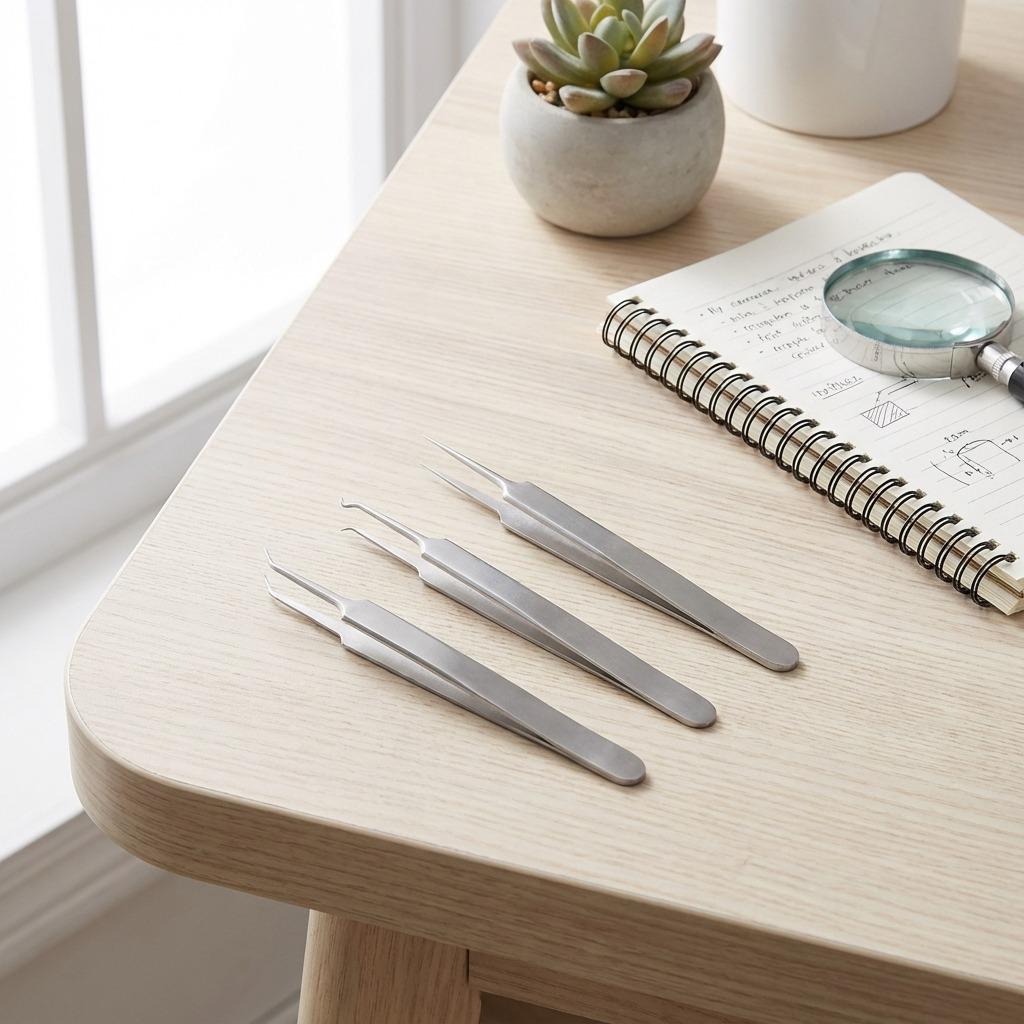
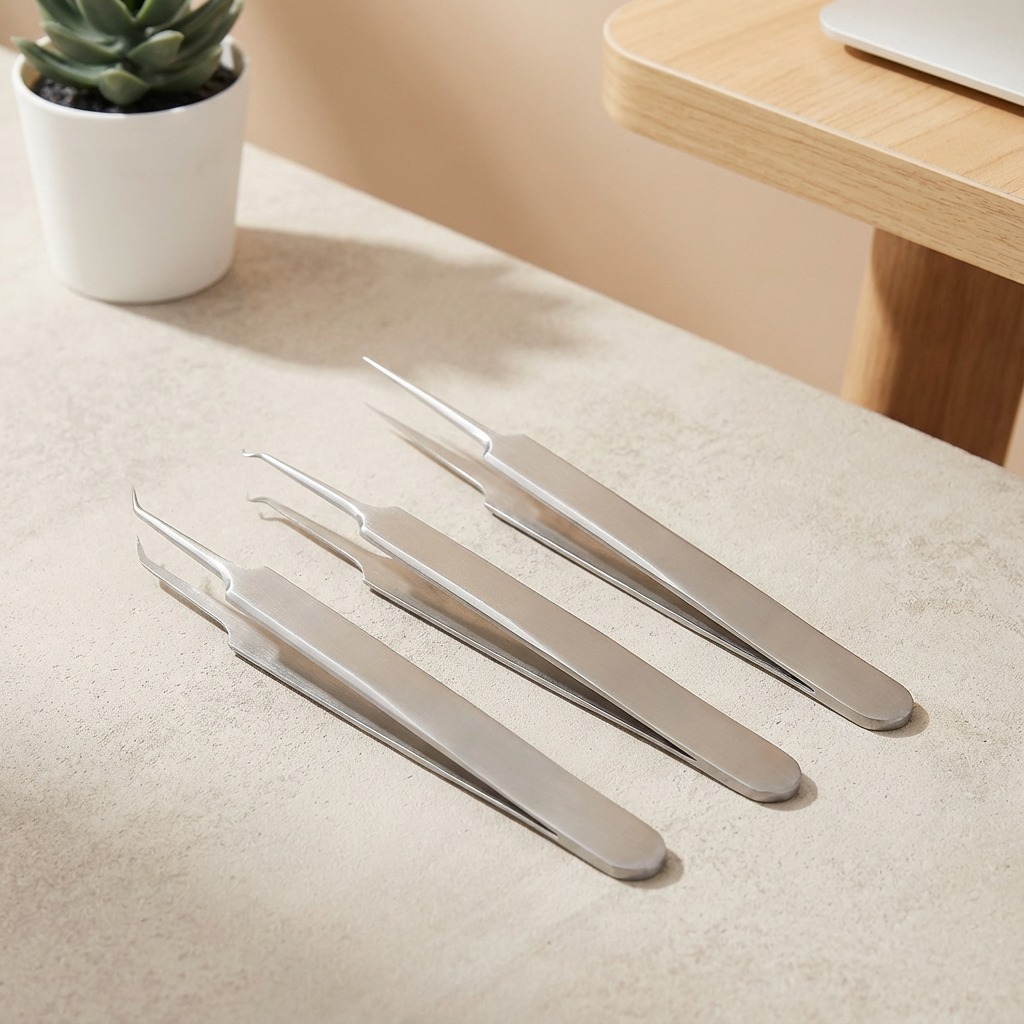
The original product direction highlights a useful precision trio: curved-tip, straight-tip and pointed-tip tweezers. Each tip style can serve a different buyer segment, so selecting the right shape should be part of the sourcing strategy rather than an afterthought.
| Tip style | Typical use case | Buyer considerations |
|---|---|---|
| Curved-tip tweezers | Detail work where the user wants visibility around the tip area | Check that the curve improves access without making alignment difficult. |
| Straight-tip tweezers | General grooming, brow maintenance and multipurpose kits | Look for even closure along the tip edge and comfortable hand control. |
| Pointed-tip tweezers | Fine, targeted pickup tasks and detailed cosmetic work | Review tip safety, finishing smoothness and packaging protection carefully. |
For many brands, one tweezer shape is not enough. A curated selection can help customers choose according to their routine, while a professional set can give brow artists or beauty technicians more control. Buyers planning several SKUs should keep the design language consistent across the line, even when the tips are different. That may include a similar handle finish, matching packaging format or shared color direction.
Why Stainless Steel and Surface Finish Matter
The supplied product information identifies stainless steel tools and a sleek satin finish. Stainless steel is widely used for beauty tools because it supports durability, cleanability and a refined appearance. However, buyers should still evaluate the execution carefully. Material choice is only one part of product quality; finishing and assembly determine how the tool feels to the customer.
A satin finish can be useful for tweezers because it gives a clean, professional look without excessive shine. It may also help the tool appear more understated in retail sets or salon kits. When reviewing samples, inspect the handle edges, the inside of the arms and the tip area. Roughness, visible burrs or inconsistent finishing can make even a good design feel low quality.
It is also worth considering how the tweezer will be stored and sold. Pointed or precision tips should be protected during transport and display. Packaging should prevent tip damage, avoid pressure that affects alignment and make the product easy for the end user to understand. If your assortment includes multiple shapes, clear labeling can reduce customer confusion and returns.
OEM Tweezers: What to Define Before Production
Tweezers OEM services are most valuable when the buyer has a clear product brief. OEM does not only mean placing a logo on an existing item. It can involve decisions about tip shape, handle style, finish, packaging compatibility and the overall user experience. For a beauty brand, these details help the product feel intentional rather than generic.
Before moving forward with an OEM tweezer project, prepare a concise specification checklist. This helps the supplier understand your target product and helps your team compare samples fairly.
- Target user: consumer grooming, professional brow service, makeup kit, travel set or craft/detail work.
- Tip style: curved, straight, pointed or a combination of multiple options.
- Grip feel: desired tension, handle width and comfort for repeated use.
- Finish direction: satin appearance, color preference if applicable, and surface consistency expectations.
- Branding area: where any logo or decoration should appear without interfering with grip.
- Packaging plan: sleeve, pouch, carded display, set box or another format suitable for your sales channel.
- Inspection focus: alignment, closing force, tip smoothness, cosmetic finish and packaging protection.
Buyers can review broader product collections to see how tweezers may fit with other beauty tools in a coordinated range. A tweezer is often purchased alongside scissors, lash tools, manicure items or grooming accessories, so the best OEM plan considers the full retail or professional assortment.
Design Your Own Tweezers Without Overcomplicating the Product
Customization is attractive because it helps a product stand apart, but more customization is not always better. A successful custom tweezer balances brand identity with functional reliability. Changing the handle style, finish or packaging can be helpful; changing the working tip without a clear reason can create performance risk. The most effective approach is to customize what matters to the user and the brand while protecting the core precision of the tool.
If you want to design your own tweezers, start with the performance requirement. For example, a brow specialist line might prioritize accurate hair removal and a grip that feels steady during long appointments. A retail travel set may prioritize compact storage, attractive finishing and clear instructions. A craft or detail-use product may need very fine points and strong tip protection. Once the use case is fixed, design decisions become easier and less subjective.
- Choose the main use case. Define whether the tweezer is for brows, general grooming, detail work or a set.
- Select the tip shape. Match curved, straight or pointed tips to the user’s expected task.
- Review hand comfort. Test how the handle feels during repeated closing, not only on first touch.
- Confirm finishing expectations. Check the satin finish, edges and visible surfaces under normal lighting.
- Plan packaging early. Make sure the package protects the tip and communicates the tweezer type clearly.
This structured process keeps customization practical. It also gives your purchasing, design and quality teams a shared standard when comparing supplier samples.
Quality Checks Buyers Should Not Skip
Because tweezers are precision tools, quality checks should focus on function as well as appearance. A tweezer can look attractive in a product photo but fail in use if the tips are misaligned or the tension is inconsistent. Olimor Beauty emphasizes internal quality controls, and buyers should also build their own approval routine before confirming a large order.
Useful checks include opening and closing each sample several times, observing whether the tips meet evenly, and testing pickup with fine material similar to the end user’s task. The handle should not twist noticeably during normal pressure. Edges should feel smooth, and the finish should appear consistent across the visible surfaces. For pointed-tip products, review whether the tip is protected in packaging and whether user guidance is clear enough for safe handling.
If you are sourcing for multiple markets or channels, also consider how customers will judge the product after purchase. Retail buyers may focus on packaging appeal and perceived value. Professional users may focus on precision and hand comfort. Online customers may judge from close-up photos and written descriptions. The product should perform well enough that the marketing claim and the actual user experience match.
How to Work With Olimor Beauty on a Tweezer Project
A strong supplier relationship begins with clear requirements. Share the intended user, preferred tip shape, design direction and packaging needs as early as possible. If you are still comparing options, outline the problems you want to solve: better tip precision, a more cohesive tool set, an OEM product for your brand or a custom tweezer that fits a specific sales channel.
Olimor Beauty can support discussions around precision tweezers, OEM services and custom design direction without requiring buyers to start from a vague concept. The curved-tip, straight-tip and pointed-tip options provide a practical foundation for different beauty and detail-use needs, while stainless steel construction and satin finishing support a professional product presentation.
For sourcing teams preparing a new tweezer range, the next step is to organize your product brief and compare it against available options. You can contact Olimor to discuss requirements or send an inquiry with your target use case, preferred styles and customization goals.
The right tweezers supplier should help you protect what matters most: precise tip performance, comfortable use, consistent finishing and a product identity that fits your brand. When those factors are defined clearly, tweezers become more than a small accessory. They become a reliable beauty tool customers can trust and repurchase.
Tag: