

How to Choose a Tweezers Supplier for Wholesale Salon Success
Choosing a tweezers supplier is a practical business decision, not only a product purchase. For salons, spas, brow studios, nail businesses and beauty distributors, tweezers are small tools that affect service quality every day. A pair that does not grip cleanly can slow down a treatment, frustrate technicians and reduce customer confidence. A pair that is comfortable, durable and consistent can support smoother services and more reliable retail or wholesale sales.
Wholesale buyers usually need more than a low unit price. They need dependable product quality, stable communication, appropriate packaging options, sensible order planning and tools that match real use cases. Olimor Beauty supplies beauty tools for professional and wholesale channels, and buyers can review broader beauty tool products or compare relevant product collections when planning a sourcing list. The goal is to select tweezers that suit your business model and to evaluate the supplier before you commit to larger volume purchasing.
Start With the Exact Use Case
Not all tweezers are used in the same way. A salon may need tools for brow shaping, stray hair removal, facial grooming or after-wax cleanup. A spa may require tweezers as part of facial service preparation. A distributor may need an assortment that can serve several customer types. Before comparing suppliers, define the actual work the tool must perform.
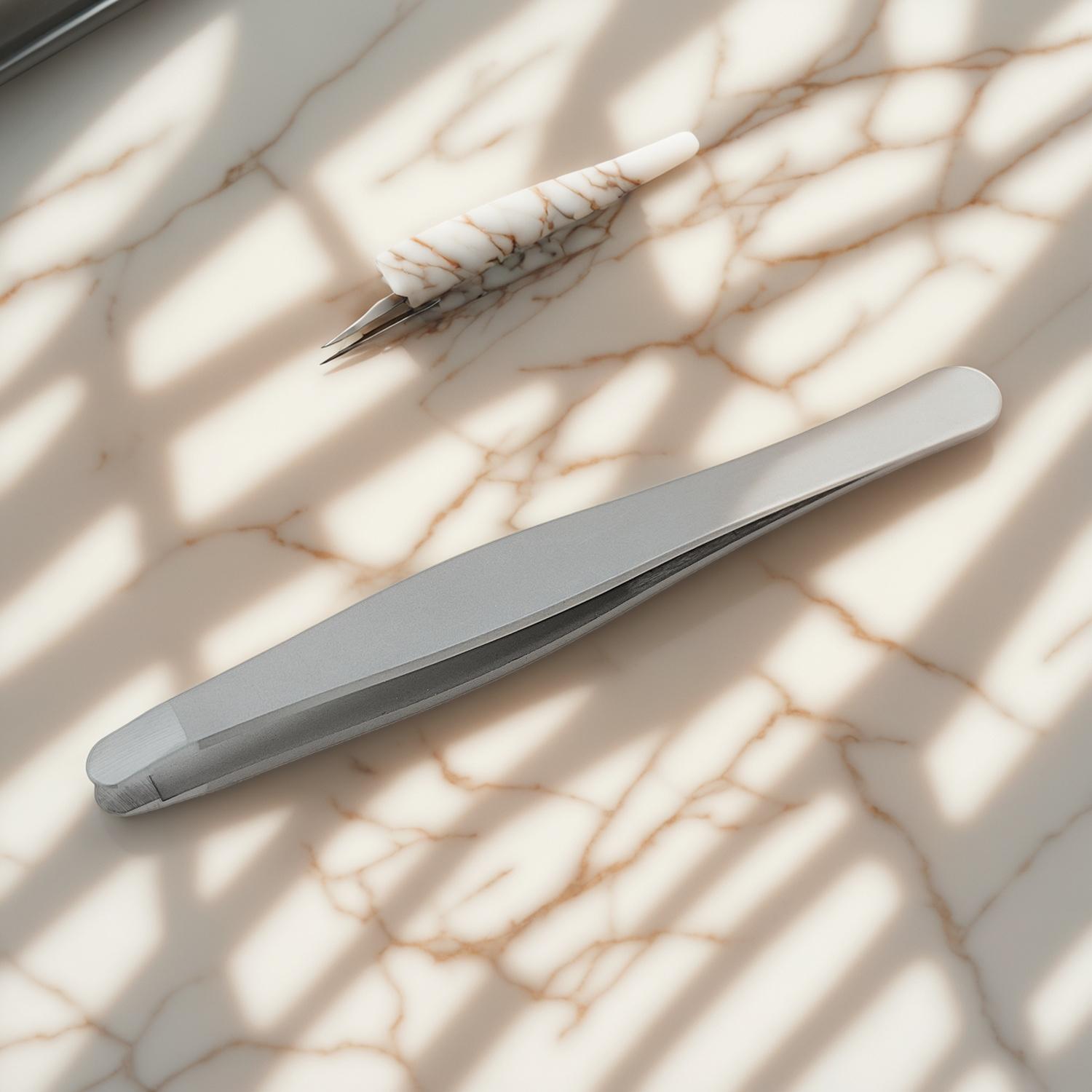
Tip shape is one of the most important selection points. Slant-tip tweezers are commonly chosen for brow grooming because the angled edge can help technicians work along the brow line. Pointed tweezers are more specialized and require careful handling. Flat or straight tips may be suitable for broader gripping tasks, depending on the product design. The best choice depends on technician habits, service menu and customer expectations.
- Brow studios: prioritize grip accuracy, tip alignment and comfortable control during repeated use.
- Salons and spas: look for reliable all-purpose tweezers that fit multiple grooming services.
- Retail beauty brands: consider appearance, packaging, perceived quality and safe consumer handling.
- Distributors: compare consistency across batches, labeling options and product range depth.
- Training schools: focus on durability, easy cleaning and predictable handling for beginners.
Quality Factors That Matter in Wholesale Tweezers
When buying tweezers in quantity, small defects become large operational problems. A single imperfect tweezer may be inconvenient; a carton of inconsistent tools can create returns, complaints and delays. Buyers should evaluate both the physical product and the supplier’s control process.
The first thing to inspect is tip alignment. The two ends should meet evenly so the tool can grip fine hairs without excessive pressure. Uneven tips can pull skin, break hairs or make the technician repeat the same movement several times. Tension is also important. Tweezers that are too stiff can cause hand fatigue during long service days. Tweezers that are too loose may not grip firmly enough.
Surface finish matters for both hygiene perception and user comfort. Edges should feel smooth, without rough burrs. The body should sit naturally in the hand and allow controlled pressure. For professional environments, the tool should also be practical to clean according to the salon’s hygiene procedures. If a supplier describes materials, finishing methods or inspection steps, compare those claims with samples rather than relying only on catalogue images.
Useful Buyer Checklist Before Placing a Wholesale Order
A structured checklist helps salons and distributors avoid decisions based only on appearance. The following table is useful when comparing sample sets from different suppliers or when reviewing a new tweezers option for your wholesale range.
| Evaluation Point | What to Check | Why It Matters |
|---|---|---|
| Tip alignment | Tips meet evenly with no visible gap or crossing | Improves grip and reduces repeated pulling |
| Grip performance | Test on fine and slightly thicker hairs or suitable test fibers | Shows whether the tweezer works across common grooming tasks |
| Hand feel | Open and close repeatedly for several minutes | Helps identify stiffness, slipping or fatigue issues |
| Finish quality | Inspect edges, surface smoothness and consistency | Supports professional presentation and safer handling |
| Packaging fit | Review sleeve, card, pouch or bulk packing needs | Protects tips and supports retail or salon storage |
| Batch consistency | Compare multiple samples, not just one piece | Reduces risk when scaling to wholesale quantities |
Assess the Supplier Beyond the Product Photo
Product photos are helpful, but they do not show long-term sourcing reliability. A good tweezers supplier should make it easier for the buyer to understand product options, packaging possibilities and ordering steps. This does not mean every buyer needs complex customization. It means communication should be clear enough to prevent misunderstandings before production or shipment.
When comparing suppliers, review how they present product information. Are tool types clearly separated? Are finishes, packaging formats or intended uses explained in a way that helps selection? Can the supplier support your assortment planning if you need tweezers alongside manicure tools or other beauty accessories? If your purchase is part of a wider procurement project, browsing Olimor Beauty’s beauty tool products can help you build a more complete sourcing list.
Wholesale buyers should also consider whether the supplier understands different sales channels. A spa ordering tools for internal use has different priorities from a distributor building a retail-ready line. Internal-use buyers may care most about durability, cleaning practicality and cost control. Retail buyers may care more about presentation, packaging protection, barcode or labeling requirements, and how the product appears on shelf or in online listings.
Packaging and Storage Are Part of Tweezer Quality
Tweezers can be damaged before they are ever used if the tips are not protected. For wholesale salon supplies, packaging is not only about visual appeal. It helps preserve the precision of the tip, keeps sets organized and reduces damage during shipping and storage. A very sharp or finely aligned tip can lose effectiveness if the tweezer is thrown loosely into a drawer or packed without protection.
Salons should plan how tools will be stored between appointments. Retailers should plan how the customer will receive the tool and whether the packaging communicates enough care instructions. Distributors should consider outer carton strength, inner packing arrangement and how easy it is to count, separate and ship units to downstream customers. Even simple packaging decisions can affect return rates and customer satisfaction.
If your business is preparing a private label or customized wholesale project, define packaging requirements early. Artwork, label placement, language requirements and protective inserts may influence timelines. Avoid approving packaging based only on digital proofs when the physical fit is important; a sample can show whether the tweezer sits securely and whether the tip remains protected.
Sampling: The Step Wholesale Buyers Should Not Skip
Samples are essential for tweezers because performance is tactile. You cannot fully judge tension, grip or comfort from a specification sheet. A practical sampling process should include more than one person when possible. Brow technicians, spa staff, retail buyers and warehouse teams may each notice different issues.
- Inspect appearance first. Look for visible defects, rough edges, inconsistent finishes or packaging damage.
- Test the grip. Try fine hair removal or an appropriate test material to check whether the tips catch cleanly.
- Use the tool repeatedly. A tweezer may feel fine for ten seconds but uncomfortable after several minutes.
- Clean and store it as you normally would. This shows whether the tool fits your daily salon workflow.
- Compare several pieces. Consistency matters more than one excellent sample.
- Record feedback. Keep notes so purchasing decisions are based on evidence, not memory.
Cost, Value and Long-Term Salon Efficiency
Price matters in wholesale purchasing, but the cheapest tweezer is not always the lowest-cost option. Poor grip can increase service time. Uncomfortable tension can reduce technician efficiency. Weak packaging can lead to damaged tips. Inconsistent batches can create customer complaints for distributors. A better sourcing decision considers the total value of the tool in daily use.
For salons, calculate value by thinking about replacement frequency, staff feedback and the quality of the service result. For distributors, consider margin together with return risk, repeat order potential and how well the tweezer fits the rest of your product range. For spas and training organizations, consistency may be more important than decorative details because many users need the same predictable handling.
It is also useful to plan reorder timing. Beauty tools are often purchased alongside other supplies, so combining tweezers with related products can simplify procurement. Buyers reviewing a broader assortment can explore Olimor Beauty product collections to identify complementary tools and keep purchasing organized.
Questions to Clarify Before You Commit
Before placing a larger wholesale order, prepare a concise list of commercial and product questions. This keeps communication efficient and helps both sides confirm expectations. You do not need to overcomplicate the process, but you should clarify points that affect product usability, packaging and delivery planning.
- Which tweezer tip shapes are available for the intended use?
- What packaging formats are suitable for salon use, retail display or bulk distribution?
- How are products checked for tip alignment, finish and general appearance?
- Can samples be reviewed before confirming a larger order?
- What information is needed for labeling, artwork or packaging discussions?
- How should the tweezers be stored to protect the tips before use or resale?
- Are there related beauty tools that can be sourced together for a more complete range?
If you are ready to compare options or discuss a wholesale project, you can contact Olimor or send an inquiry with your intended use, quantity range, packaging needs and target sales channel. Clear information at the beginning helps narrow the product selection and reduces avoidable back-and-forth.
Final Buying Advice for Salons and Distributors
A dependable tweezers supplier should help you source tools that are precise, comfortable and appropriate for your customers. The best buying process begins with use case, then moves through sample testing, packaging review and supplier communication. For salons, the right tweezers can support efficient brow and grooming services. For distributors and beauty brands, consistent wholesale tweezers can strengthen a product line and encourage repeat orders.
Focus on the details that affect real use: aligned tips, controlled tension, smooth finish, protective packaging and batch consistency. Those factors are more important than broad marketing claims. With a careful checklist and a supplier that understands professional beauty tool sourcing, tweezers can become a reliable part of your salon, spa or wholesale product offering.
Tag: