

How to Choose a Reliable Tweezers Exporter for Precision Beauty Tools
Tweezers look simple, but buyers who source them for salons, retail shelves, beauty kits, e-commerce stores, or private-label programs know that small differences can decide whether the tool performs well or disappoints the user. A dependable pair should grip fine hairs cleanly, feel stable in the hand, resist everyday wear, and arrive in packaging that protects the tip alignment. That level of consistency depends heavily on the exporter behind the product.
When comparing top tweezers exporters, the goal is not only to find an attractive price. It is to understand whether the supplier can produce a tool with repeatable precision, suitable materials, controlled finishing, and reliable inspection before shipment. Olimor Beauty focuses on beauty tools where manufacturing detail matters, including stainless steel tweezers designed for precision handling and a clean, professional appearance.
What Makes Tweezers Worth Exporting at Professional Quality?
A quality tweezer is judged first by the contact between its two tips. If the tips are uneven, too thick, poorly finished, or misaligned, the user may pinch skin, break hairs, or fail to grip fine strands. For grooming and beauty applications, tip precision is often more important than decorative appearance. A reliable exporter should understand this from the earliest stages of production.
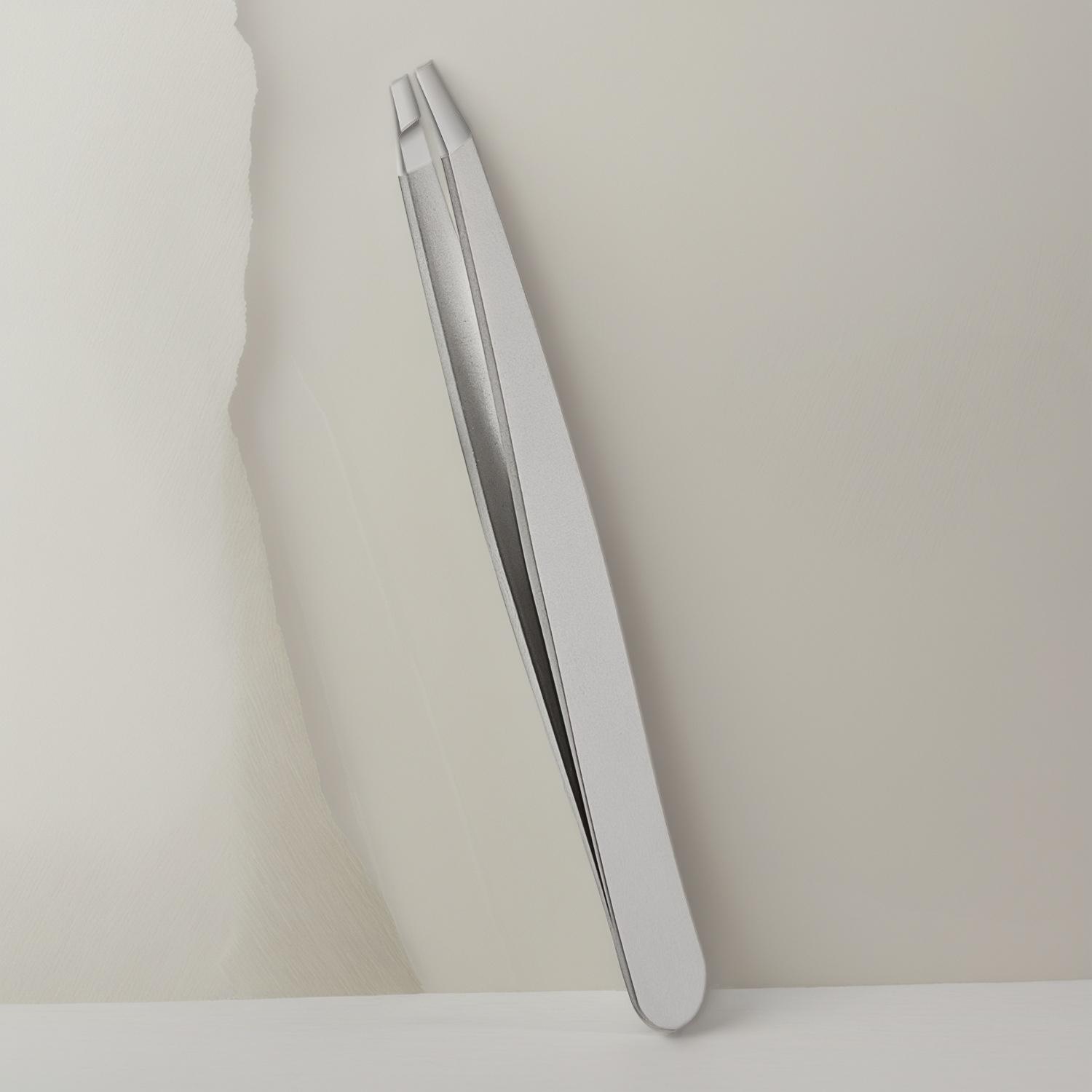
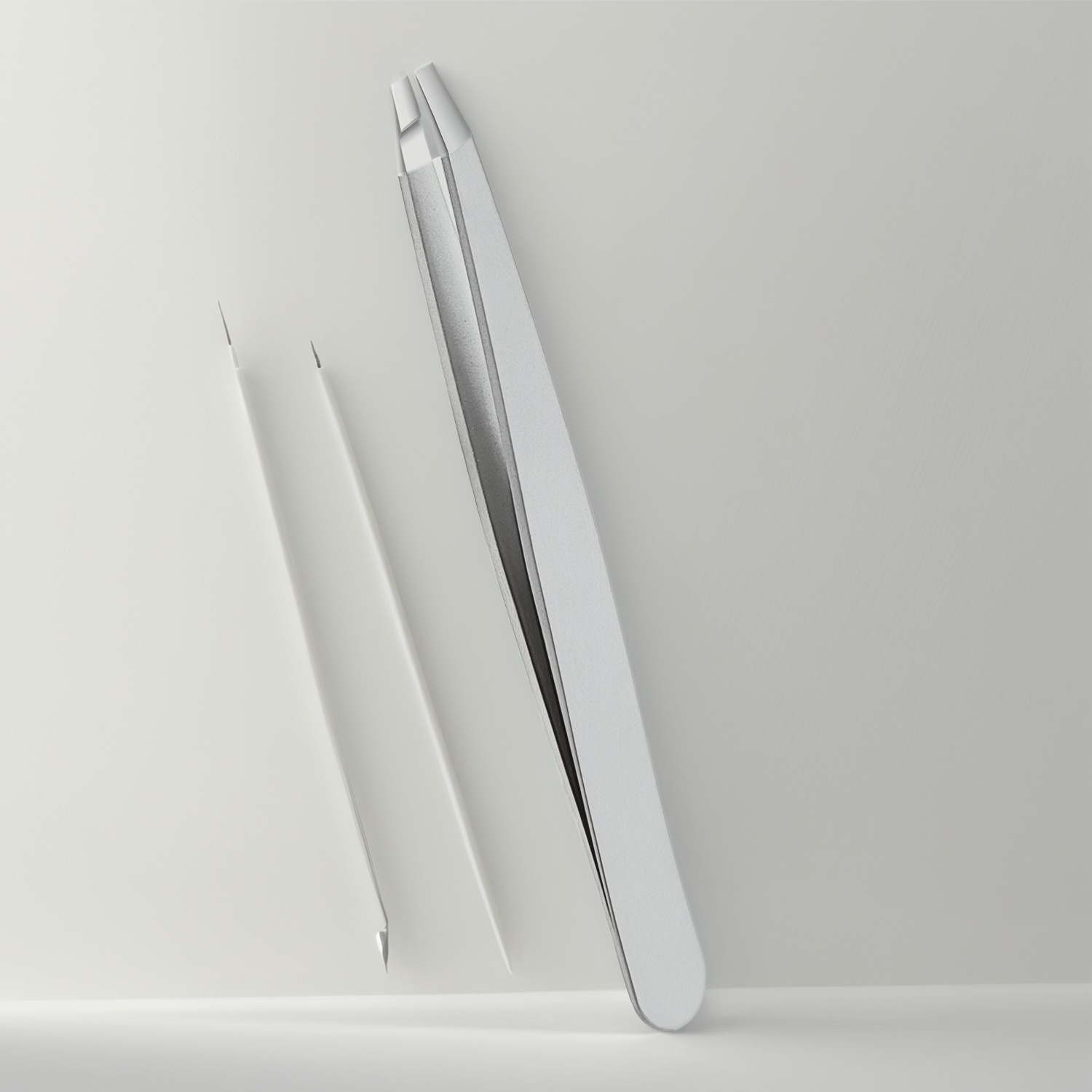
Stainless steel is commonly preferred for beauty tweezers because it offers durability and a hygienic surface when properly finished and maintained. In the supplied Olimor Beauty product information, the tweezers are described as stainless steel with a sleek brushed finish and precision-point tips. Those details matter because they connect visual quality with practical control: the brushed surface gives a refined look, while aligned tips help users grasp even fine hairs.
For buyers reviewing samples, a tweezer should close evenly from base to tip, without twisting or leaving visible gaps at the gripping point. The arms should have enough spring to reopen smoothly, but not so much resistance that the user’s fingers tire quickly. Edges should feel clean rather than sharp or rough, especially where the user holds the tool.
Core Selection Criteria for Tweezers Exporters
Before committing to a supplier, buyers should compare more than catalog photos. The best exporters can explain how they control consistency across materials, forming, alignment, finishing, inspection, and packaging. Even when specific production details are not publicly listed, the buyer can still use a structured checklist to evaluate whether the exporter is prepared for professional beauty tool sourcing.
- Tip alignment: Tips should meet cleanly and consistently, with no visible offset when closed.
- Grip performance: The tool should hold fine hairs without sliding, cutting, or requiring excessive pressure.
- Material suitability: Stainless steel is a practical choice for strength, hygiene, and long-term use in beauty routines.
- Surface finish: A brushed or polished finish should be even, clean, and free from burrs or rough patches.
- Ergonomics: The tweezer should feel stable in the fingers and allow controlled movement for detailed work.
- Packaging protection: Tips must be protected during transport because impact can ruin alignment.
- Inspection process: The exporter should have quality checks that focus on function, not only appearance.
Olimor Beauty’s emphasis on precise manufacturing steps and quality checks is important here. In the tweezers category, inspection is not a formality; it is where functional problems are found before products reach customers. Buyers comparing beauty tool products should pay close attention to how each item will be protected, handled, and checked before delivery.
How to Evaluate Samples Before Placing a Larger Order
A sample review should imitate the conditions of real use. Looking at the tweezer under good lighting is helpful, but handling it is essential. Open and close the arms repeatedly. Check whether the spring tension feels balanced. Test the tip contact on a fine hair or thin thread. Look for slipping, uneven pressure, or tip movement from side to side.
It is also useful to compare several samples from the same batch. One excellent sample is encouraging, but consistency across multiple pieces is a better sign of export readiness. If five pairs feel noticeably different, there may be variation in forming, tip grinding, or final adjustment. For retailers and beauty brands, that inconsistency can lead to returns and poor reviews even if the average product looks acceptable.
During sample review, buyers can use a simple evaluation table:
| Area to Check | What to Look For | Why It Matters |
|---|---|---|
| Tip contact | Tips meet evenly without a gap | Improves grip on fine hairs |
| Arm tension | Smooth resistance and easy reopening | Reduces hand fatigue during repeated use |
| Finish quality | Clean brushed surface, no burrs | Supports comfort and retail appearance |
| Edge feel | No rough corners where fingers rest | Makes the tool safer and easier to control |
| Packaging | Tip protection and clean presentation | Prevents damage during shipping and storage |
If the product is intended for professional kits, beauty salons, or detailed brow work, precision-point tips may be especially relevant. If it is intended for general personal grooming, comfort and easy handling may be just as important as ultra-fine tip geometry. Matching the tweezer style to the use case prevents overbuying on features that customers do not need or underbuying on features that affect satisfaction.
Why Quality Control Matters More Than Cosmetic Appearance
A visually attractive tweezer can still fail if the tips do not align. This is why quality control for tweezers must include hands-on functional testing. The most important checks are usually simple: do the tips close properly, do they grip, does the tool reopen smoothly, and is the finish clean enough for comfortable handling?
Export-focused suppliers must also consider shipping and storage. Tweezers may pass inspection at the factory but arrive damaged if the tips are not protected. For this reason, packaging should not be treated as an afterthought. A cap, sleeve, insert, or secure retail pack can help preserve the most important part of the tool. Buyers should confirm that packaging supports both presentation and protection.
Olimor Beauty’s described stainless steel tweezers include a sleek brushed finish and aligned precision-point tips. These are useful product attributes because they address both appearance and function. The brushed finish helps create a refined, professional look, while the precision-point design is intended for controlled grasping of fine hairs. For buyers building a range of grooming tools, this combination can fit well alongside other product collections where consistent quality and presentation are priorities.
Sourcing Questions That Help Separate Strong Exporters from Weak Ones
Rather than relying only on broad claims, buyers should prepare focused sourcing questions. The strongest questions are specific enough to reveal process control but flexible enough for different suppliers and product types. They should cover the complete path from raw material to shipment.
- What material is used for the tweezer body, and how is it selected for beauty tool use?
- How are the tips formed, finished, and aligned before final inspection?
- What functional checks are performed to confirm grip performance?
- How is surface finishing controlled to avoid rough edges, burrs, or inconsistent appearance?
- How are tweezers packed to protect the tips during export shipping?
- Can multiple samples from the same production run be reviewed for consistency?
- What information is available for packaging, labeling, or presentation requirements?
These questions keep the discussion practical. They also help buyers avoid vague comparisons such as “premium” or “professional” without evidence. A reliable exporter should be able to discuss function, handling, and inspection in plain language. If the project requires custom packaging or a coordinated beauty tool range, it is sensible to send an inquiry with intended use, quantity planning, packaging expectations, and target market requirements.
Maintenance Guidance Buyers Can Pass to End Users
Good sourcing does not end with shipment. Retailers and beauty brands can reduce complaints by giving clear care instructions to end users. Tweezers are precision tools, and the tips should be protected from impact. Dropping them on a hard surface can affect alignment, even if the body still looks fine.
After use, tweezers should be cleaned according to the user’s hygiene routine and dried before storage. They should not be stored loose with heavy tools that may strike or bend the tips. A protective sleeve or dedicated pouch helps maintain alignment, especially for precision-point designs. Users should also avoid using beauty tweezers as general household tools, because prying, scraping, or bending can damage the grip surface.
For professional environments, it is useful to separate personal grooming tweezers from other implements and to inspect them regularly. If the tips no longer meet cleanly or begin to slip, the tool may no longer deliver the performance customers expect. Clear maintenance advice protects the buyer’s product reputation as much as it helps the end user.
Choosing Olimor Beauty for Tweezers and Beauty Tool Sourcing
The right tweezers exporter combines material awareness, precise manufacturing, careful finishing, and practical quality checks. For buyers, the most important decision is whether the supplier understands that tweezers are judged at the tip, in the hand, and after repeated use. A stainless steel body, brushed finish, and precision-point alignment are valuable only when they are executed consistently and protected through packaging and shipment.
Olimor Beauty provides beauty tools for buyers who care about dependable product presentation and functional detail. When reviewing tweezers for your retail line, salon supply program, or grooming kit, focus on how each product performs in real hands: grip, comfort, finish, alignment, and protection. To discuss product options or sourcing needs, you can contact Olimor with your project requirements and intended market.
By taking a structured approach to supplier selection, buyers can move beyond general claims and choose tweezers that are better suited for long-term customer satisfaction. Precision may be measured in small details, but those details are exactly what make a beauty tool worth exporting.
Tag: