

Choosing Tweezers Exporters for Professional Lash, Brow and Beauty Tool Programs
For beauty professionals, tweezers are not small accessories; they are precision instruments used many times a day. A brow technician depends on clean tip alignment for hair removal. A lash artist needs controlled tension and a dependable grip for isolating and placing extensions. A distributor or private-label buyer needs consistency across cartons, not only a good sample. That is why comparing top tweezers exporters requires more than looking at a product photo or a low unit price.
Olimor Beauty works with beauty tool buyers who need reliable tweezers for professional use, including custom made tweezers and tweezers for false lash application. The right sourcing decision should consider material, tip geometry, hand feel, finishing, packaging expectations and repeat-order stability. This guide explains how salons, lash training brands, distributors and beauty retailers can evaluate tweezers before adding them to a professional range.
What Separates Professional Tweezers from Basic Beauty Accessories?
Professional tweezers are judged by control. A tool may look polished, but if the tips do not meet evenly, if the tension is too stiff, or if the grip becomes unstable during detailed work, it will frustrate trained users. Beauty professionals usually evaluate tweezers by performance during repeated tasks rather than by appearance alone.
For brow services, the tweezer must catch fine hairs without cutting them or slipping off the shaft. For lash extensions, the tool must allow careful isolation and placement close to the lash line while helping the artist maintain a steady hand. For retail beauty kits, the tweezer should feel approachable for consumers while still reflecting professional quality.
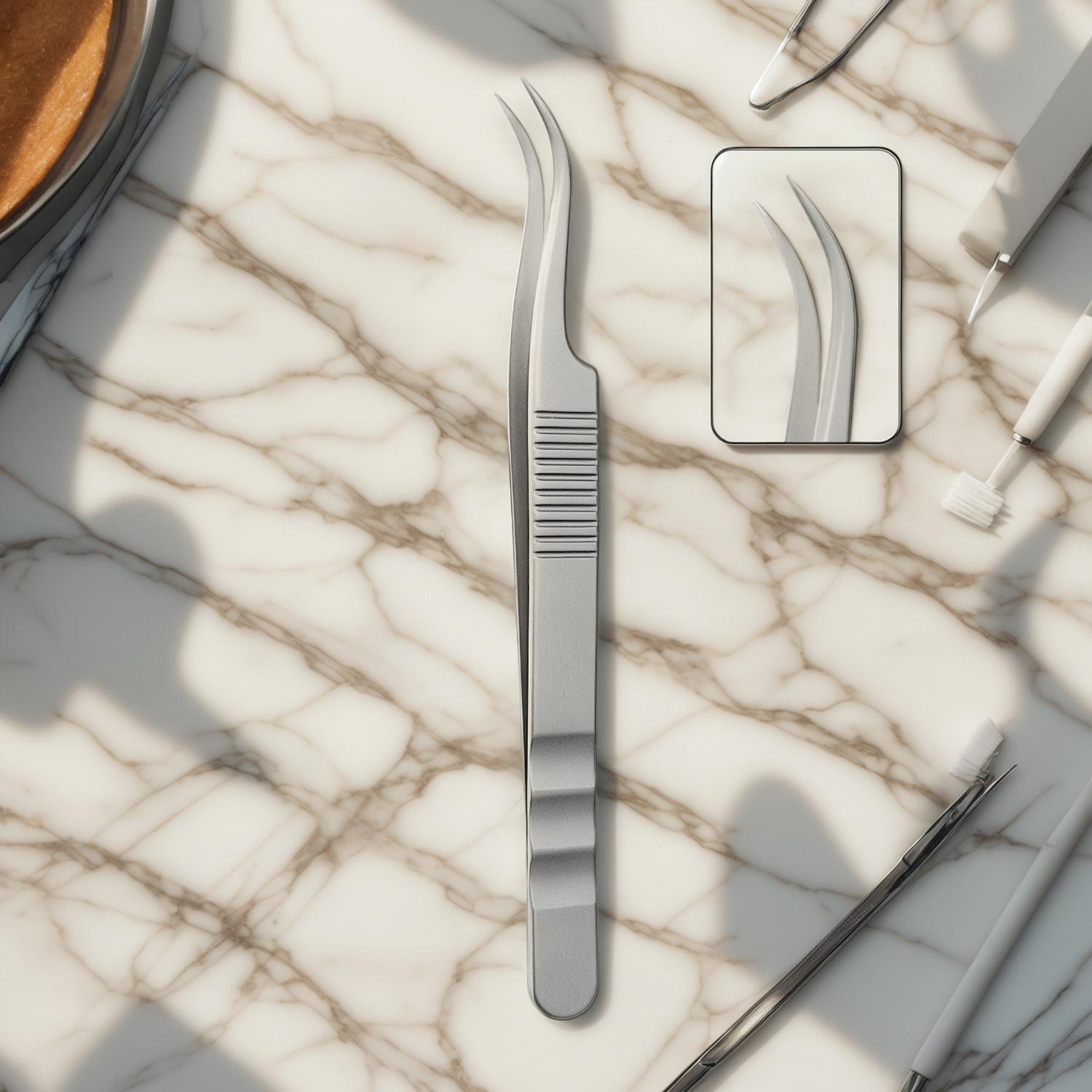
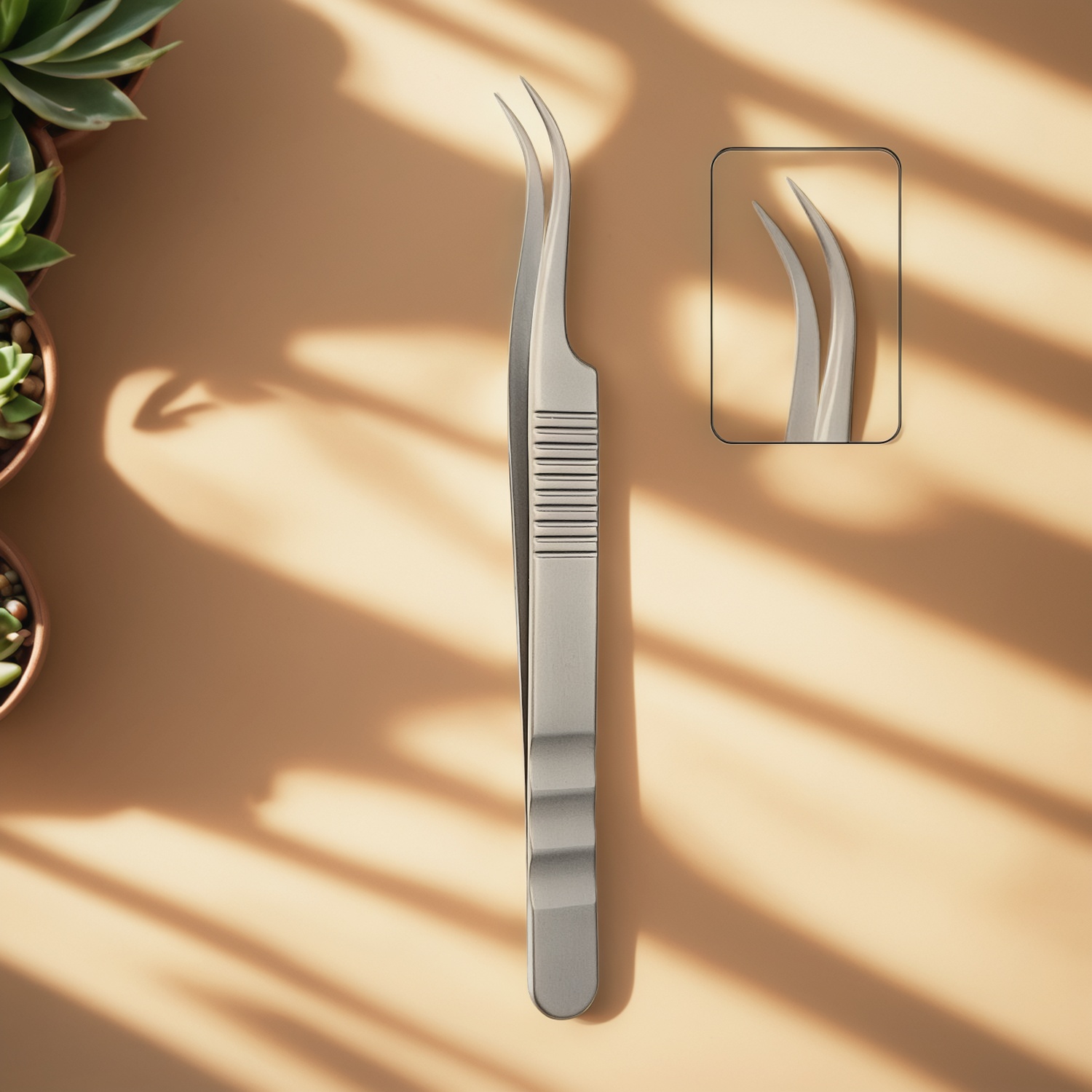
Stainless steel is commonly preferred for professional tweezers because it supports durability and resistance to rust when tools are cared for correctly. The original product focus also highlights stainless steel construction, an embossed grip and curved tips for false lash work. These are practical details because the user’s hand, the angle of the tip and the resistance of the metal all affect accuracy during service.
Key Checks When Comparing Tweezers Exporters
When reviewing potential tweezers exporters, buyers should look beyond the first quotation. A sourcing partner should be able to support product consistency, custom development discussions and realistic quality expectations. The following checklist can help teams compare options before confirming a supplier or developing a private-label line.
- Tip alignment: The two tips should meet evenly at the working edge. Poor alignment causes slipping, uneven pressure and user fatigue.
- Closing tension: The tweezer should close smoothly without requiring excessive force. Very stiff tension can tire the hand during lash or brow services.
- Tip shape: Straight, slanted, pointed or curved tips each serve different tasks. For false lash work, a gentle curve can support isolation and placement.
- Grip surface: An embossed or textured grip can help reduce slipping, especially when technicians work for long sessions.
- Edge finishing: Tips should feel clean and controlled, not rough. Finishing affects both comfort and the ability to pick up fine hairs or lash fibers.
- Material and surface care: Stainless steel supports durability, but buyers should still define care instructions, storage and cleaning expectations.
- Packaging fit: Packaging should protect the tip and match the intended sales channel, whether salon use, retail display or distributor inventory.
- Repeat-order consistency: A good sample is only useful if bulk orders maintain the same hand feel and functional standard.
Buyers building a wider beauty range can also compare tweezers alongside other beauty tool products to keep packaging, finishing and quality expectations consistent across the line.
Custom Made Tweezers: What Can Be Specified?
Custom made tweezers are useful when a brand has a clear user group or a specific service requirement. A lash training academy, for example, may want a tweezer that supports beginner control. A brow brand may prioritize a slanted tip and a comfortable hand feel. A distributor may need branded finishing and packaging that fits an existing catalog.
The supplied product information notes that custom made tweezers can involve a unique tip design, a particular ergonomic shape or branded finishing. These are meaningful customization areas because they change how the tool is used, perceived and sold. However, customization should be approached with a practical development process rather than only aesthetic preferences.
Before finalizing a custom tweezer, define the main task. Is it for brow hair removal, lash isolation, lash pickup, strip lash application, general grooming or retail kits? Then define the user. A highly experienced lash artist may prefer a more specialized angle, while a consumer retail buyer may need a more forgiving shape. Finally, define the channel. A professional tool sold to technicians may need different packaging and instructions than a tweezer included in a beauty gift set.
- Start with the use case: Identify the service or retail application before discussing appearance.
- Choose the tip direction: Select a tip shape that supports the user’s working angle and precision needs.
- Evaluate hand comfort: Consider length, curvature, grip area and closing tension for repeated use.
- Review branding carefully: Branded finishing should not interfere with grip, balance or cleaning.
- Test with real users: Have lash artists, brow technicians or target consumers handle samples before scaling the order.
For buyers comparing several categories at once, Olimor’s product collections can help structure a range around related beauty tools rather than sourcing each item in isolation.
Tweezers for False Lash Application Need Special Attention
False lash and eyelash extension services require a different level of control from ordinary grooming tasks. The work is close to the eye area, the materials are light, and the artist must place or isolate small fibers accurately. A tweezer that feels acceptable for general use may not be suitable for lash work.
The original product details highlight tweezers for false lash application with gently curved tips and an embossed grip. These features are directly relevant. A gentle curve can help the lash artist approach the lash line at a controlled angle, while the grip surface helps maintain stability. The tool must feel balanced enough that the user can make small adjustments without over-closing or losing the lash.
When selecting lash tweezers, consider whether the tool is intended for isolation, pickup, placement or strip lash handling. Many lash professionals use more than one tweezer because different tasks benefit from different working angles. For a product line, this means the buyer may want to offer a focused lash tweezer rather than presenting a general grooming tweezer as a professional lash instrument.
| Use case | Important tweezer qualities | Buyer evaluation focus |
|---|---|---|
| Brow shaping | Precise tip contact, controlled tension, comfortable grip | Ability to catch fine hairs cleanly |
| False lash application | Curved or task-specific tip, stable grip, balanced closing force | Isolation, pickup and placement control |
| Retail grooming kit | User-friendly shape, protected tips, attractive finishing | Durability, packaging and consumer ease of use |
| Private-label beauty range | Consistent finishing, branding area, repeatable performance | Sample-to-bulk consistency and packaging alignment |
Material, Grip and Finishing Decisions That Affect Daily Use
Stainless steel is a practical choice for professional tweezers because it supports long-term use and helps resist rust when handled and stored properly. Still, material alone does not guarantee a good tweezer. The feel of the tool depends on manufacturing details such as tip grinding, alignment, tension and surface finishing.
Grip is especially important for lash and brow professionals. An embossed grip can improve control by giving the fingers a more secure contact point. This is useful during long appointments or when the technician works with delicate materials. Smooth tweezers may look clean, but if the hand slips, performance suffers.
Finishing also influences brand perception. A beauty retailer may care about visual consistency across a shelf display, while a salon buyer may focus more on how the tip closes after repeated use. For custom made tweezers, any decorative or branded finishing should be evaluated alongside function. The best-looking surface is not helpful if it creates discomfort or reduces practical grip.
Maintenance Guidance for Salons, Lash Artists and Retail Buyers
Even a well-made tweezer can perform poorly if it is damaged or stored incorrectly. Buyers should include simple care guidance with professional tools, especially for salons, lash artists and retail customers who may not understand how easily precision tips can be affected by impact.
- Store tweezers with tip protection whenever possible to prevent bending or dulling.
- Keep tools dry after cleaning to support the rust-resistant benefits of stainless steel.
- Avoid dropping tweezers onto hard surfaces, as tip alignment can be affected.
- Do not use fine lash tweezers for unrelated tasks such as opening packaging or scraping residue.
- Separate professional lash tweezers from general grooming tools to protect tip accuracy.
For distributors and retailers, care instructions reduce complaints and help customers understand the tool as a precision item. For salons, correct maintenance protects service quality and reduces the need to replace tools prematurely.
How to Build a Better Tweezer Sourcing Brief
A clear sourcing brief helps exporters understand the buyer’s priorities and reduces back-and-forth during sampling. Instead of requesting only “high quality tweezers,” specify the service category, desired tip style, user level, packaging direction and branding needs. If the target market is professional lash artists, include that information early because the tweezer will be judged differently from a general consumer grooming product.
A strong brief may include: intended use, preferred tip shape, grip preference, stainless steel requirement, branding placement, packaging style, target sales channel and any sample evaluation criteria. If a buyer is unsure which configuration is best, it is still useful to define the business goal: salon supply, retail beauty kit, lash academy tool, distributor catalog or private-label line.
Olimor Beauty supports professional beauty tool sourcing discussions for buyers comparing tweezers, lash tools and related implements. To discuss a custom made tweezers project or a false lash tweezer requirement, you can send an inquiry with your intended use, quantity planning and packaging direction. For broader sourcing questions, you can also contact Olimor and outline the type of beauty tool program you are developing.
Final Takeaway for Beauty Tool Buyers
The best tweezers exporter for a professional beauty program is not simply the one with the lowest price or the most polished product image. It is the partner that understands how a small tool performs in the hand, how lash and brow tasks differ, and how custom details affect real service work. Focus on tip accuracy, controlled tension, stainless steel construction, grip security, packaging protection and repeat-order consistency.
For lash artists, brow professionals, distributors and private-label buyers, tweezers should be selected as working instruments. With a clear brief and careful sample evaluation, custom made tweezers and specialized tweezers for false lash application can become reliable products in a professional beauty range.
Tag: