

How to Choose Tweezers Exporters for Beauty Tool Sourcing
For beauty brands, distributors, salons, and private-label buyers, tweezers are small tools with a large impact on customer satisfaction. A tweezer that feels unstable, loses alignment, pinches skin, or arrives with inconsistent finishing can quickly damage a product line’s reputation. That is why many buyers search for reliable tweezers exporters rather than simply choosing the lowest-cost offer.
Olimor Beauty focuses on B2B beauty supplies and tweezers ODM support for companies that need consistent tools for retail, professional grooming, and branded beauty assortments. When evaluating an export partner, the goal is not only to find a supplier that can ship tweezers. The stronger goal is to build a sourcing process that protects precision, usability, packaging presentation, and repeat order consistency.

Why Tweezers Require Careful Supplier Evaluation
Tweezers appear simple, but their performance depends on several small details working together. The arms must have the right tension. The tips must meet cleanly. The edge finish must be comfortable against the skin. The surface should be smooth enough for daily handling and attractive enough for retail presentation. Even packaging matters, because tip protection during transport can influence the condition of the tool when it reaches the end user.
For B2B buyers, these details become more important at scale. A single sample may look acceptable, but a full production order must remain consistent across many units. This is where experienced tweezers exporters add value. They should understand production inspection, export packing, buyer communication, and the difference between a generic tool and one that supports a brand’s positioning.
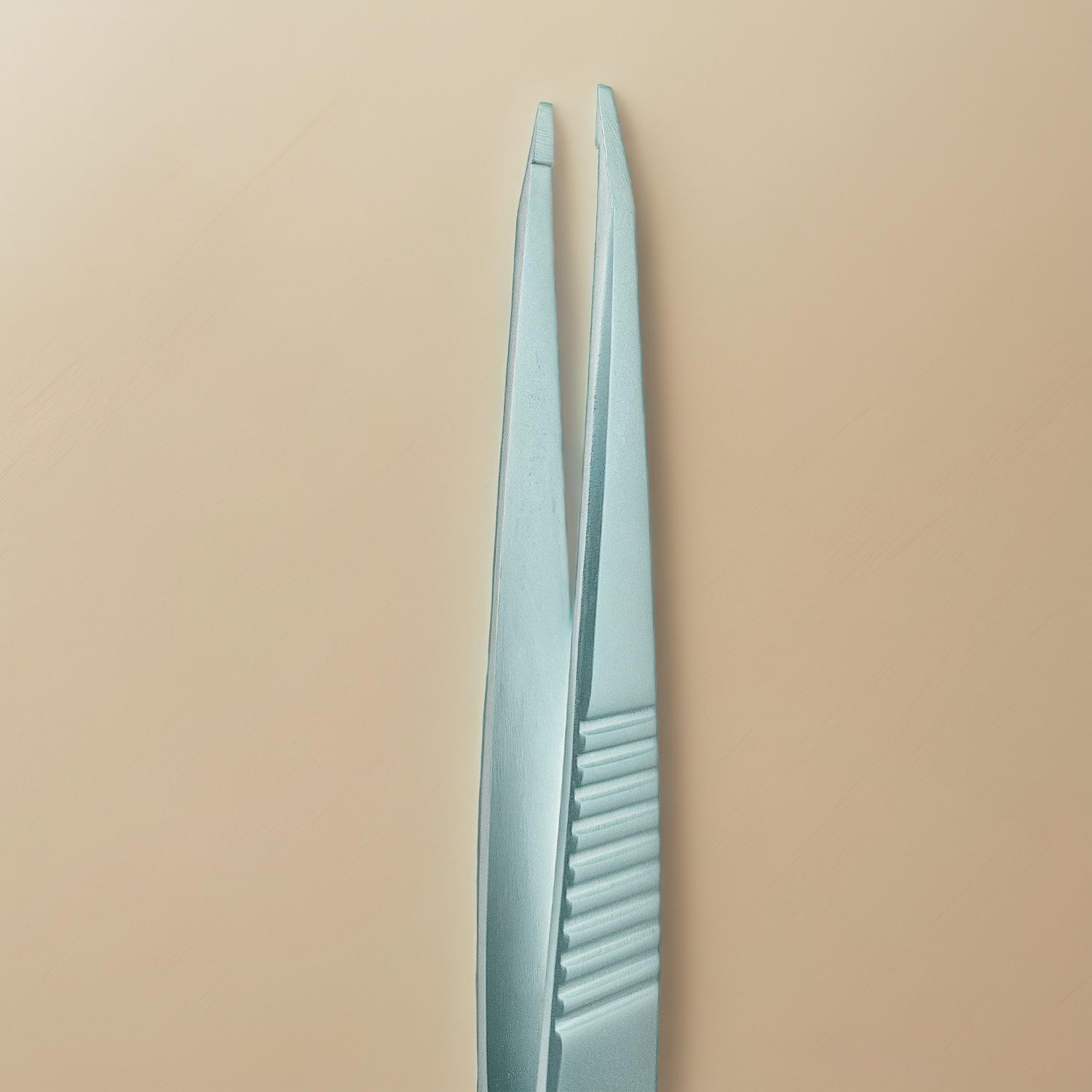
Olimor Beauty highlights stainless steel tweezers with ergonomically designed handles and perfectly slanted tips. Those features are useful for both professional and consumer grooming because they support control, precision, and repeatable use. When comparing suppliers, buyers should examine whether these performance details are managed intentionally or treated as afterthoughts.
Key Quality Points to Check Before Ordering
A practical sourcing decision should begin with the user experience. A customer usually judges tweezers within seconds: how they feel in the hand, whether the tips align, and whether the tweezer can grip fine hair without excessive pressure. Before approving a bulk order, buyers should inspect samples and define expectations clearly.
- Tip alignment: The two tips should meet evenly. Uneven contact can reduce gripping accuracy and lead to frustration.
- Tip shape: Slanted tips are widely used for brow shaping and general grooming because they allow a controlled angle of contact.
- Grip tension: The tweezer should close with steady resistance. Too loose may feel weak; too stiff may fatigue the hand.
- Handle comfort: Ergonomic handle design helps users maintain control during detailed grooming work.
- Surface finishing: Edges should feel smooth, with no rough spots that affect handling or appearance.
- Material suitability: Stainless steel is commonly valued in beauty tools for durability and a clean professional appearance.
- Packaging protection: Tips should be protected from bending, scratching, or misalignment during storage and transport.
These checks are not only for premium beauty brands. They also matter for distributors and promotional buyers because inconsistent tools can increase complaints, returns, and rework. A clear checklist allows both buyer and exporter to discuss quality in measurable terms instead of relying on broad words such as “good” or “premium.”
What Makes a Strong B2B Tweezers Exporter
A dependable exporter should support more than production. B2B beauty sourcing involves communication, documentation, sample review, packaging decisions, and order follow-up. Buyers should look for a partner that can explain its process, respond clearly to product questions, and help prevent misunderstandings before production begins.
Olimor Beauty positions itself as a partner for B2B beauty supplies, with attention to quality assurance from raw stainless steel inspection through final packaging. For buyers, this kind of staged thinking is valuable because problems can occur at many points: incoming materials, shaping, polishing, tip alignment, surface treatment, assembly, and packing. A supplier that only inspects at the end may find issues too late, while a supplier with process awareness can reduce risk earlier.
When comparing tweezers exporters, consider these selection factors:
- Sample accuracy: The sample should reflect the intended production standard, not a one-off piece that cannot be repeated.
- Quality control language: The supplier should be able to discuss inspection points such as alignment, finishing, and packaging condition.
- Export experience: Beauty tool orders often require careful packing and clear communication for international buyers.
- Product focus: A supplier experienced with beauty tools is more likely to understand details that affect grooming performance.
- Brand support: If the buyer needs private-label packaging or ODM development, the supplier should be comfortable with structured customization discussions.
For buyers building a wider assortment, reviewing beauty tool products can also help compare how tweezers fit alongside related grooming tools. This is useful when creating a coordinated retail range, salon kit, or distributor catalog.
Using Tweezers ODM to Build a Distinct Product Line
Tweezers ODM is especially relevant for brands that do not want to compete only on a standard catalog item. ODM support can involve design direction, material choices, handle shape, finish preferences, color direction, packaging format, and overall presentation. The purpose is to create a product that matches the brand’s customer, price segment, and retail channel.
Before starting an ODM discussion, buyers should prepare a product brief. A clear brief does not need to be complicated, but it should answer the essential commercial and functional questions. Who will use the tweezers: brow artists, retail consumers, travel kit buyers, or gift set customers? Will the tool be sold individually or as part of a set? Is the priority precision plucking, daily grooming, shelf appeal, or brand consistency across multiple tools?
A useful ODM brief may include:
- Target user and sales channel, such as salon, retail, e-commerce, or distributor supply.
- Preferred tweezer style, including slanted tip direction if known.
- Desired handle feel, such as slim, broad, textured, or smooth.
- Packaging goal, such as simple protection, retail display, gift-ready presentation, or private-label carton.
- Brand elements that must appear on the product or packaging.
- Reference samples or competitor benchmarks for comfort, finish, or positioning.
- Inspection priorities that matter most to the buyer’s customers.
ODM should not be rushed. A well-developed tweezer can become a repeat product in a brand’s lineup, while a poorly defined design can create avoidable sampling rounds. If your team is preparing a custom project, you can send an inquiry with your requirements and intended use case.
Packaging, Handling, and Export Readiness
Packaging is often underestimated in tweezer sourcing. The tips are the most performance-sensitive part of the tool, so protection during shipment matters. Even a well-made tweezer can disappoint if it arrives with damaged tips or scratched surfaces. Buyers should review both individual packaging and outer carton protection before confirming an order.
For retail brands, packaging also communicates product value. A clean package, secure placement, and clear product information can make the tool easier to present online or in stores. For salon and distributor buyers, packaging may be more focused on efficiency, protection, and easy inventory handling. The right choice depends on the channel.
Export readiness also includes labeling discussions, carton organization, and consistency between approved samples and shipped goods. Buyers should maintain written approval records for product appearance, packaging layout, and any custom details. This reduces ambiguity and gives both sides a clear reference for inspection.
Questions Buyers Should Answer Before Choosing a Supplier
The best sourcing results come from aligning product expectations with business needs. Before selecting tweezers exporters, buyers should clarify their own priorities. A premium brow-focused brand may care most about precision and hand feel. A distributor may prioritize consistent availability and packaging durability. A gift set brand may focus on appearance, surface finish, and how the tweezer coordinates with other tools.
| Buying priority | What to evaluate | Why it matters |
|---|---|---|
| Precision grooming | Tip alignment, slanted tip quality, grip tension | Determines how accurately the user can grasp fine hair |
| Retail presentation | Surface finish, packaging design, product cleanliness | Influences first impression and perceived value |
| Repeat B2B supply | Inspection process, communication, order consistency | Helps reduce variation between shipments |
| Private-label development | ODM capability, branding options, packaging coordination | Supports a product that fits the buyer’s market position |
| Transport protection | Tip cover, inner packing, carton arrangement | Reduces risk of damage before the product reaches customers |
This table can be used as a starting point for internal sourcing meetings. It helps purchasing, product development, and sales teams agree on what “quality” means for the specific order.
Working With Olimor Beauty for Tweezers Sourcing
Olimor Beauty supports beauty brands and B2B buyers seeking reliable tweezers, beauty tool sourcing, and ODM cooperation. The focus is on practical product performance: stainless steel construction, ergonomic handle design, slanted tips, and attention to quality assurance throughout production and packaging. For buyers, that means the conversation can move beyond price alone and into the details that shape customer satisfaction.
If you are comparing tweezers exporters, begin with samples, define your inspection criteria, and confirm how the supplier handles customization and packaging. For broader planning, explore Olimor product collections to consider how tweezers may fit into a complete beauty tool range. If you need help preparing a B2B order or custom tweezer brief, you can also contact Olimor to discuss the next sourcing step.
A well-chosen tweezer supplier should help your brand deliver tools that feel precise, look consistent, and arrive ready for the market. With a clear evaluation process and a manufacturing partner that understands beauty tool details, tweezers can become a dependable part of a professional, retail, or private-label product assortment.
Tag: