

How to Compare Top Tweezers Manufacturers in the Beauty Industry
Searching for the top 10 tweezers manufacturers is usually not about finding a simple ranking. For beauty brands, lash studios, brow professionals and distributors, the real goal is to identify a manufacturing partner that can deliver consistent tip alignment, comfortable handling, suitable customization and dependable quality control. Tweezers are small tools, but they directly affect speed, accuracy and client comfort in services such as lash extensions, eyebrow shaping, detailed grooming and beauty retail kits.
A good manufacturer should help you match the tweezer design to the job. Lash isolation, fan creation, brow hair removal and fine detailing all require different tip shapes, tension levels and grip comfort. This guide explains what to look for when comparing suppliers, how OEM custom tweezers differ from basic private-label options, and which questions can help you make a safer sourcing decision.
What Makes a Tweezers Manufacturer Worth Shortlisting?
The strongest manufacturers are not defined only by catalog size. They are usually the ones that can repeatedly produce tools with accurate tips, clean finishing and stable performance from batch to batch. When you are comparing suppliers, focus on the practical features that affect daily use rather than broad claims.
- Tip precision: The two tips should meet evenly without visible gaps, twisting or excessive pressure. Poorly aligned tips can slip, pinch unevenly or damage delicate lash work.
- Appropriate tension: Tension should suit the application. Lash artists often need controlled closing force for long service sessions, while brow tweezers may require firmer grip for shorter, targeted removal.
- Surface finishing: Edges should feel smooth, and the handle should not have rough spots that irritate fingers during repeated use.
- Material choice: Stainless steel is commonly used in professional beauty tools because it can support durability and rust resistance when properly processed and maintained.
- Inspection process: A supplier should be able to explain how tools are checked from raw material handling through final packaging, especially for tip alignment and cosmetic finish.
Olimor Beauty works in the beauty tool field with OEM custom tweezers and personalized tweezers options for professional and brand buyers. If you are comparing beauty tool categories beyond tweezers, you can also review Olimor beauty tool products to understand how different tools may fit into a broader retail or salon range.
Choosing the Right Tweezer Shape for Lash and Brow Work
One reason beauty buyers search for leading tweezers manufacturers is that shape selection can be confusing. A tool that performs well for eyebrow grooming may not be the right option for lash extension work. Before discussing branding, packaging or quantity planning, confirm which tool shapes your audience actually needs.
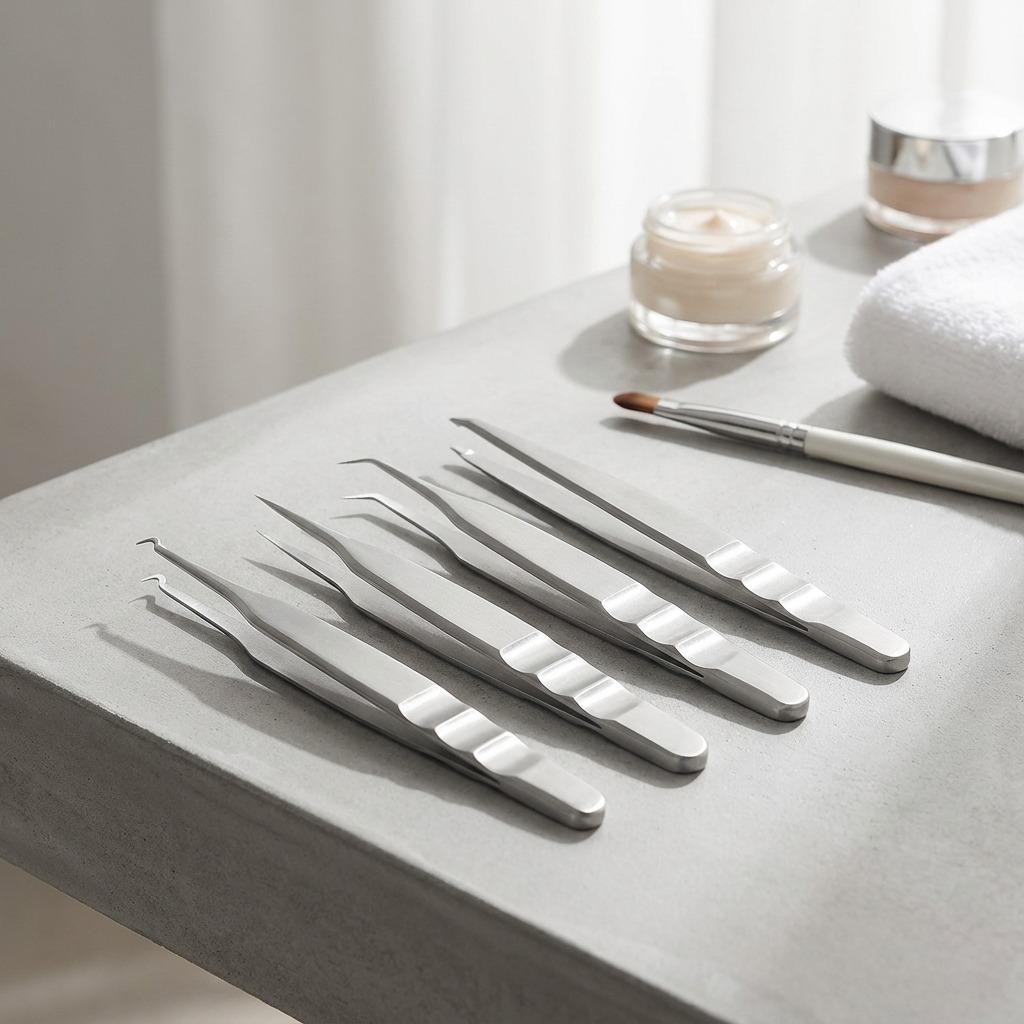
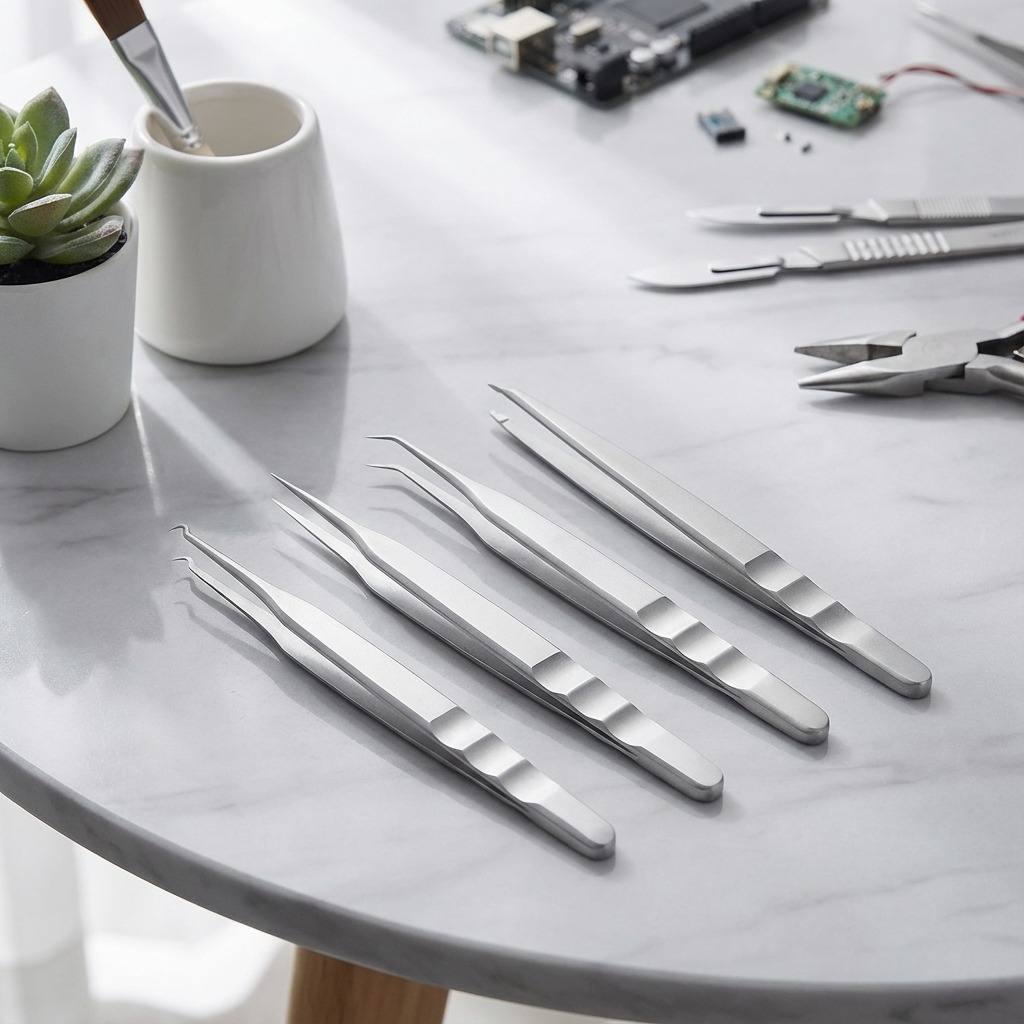
For lash extension professionals, curved tweezers can help with isolation because the angle improves visibility around the lash line. Straight tweezers are often used for picking up, separating or arranging lashes, depending on the artist’s technique. Angled tweezers can support delicate pick-ups, while precision-tip designs are helpful for fine adjustments and detailed placement. The original Olimor Beauty Premium Eyelash Extension Tweezers Set includes four versatile tools: a curved tweezer for lash isolation, a straight one for fan assembly, an angled version for delicate pick-ups and a precision tip for detailing.
For brow grooming, the selection criteria may be different. Slanted tips are popular because they can grip individual hairs cleanly, while pointed tips suit very fine or short hairs when used by experienced hands. A manufacturer that understands beauty applications should be able to discuss use cases clearly instead of offering one generic tweezer for every purpose.
OEM Custom Tweezers: What Can Be Customized?
OEM custom tweezers are useful for beauty brands that want a tool line with a specific look, handling feel or retail positioning. Customization can range from simple branding to more detailed product development. However, every customization decision should support function first. A beautiful tool that slips during lash work or feels tiring after repeated use will not build long-term loyalty.
Common customization areas include handle finish, color treatment, logo placement, packaging style, tweezer angle, tip style and set composition. Personalized tweezers may also include engraved handles or selected shapes for professional kits. These choices can make sense for lash academies, salon retail, influencer beauty lines and distributors building a complete accessory range.
When planning an OEM project, prepare clear references. Define whether the tool is for classic lash extensions, volume fans, brow grooming, professional training kits or general beauty retail. Share target users, expected service scenarios and packaging requirements. If you need to discuss a specific tweezer project, you can send an inquiry with your intended application and customization goals.
Quality Checks Buyers Should Not Skip
Tweezers look simple, which can lead buyers to underestimate inspection. In reality, small variations at the tip can create major performance differences. A structured inspection checklist helps both brand owners and purchasing teams compare samples more objectively.
| Check Point | Why It Matters | What to Look For |
|---|---|---|
| Tip closure | Determines grip accuracy | Tips meet evenly from the correct contact point without gaps |
| Tip symmetry | Affects control and comfort | No obvious twisting, bending or uneven grinding |
| Hand tension | Impacts fatigue during services | Firm enough to grip, not so stiff that it strains fingers |
| Surface finish | Supports comfort and retail appearance | Smooth edges, clean handle finish and no visible burrs |
| Packaging protection | Prevents damage before use | Tips are protected so alignment is not affected in transit |
For professional lash users, sample testing should include real service movements, not just visual inspection. Practice isolating lashes, picking up fans and releasing product at the correct moment. For brow tools, test grip on different hair thicknesses and check whether the tips cut, slip or pull cleanly. Document the results so supplier comparisons are based on evidence rather than first impressions.
Manufacturing and Sourcing Questions for Beauty Brands
Before selecting a manufacturer, buyers should ask questions that reveal process control and communication quality. This is especially important for OEM custom tweezers because a small design change can affect balance, tension or tip behavior.
- Which tweezer shapes are available for my intended use? This helps confirm whether the supplier understands lash, brow or multi-use applications.
- How are tips aligned and inspected? Look for a clear explanation rather than a vague promise of quality.
- What material and finish options are available? Confirm options without assuming a specific grade or treatment unless it is documented.
- Can samples be tested before production decisions? Samples help verify hand feel, closing force and tip contact.
- How will personalized branding be applied? Logo placement, engraving or printing should not interfere with grip or comfort.
- How are products protected during packaging? Fine tips need protection to prevent misalignment before the tool reaches the user.
These questions are not only for large buyers. Independent lash educators, boutique beauty brands and salon chains can all benefit from a structured sourcing process. If your business is comparing multiple tool categories, Olimor product collections can help you view related beauty tools together and plan a more coherent product range.
Care and Maintenance That Protects Tweezer Performance
Even well-made tweezers need proper care. Misuse, drops and poor storage can reduce accuracy faster than normal wear. For professional environments, maintenance should be part of the training process because several artists may share the same tools or work quickly between appointments.
After use, remove visible residue according to your salon hygiene procedures and local requirements. Avoid tossing tweezers into drawers where the tips can strike harder objects. Use a protective cap or dedicated case when storing or transporting tools. Do not use fine lash tweezers for unrelated tasks such as opening packaging, scraping adhesive or handling hard materials. Those actions can deform the tip and reduce precision.
If a tweezer begins to slip, first check whether residue is affecting the tip contact. If the tool has been dropped or the tips no longer meet evenly, it may need replacement. For professionals, keeping backup tweezers in the same preferred shape reduces service disruption and helps maintain consistent technique.
How to Build a Better Tweezer Line
A strong tweezer range does not need to include every possible shape. It should solve specific user problems. For a lash-focused line, a compact set with isolation, pick-up and detailing options may be more useful than a wide assortment with unclear differences. For brow retail, slanted and precision options may cover the most common grooming needs. For training kits, consistency across tools is especially important because students learn hand positioning and pressure control from repeated use.
Olimor Beauty positions tweezers as professional beauty tools where precision, durability and user-friendly design matter. The best sourcing decision is made by matching tool shape, finish, branding and packaging to the end user’s technique and expectations. If you are developing an OEM custom tweezers project or comparing personalized tweezers for a professional kit, prepare your use case, test samples carefully and choose a manufacturer that can discuss both design and practical performance. For project-specific support, you can contact Olimor and outline your beauty tool requirements.
Tag: