

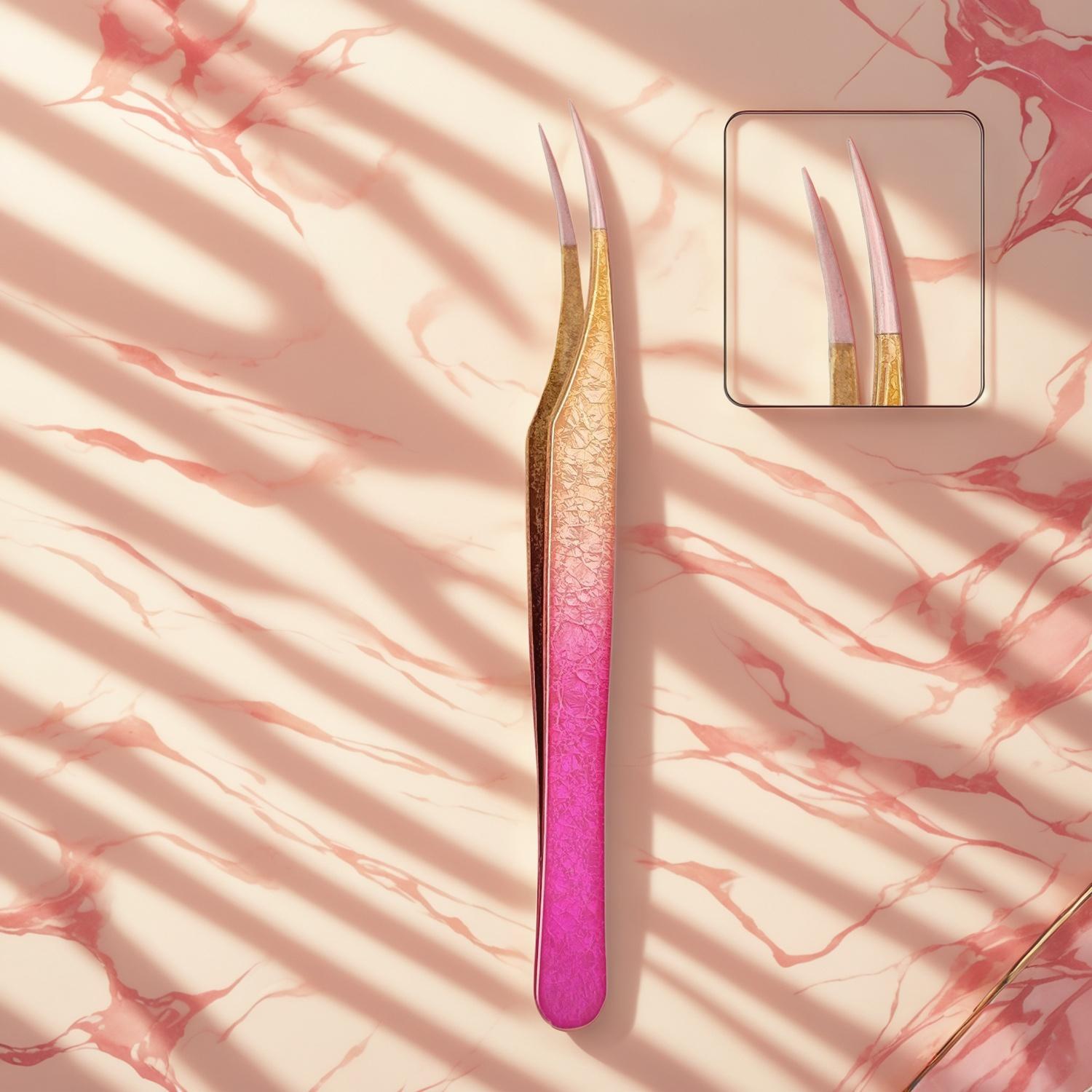
Two-Tone Precision Tweezers for False Lash Application
False lashes can look clean and natural only when placement is controlled. Adhesive timing, lash band shape and eye shape all matter, but the tool in your hand often decides whether the lash lands neatly on the lash line or shifts out of position. A well-made pair of tweezers for false lash application gives you the reach, visibility and grip needed to place strip lashes, half lashes or small lash sections with less hand tension.
Olimor Beauty’s Two-Tone Precision Tweezers are designed for this kind of careful beauty work. The tool combines finely tapered tips, a textured handle, stainless steel construction and a magenta-to-gold gradient finish. For beauty retailers, lash artists, makeup kits and private-label buyers evaluating beauty tool products, the important question is not only how the tweezers look, but how consistently they help users pick up, position and release a delicate lash band.

What Makes Tweezers Suitable for False Lashes?
Not every tweezer shape is ideal for lashes. General grooming tweezers may grip hair well, but false lash application requires a different type of control. The tips need to hold a lash band securely without crushing it, and the user must be able to see the lash line while moving close to the eye. Finely tapered tips are especially useful because they allow accurate placement near the inner and outer corners, where fingers often block the view.
Stability is equally important. If the arms flex unevenly or the tips do not meet cleanly, the lash can twist at the moment of application. This is frustrating for home users and inefficient for makeup professionals. A textured handle helps reduce slipping, especially when hands have moisturizer, primer or makeup residue on them. The goal is not to squeeze harder; it is to hold the lash with enough control that the hand can stay relaxed.
When comparing false lash tweezers, look for a balance of precision and comfort. Very sharp or overly narrow tips may feel intimidating near the eye, while bulky tips can make detailed placement difficult. The best choice is a tool that lets the user approach the lash line from a comfortable angle, make small adjustments and release the lash smoothly once the band is seated.
Two-Tone Precision Tweezers: Key Features for Beauty Kits
The Two-Tone Precision Tweezers from Olimor Beauty bring together practical construction and a distinctive appearance. The magenta-to-gold gradient finish makes the tool easy to identify in a makeup station, salon drawer or retail display. Color is not a substitute for performance, but in beauty retail it can help a product stand out without requiring a complicated explanation.
The stainless steel construction supports durability for repeated use, while the textured handle improves grip during close-up tasks. For false lash placement, that grip matters because the tool is often used in short, controlled movements rather than broad motions. The finely tapered tips are suited to picking up a lash band, positioning it along the natural lash line and making small corner corrections after the adhesive begins to set.
These tweezers can also support other delicate grooming tasks, including eyebrow shaping, as long as the tool is cleaned appropriately between uses. This multi-use value is helpful for consumers who want one reliable precision tool in a personal beauty kit and for retailers building practical accessory assortments.
How to Use Precision Tweezers for Cleaner Lash Placement
A careful application method protects both the lash band and the eye area. The following steps are useful for strip lashes and can be adapted for half lashes or segmented styles.
- Check the lash length first. Before adhesive is applied, place the lash gently along the lash line to see whether the outer edge needs trimming. Trim from the outer end if adjustment is needed.
- Apply adhesive in a thin line. Too much glue makes the band slide. A moderate, even layer gives better control.
- Wait for tackiness. Most lash placement problems happen when adhesive is still too wet. Let it become tacky so the band grips faster when positioned.
- Hold the lash near the center. Use the tapered tips to grip the band, not the loose fibers. Holding the center helps you place the middle first, then adjust each corner.
- Place close to the natural lash line. Look slightly downward into a mirror and set the band as close as comfortable to the natural lashes.
- Secure the corners. Use the tweezer tips to guide the inner and outer corners into place. Avoid poking or pressing directly into the eyelid.
- Release gently. Once the band is seated, open the tweezers slowly so the lash stays in position.
For beginners, it helps to practice without adhesive first. The purpose is to learn the angle and pressure needed to hold the lash band. Once the movement feels familiar, adhesive application becomes easier and less rushed.
Selection Criteria for Retailers, Lash Artists and Bulk Buyers
When sourcing lash tweezers, buyers should evaluate more than the finish. A beauty tool may look attractive online but fail in daily use if the tips are inconsistent or the grip feels unstable. Whether you are adding accessories to a retail range, building a salon supply list or comparing options across product collections, review the tool from both the user and quality-control perspective.
- Tip alignment: The two tips should meet evenly so they can hold a lash band without slipping sideways.
- Tip finish: Edges should feel smooth enough for beauty use while still offering precise control.
- Grip area: A textured handle can improve handling, especially in professional environments where tools are used repeatedly.
- Material choice: Stainless steel construction is preferred for durability and routine cleaning.
- Hand comfort: The tweezer arms should provide control without requiring excessive pressure.
- Visual merchandising: A recognizable finish, such as the magenta-to-gold gradient, can support display appeal and product differentiation.
- Packaging compatibility: Consider how the tool will be protected during transport and how it will appear in a retail setting.
- Inspection consistency: Quality checks should cover tip alignment, surface condition, finish appearance and basic handling before shipment.
For sourcing discussions, it is also useful to prepare a clear brief: intended sales channel, packaging expectations, target customer, preferred finish and inspection priorities. This helps avoid vague comparisons and makes product evaluation more objective. If you are developing a purchase plan or need clarification on available beauty tools, you can send an inquiry with your requirements.
Cleaning, Storage and Daily Maintenance
Precision tweezers last longer when they are cleaned and stored correctly. False lash adhesive can collect near the tips, and even a small residue buildup may affect grip. After use, remove visible glue carefully from the tips. Wipe the tool with an appropriate cleaning method for cosmetic tools, then let it dry fully before storage. Avoid soaking decorated tools for long periods unless the care instructions for that product support it.
Storage is simple but important. Keep the tweezers away from heavy tools that could bend the tips or scratch the finish. If the tweezers are carried in a makeup bag, a protective sleeve or separate compartment helps preserve alignment. Dropping precision tweezers on a hard surface can affect the tips even if the damage is not obvious at first glance.
For professional settings, hygiene procedures should be consistent and documented according to local salon or studio requirements. Personal users should also avoid sharing eye-area tools without proper cleaning. Since the tweezer tips work close to the eye, cleanliness is part of safe and comfortable application.
Why Supplier Reliability Matters for Lash Tweezers
A reliable tweezers supplier helps reduce variation from one batch to the next. For a tool as small as lash tweezers, small differences are noticeable: a slightly uneven tip, a rough edge or an inconsistent grip can change the user experience. Olimor Beauty applies internal quality control through the production process, including checks that support the accuracy and usability expected from precision beauty tools.
For buyers, supplier evaluation should focus on communication, sample review, inspection criteria and consistency. Rather than relying only on product photos, examine how the tweezers perform with real lash bands and how the finish holds up through normal handling. If your business needs beauty accessories that look presentable in retail while still performing in close-up application, the Two-Tone Precision Tweezers offer a focused option for false lash users.
To compare tool options, discuss packaging needs or explore supply suitability for your market, contact Olimor. A clear product brief and practical testing process will help you choose lash tweezers that meet both visual and functional expectations.
Tag: